Improve Outdoor Lighting and Visibility
Sliding glass doors are often installed in areas that connect directly to patios, gardens, balconies, pool areas or side entrances. These spaces can feel private and comfortable during the day, but they may become vulnerable at night if they are poorly lit or hidden from view.
Adding exterior lighting near the sliding door can improve visibility and reduce blind spots around the opening. Motion-sensor lights are especially useful because they turn on when movement is detected, making the area less attractive for forced entry and easier to monitor from inside the property.
It is also important to review the landscaping, furniture or exterior elements around the door. Large plants, walls, storage items or decorative features can create hiding spots close to the entrance. Keeping the area clear and visible helps support the physical security measures already installed on the door.
Outdoor lighting does not replace locks, security bars or reinforced glass, but it strengthens the overall security strategy. A well-lit sliding door is easier to supervise, less exposed to unnoticed activity and better integrated into a complete protection plan.
Add Privacy Without Blocking Natural Light
Security is not only about preventing forced entry. It is also about controlling how much of the interior can be seen from outside. A clear sliding glass door can expose furniture, equipment, merchandise or daily routines, especially at night when interior lights make the space more visible from the exterior.
Blinds, curtains, shades or privacy glass can help reduce visibility when needed. These solutions are especially useful for bedrooms, living rooms, offices, storefronts or commercial spaces where the sliding door faces a public or semi-public area.
The goal is not to eliminate transparency completely, but to create better control. During the day, the door can still bring in natural light and maintain a strong visual connection with the exterior. At night or during private moments, privacy solutions can limit direct views into the space.
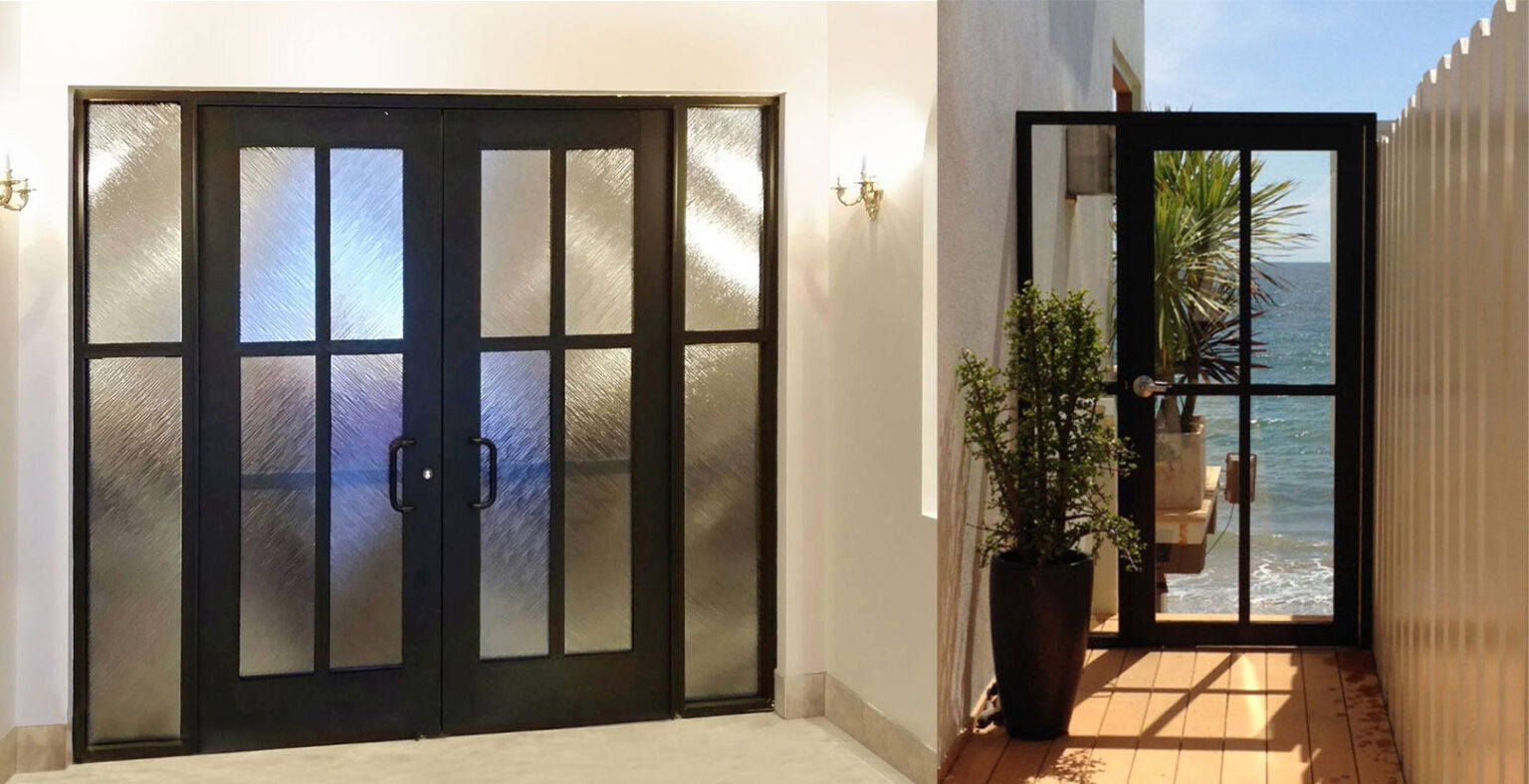
For projects that require a cleaner architectural finish, privacy can also be considered during the specification of the door system. Glass options, frame design, orientation and surrounding elements can all influence how open or exposed the space feels.
When Is It Better to Replace a Sliding Door Instead of Reinforcing It?
Additional locks, security bars and smart devices can significantly improve the protection of an existing sliding door. However, there comes a point where adding more accessories no longer solves the underlying problem.
If the door has a damaged frame, worn rollers, an outdated locking mechanism or excessive movement within the track, its overall security may already be compromised. In these situations, reinforcing individual components may provide only a temporary improvement.
Some signs that it may be time to replace the sliding door include:
- The door no longer closes or locks properly.
- The panel can be lifted or moves excessively within the track.
- The frame shows signs of wear, corrosion or structural damage.
- The glass is outdated or no longer meets your security requirements.
- Air or water leaks indicate that the system is no longer performing as intended.
- Multiple repairs have failed to restore smooth operation or reliable security.
Modern sliding glass door systems are designed with stronger aluminum frames, improved hardware, better locking mechanisms and high-performance glass options. Instead of relying on several aftermarket accessories, a newer system can integrate many of these security features into the original design while also improving energy efficiency, durability and everyday operation.
If your current door requires multiple upgrades just to feel secure, replacing the entire system may provide a more practical and cost-effective long-term solution.
Best Sliding Door Security Options by Need
The best security option depends on the condition of the door, where it is located and the level of protection required. In many cases, the safest approach is to combine more than one solution instead of relying on a single device.
Security Need | Recommended Solution | Best For |
Quick and affordable reinforcement | Security bar or track blocker | Existing sliding doors, rental properties and temporary protection |
Stronger daily protection | Secondary lock, bolt lock or foot lock | Homes, apartments and commercial spaces with frequent use |
Preventing panel removal | Anti-lift protection | Older doors, loose panels or doors with worn rollers |
Better impact resistance | Laminated glass or security film | Doors exposed to patios, gardens, side entrances or public-facing areas |
Remote alerts and monitoring | Contact sensors, glass-break sensors or cameras | Empty properties, businesses, secondary entrances and smart homes |
Better nighttime visibility | Motion-sensor exterior lighting | Backyards, pool areas, balconies and side entrances |
More privacy | Blinds, shades, privacy film or privacy-focused glass options | Bedrooms, offices, storefronts and spaces visible from outside |
Long-term security improvement | Full sliding door replacement | Damaged, outdated or poorly performing door systems |
For the best result, combine physical barriers with proper locking, reinforced glass and monitoring. A security bar may stop the panel from sliding open, but it should ideally work together with a strong lock and anti-lift protection. Likewise, sensors can improve detection, but they should not replace a secure door system.
Secure Sliding Glass Doors for Modern Homes and Commercial Spaces
Improving sliding door security is not always about adding more visible barriers. In many cases, the best solution is to start with a door system designed to perform securely from the beginning.
A modern sliding glass door should combine a strong frame, reliable hardware, smooth operation and glass options that match the level of protection required for the space. When these elements work together, the door can provide better security without compromising natural light, exterior views or the overall architectural design.
At PRL Glass & Aluminum, we manufacture and supply custom sliding glass door systems for residential and commercial projects across the United States. Our solutions can be configured with durable aluminum frames, high-quality glass options and hardware designed to support everyday use, performance and security.
Whether you are replacing an outdated sliding door or specifying a new system for a project, PRL can help you choose a solution that balances protection, aesthetics and functionality.
Contact PRL Glass & Aluminum to explore sliding glass door options that bring security, light and modern design together.
Frequently Asked Questions About Sliding Door Security
Are sliding glass doors easy to break into?
Sliding glass doors can be vulnerable if they have weak locks, outdated glass, damaged tracks or poorly aligned frames. However, they can be made much more secure with stronger locks, security bars, anti-lift protection, reinforced glass and monitoring devices.
What is the best way to secure a sliding glass door?
The best way to secure a sliding glass door is to use more than one layer of protection. A strong lock, a security bar, anti-lift protection, reinforced glass and exterior monitoring can work together to reduce the risk of forced entry.
Do security bars really work for sliding doors?
Yes. A security bar can help prevent the active panel from sliding open, even if the main latch is forced or damaged. However, it should be combined with anti-lift protection and a reliable locking system for better overall security.
Can a sliding glass door be lifted out of its track?
Some older or poorly adjusted sliding doors may be vulnerable to being lifted out of the track. Anti-lift blocks, security pins, roller adjustments and proper frame design can help keep the panel in place.
Is laminated glass better for sliding door security?
Laminated glass can improve security because it includes an interlayer that helps hold the glass together after impact. This makes it harder to create an immediate opening compared with standard glass.
Can I reinforce an old sliding door?
Yes, an old sliding door can often be reinforced with additional locks, a security bar, anti-lift protection, sensors or security film. However, if the frame, track, glass or hardware is severely worn, replacement may be a better long-term option.
When should I replace my sliding glass door?
You should consider replacing a sliding glass door if it no longer locks properly, moves excessively in the track, has damaged framing, uses outdated glass or requires repeated repairs. A modern sliding door system can offer better security, smoother operation and a cleaner design.