Loading

Archives 2026

The Triangle Shirtwaist Factory fire of March 25, 1911, became a turning point in industrial safety after blocked and inadequate exits contributed to the deaths of 146 workers

The Tragedy of 1911: It Wasn’t Only the Fire, but How the Exit Failed

Home / 2026

In an emergency, an exit is not judged by its appearance or by how well it seemed to work during installation. What matters is whether people can get through it immediately when panic sets in.

That is one reason the Triangle Shirtwaist Factory fire of 1911 is still remembered today. The fire was devastating, but so was the failure of the exits people depended on to escape.

Why the 1911 Factory Fire Still Matters

On March 25, 1911, a fire broke out at the Triangle Shirtwaist Factory in New York. Many workers on the upper floors could not get out. Some exits had been locked, reportedly to prevent theft, and others did not function in a way that matched the reality of a mass escape.

As workers tried to flee, the doors became part of the disaster. In a crowd, people do not evacuate calmly or one at a time. They move together, pressed forward by fear, urgency, and the force of others behind them.

That is what makes this tragedy more than a story about fire. It also revealed how badly exit design could fail when it did not account for real human behavior.

Why Emergency Behavior Changes Everything

For years, many doors were designed around a single user: someone who approaches, sees the hardware, understands it, and operates it correctly. But that is not how evacuations happen.

In a real emergency, no one stops to study a handle or think through how a mechanism works. People react. They head for the exit and push forward. Any system that depends on calm interpretation in that moment is already vulnerable to failure.

That is the lesson safety design had to learn: emergency egress must respond to instinct, not work against it.

Modern panic hardware exists in part because disasters like the 1911 Triangle fire showed that emergency exits must function under crowd pressure, urgency, and instinctive human behavior.

How Panic Hardware Changed Exit Design

Over time, tragedies like this helped reshape building safety standards. One of the most important changes was the wider use of panic hardware: a horizontal bar or touchpad installed on the interior side of a door that releases the latch when pushed.

Its value is straightforward. It follows the way people actually behave in an emergency. Instead of requiring a key, a turn of the wrist, or any precise movement, it allows the door to open through direct forward pressure.

That principle became essential in commercial and high-occupancy buildings, where exits need to work quickly, clearly, and reliably.

A Door Should Not Need to Be Figured Out in a Crisis

Today, the effectiveness of an emergency exit depends less on whether a person can figure it out and more on whether the system was designed to respond clearly in a chaotic moment.

That shift changed the way safe exits are built. Modern panic hardware is intended to reduce hesitation, support immediate egress, and keep a door functional even when several people are pushing toward it at once.

The lesson from 1911 is not just historical. It remains relevant now: in a real emergency, a door must work the way people actually move.

If Your Door Makes a Customer Hesitate, You’re Already Losing More Than You Think

Home / 2026

It may seem like a small moment, but hesitation at the entrance changes the entire rhythm of a space. One person stops, the person behind them slows down, and what should feel like a smooth arrival turns into a minor point of friction.

In a busy commercial setting, that moment can happen again and again throughout the day. Most people would never describe it as a door problem. They simply register that entering the space felt less intuitive than it should have.

Why Glass Doors Often Create This Problem

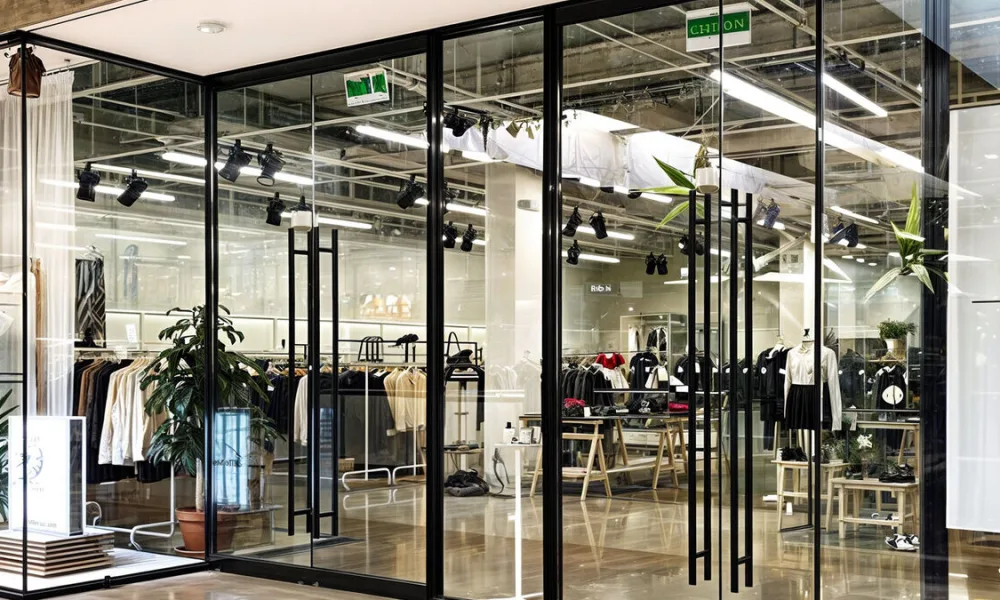
This is especially common with glass doors. Their visual appeal is part of the reason businesses choose them: they look clean, modern, and open. But that same minimal appearance can remove the cues people usually rely on when approaching an entrance.

A customer may not immediately know whether to push or pull. The hardware may not clearly suggest direction. And because the door feels visually light or almost invisible, people tend to react on instinct rather than pause to interpret it carefully.

The result is familiar: someone pushes when they should pull, stops to check, or loses momentum before even stepping inside.

When Hardware Reduces Hesitation

The issue is not the glass itself. The issue is asking the user to make a decision in a moment that should feel automatic.

That is where the right hardware matters. A properly integrated panic device simplifies the interaction: push the bar, and the door opens. The action is immediate and easy to understand, especially in moments of pressure or heavy foot traffic.

In practical terms, that means the entrance works with human behavior instead of interrupting it.

Their visual appeal is part of the reason businesses choose them: they look clean, modern, and open

Panic Bars Are Not Only About Emergencies

Although panic bars are essential in emergency egress, their value is not limited to crisis. In many commercial environments, they also support everyday performance by handling repeated use more clearly and consistently than less intuitive systems.

That matters in entrances that deal with constant traffic. When the hardware is easy to read, the door stops becoming a point of hesitation and starts doing what it should have done from the beginning: allow movement without slowing people down.

Consistency Comes From the Full System

Reliable performance does not depend on appearance alone. It depends on whether the door and its hardware were designed to function together as a complete system.

When the components are properly integrated from the start, the result is more consistent under daily use. The door responds the way people expect it to respond—quickly, clearly, and without unnecessary friction.

Human behavior plays a bigger role in door performance than most projects anticipate. When a system lacks clear cues, hesitation becomes part of the user experience from the first contact point

Glass Doors Aren’t Used as Designed; They’re Used as People Behave

Home / 2026

Most people don’t stop to think about how a door works. They react. If a space looks open, they move forward. If a handle suggests pulling, they pull. If a crowd is pushing from behind, they push too.

That is what makes glass doors so interesting in commercial spaces. They are often chosen for visual reasons—they extend the storefront, let natural light in, and make the business feel more open from the street. But once people start using them, appearance stops being the main issue. Behavior takes over.

Why Glass Doors Change the Way People Move

A glass entrance reduces the visual separation between outside and inside. From the sidewalk, people can already see the lighting, the merchandise, and the activity inside. That makes the entrance feel more accessible and lowers hesitation.

But that same visual openness can also create confusion. When the barrier feels almost invisible, users rely even more on instinct. They do not study the hardware. They respond to what seems obvious in the moment.

That is why the real test of a door is not how clean it looks in elevation. It is how clearly it communicates what to do when someone reaches it.

People Don’t Use Doors Theoretically

In design, this is a familiar principle: people interact with objects based on perception, habit, and context—not based on the designer’s intention alone.

A door may seem straightforward on paper, but real use is rarely that controlled. Someone approaches while looking at their phone. Another person has their hands full. A group enters while others try to exit. In those moments, the body reacts first.

That is where design either helps or fails.

In commercial architecture, a glass door is not only a visual feature. Its real performance depends on whether people can understand how to use it immediately, without stopping to think

When Door Hardware Works With Human Behavior

The best door systems do not force users to stop and decode them. They guide action immediately.

That is especially important in emergency egress. A horizontal push bar works because it matches the most instinctive response in a high-pressure moment: push and move. There is little ambiguity, and that clarity matters.

The same principle applies beyond emergencies. Everyday entrances also benefit from hardware that reads quickly—lever handles, push paddles, and full-width pulls all help reduce hesitation when they are selected correctly for the way people actually move through a space.

Good Design Anticipates Real Reactions

The issue is not that people use doors “wrong.” The issue is expecting perfect behavior in imperfect situations.

Good design accounts for distraction, urgency, repeated traffic, and split-second decisions. It does not depend on users pausing to interpret the system correctly every time.

That is why the most effective glass door is not simply the one that looks integrated with the storefront. It is the one that continues to work clearly when real people approach it the way they actually do: quickly, distracted, carrying things, or moving with a crowd.

Handrails provide a graspable point of support on stairs, ramps, and transition areas, helping improve balance, stability, and everyday safety.

What Is a Handrail? Purpose, Types, and Where It’s Used

Home / 2026

A handrail is a support element designed to be held by hand while moving through a space. It is most commonly installed along stairs and ramps, where people need extra balance and stability, but it can also be used in corridors, balconies, and other transition areas.

Although the term is often used loosely, a handrail has a specific function: it gives users a reliable point of support as they walk, climb, or descend. That becomes especially important in spaces with level changes, heavier foot traffic, or a higher risk of slips and falls.

Modern handrail systems are used in both residential and commercial projects, where they combine user support with cleaner architectural design.

What Is the Purpose of a Handrail?

The purpose of a handrail is straightforward. It helps people maintain balance and move more safely through a space.

On stairs, it provides support while going up or down. On ramps, it adds stability over a longer change in elevation. In both cases, it helps people feel more secure and move with better control.

This is why handrails matter in both residential and commercial settings. They are not just finishing details. They are functional elements that improve safety, usability, and overall comfort.

Handrail vs. Stair Railing vs. Guardrail

These terms are often used as if they mean the same thing, but they refer to different parts of a system.

  • A handrail is the part intended to be grasped by the hand. Its role is support.
  • A stair railing usually refers to the broader railing system associated with a staircase. Depending on the design, that system may include posts, infill panels, glass, guards, top rails, and sometimes a separate handrail.
  • A guardrail has another purpose. It serves as a protective barrier along an exposed edge, such as a landing, balcony, deck, or open-sided stair.

In many projects, these elements work together. A glass stair system, for example, may include a guard for edge protection and a handrail that helps guide movement and improve grip.

Where Are Handrails Commonly Used?

Stairs are the most familiar application, but they are not the only one. Handrails are used in many areas where extra support improves circulation and safety.

Common locations include:

  • staircases
  • ramps
  • corridors and transition walkways
  • balconies and mezzanines
  • decks and terraces
  • commercial entry sequences
  • certain interior accessibility areas

In commercial environments, handrails often need to perform under heavier daily use. In residential projects, they may also have a stronger visual role, especially in custom staircases, balcony systems, and modern renovations.

What Types of Handrails Are There?

Handrails can vary by mounting method, material, and overall design approach.

Wall-mounted handrails

These are fixed directly to a wall and are commonly used in stairwells, ramps, and circulation corridors. They are often chosen when the priority is straightforward support.

Post-supported handrails

These are mounted to posts and usually form part of a larger railing system. They are common in stairs, balconies, decks, and exterior guardrail applications.

Integrated handrails in glass railing systems

In contemporary projects, handrails are often incorporated into glass systems through top caps, slim rails, or similar support profiles. These solutions are popular because they help maintain open views while still contributing to safety.

Metal handrails

Aluminum and stainless steel are widely used because they are durable, low-maintenance, and well suited to modern commercial and residential projects.

Wood handrails

Wood remains a common option in more traditional interiors, where a warmer and more classic look is preferred.

The right choice depends on the location, the design goals, the expected level of use, and the maintenance needs of the project.

Glass and aluminum handrail solutions are often chosen for their durability, open appearance, and ability to support safe circulation without adding visual heaviness.

What Makes a Handrail Functional?

A handrail works well when it is comfortable to grip and easy to use continuously.

That may sound obvious, but it is a major part of good design. A rail that looks substantial but is awkward to hold, interrupted too often, or placed too close to a wall may not perform the way users expect.

Function matters just as much as appearance. A handrail should feel dependable in everyday use, especially in areas where people rely on it for support.

Why Handrails Matter in Modern Design

Today, handrails do more than meet a practical need. They also shape the way a space looks and feels.

In well-designed projects, a handrail helps organize movement, reinforce safety, and support accessibility without adding unnecessary visual weight. That is one reason glass and aluminum systems have become more common in both commercial and residential work. They can deliver support and durability while keeping the overall design cleaner and more open.

For architects, contractors, and property owners, the value of a handrail is not only that it serves a purpose. It is that it improves how people move through a space.

A handrail is a graspable support element that helps people move more safely and confidently through stairs, ramps, and other transition areas.

Understanding what a handrail is, where it is used, and how it differs from other railing components makes it easier to make better design decisions. In some projects, a simple wall-mounted solution may be enough. In others, especially where durability, visibility, and architectural consistency matter, a more integrated glass or aluminum system may be the better fit.

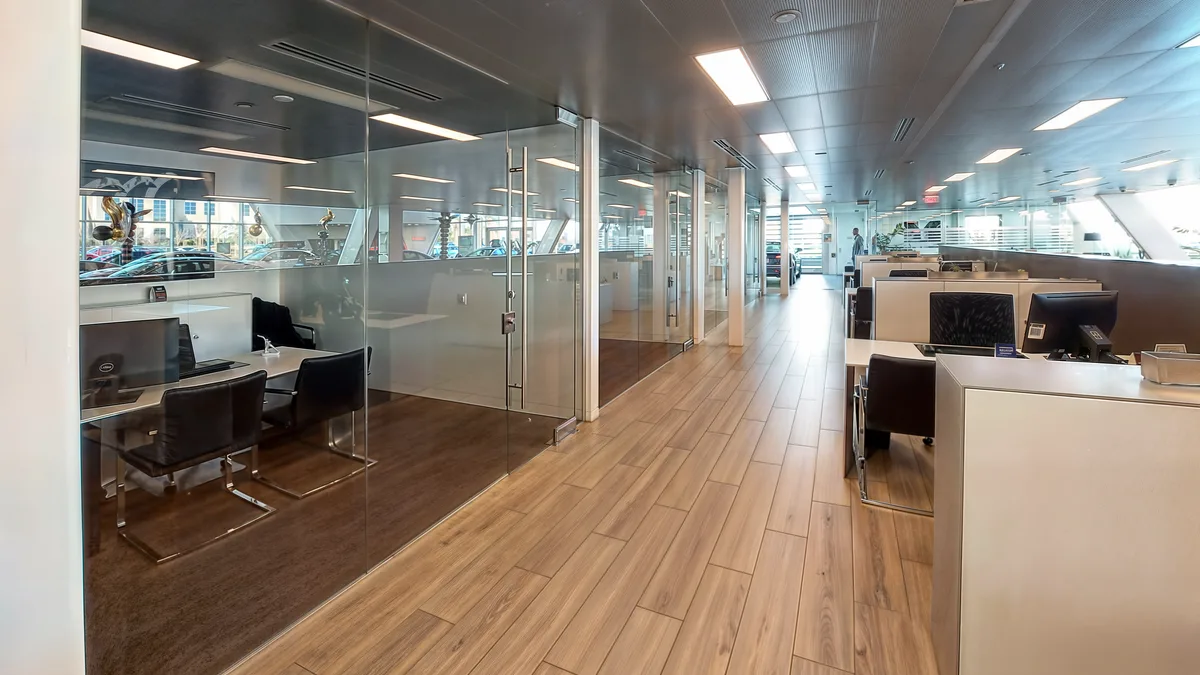
Close-up of a commercial glass emergency exit door with a panic device bar, inside a busy public or office building. The image should highlight the hardware, the glass surface, and the idea of real-world performance, with a documentary-style, editorial look.

Glass Doors in Commercial Spaces May Look Standard, Until Performance Becomes the Issue

Home / 2026

Glass doors are common in commercial spaces because they create a clean, open entrance. From the outside, everything looks simple: no visual barriers, no bulky elements, and a smooth transition between the street and the interior. 

That is precisely why they tend to go unquestioned. If the design looks right, most people assume the door will perform just as well. 

In everyday use, it usually does. Someone pushes, the door swings, and people move in and out without thinking twice. It feels effortless, almost automatic. 

The problem is that real performance is not tested during calm moments. 

It becomes visible when traffic increases, several people move through the opening at once, and the system is forced to respond under pressure. In those moments, the door may no longer behave the way it did under normal use. It may hesitate, feel heavier than expected, or require a second push before it opens fully. 

That kind of hesitation matters more than it seems. 

When one push is supposed to be enough 

In an emergency exit, the door should not require a second attempt. It should release with a single push from the interior. 

That is the role of a panic device: a touch bar designed to unlock the door immediately when pressure is applied. 

Under normal conditions, that movement can seem simple enough. But emergencies are different. People do not approach the door one by one, calmly and in order. Several people may push at once, often with urgency, and the system has to respond instantly. 

That is when small installation problems stop being small.

The issue is often not the device itself 

When a panic door fails to respond properly, the problem is not always the bar. In many cases, the issue comes from the installation. 

A frame that is slightly out of alignment can cause the leaf to rub against the floor. Hardware installed too tight can make the operation feel stiff. If the glass was not drilled with precision from the start, the entire system may be forced out of position. 

And in glass door systems, those mistakes are not always easy to correct later. Once the installation is completed, the margin for adjustment is limited. 

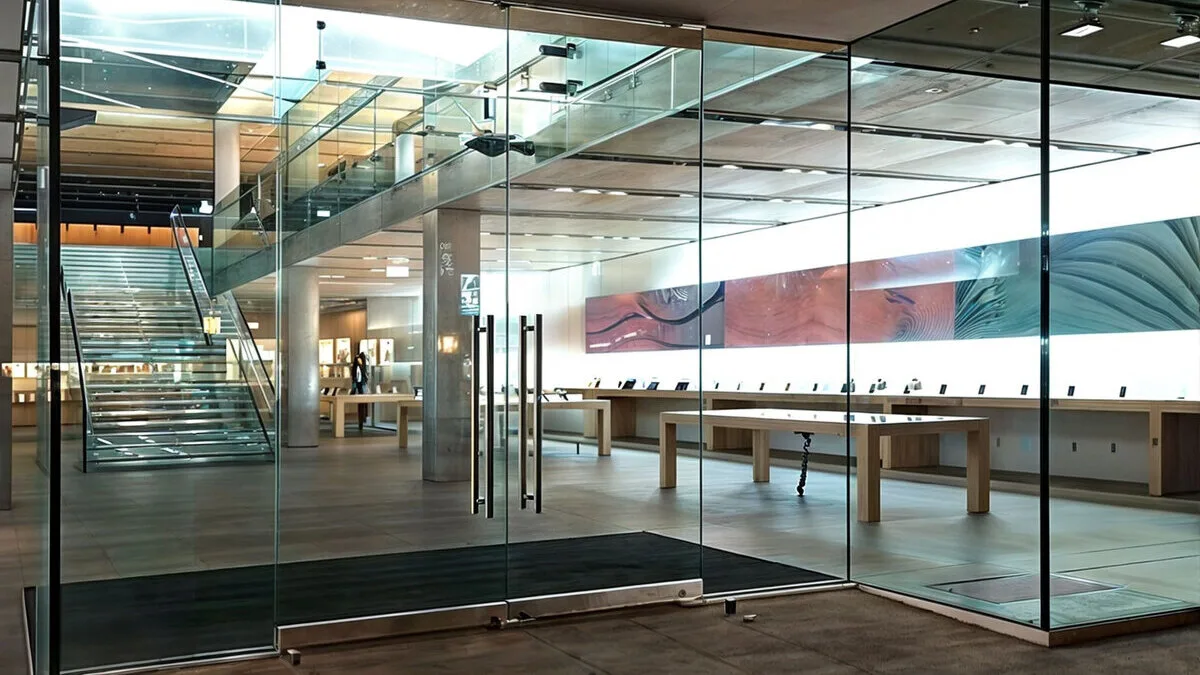
Commercial glass doors often appear fully functional at handover, but performance issues can emerge later under constant use, heavy foot traffic, or installation misalignment. This image should illustrate the idea that visual simplicity in commercial entrances does not always guarantee reliable operation in real-world conditions.

A door can look fine and still have a performance problem 

This is what makes the issue easy to miss. 

On handover day, the door may appear to work perfectly. It opens, closes, and passes initial testing. Everything seems in order. 

But repeated daily use tells a different story. Over time, the door may begin to lose consistency. Sometimes it opens smoothly. Other times, it requires more effort or does not respond on the first push. 

That inconsistency is often the first real sign that the system was never as well resolved as it looked. 

Design is not the same as performance 

A commercial glass door may look minimal, elegant, and fully integrated into the architecture. But appearance alone says very little about how the system will respond when it is under real pressure. 

In the end, the door, the hardware, and the installation work as one unit. And it is only through repeated use, heavy traffic, and high-pressure conditions that the quality of that unit becomes clear. 

glass door can look standard from the street. The real question is whether it will still perform when performance matters most. 

Glass and Aluminum Manufacturers in Monstrose

Modern Glass & Aluminum Solutions for Homes & Businesses in Montrose

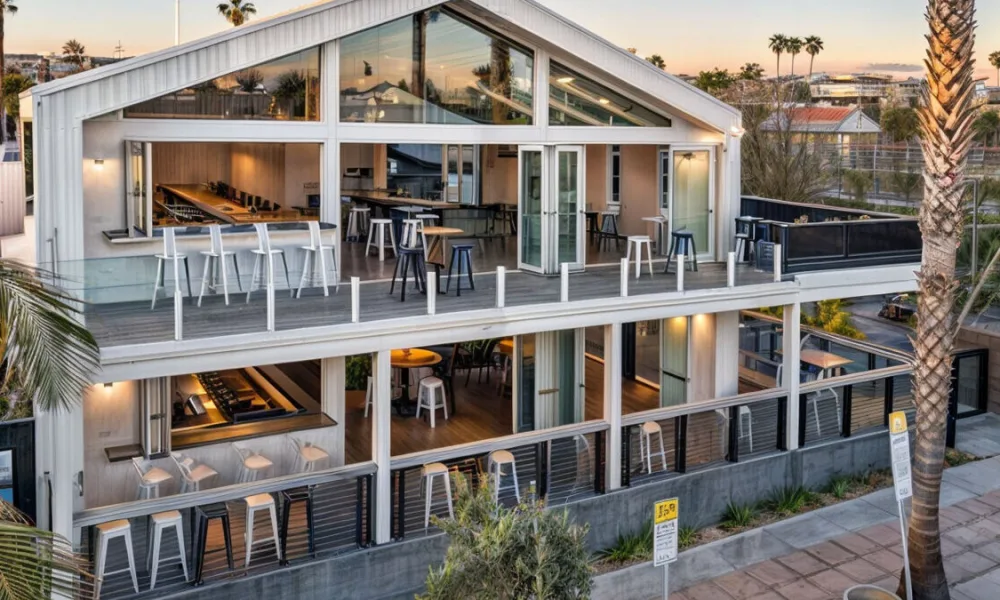
Montrose is one of Houston’s most eclectic and design-driven neighborhoods, known for its mix of historic homes, modern residences, art galleries, restaurants, and creative commercial spaces.

With constant renovation and architectural reinvention, projects in Montrose require glass and aluminum systems that deliver flexibility, durability, and contemporary aesthetics.

At PRL Glass & Aluminum, we provide modern architectural solutions engineered for Montrose’s unique character, supporting residential upgrades, adaptive reuse projects, and boutique commercial spaces with precision fabrication and premium materials.

Building or Renovating in Montrose? Connect with PRL Glass & Aluminum Today

Whether you’re renovating a historic home, designing a modern residence, or upgrading a retail or hospitality space, PRL delivers custom fabrication, nationwide logistics, and expert technical support from California.

We proudly support projects throughout Montrose, Midtown Houston, River Oaks, and the greater Houston metropolitan area.

Service 

Contact Number 

Aluminum Division 

📞 877-775-2586 

Glass Division 

📞 800-433-7044 

📍 Visit our locations in City of Industry, California and explore our wide range of innovative, high-quality aluminum and glass solutions!

Premium Glass & Aluminum Designs for Montrose Homes

Montrose homes emphasize individuality, open layouts, and modern upgrades. PRL’s premium residential systems are designed to enhance these spaces while maintaining durability and performance.

All residential systems meet ASTM and NFRC standards. 

Glass & Aluminum Solutions for Montrose Businesses

Montrose’s commercial environment, boutique retail, restaurants, galleries, and creative offices—requires architectural systems that balance aesthetics, visibility, and durability.

  • Curtain Wall Systems: Ideal for mixed-use developments and contemporary commercial buildings
  • Storefront Systems: Clean, modern glass façades for street-facing retail and hospitality
  • Architectural Glass Solutions – Laminated and tempered glass for safety, acoustic comfort, and energy efficiency

PRL systems support both new developments and adaptive reuse projects across this dynamic Houston neighborhood.

PRL Glass and Aluminum in Upper East Side, Manhattan

Why Montrose Developers and Property Owners Trust PRL Glass & Aluminum

Montrose projects require flexibility, customization, and strong design execution—PRL delivers consistently.

  • Custom fabrication for residential renovations and boutique commercial projects
  • Premium aluminum finishes and large-format glazing options
  • Nationwide manufacturing with dependable delivery timelines
  • Technical support for architects, developers, builders, and designers
  • Proven experience in creative and design-driven urban environments

Benefits of Glass and Aluminum Systems in Montrose

Montrose architecture thrives on creativity, diversity, and modern reinvention—glass and aluminum systems support these qualities.

  • Thermal Performance for comfort in Houston’s hot climate
  • Noise Reduction, important in active mixed-use neighborhoods
  • Modern Architectural Appeal aligned with contemporary and adaptive design
  • Durability suitable for both residential and high-traffic commercial use
  • Eco-Friendly Materials, supporting sustainable construction practices
  • Battle Door Capability, offering reinforced security against break-ins, vandalism, or protests, especially important for street-facing retail, galleries, and restaurants

Transform Your Space with PRL Glass & Aluminum

Based in California and trusted nationwide, PRL serves Texas and all 50 states with luxury-grade architectural glass and aluminum systems.

From custom sliding doors to boutique storefronts, we deliver craftsmanship designed to elevate your next project.

We are present in the most important neighborhoods in the United States, offering the highest quality service.

Oak Lawn / Turtle Creek

Deep Ellum

River Oaks

The Galleria / Uptown

Midtown Houston

Follow us on social media ✅

Stay tuned for news, events, discounts and new products through the different social media channels.