Loading

The Triangle Shirtwaist Factory fire of March 25, 1911, became a turning point in industrial safety after blocked and inadequate exits contributed to the deaths of 146 workers

The Tragedy of 1911: It Wasn’t Only the Fire, but How the Exit Failed

Home / Archive by category "Design & Living"

In an emergency, an exit is not judged by its appearance or by how well it seemed to work during installation. What matters is whether people can get through it immediately when panic sets in.

That is one reason the Triangle Shirtwaist Factory fire of 1911 is still remembered today. The fire was devastating, but so was the failure of the exits people depended on to escape.

Why the 1911 Factory Fire Still Matters

On March 25, 1911, a fire broke out at the Triangle Shirtwaist Factory in New York. Many workers on the upper floors could not get out. Some exits had been locked, reportedly to prevent theft, and others did not function in a way that matched the reality of a mass escape.

As workers tried to flee, the doors became part of the disaster. In a crowd, people do not evacuate calmly or one at a time. They move together, pressed forward by fear, urgency, and the force of others behind them.

That is what makes this tragedy more than a story about fire. It also revealed how badly exit design could fail when it did not account for real human behavior.

Why Emergency Behavior Changes Everything

For years, many doors were designed around a single user: someone who approaches, sees the hardware, understands it, and operates it correctly. But that is not how evacuations happen.

In a real emergency, no one stops to study a handle or think through how a mechanism works. People react. They head for the exit and push forward. Any system that depends on calm interpretation in that moment is already vulnerable to failure.

That is the lesson safety design had to learn: emergency egress must respond to instinct, not work against it.

Modern panic hardware exists in part because disasters like the 1911 Triangle fire showed that emergency exits must function under crowd pressure, urgency, and instinctive human behavior.

How Panic Hardware Changed Exit Design

Over time, tragedies like this helped reshape building safety standards. One of the most important changes was the wider use of panic hardware: a horizontal bar or touchpad installed on the interior side of a door that releases the latch when pushed.

Its value is straightforward. It follows the way people actually behave in an emergency. Instead of requiring a key, a turn of the wrist, or any precise movement, it allows the door to open through direct forward pressure.

That principle became essential in commercial and high-occupancy buildings, where exits need to work quickly, clearly, and reliably.

A Door Should Not Need to Be Figured Out in a Crisis

Today, the effectiveness of an emergency exit depends less on whether a person can figure it out and more on whether the system was designed to respond clearly in a chaotic moment.

That shift changed the way safe exits are built. Modern panic hardware is intended to reduce hesitation, support immediate egress, and keep a door functional even when several people are pushing toward it at once.

The lesson from 1911 is not just historical. It remains relevant now: in a real emergency, a door must work the way people actually move.

If Your Door Makes a Customer Hesitate, You’re Already Losing More Than You Think

Home / Archive by category "Design & Living"

It may seem like a small moment, but hesitation at the entrance changes the entire rhythm of a space. One person stops, the person behind them slows down, and what should feel like a smooth arrival turns into a minor point of friction.

In a busy commercial setting, that moment can happen again and again throughout the day. Most people would never describe it as a door problem. They simply register that entering the space felt less intuitive than it should have.

Why Glass Doors Often Create This Problem

This is especially common with glass doors. Their visual appeal is part of the reason businesses choose them: they look clean, modern, and open. But that same minimal appearance can remove the cues people usually rely on when approaching an entrance.

A customer may not immediately know whether to push or pull. The hardware may not clearly suggest direction. And because the door feels visually light or almost invisible, people tend to react on instinct rather than pause to interpret it carefully.

The result is familiar: someone pushes when they should pull, stops to check, or loses momentum before even stepping inside.

When Hardware Reduces Hesitation

The issue is not the glass itself. The issue is asking the user to make a decision in a moment that should feel automatic.

That is where the right hardware matters. A properly integrated panic device simplifies the interaction: push the bar, and the door opens. The action is immediate and easy to understand, especially in moments of pressure or heavy foot traffic.

In practical terms, that means the entrance works with human behavior instead of interrupting it.

Their visual appeal is part of the reason businesses choose them: they look clean, modern, and open

Panic Bars Are Not Only About Emergencies

Although panic bars are essential in emergency egress, their value is not limited to crisis. In many commercial environments, they also support everyday performance by handling repeated use more clearly and consistently than less intuitive systems.

That matters in entrances that deal with constant traffic. When the hardware is easy to read, the door stops becoming a point of hesitation and starts doing what it should have done from the beginning: allow movement without slowing people down.

Consistency Comes From the Full System

Reliable performance does not depend on appearance alone. It depends on whether the door and its hardware were designed to function together as a complete system.

When the components are properly integrated from the start, the result is more consistent under daily use. The door responds the way people expect it to respond—quickly, clearly, and without unnecessary friction.

Human behavior plays a bigger role in door performance than most projects anticipate. When a system lacks clear cues, hesitation becomes part of the user experience from the first contact point

Glass Doors Aren’t Used as Designed; They’re Used as People Behave

Home / Archive by category "Design & Living"

Most people don’t stop to think about how a door works. They react. If a space looks open, they move forward. If a handle suggests pulling, they pull. If a crowd is pushing from behind, they push too.

That is what makes glass doors so interesting in commercial spaces. They are often chosen for visual reasons—they extend the storefront, let natural light in, and make the business feel more open from the street. But once people start using them, appearance stops being the main issue. Behavior takes over.

Why Glass Doors Change the Way People Move

A glass entrance reduces the visual separation between outside and inside. From the sidewalk, people can already see the lighting, the merchandise, and the activity inside. That makes the entrance feel more accessible and lowers hesitation.

But that same visual openness can also create confusion. When the barrier feels almost invisible, users rely even more on instinct. They do not study the hardware. They respond to what seems obvious in the moment.

That is why the real test of a door is not how clean it looks in elevation. It is how clearly it communicates what to do when someone reaches it.

People Don’t Use Doors Theoretically

In design, this is a familiar principle: people interact with objects based on perception, habit, and context—not based on the designer’s intention alone.

A door may seem straightforward on paper, but real use is rarely that controlled. Someone approaches while looking at their phone. Another person has their hands full. A group enters while others try to exit. In those moments, the body reacts first.

That is where design either helps or fails.

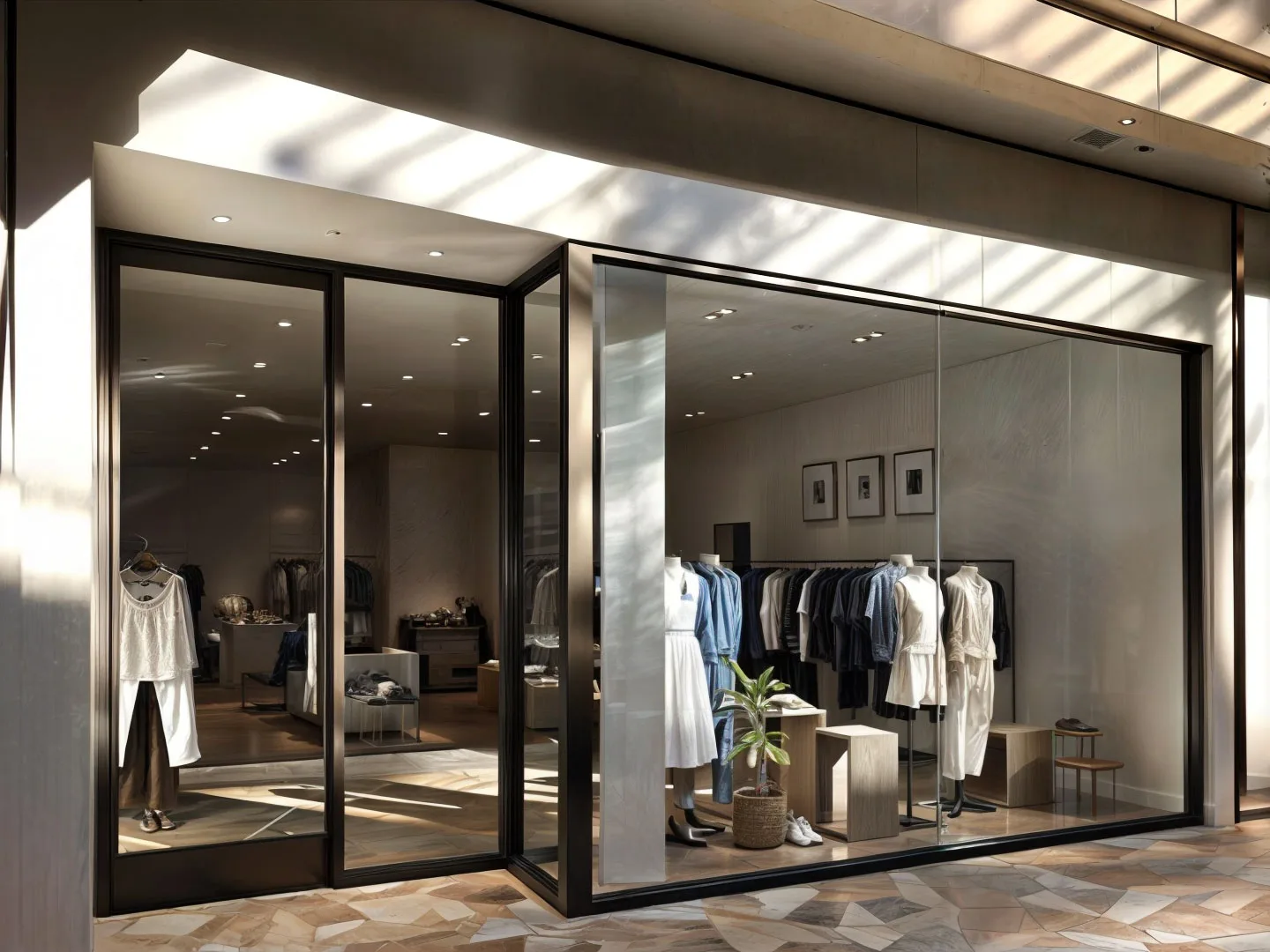
In commercial architecture, a glass door is not only a visual feature. Its real performance depends on whether people can understand how to use it immediately, without stopping to think

When Door Hardware Works With Human Behavior

The best door systems do not force users to stop and decode them. They guide action immediately.

That is especially important in emergency egress. A horizontal push bar works because it matches the most instinctive response in a high-pressure moment: push and move. There is little ambiguity, and that clarity matters.

The same principle applies beyond emergencies. Everyday entrances also benefit from hardware that reads quickly—lever handles, push paddles, and full-width pulls all help reduce hesitation when they are selected correctly for the way people actually move through a space.

Good Design Anticipates Real Reactions

The issue is not that people use doors “wrong.” The issue is expecting perfect behavior in imperfect situations.

Good design accounts for distraction, urgency, repeated traffic, and split-second decisions. It does not depend on users pausing to interpret the system correctly every time.

That is why the most effective glass door is not simply the one that looks integrated with the storefront. It is the one that continues to work clearly when real people approach it the way they actually do: quickly, distracted, carrying things, or moving with a crowd.

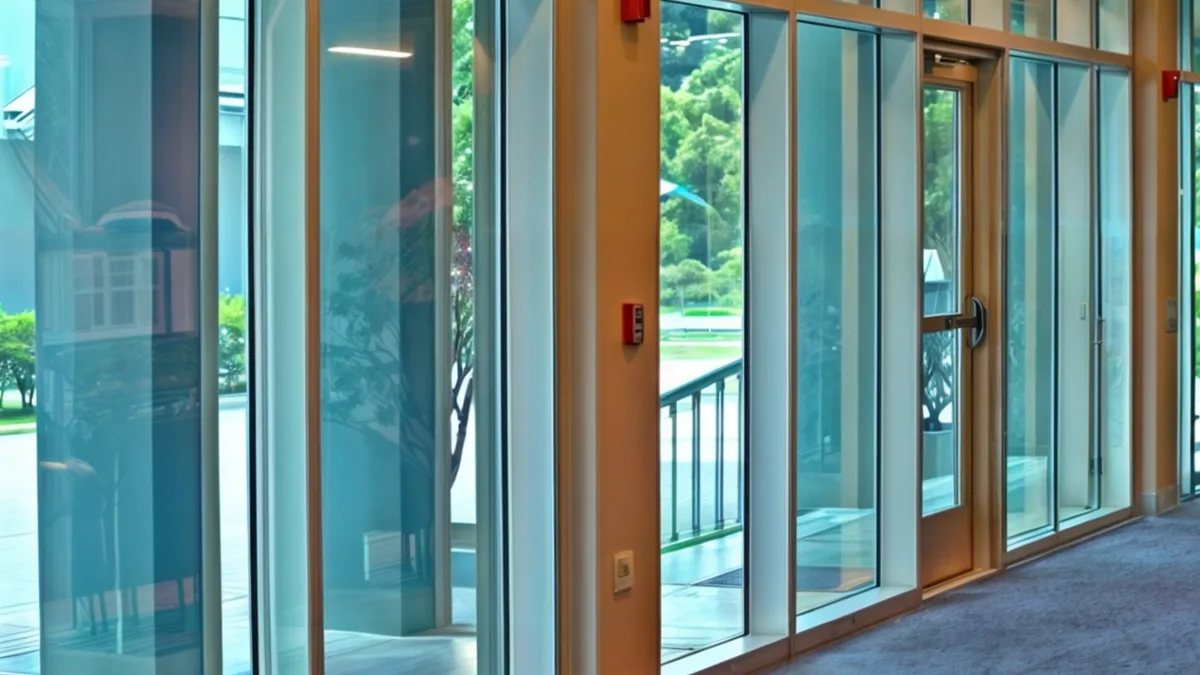
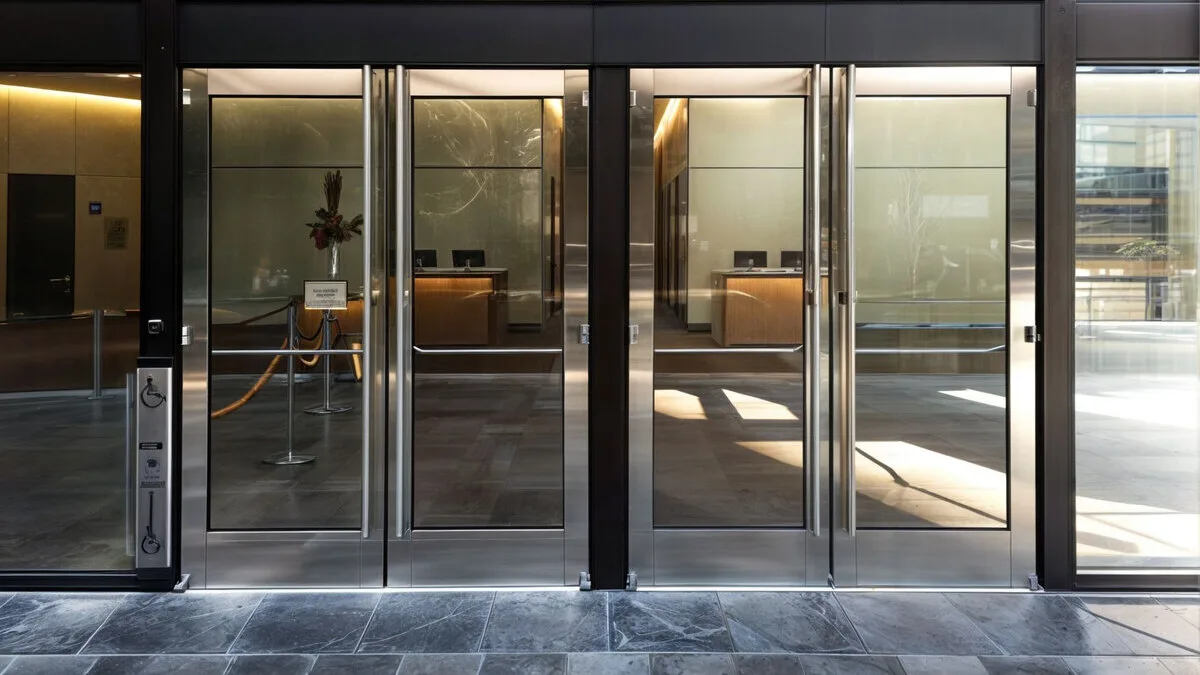
Close-up of a commercial glass emergency exit door with a panic device bar, inside a busy public or office building. The image should highlight the hardware, the glass surface, and the idea of real-world performance, with a documentary-style, editorial look.

Glass Doors in Commercial Spaces May Look Standard, Until Performance Becomes the Issue

Home / Archive by category "Design & Living"

Glass doors are common in commercial spaces because they create a clean, open entrance. From the outside, everything looks simple: no visual barriers, no bulky elements, and a smooth transition between the street and the interior. 

That is precisely why they tend to go unquestioned. If the design looks right, most people assume the door will perform just as well. 

In everyday use, it usually does. Someone pushes, the door swings, and people move in and out without thinking twice. It feels effortless, almost automatic. 

The problem is that real performance is not tested during calm moments. 

It becomes visible when traffic increases, several people move through the opening at once, and the system is forced to respond under pressure. In those moments, the door may no longer behave the way it did under normal use. It may hesitate, feel heavier than expected, or require a second push before it opens fully. 

That kind of hesitation matters more than it seems. 

When one push is supposed to be enough 

In an emergency exit, the door should not require a second attempt. It should release with a single push from the interior. 

That is the role of a panic device: a touch bar designed to unlock the door immediately when pressure is applied. 

Under normal conditions, that movement can seem simple enough. But emergencies are different. People do not approach the door one by one, calmly and in order. Several people may push at once, often with urgency, and the system has to respond instantly. 

That is when small installation problems stop being small.

The issue is often not the device itself 

When a panic door fails to respond properly, the problem is not always the bar. In many cases, the issue comes from the installation. 

A frame that is slightly out of alignment can cause the leaf to rub against the floor. Hardware installed too tight can make the operation feel stiff. If the glass was not drilled with precision from the start, the entire system may be forced out of position. 

And in glass door systems, those mistakes are not always easy to correct later. Once the installation is completed, the margin for adjustment is limited. 

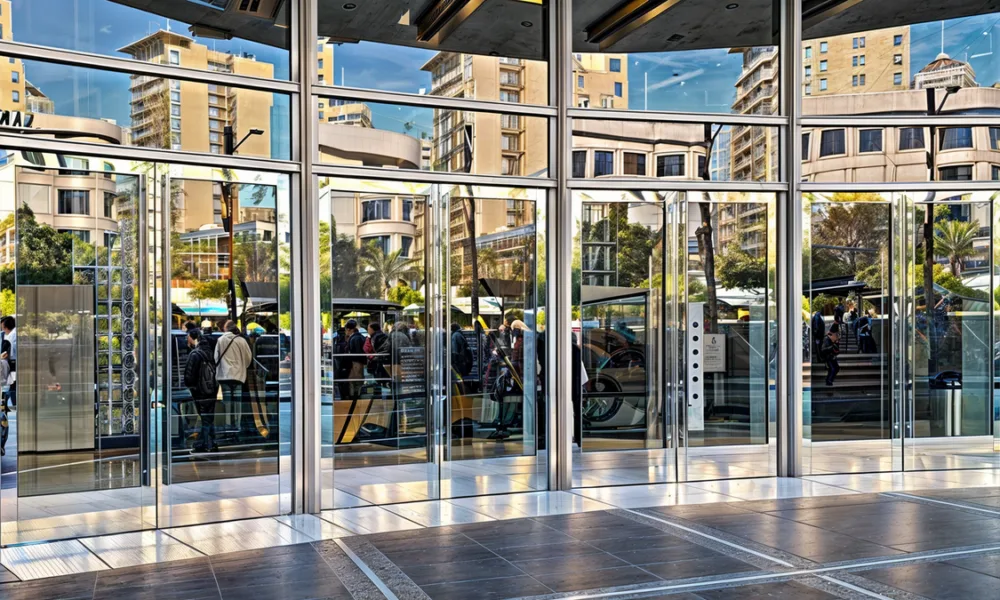
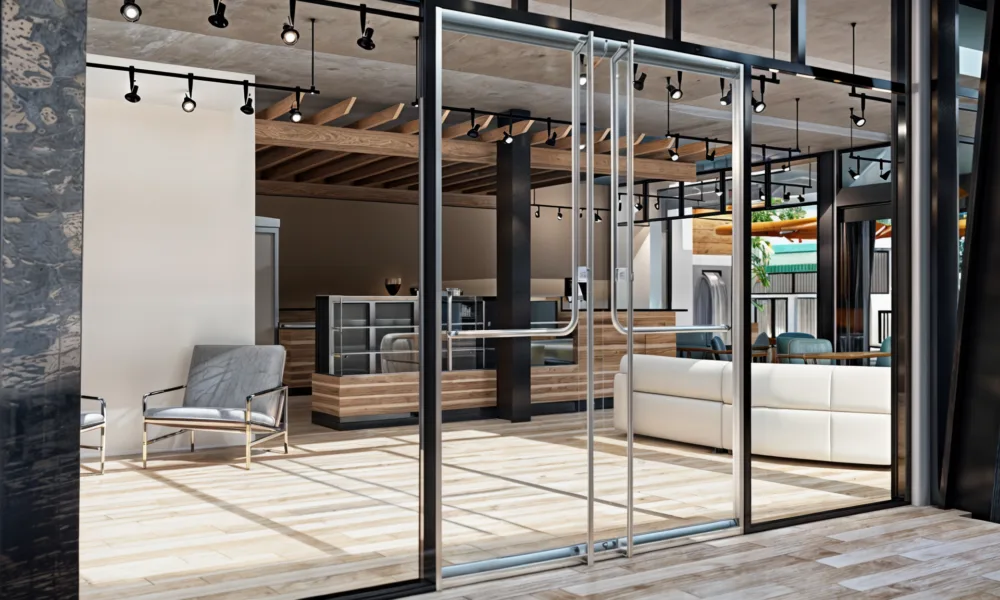
Commercial glass doors often appear fully functional at handover, but performance issues can emerge later under constant use, heavy foot traffic, or installation misalignment. This image should illustrate the idea that visual simplicity in commercial entrances does not always guarantee reliable operation in real-world conditions.

A door can look fine and still have a performance problem 

This is what makes the issue easy to miss. 

On handover day, the door may appear to work perfectly. It opens, closes, and passes initial testing. Everything seems in order. 

But repeated daily use tells a different story. Over time, the door may begin to lose consistency. Sometimes it opens smoothly. Other times, it requires more effort or does not respond on the first push. 

That inconsistency is often the first real sign that the system was never as well resolved as it looked. 

Design is not the same as performance 

A commercial glass door may look minimal, elegant, and fully integrated into the architecture. But appearance alone says very little about how the system will respond when it is under real pressure. 

In the end, the door, the hardware, and the installation work as one unit. And it is only through repeated use, heavy traffic, and high-pressure conditions that the quality of that unit becomes clear. 

glass door can look standard from the street. The real question is whether it will still perform when performance matters most. 

A practical look at how folding patio doors can improve layout, usability, and year-round comfort at home.

The “Open It Up” Dream, Without the Winter Regret

Home / Archive by category "Design & Living"

It’s easy to fall for the fantasy.

A wall of glass folds away, the patio feels like part of the room, and suddenly an ordinary Tuesday feels a little more like a getaway.

Then real-life steps in.

A chilly spot shows up right by the sofa. The handle feels too hot or too cold. The stacked panels take over the side of the room you actually use. And when guests come over, the wide opening somehow turns into an awkward bottleneck.

That’s the part people don’t always think about when choosing multi-panel folding patio doors. The best systems do more than look impressive when open. They need to feel comfortable, easy to use, and well integrated into the room every day, not just in perfect weather.

That is where thoughtful layout, glazing, and frame design start to matter. And when folding doors include thermally broken frames, the opening can feel more comfortable through seasonal temperature swings, which makes the space easier to enjoy year-round.

The Quick Way to Choose

Start with how you actually live in the room. Then choose the details.

Before comparing finishes, panel counts, or glass options, think about the basics:

  • how people move through the space
  • where you sit most often
  • when privacy matters
  • how much sun hits the opening
  • whether the room still needs to feel comfortable when the weather changes

Once those answers are clear, the right setup becomes much easier to identify.Here are a few “best for” ways to think about it.

Best For: Daily Comfort at the Handle and Along the Frame

This is one of the most noticeable benefits of a thermally broken system, because it shows up in the places you touch and use the most.

A thermally broken frame includes an insulating barrier inside the metal. In simple terms, that helps reduce how much outdoor temperature transfers to the interior side of the frame. The result is a door that tends to feel less extreme during hot afternoons, cold mornings, and seasonal swings.

That matters more than people expect.

  • Best for no-flinch mornings: the handle and interior frame are less likely to feel like the weather outside.
  • Best for high-use patio doors: when a doorway is part of your everyday routine, small comfort issues quickly become bigger annoyances.
  • Best for households that are constantly moving in and out: if the opening feels more comfortable to use, people naturally use it more often.

It is a practical difference, but it can shape the whole experience of the room.

Best For: Keeping the Room Functional When the Panels Are Open

Folding doors do not simply disappear. When open, the panels need somewhere to stack, and that stacked area becomes part of the room whether you plan for it or not.

That is why panel stacking should be treated like a layout decision, not an afterthought.

  • Best for protecting your favorite seat: keep the stack away from the chair, sofa corner, or dining spot you use most.
  • Best for cleaner sightlines: place the stack on the side of the room that matters less visually in daily life.
  • Best for fewer compromises later: think of the stacked panels as a tall piece of furniture and decide in advance where you want that “parking spot” to live.

When this is planned well, the opening feels natural. When it is not, the room can end up feeling slightly off every time the doors are open.

Best For: Better Insulation, Privacy, and Glare Control

The glass itself has a huge influence on how a folding door system performs, even though it often gets less attention than the frame.

This is where it helps to think in outcomes rather than technical jargon.

  • Best for a more stable-feeling doorway: pair thermally broken frames with insulated glazing.
  • Best for strong afternoon sun: choose glazing designed to reduce glare.
  • Best for a room that feels more comfortable near the glass: insulated glass options can help reduce that reactive feeling many people notice around large openings.
  • Best for privacy without shutting the room down: consider glazing choices that give you more privacy while still letting in light.

This is also where the system starts to work as a whole. When the frame helps limit temperature transfer and the glazing supports insulation, glare control, or privacy, the opening feels more balanced overall.

Folding patio doors designed for comfort, natural light, and better everyday flow between indoor and outdoor spaces.

Best For: Hosting Flow That Does Not Turn Into a Bottleneck

Many people choose a large folding opening for the view or the wow factor. In everyday life, though, you end up judging it by how people move through it.

Think about the real routes:

  • from the kitchen to the patio
  • from the patio back to the sink
  • from the dining area to outside
  • kids running in and out
  • someone carrying drinks, plates, or a tray with both hands full

That is where layout matters just as much as appearance.

  • Best for easy hosting: make sure the main walk-through area stays clear when the doors are fully open.
  • Best for everyday movement: create a natural path that does not require people to detour around furniture or stacked panels.
  • Best for flexible rooms: choose a configuration that preserves usable interior space instead of interrupting it.

A wide opening should make the room feel easier to use, not more awkward to navigate.

Best For: A Doorway Edge That Feels More Neutral Year-Round

One of the most overlooked details in large openings is the perimeter effect. Even when a room looks beautiful, people notice when the area near the frame feels warmer, colder, or less comfortable than the rest of the space.

Thermally broken frames are designed to reduce that contrast by helping the interior side of the frame feel less affected by outdoor conditions.

That can improve the room in subtle but important ways.

  • Best for sitting closer to the opening: the area near the frame can feel more usable and less like a “different zone.”
  • Best for a more consistent threshold: the doorway feels more integrated into the room instead of acting like a hard boundary.
  • Best for spaces that get ignored in winter or during weather extremes: the perimeter is less likely to become the part of the room people avoid.

This is not just about technical performance. It is about whether the opening still feels comfortable enough to be part of daily life.

The Part That Matters Most

Folding patio doors work best when they support the way you actually live.

That means thinking beyond the dramatic open-wall effect and asking a few more grounded questions:

  • Where do people sit most often?
  • How do they move through the room?
  • When does privacy matter?
  • What time of day does the sun hit the glass?
  • Will the doorway still feel comfortable when the weather is not ideal?
  • Will you actually use it in January, in summer, and on a completely normal weekday?

Those questions usually reveal more than style samples ever will.

A well-planned folding door system should not feel impressive only when everything is open and the weather is perfect. It should also feel easy on a regular day, when people are moving through the house, sitting near the glass, hosting friends, or simply walking outside with coffee in hand.

That is why frame design, panel stacking, and glazing choices all matter. And when thermally broken frames are part of the equation, the opening can feel more comfortable, more usable, and more consistent through changing conditions.

In the end, the best compliment is a simple one: the doorway gets used, the room feels good, and the big opening you dreamed about actually works in real life.

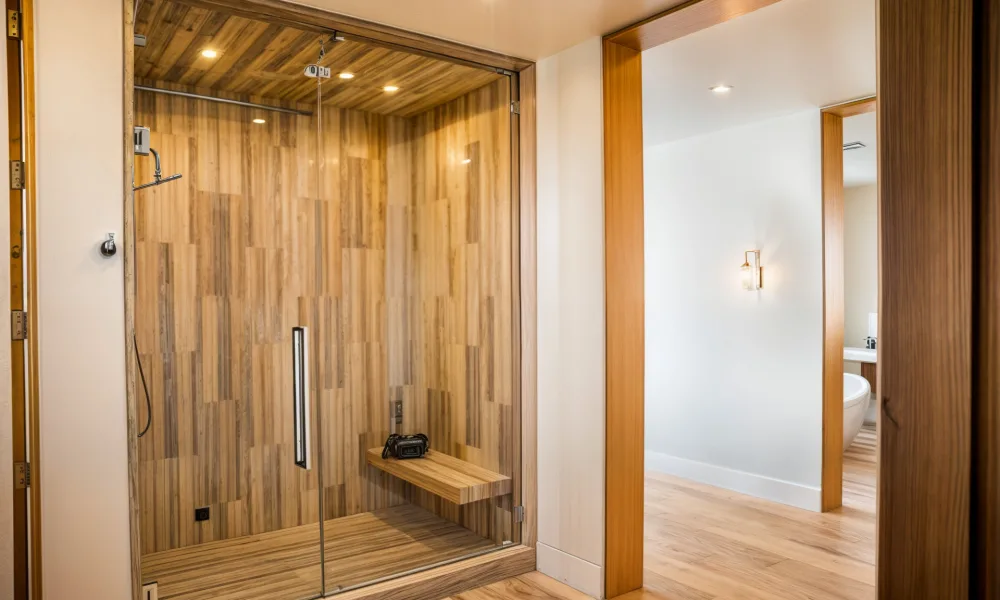
Spaces near windows react first to March weather changes. As outdoor temperatures shift throughout the day, sunlight, glass exposure, and frame materials can influence how quickly heat enters or leaves the room.

March Weather Swings. Why Your Favorite Spot Always Feels It First

Home / Archive by category "Design & Living"

You wake up to a cold floor and a room that feels a little biting. By midday, sunlight hits the glass and your favorite spot feels warmer than it should. Then the sun drops, the temperature falls off fast, and you’re back to hoodie mode.

March has a talent for making a home or building feel undecided.

In many regions, early spring can bring temperature swings of 20°F or more within a single day, which makes indoor spaces react faster than expected.

So, you might even find yourself cracking windows open, then closing them an hour later, just to keep the temperature from drifting.

And if it seems like one area reacts more than the rest, you’re not imagining it. That’s usually where sun, shade, and the perimeter are doing the most work.

Why March Feels So Variable Near Glass

Mornings start cold and slow. Midday conditions can flip quickly, especially on the perimeter. By evening, the room can feel like it’s recalibrating again.

And your HVAC can’t predict this zigzag. It can only respond.

So, comfort becomes less about the thermostat number and more about how quickly one area gains heat, loses heat, or feels different the moment you step closer to the perimeter.

Why One Room Can Feel Like Two

Most March discomfort isn’t across the whole room. It’s along the edges. That’s where you’ll notice things like:

  • A couch corner that feels colder than the center
  • A sunny patch that flips from pleasant to distracting
  • An entry area that feels fine until the weather changes again

Those are the “high-impact variables” in real life. Small, specific spots that swing first, even when the rest of the room feels mostly normal.

March just makes those contrasts easier to notice.

The Window Factor Behind March Swings

When outdoor conditions change hour to hour, the areas near windows and frames often feel it first.

One non-technical factor matters a lot here: how easily heat moves through the frame.

A thermally broken window is designed to slow that heat transfer by separating the inside and outside portions of the frame with a non-conductive barrier.

This type of design helps reduce what architects call thermal bridging, which is when heat quickly travels through conductive materials like aluminum.

Many modern aluminum window systems use thermally broken frames to make indoor spaces feel less reactive during fast temperature shifts.

Early spring temperature swings can cause indoor comfort to change quickly near windows. Sunlight warming the glass during the day and cooler outdoor air at night often make perimeter areas of a room feel colder in the morning and warmer by the afternoon.

Three Small Tweaks That Help Fast

No overhaul needed. The win is smoothing out the swings, not chasing perfect. March comfort usually improves with steady, low-key adjustments, not constant thermostat whiplash.

1) Treat Sunlight Like a Dimmer Switch

If afternoon sun is heating one side of the room fast, don’t wait until it feels unbearable.

Close window shades partway before the brightest stretch. Open them again once the sun shifts. You’re reducing the spike, not blocking daylight all day.

If glare is part of your March annoyance, notice when it hits. Morning glare and late-day glare usually call for different shade timing.

2) Pick One “Open Window” Plan and Stick With It

In March, people often flip settings constantly and wonder why the room feels inconsistent.

So, for one week, keep it simple. If you like fresh air, crack windows open the same way at the same time of day. If you don’t, keep them closed and let the HVAC do the work.

The goal is consistency, so the room stops feeling like it’s changing personalities every hour.

3) Don’t Force the Problem Areas to Be Your Main Areas

If one seat or work spot feels noticeably colder or warmer than everything else, don’t treat that as a flaw in the whole room.

Try moving the chair, desk, or small table a bit. Even a short shift can change how your body reads the space.

And if the “cold spot” is always near the same window wall, that’s useful information. It may point to what designers often call a cold wall effect, rather than a whole-house issue.

Thinking About Window Upgrades?

If you’re planning upgrades this spring, March is often when people start noticing how much their windows influence indoor comfort.

Insulated glass units (IGUs), for example, are designed to slow down rapid temperature changes by adding an extra layer of insulation between interior and exterior environments.

Double-glazed units with tempered glass are commonly used in modern aluminum window systems because they help stabilize indoor temperatures while maintaining durability and safety.

For projects that require additional protection, windows can also be manufactured with impact-resistant or anti-intrusion glass, depending on the needs of the building.

If March has you constantly adjusting shades, airflow, and seating spots, it may simply be a sign that your windows are working harder than they should.

And in many cases, improving glazing performance can help create a more stable and comfortable indoor environment throughout the changing seasons.