Loading

How to Reinforce Your Windows Against Burglars

How to Reinforce Your Windows Against Burglars: Keep Thieves Out!

Home / Archive by category "BLOG"

In an era of rising awareness about property crime, securing windows (the most common entry point for intruders) is important for both homeowners and business owners. Whether you’re upgrading your window security film, installing antitheft locks, or adding smart glass break sensors, protecting these vulnerable spots can protect your valuables and give you peace of mind. 

Property crime remains a serious concern. According to recent data, a burglary occurs every 51 seconds in the U.S., with approximately 842,000 reported cases in 2023 . Even more alarming, studies estimate that 75% of homes will experience a burglary within the next 20 years. For businesses, the figures are equally sobering: over 455,000 non-residential break-ins were reported in the U.S. last year. 

For this reason, part of the annual budget of families and businesses should be allocated to the security of such vulnerable points as windows. Here are some tips for all budgets. 

One of the biggest security problems in the U.S. is home burglaries, which can break through doors and windows.

Burglary: One of America’s Hidden Problems 

While overall crime rates may be trending downward, burglary remains a costly and invasive threat across the U.S. In 2018 alone, burglary victims suffered over $3.4 billion in property losses, with an average loss per incident nearing $2,800. 

Most of these break-ins occur in residential settings. So, homes are the primary target, although commercial properties are far from being immune. Forced entry remains the most common method, followed by unauthorized access without damage, and a smaller percentage involving failed attempts.  

In total, burglaries account for a significant portion of all property crimes in the U.S.– which highlights just how exposed many properties still are. 

Common Window Vulnerabilities 

Windows are one of the most attractive targets for burglars, and not just because of broken locks or open frames. Many break-ins happen because of small oversights or outdated installations that leave a property exposed. 

Here are some of the most common weak points burglars look for: 

  • Standard Latches: Most stock window locks offer minimal resistance and can be easily forced open with a crowbar or even a screwdriver. 
  • Unsecured Sliding Windows: These are particularly vulnerable due to weak tracks and limited locking mechanisms. 
  • Single-Pane Glass: Older windows with single-pane glass shatter easily, providing little to no deterrent. 
  • Lack of Visibility or Lighting: Poorly lit areas around windows, especially inside or back entrances, make it easier for intruders to act unnoticed. 
  • Windows Left Open or Ajar: Even slightly open windows can be an invitation for break-ins — especially during hot weather or overnight. 
  • No Alarm Sensors or Surveillance: A window without a contact sensor, motion detector, or visible camera is a soft spot in your security perimeter.  

How to Secure Your Windows from Burglars 

Once you understand the vulnerabilities, it’s time to reinforce your windows with solutions that actually work, not just deter. Below are the most effective ways to secure residential and commercial windows from burglars and drastically reduce the risk of break-ins. 

Install Impact-Resistant Glass 

One of the most effective upgrades you can make is replacing standard window panes with impact-resistant glass. This type of glass is engineered to withstand strong physical force, including strikes from blunt objects, thrown projectiles, or attempted forced entry. Even if it cracks, it typically stays intact within its frame, making it extremely difficult for burglars to breach. 

Often used in hurricane zones, shatter-resistant or laminated glass is now becoming a popular choice for urban homes and businesses. This provides both security and durability without compromising aesthetics. 

Use Window Security Film 

For a more affordable, but still highly effective layer of protection, consider applying window security film. This transparent film reinforces your existing glass and makes it harder to shatter or break apart on impact. It’s also a great option for storefronts or glass doors, where full window replacement might not be feasible. 

Add Reinforced Locks and Anti-Lift Devices 

Replace weak latches with heavy-duty window locks or keyed locking mechanisms. For sliding windows, installing anti-lift devices or pin locks can prevent intruders from simply lifting the panel off its track. 

Install Smart Window Sensors and Alarms 

Modern window contact sensors, glass break detectors, and even motion-activated lights can alert you, or law enforcement, the moment someone tries to tamper with your windows. These devices are affordable, easy to install, and compatible with most home security systems. 

Use Window Bars or Decorative Grilles for High-Risk Areas 

In neighborhoods or commercial districts with high break-in rates, adding security bars or custom grilles can serve as a strong visual deterrent and physical barrier. This is especially true for ground-floor windows or back entrances. 

If burglars can't open the locks because you have some security locks installed, then they will try to break the glass, so Impact-Resistant Glass is one of the best options today.

More Tips to Deter Burglars

In addition to techniques to reinforce your window or glass, you can start with these useful tips: 

Discourage Intruders with Visible Deterrents and Tech 

  • Exterior Lighting: Bright motion-activated floodlights around windows discourage night-time attempts and increase surveillance footage clarity. 
  • Security Cameras: Place visible cameras with motion sensors near entry points to both deter and record any suspicious activity. 
  • Alarms and Sensors: Equip your windows with glass break sensors, window contact alarms, or smart home integrations for instant alerts during an attempted intrusion. 
  • Window Well Covers: For homes with basement windows, install secure well covers to block access from below ground level. 
  • Natural Deterrents: Plant thorny shrubs like rose bushes under accessible windows to create a low-maintenance physical barrier. 

Maintain Visibility and Appearance 

  • Keep Windows Clean and Well-Maintained: Well-cared-for windows signal that a home or business is regularly monitored, an easy psychological deterrent for opportunistic burglars. 
  • Trim Nearby Shrubs and Trees: Overgrown vegetation provides cover for intruders. Keep the area around windows clear and open to maximize natural surveillance. 

👉  You may also be interested in reading: How Do We Protect Our Home or Business from Looters, Rioters or Burglaries? 

Windows are more than architectural features. They’re access points that demand the same level of security as doors. Whether you’re securing your home or business, reinforcing your windows is not just a precaution, it’s a proactive step toward full protection. 

Among the many options available, impact-resistant glass stands out as the most effective and long-term solution. At PRL Glass & Aluminum, we specialize in providing high-performance glazing solutions that combine security, design, and durability. Our impact-resistant windows are engineered to withstand forced entry while maintaining a sleek, modern look. 

For maximum protection, pair reinforced glass with our signature Battle doors. These aluminum-framed, security-grade doors are designed to resist both physical impact and environmental threats. Together, they form a complete system that transforms your property into a fortified, yet elegant, space. 

Hurricane-prone and coastal developments require aluminum and glass door systems designed to withstand repeated pressure cycles, impact forces, and water infiltration beyond everyday conditions.

How Aluminum and Glass Doors Perform in Hurricanes and Extreme Conditions

Home / Archive by category "BLOG"

Aluminum and glass door systems have become a significant architectural element in the United States. Their ability to integrate natural light, expansive views, and a clean, modern design has positioned them as a common solution in high-end residential properties as well as urban and coastal developments.

However, when these systems are exposed to extreme conditions (such as hurricanes, high-pressure winds, debris impact, and even deliberate acts of intrusion) their performance goes far beyond aesthetics. In these scenarios, the structural behavior of the entire assembly (glass, frame, anchoring systems, and seals) becomes a critical factor in maintaining building safety and structural integrity.

During severe weather events, glass doors do not fail solely due to glass breakage. Pressure differentials, wind suction, water infiltration, and the impact of airborne objects can compromise the entire system if it has not been engineered to withstand these forces. For this reason, understanding how aluminum and glass doors respond to extreme conditions is essential when evaluating which solutions are truly suitable for high-risk environments.

In this article, we examine how factors such as impact resistance, glass composition, aluminum frame rigidity, and integration within the building envelope influence real-world performance, offering a clear perspective on how these systems behave in hurricanes and other extreme conditions.

Aluminum and glass doors are often one of the most exposed components during hurricanes, where wind pressure, debris impact, and system anchoring determine whether the building envelope remains intact.

Why Aluminum and Glass Doors Are Subject to the Highest Demands in Extreme Environments

Aluminum and glass doors are often located in the most critical areas of a building: primary façades, terrace and patio access points, balconies, or transitional zones between interior and exterior spaces. This direct exposure makes them one of the most highly stressed components when a building is subjected to extreme conditions, both climatic and urban.

In regions prone to hurricanes or severe storms, these doors are exposed to significantly higher wind loads than other building enclosures. Unlike solid walls, glass is a transparent material that becomes structurally vulnerable if it is not properly specified.

Intense gusts generate alternating positive and negative pressure, subjecting the entire system to repeated stress cycles that test the strength of the glass, the rigidity of the aluminum frame, and the quality of the anchoring.

Beyond wind forces, the impact of airborne debris represents one of the most severe risks. Objects such as tree branches, roof fragments, outdoor furniture, or urban signage can become high-velocity projectiles.

In these scenarios, it is not enough for the glass alone to be resistant; the system must be capable of absorbing energy, maintaining enclosure integrity, and preventing sudden building openings.

Aluminum and glass doors are also more exposed to intentional impacts, vandalism, or forced intrusion attempts. Large glazed surfaces, visible access points, and strategic locations increase the likelihood of concentrated loads at specific points within the system, requiring solutions with higher structural capacity and controlled failure behavior.

For these reasons, aluminum and glass doors are considered a critical component of a building’s performance under extreme conditions. Their design, specification, and integration affect not only aesthetics and daily functionality, but also the building’s ability to withstand high-energy events without compromising safety or the overall performance of the architectural building envelope.

👉  You may also be interested in reading: how do we Protect our Home or Business from Looters, Rioters or Burglaries? 

How Extreme Weather Affects Glass Door Systems

Extreme weather events impose multiple types of loads on aluminum and glass door systems. Unlike moderate climatic conditions, where impacts tend to be isolated or progressive, hurricanes and severe storms combine simultaneous forces acting on the glass, the frame, and the interface with the building’s structural system.

Understanding these mechanisms is essential to properly evaluate real-world system performance.

Wind Pressure and Suction Forces

During a hurricane or high-intensity storm, wind does not act uniformly. Gusts generate positive pressure when they strike the glass surface directly, and negative pressure or suction as airflow shifts direction or moves around the building.

This alternating effect subjects doors to repeated load and release cycles, which can lead to deformation, structural fatigue, or anchorage failures.

In large-format glass doors, these forces are amplified due to the increased exposed surface area. If the aluminum frame lacks sufficient rigidity, or if the system has not been properly anchored to the structure, wind pressure can cause excessive displacement, compromising overall stability and increasing the risk of breakage or detachment.

Flying Debris and Impact Loads

One of the most critical factors during extreme events is the impact of windborne debris. Tree branches, roof fragments, outdoor furniture, or urban elements can become high-velocity projectiles capable of concentrating significant energy on a small area of the system.

In these scenarios, performance depends not only on glass strength, but on the ability of the entire assembly to absorb and distribute impact energy. Glass not designed for impact resistance may fracture immediately, while reinforced systems aim to maintain enclosure integrity, preventing sudden openings that could expose the building interior to further structural damage.

Water Infiltration and System Failure

Wind-driven rain presents another major risk to aluminum and glass door systems. Under extreme conditions, water does not fall only vertically but is forced horizontally against joints, seals, and tracks. If these components are not designed to withstand sustained pressure, water infiltration, material degradation, and functional system failures can occur.

Additionally, water accumulation combined with wind pressure can affect track performance, cause unintended movement, or even contribute to partial system failure. For this reason, glass doors must be understood as an integral part of the building envelope, where continuity between glass, framing, seals, and structural connections is essential to control air, water, and energy under extreme conditions.

Laminated Glass vs Impact-Resistant Glass: What’s the Difference?

Although often used interchangeably, laminated glass and impact-resistant glass do not serve the same purpose nor provide the same level of performance under extreme conditions. Understanding this distinction is essential when specifying aluminum and glass doors in areas exposed to hurricanes, impacts, or high-energy events.

Laminated Glass: Retention and Fragmentation Control

Laminated glass is composed of two or more glass layers bonded together by an interlayer, typically made of PVB or similar materials. Its primary function is glass retention in the event of breakage.

When the glass fractures, the fragments adhere to the interlayer, reducing the risk of dangerous debris and allowing the enclosure to remain partially intact.

This type of glass is widely used to enhance passive safety, acoustic control, and protection against minor or accidental impacts. However, while laminated glass offers a significant advantage over conventional tempered glass, not all laminated systems are designed to withstand high-energy impacts or extreme wind loads.

Impact-Resistant Glass: Certified System Performance

Impact-resistant glass goes a step further. It is not defined solely by the type of glass, but by the proven performance of the entire system, glass, interlayers, framing, anchoring, and seals working together.

These systems are engineered to resist severe impacts, such as windborne debris during high-speed storms, and to continue withstanding pressure and suction loads after impact. The objective is not only to prevent initial breakage, but to maintain enclosure integrity even after exposure to extreme forces.

Unlike standard laminated glass, impact-resistant systems are specified based on their behavior under repeated stress, controlled deformation, and continuity of the building envelope, making them a suitable solution for high-risk environments.

Beyond the Glass: Performance Under Impact and Pressure Loads

A key distinction between these concepts is that laminated glass primarily describes a material composition, while impact-resistant glass refers to a performance-based criterion.

Under extreme conditions, the outcome is determined not only by the glass itself, but by how the entire system responds to impacts, wind loads, and subsequent pressure cycles.

For this reason, when evaluating aluminum and glass doors for environments exposed to hurricanes or extreme events, it is critical to assess the system as a whole rather than assuming that any laminated glass solution provides the same level of protection as a system specifically designed and validated for impact resistance.

In extreme weather events, door failures rarely depend on glass alone; frame rigidity, anchoring, and system integration play a decisive role in overall structural performance.

The Role of Aluminum Frames in Structural Performance

In glass door systems exposed to extreme conditions, the frame plays a structural role that is just as critical as the glass itself. Beyond serving as a support or aesthetic element, the frame is responsible for transferring loads, controlling deformation, and maintaining system stability under wind forces, impact loads, and sustained pressure.

Why Aluminum (Compared to Other Materials)

Aluminum is one of the most widely used materials in high-performance door systems due to its balance of strength, rigidity, and durability. Unlike more flexible materials such as vinyl, aluminum maintains its shape under high loads, which is essential when a system is subjected to constant pressure or repeated stress.

Under extreme conditions, frames with low rigidity may deform, lose alignment, or compromise system sealing. Properly designed and reinforced aluminum frames offer a greater capacity to resist these forces without affecting functionality or the integrity of the enclosure.

Structural Reinforcement and Deformation Control

Not all aluminum frames deliver the same level of performance. In high-risk applications, frames often incorporate internal reinforcements, thicker sections, or geometries designed to increase structural inertia.

These reinforcements help control deflection under wind loads and reduce the likelihood of progressive failure. A frame that maintains its rigidity allows the glass to perform within its design limits, preventing stress concentrations that could lead to breakage or detachment.

Anchoring to the Building Structure

Frame performance depends not only on design, but also on how the system is integrated and anchored to the building structure. Insufficient, poorly distributed, or incompatible anchoring can become a critical weakness under extreme loads.

During high-energy events, forces are transferred from the glass to the frame and then into the structure. If this load path is not continuous and controlled, excessive movement, partial detachment, or localized failures may occur, compromising the entire enclosure.

Frame and Track Failures Under Extreme Conditions

In severe scenarios, failures do not always originate in the glass. Frames and tracks may deform, separate from the structure, or lose load-bearing capacity when they are not designed to withstand combined wind, impact, and water loads.

These failures can result in unintended openings, loss of weather tightness, or partial system collapse. For this reason, analyzing the frame and its components must be an integral part of evaluating the performance of aluminum and glass doors in environments exposed to extreme conditions.

Designing for High-Risk Urban and Coastal Environments

Dense urban settings and coastal zones present very specific exposure conditions for aluminum and glass door systems. In these environments, system performance depends not only on individual strength, but on how it responds to variables such as visibility, scale, location, and the building’s use within its immediate context.

Visibility and Direct Exposure

In urban and commercial areas, glass doors are often part of highly visible façades. This constant exposure increases the likelihood of direct loads, whether from wind, accidental impact, intentional actions, or even prolonged solar exposure. While visibility is desirable from an architectural standpoint, it places greater demands on the system, which must maintain its integrity without relying solely on additional protective barriers.

Designing for high visibility requires considering not only the glass itself, but also frame continuity, support points, and the way the system absorbs and redistributes concentrated loads, as discussed in the sections above.

Large Glazed Spans

Contemporary architectural trends favor the use of large-format glass panels, particularly in high-end residences, hotels, and coastal developments. However, as exposed surface area increases, so do wind loads, pressure, and suction forces acting on the system.

In these cases, design must focus on controlling deflection, limiting excessive movement, and ensuring that both the glass and the frame operate within safe structural parameters. Systems not engineered for these dimensions may experience progressive failure under extreme conditions.

Ground-Level Exposure

Doors located at street level or on lower floors are subject to additional risks. Beyond direct wind and rain loads, these areas experience higher levels of accidental impact, hydrostatic pressure during flooding events, and increased structural demands during severe conditions.

This exposure is further intensified by the combination of wind, saltwater, and sand in coastal environments—factors that can accelerate component wear if materials and finishes are not properly specified for these conditions.

Mixed-Use Buildings

In mixed-use developments (where residential, commercial, and public spaces coexist) aluminum and glass doors must fulfill multiple functions simultaneously. They are expected to provide visual openness, structural resistance, and enclosure continuity within a single system.

These buildings often exhibit more complex load patterns, driven by variations in height, occupancy, and circulation. As a result, door design in these contexts must account not only for individual system performance, but also for its integration within an architectural envelope subject to variable and, in many cases, extreme demands.

General Door Security vs Extreme-Condition Performance

Although these concepts are related, general door security and performance under extreme conditions address different needs and should be evaluated separately.

Everyday security typically focuses on preventing unauthorized access through solutions such as additional locks, security bars, sensors, or mechanical reinforcements. These measures are effective for common scenarios and form part of a daily protection strategy for homes and buildings.

Performance under extreme conditions, on the other hand, focuses on how a door system responds to high-energy events, such as hurricanes, windborne debris impacts, sustained wind pressure, or severe water infiltration.

In these situations, analysis goes beyond visible security components and centers on the structural behavior of the entire assembly, glass, framing, anchoring, and its integration within the building envelope.

For everyday door security, including locks, bars and burglary prevention, see our complete guide to sliding door security.

When Standard Glass Doors Are Not Enough

In many projects, conventional aluminum and glass doors perform adequately under everyday use and moderate climate conditions. However, in high-risk environments, there are scenarios where standard solutions simply do not provide the level of performance required to protect the integrity of the building.

Areas exposed to recurring hurricanes, coastal developments facing extreme winds, urban buildings with large glazed surfaces, or critical ground-level access points require systems specifically designed to withstand high-energy events. In these cases, the approach must shift from adapting traditional solutions to specifying advanced systems from the outset.

Reinforced solutions are based on a different design logic. Rather than focusing solely on resisting an initial impact, they aim to maintain enclosure continuity under combined impact, pressure, and suction loads. This involves higher-capacity structural frames, glass engineered to absorb energy, optimized anchoring systems, and precise deformation control.

Systems such as Battle Door represent an evolution in aluminum and glass door design for extreme conditions. These systems are conceived as integrated solutions, where every component (glass, frame, internal reinforcements, and anchoring) works together to deliver superior performance against severe impacts and extreme weather events, without compromising functionality or architectural design.

When risk exceeds conventional conditions, proper specification moves beyond aesthetics or comfort and becomes a critical decision for structural performance and safety. Identifying when a standard door is no longer sufficient is the first step toward designing buildings that are more resilient in the face of extreme conditions.

Battle Door for Protesters

What’s a Battle Door and Why Will It Be Essential in 2025?

Home / Archive by category "BLOG"

Today’s world is marked by extreme weather events and rising social tensions, which means protecting your property is no longer optional, it’s essential. Battle doors, typically made from high-strength aluminum with thermal insulation, are gaining attention for their ability to withstand hurricanes and intense storms, helping reduce the impact of climate change in vulnerable areas like the U.S. West Coast. 

But their role has evolved. Today, recent protests in cities like Los Angeles have shown that civil unrest can pose a real threat to both businesses and private homes. That’s why battle doors are emerging as the ultimate security solution for 2025 and beyond. They not only resist storm impacts but also protect against acts of vandalism, protestors, and looters. 

What’s a Battle Door? The Ideal Armored Door for Your Home 

Imagine a door that not only looks amazing but is also ready to face nearly any threat, from violent hurricanes to aggressive protestors. That’s the Battle door: a high-strength aluminum door, designed with advanced thermal technology to keep your space safe, cool, and protected. 

But it’s not just any door… it’s like having armor-level protection at your entrance. Plus, it offers: 

  • Resistance to extreme impacts (yes, even flying objects and bat strikes) 
  • Hurricane-grade durability 
  • Thermal insulation to help you save energy 

Best of all, it comes in various styles and finishes, so it matches your home or business. You can even see it in action in this demo video 👇 

Benefits of Having a Battle Door 

Investing in a Battle door isn’t just about aesthetics or modern design, it’s a strategic decision to protect what matters most. Here’s why: 

🌪️ 1. Protection from Hurricanes and Severe Storms 

Thanks to its reinforced aluminum frame and thermal insulation, this door is certified to withstand high-level impacts, such as those caused by hurricane winds and flying debris. 

  • That makes it ideal for natural disaster-prone areas. 

🔥 2. Security During Social Unrest 

Recent protests in cities like Los Angeles have shown how easily homes and businesses can become targets of vandalism. A Battle door withstands forceful entry attempts and aggressive impacts, becoming your first line of defense. 

❄️ 3. Year-Round Energy Efficiency 

With its thermally broken system, the Battle door helps maintain a stable indoor temperature, leading to lower energy consumption and greater comfort. 

🎯 4. Versatility and Customization 

Yes, it has style too. It’s available in multiple finishes (like dark bronze anodized or Kynar paints) and in several configurations (single or double doors, inswing or outswing) to perfectly match your space’s aesthetics. 

🔒 5. Like Having a Silent Guard 

The Battle Door works 24/7 without drawing attention. It doesn’t require constant maintenance, resists rust, and is built to last for years without losing performance or appearance. 

Technical Features That Make the Battle Door a Fortress 

Behind its sleek design, the Battle door is powered by high-level engineering. Every component plays a critical role in delivering security, energy efficiency, and durability. Here’s what makes it stand out: 

Thermally Broken Aluminum 

Its frame is made from thermally broken aluminum using a polyamide strut, which helps reduce heat transfer between the outside and inside. 

  • Result: Less heat in summer, better insulation in winter. 

Certified Impact & Hurricane Resistance 

It complies with ASTM E1996-17 and ASTM E1886-19, which test the door’s resistance to windborne debris and hurricane-like pressures. 

👉 Includes Missile D impact rating and can withstand pressures up to 35.0 PSF. 

Thermal Efficiency (Low U-Factor) 

Depending on the glass type, the U-Factor (thermal insulation value) ranges between 0.55 and 0.57, making it ideal for energy-conscious property owners. 

Multiple Configuration Options 

  • Opening: Inswing or outswing 
  • Types: Single or double door 
  • Mounting Styles: Gear hinge (water-resistant) or center pivot (modern design) 

Wide Range of Stiles and Rails 

Choose from narrow, medium, or wide stiles, plus various top and bottom rails to match your architectural style. 

Customizable Finishes 

Available in: 

  • Dark bronze anodized 
  • Clear anodized 
  • Kynar paints 
  • Powder coats 
In addition to vandalizing, battle doors are an excellent option for hurricane protection.

Battle Door vs. Traditional Doors: Which Offers Better Protection? 

Even though both may be aluminum, Battle doors are far more advanced in terms of features and safety: 

Feature 

Battle Door (PRL) 

Traditional Aluminum or Wood Door 

Impact & Vandalism Resistance 

High (ASTM certified, withstands storms and unrest) 

Low to medium (not certified, easily damaged) 

Thermal Insulation (U-Factor) 

Excellent (0.55–0.57 via thermal strut) 

Limited or none (high thermal conductivity) 

Energy Efficiency 

Year-round climate savings 

May increase energy usage 

Custom Configuration Options 

Wide range (single/double, inswing/outswing) 

Limited, depends on provider 

Premium Aesthetic Finishes 

Anodized, Kynar, powder coat, modern styles 

⚠️ Often basic or limited options 

Hurricane Certification 

Yes (ASTM E1996-17, E1886-19, Missile D) 

Not applicable 

Long-Term Durability 

Very high, low maintenance 

⚠️ Moderate, needs upkeep (especially wood) 

Urban Risk & Security Applications 

Ideal for homes, shops, and commercial spaces 

Vulnerable to vandalism and looting 

In 2025, we require more than just good looks. We need real security, energy efficiency, and adaptability. Whether you’re facing increasingly unpredictable weather or living in a city with high social activity, our Battle door is your best ally. 

It’s not just a door, it’s a shield for your space, your investment, and your peace of mind. 

And the best part? You can get your Battle doors directly from PRL Glass, experts in high-performance architectural solutions. From custom finishes to expert support, our team is ready to help you upgrade the protection of your home or business. 

Don’t wait for the next threat. Use anti-theft laminated glass and PRL’s Battle Door to shield your home or store from violent attacks.

How do we Protect our Home or Business from Looters, Rioters or Burglaries?

Home / Archive by category "BLOG"

Home security is no longer just about locking the front door. It’s about being proactive, strategic, and prepared for any scenario. Whether you live in a peaceful neighborhood or an area more exposed to social tension, knowing how to protect your home is essential for your family’s safety and peace of mind.

Recent years have shown us how quickly order can break down during public demonstrations, blackouts, or emergencies. Looters and rioters often target homes and businesses they perceive as vulnerable. Meanwhile, burglaries remain a constant threat, often occurring when least expected. The good news? There are proven, practical steps you can take to deter these intrusions and strengthen your home’s defenses.

This guide will walk you through the most effective strategies, from structural reinforcements to digital monitoring, to help you turn your home into a secure, resilient space no matter what happens outside.

Theft and disruption due to demonstrations are two of the major problems facing businesses and homes.

Rising Threats: Home Invasions Amid Civil Unrest in 2025

Home invasions are no longer isolated incidents. In recent years, and especially throughout 2025, we’ve seen a clear rise in residential attacks coinciding with moments of civil tension.

One of the most visible examples took place during the protests in Los Angeles earlier this year, where what began as peaceful demonstrations escalated into city-wide unrest. Several neighborhoods reported property damage, forced entries, and looting, not just of commercial spaces, but of private homes.

According to local authorities, over 120 cases of residential break-ins were reported during the peak of the LA protests, many of them concentrated in high-density urban areas but also reaching suburban homes. In some instances, organized groups targeted homes perceived as vulnerable, taking advantage of diverted police presence and public chaos.

This surge in criminal activity during unrest highlights a sobering reality: your home may become a target not only for burglars, but also for opportunistic rioters or looters when public order is compromised. This makes it more important than ever to assess your current security measures and implement layers of protection designed for both everyday safety and emergency scenarios.

Protecting your home or business: small details make a difference

When it comes to securing your home or business, it’s easy to focus on big-ticket items like alarm systems or surveillance cameras (and while those are important), it’s often the smaller, overlooked details that make the difference between vulnerability and true protection.

Criminals, especially during chaotic events like riots or coordinated burglaries, tend to look for easy targets. A weak door frame, an unlocked window, poor lighting, or even a predictable daily routine can be all it takes for them to strike. That’s why a layered security approach that addresses both major and minor entry points is crucial. Strengthening your perimeter with intentional, practical adjustments can buy you precious time and even deter an intruder altogether.

In the next section, we’ll break down specific, high-impact recommendations, from securing your doors and windows to rethinking visibility, motion detection, and emergency access protocols, designed to elevate your safety without requiring a complete overhaul.

🔐 1. Secure All Entry Points

The first and most critical step in protecting your home or business is reinforcing all potential entry points, especially doors and windows, which are often the weakest links in your perimeter.

  • Reinforced Doors and Windows: Upgrade to solid-core doors with heavy-duty deadbolts and reinforce the strike plates with longer screws and metal backings. For windows, avoid standard single-pane glass and opt instead for impact resistant glass or anti-theft glass, which are designed to withstand forced entry attempts. You can also apply protective glass films that make it significantly harder to shatter or break through the surface.
  • Smart Locks: Add an extra layer of control with smart deadbolts. These allow for remote locking and unlocking via your smartphone, and many models send instant notifications when a door is accessed—perfect for monitoring entry points in real time.
  • Security Bars or Shutters: For properties in high-risk areas or commercial zones, rolling shutters and steel window bars provide added physical resistance. They can act as a strong deterrent against break-ins and are especially useful when the property is vacant or during periods of civil unrest.

🎥 2. Invest in a Reliable Security System

A robust security system isn’t just a luxury, it’s one of the most effective deterrents against looters, burglars, or violent break-ins. Especially in areas that have recently experienced unrest, like parts of Los Angeles in 2025, having eyes on your property 24/7 and a system that can trigger real-time alerts is essential.

  • Add a Battle Door for Critical Entry Points: For those looking for maximum physical defense, consider installing a Battle Door at your most vulnerable entries. These doors, originally designed to withstand extreme impact (like a hurricane),are engineered with layered protective glass, steel cores, and anti-theft locking systems. Whether it’s a forced entry with tools, a riot scenario, or an attempted ram, the Battle Door holds its ground. Its industrial-grade construction makes it ideal for front doors, garage entry points, or any access area facing the street.
  • 24/7 Surveillance Cameras: Strategically install high-definition cameras with night vision and motion detection at all key access points. Exterior-facing units should cover driveways, doors, and low windows. Look for systems that allow remote viewing and cloud storage for incident review.
  • Monitored Alarm System: Choose a professionally monitored system that notifies local law enforcement or a private security firm immediately when triggered. The faster the response, the lower the risk of major damage or loss.
  • Smart Sensors: Install glass-break detectors, entry sensors, and even motion sensors within your home or business. These can detect unauthorized activity and sound alerts before intruders make it far.

💡 3. Use Lighting and Visibility as a Deterrent

Criminals seek opportunities where they can act unseen: dark corners, blind spots, or homes that appear unoccupied. That’s why proper lighting and visibility are crucial elements in any effective security plan.

  • Motion-Activated Lighting: Install outdoor lights with motion sensors around all entry points, especially front doors, backyards, side alleys, and garage areas.
  • Strategic Placement of Lights: Use lighting not just on walls, but also on pathways, driveways, fences, and rooftop perimeters.
  • Landscape Management: Keep trees and bushes trimmed, especially near windows and doors.
  • Visible Cameras and Signage: Sometimes, the mere appearance of a well-defended property is enough to prevent an attack.
  • Keep Your Property Lived-In: A dark or silent property is an open invitation. Use smart lights with timers or app-based controls to simulate presence while away.

🧳 4. Protect Valuables Inside the Home

Even if an intruder gets in, you can minimize losses by securing your most valuable possessions:

  • Hidden safes: Use wall-mounted or floor-anchored safes for documents, cash, and jewelry.
  • Designated safe zones: Create a secure room or hidden storage area for high-value items.
  • Keep valuables out of sight: Especially near windows or main entry points.

🚗 5. Secure Your Garage and Vehicles

Garages and parked vehicles are often overlooked, but they’re frequent targets:

  • Reinforce garage doors: Use heavy-duty locks and consider adding smart sensors.
  • Disconnect remote openers: When leaving for extended periods, disable garage remotes.
  • Lock your car: Always lock doors, even inside your property, and never leave valuables in plain sight.
  • Use motion lights: Bright lighting deters nighttime intruders from approaching vehicles or garages.

Protecting your home or business from looters, rioters, or burglaries isn’t just about reacting, it’s about preparing. By reinforcing vulnerable points, investing in smart security systems, and practicing proactive habits, you significantly reduce your risk.

At PRL, we manufacture laminated safety glass specifically designed to resist forced entry, blunt impact, and break-ins. This anti-theft glass combines multiple layers that hold together when shattered, making it much harder to breach than standard glazing. Whether for windows, doors, or storefronts, our protective glass solutions add a critical layer of security, ideal for both residential and commercial applications.

For those requiring the highest level of protection, PRL’s Battle Door is the ultimate solution. Engineered to withstand extreme force, this door integrates impact-resistant glass, reinforced aluminum framing, and multi-point locking systems. It’s a top-tier defense barrier for homes, retail stores, or high-risk areas, offering peace of mind without sacrificing modern aesthetics.

Bifold Doors Guide: Types, Materials & Benefits

What Do You Need to Know About Bifold Doors?

Home / Archive by category "BLOG"

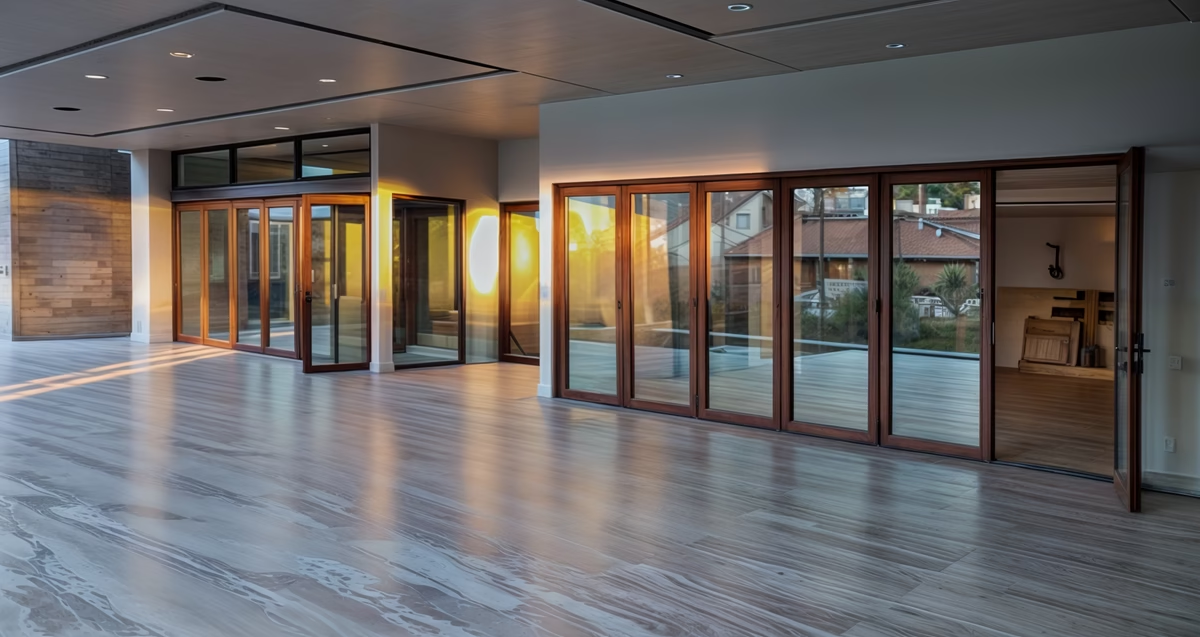
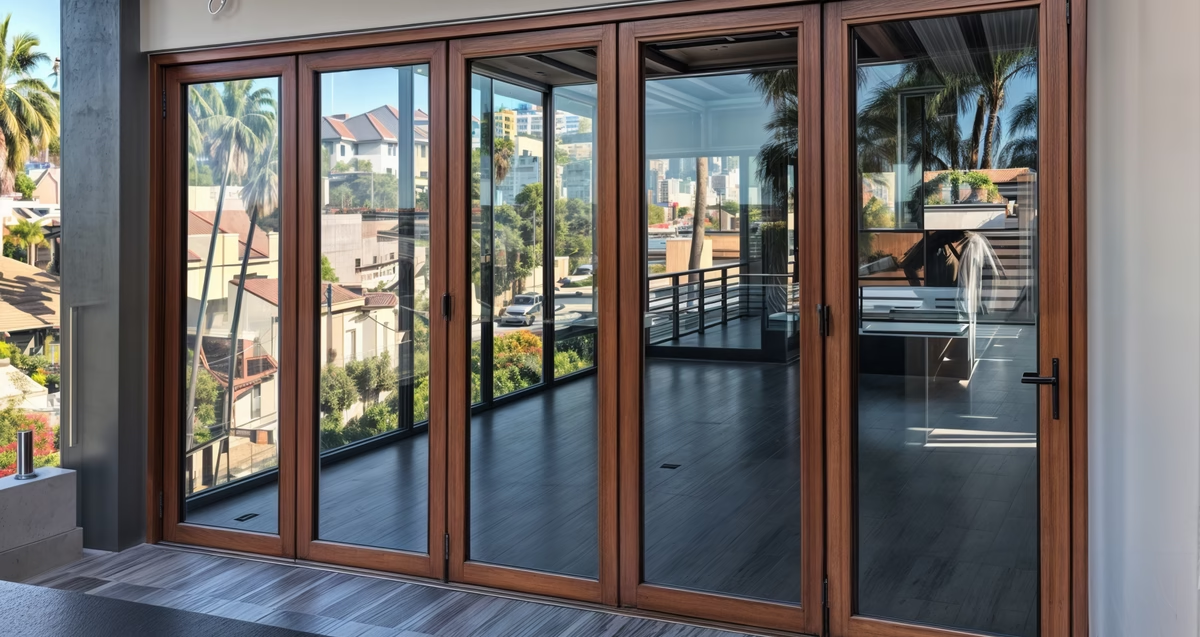
Bifold doors—also known as folding doors—have become a popular choice for homeowners and builders looking to maximize space without sacrificing design or functionality. With a panel system that folds neatly onto itself, bifold doors allow for wide, seamless openings, connecting indoor and outdoor areas, or serving as stylish interior dividers. 

In this article, we cover everything you need to know before choosing bifold doors, and how PRL Glass can help you find the ideal solution for your project. 

bifold doors can become a very good aesthetic and protective element for the home.

Thinking About Installing Bifold Doors? Here’s What You Should Know 

Bifold doors, or accordion doors, are a growing trend for those seeking to open up spaces without visual barriers. However, there are a few key considerations to keep in mind before installing them. And we break them down for you. 

  1. Types and Materials

Bifold doors can be installed both indoors and outdoors. They’re perfect for: 

  • Connecting living rooms with gardens or patios 
  • Dividing interior spaces without building permanent walls 
  • Enhancing natural light and offering a sleek, minimalist design 

These systems are made with weather-resistant, yet elegant materials. After all, they’re a visible design element of your home. Common frame materials include: 

  • Aluminum: Lightweight, durable, and modern-looking. An excellent value-for-money option 
  • Wood: Brings warmth and natural aesthetics 
  • uPVC: A budget-friendly, low-maintenance alternative 

Transparent panels are typically made from glass, although low-end systems may use plastic, which is not recommended due to reduced durability and clarity. 

At PRL Glass, we design high-performance bifold systems using tempered glass and aluminum, perfect for residential and commercial applications alike. 

  1. Space Requirements

Before choosing a bifold system, it’s crucial to evaluate your available space. Unlike sliding or standard swing doors, bifold doors require room to fold and stack. 

  • Opening Space: Panels need clearance to fold and stack along the wall without obstructions 
  • Track Length: These systems run on top, bottom, or dual tracks. Large openings may require multiple tracks 
  • Custom Sizes: At PRL, we manufacture custom bifold doors tailored to the dimensions and demands of your project 

Our team will measure and assess your space to ensure a perfect fit. 

  1. Operation and Key Features

The folding mechanism is what defines bifold doors and it’s essential to understand how it works: 

  • Opening System: Panels fold neatly to one side, saving space 
  • Handles and Locks: These must be secure, durable, and tested for long-term use 

There are two main support systems: 

  • Top-Hung Systems: These are known for smoother, more reliable performances, especially in modern designs 
  • Bottom-Rolling Systems: Weight is supported by the bottom track—suitable for specific structural needs 
  1. Security Features

A multi-point locking system and reinforced hardware are recommended—and come built into PRL’s bifold systems. 

Additionally, specialized glass can offer enhanced protection. For example, laminated or bullet-resistant glass. Or our new Battle doors, that provide added security against external threats. 

  1. Energy Efficiency

Modern bifold doors offer more than just aesthetics. They can also boost your building’s thermal performance. While most come with quality glass, high-end systems go a step further. 

One standout solution is our thermally broken system. It drastically reduces HVAC costs by keeping indoor temperatures stable and blocking excessive heat or cold for long-lasting comfort. 

  1. Installation and Maintenance

Proper installation ensures smooth operation and long-term durability: 

  • Professional Installation: Due to their complexity, bifold systems should always be installed by trained professionals 
  • Routine Maintenance: Regularly lubricate hardware, clean frames, and inspect tracks to keep everything in top shape 

Ready to Add Bifold Doors to Your Next Project? 

At PRL Glass & Aluminum, we manufacture top-tier aluminum and glass bifold doors with cutting-edge designs, outstanding durability, and versatile performance. Whether you’re working on a modern home, an open-concept office, or a commercial space, our solutions deliver the perfect blend of beauty, energy efficiency, and strength. 

We also offer thermally broken systems and our new Battle door line for added protection and performance. 

👉 Contact us today to discover how PRL’s bifold doors can transform your space. 


Benefits of Choosing Aluminum Doors for Homes

Benefits of Choosing Aluminum Doors for Homes

Home / Archive by category "BLOG"

Choosing the right doors for your home is a significant decision that affects both the aesthetics and functionality of your living space. Aluminum doors have gained immense popularity among homeowners and builders alike, thanks to their numerous benefits.

In this article, we’ll explore the advantages of using aluminum doors, particularly aluminum patio doors and aluminum door frames, and why they might be the perfect addition to your home.

Aluminum is one of the most beneficial materials for the doors of your next project.

Why choose aluminum doors for your home? These are the most important benefits

In the market you can find very good materials to make a reliable door: wood, steel or even plastic. But aluminum is a great option in places with climatic problems or for those who require more security.

These are the most important benefits of choosing this material for your next projects.

Durability and Strength

One of the most compelling reasons to choose aluminum doors is their exceptional durability and strength. Aluminum is a robust material that can withstand harsh weather conditions, making it ideal for both exterior and interior applications.

Unlike wood, which can warp or rot over time, or steel, which may rust, aluminum remains resilient and requires minimal maintenance.

Resistance to Corrosion

Aluminum doors are highly resistant to corrosion, a significant advantage for homes in coastal areas or regions with high humidity. The natural oxide layer on aluminum prevents it from rusting, ensuring that your doors remain in pristine condition for years to come.

Low Maintenance

Aluminum doors require very little upkeep compared to other materials. A simple cleaning with mild soap and water is usually sufficient to keep them looking new. This low maintenance requirement makes aluminum doors a cost-effective choice in the long run.

Versatility and Design Flexibility

Aluminum doors offer unparalleled design flexibility, allowing homeowners to choose from a wide range of styles, colors, and finishes. Whether you’re looking for sleek, modern aesthetics or a more traditional look, aluminum doors can be customized to suit your preferences.

Customizable Options

With aluminum doors, you have the freedom to personalize aspects such as the color, finish, and hardware. This level of customization ensures that your doors complement your home’s existing décor and architectural style.

Slim Profiles and Larger Glass Panels

Aluminum’s inherent strength allows for slim door profiles, which means larger glass panels can be used. This design feature not only enhances the visual appeal of your doors but also maximizes natural light, creating a brighter and more welcoming home environment.

Energy Efficiency

Energy efficiency is a critical consideration for any homeowner, and aluminum doors deliver on this front. Modern aluminum doors are designed with thermal breaks and advanced glazing options that help reduce heat transfer, contributing to better insulation and lower energy bills.

Durability, energy efficiency and thermal efficiency are some of the best benefits of aluminum doors.

Thermal Efficiency

The inclusion of thermal breaks in aluminum door frames minimizes heat loss during the winter and heat gain in the summer. This improved thermal efficiency helps maintain a comfortable indoor temperature year-round, reducing the need for excessive heating or cooling.

Eco-Friendly Material

Aluminum is a sustainable material that is 100% recyclable. Choosing aluminum doors means you’re making an environmentally responsible choice that reduces your carbon footprint. Additionally, the energy efficiency of aluminum doors contributes to lower energy consumption in your home.

Security Features

Security is a top priority for homeowners, and aluminum doors excel in providing peace of mind. Their robust construction and design can accommodate various security features to keep your home safe.

Enhanced Locking Systems

Aluminum doors can be equipped with advanced locking mechanisms, including multi-point locking systems that offer superior protection against break-ins. This added security feature makes aluminum doors an excellent choice for exterior applications, such as patio doors.

Impact Resistance

In addition to their strength, aluminum doors are highly resistant to impact, making them a reliable choice for protecting your home against potential intruders or extreme weather conditions.

Cost-Effectiveness

While aluminum doors may have a higher initial cost compared to some other materials, their long-term benefits make them a wise investment. The durability, low maintenance, and energy efficiency of aluminum doors contribute to significant cost savings over time.

Long-Term Value

The longevity and performance of aluminum doors ensure that you won’t need to replace them frequently, reducing the overall cost of ownership. Their ability to withstand the test of time means you can enjoy beautiful and functional doors for many years.

Aesthetic Appeal

Aluminum doors are known for their sleek and contemporary appearance, making them a popular choice for modern homes. Their clean lines and minimalist design can enhance the overall aesthetic of your home, adding a touch of elegance and sophistication.

Modern and Stylish

The modern appeal of aluminum doors makes them a perfect fit for contemporary homes, but they can also be adapted to complement more traditional settings. With a variety of finishes and colors available, aluminum doors can seamlessly integrate into any design scheme.

Increased Curb Appeal

By choosing aluminum doors, you can boost your home’s curb appeal, potentially increasing its market value. The attractive appearance and functionality of aluminum doors make them an appealing feature for prospective buyers.

Aluminum doors offer a multitude of benefits that make them an excellent choice for homeowners seeking durable, stylish, and energy-efficient solutions. From their remarkable strength and low maintenance requirements to their design flexibility and security features, aluminum doors are a smart investment for any home.

Whether you’re upgrading your existing doors or building a new home, consider aluminum patio doors and aluminum door frames to enhance your living space with lasting beauty and performance.