Loading

Archives March 2026

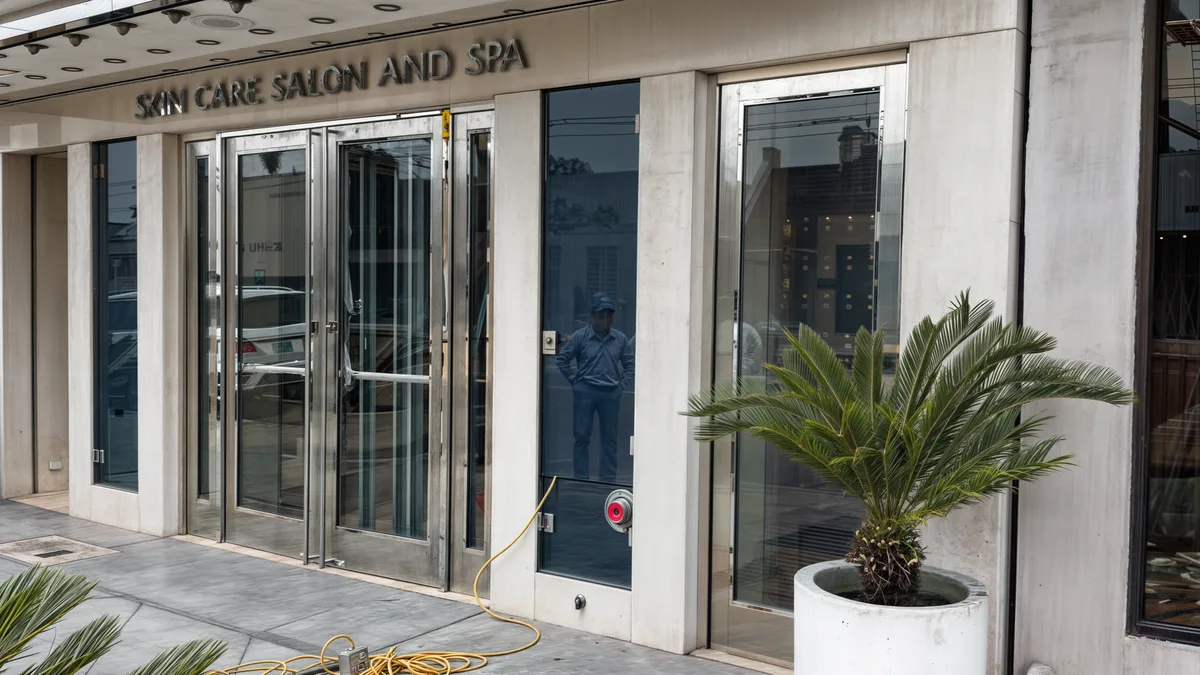
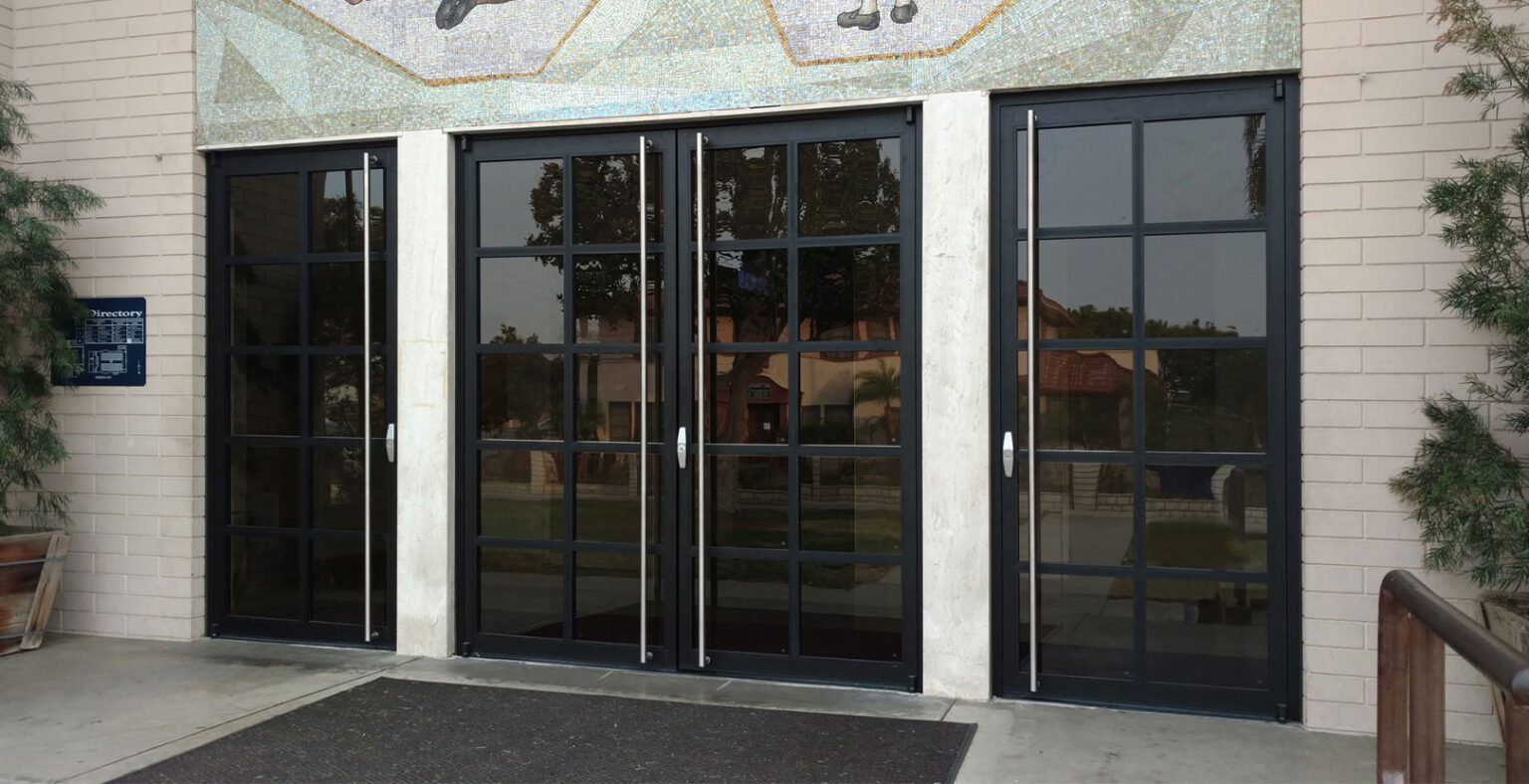
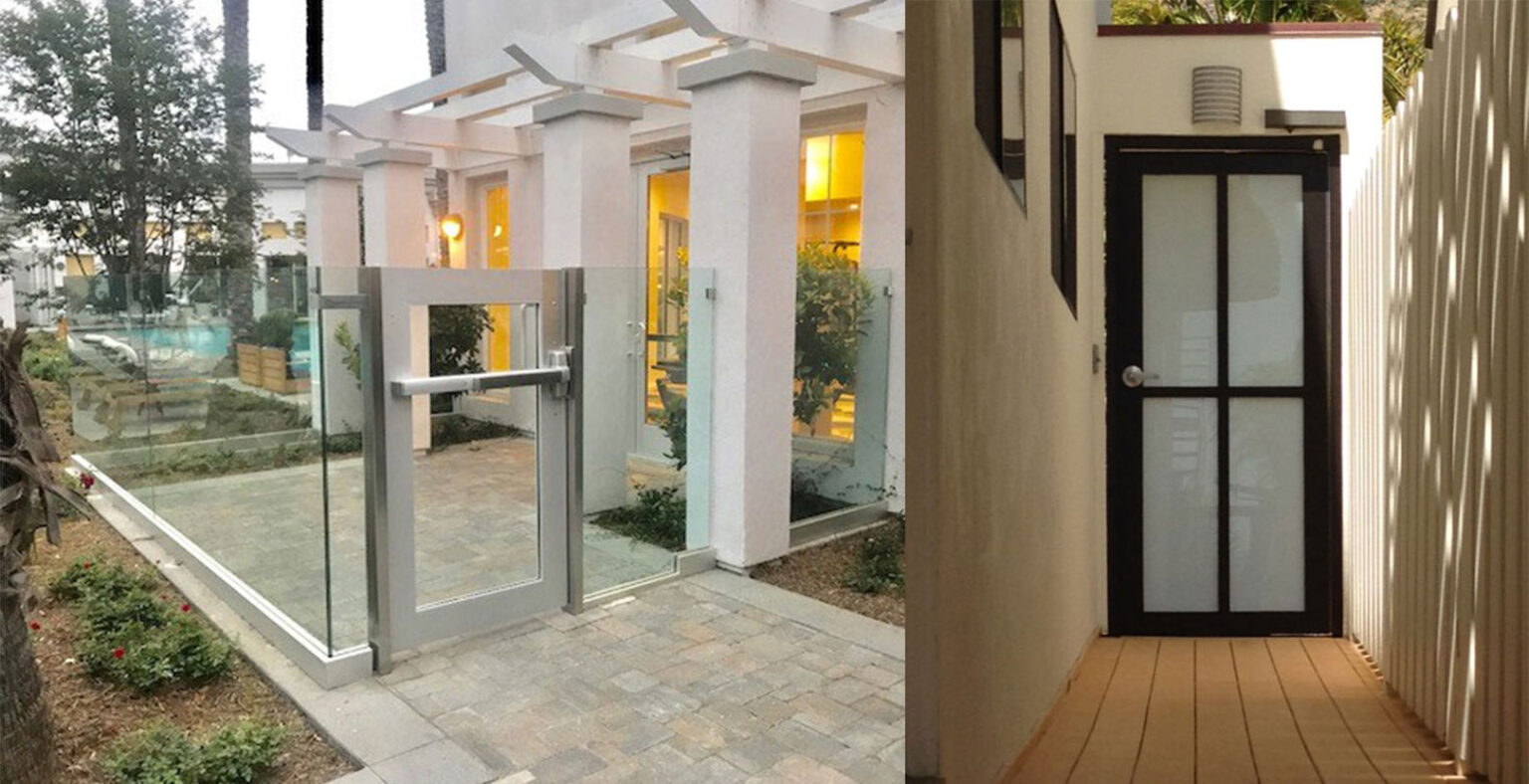
Detail of panic hardware on a glass entrance, illustrating the balance between safety, everyday functionality, and professional commercial design

What Is Panic Hardware? Uses, Types, and What You Need to Know

Home / 2026 / March

Panic hardware is designed to make exiting a door fast, simple, and reliable, especially in emergencies. Most people recognize it as the horizontal bar mounted on the inside of a commercial door that releases the latch when pushed, allowing occupants to leave quickly without keys, complicated movements, or prior knowledge of how the door works.

You’ll also see it referred to as a panic device, exit device, panic bar, or crash bar. While the terminology can vary, the core idea stays the same: it is a door hardware system built to make egress easier, safer, and more intuitive.

Beyond emergency use, panic hardware is also valued for its durability, ease of operation, and compatibility with high-traffic commercial entrances. In this guide, we’ll cover what panic hardware is, what it is used for, the main types available, and the key features worth knowing.

Panic hardware is widely used on commercial doors because it allows fast, intuitive egress while maintaining reliable day-to-day operation in high-traffic spaces.

What Is Panic Hardware?

Panic hardware is a type of door hardware that releases the latch and allows fast egress from the inside with a single push. It is commonly installed on exit doors in commercial buildings and public-facing spaces, where smooth and intuitive door operation is important for both safety and everyday use.

In most applications, it appears as a horizontal bar or push device mounted on the interior side of the door. When someone pushes the bar in the direction of egress, the door unlatches and opens without requiring a key, a turn of the wrist, or any special instruction.

Although the exact term may vary depending on the manufacturer or application, panic hardware generally refers to a system designed to make exiting quicker and easier. It is often added to doors—frequently glass doors in commercial environments—where safety, convenience, and clean operation all matter.

What Is Panic Hardware Used For?

The main purpose of panic hardware is to allow people to exit quickly from the inside when immediate door operation matters. Its design keeps the motion simple and intuitive, which is especially useful in busy spaces, stressful moments, or situations where people need to move through a door without hesitation.

Put simply, it makes egress easier on frequently used doors, especially at entrances and exits in commercial, institutional, and public-facing buildings. Because the door opens with a single push, it helps improve pedestrian flow and makes the door easier to use day after day.

Panic hardware also helps balance safety with functionality. It allows immediate exit from the inside while still being part of a more controlled access setup from the exterior, which is one reason it is so common in commercial entrances and perimeter doors.

Many projects use panic hardware not only because of emergency considerations but also because it performs well in high-traffic environments. In buildings where doors are opened constantly, ease of use, durability, and reliable operation all become part of the value.

Where Is Panic Hardware Commonly Used?

Panic hardware is commonly used on doors in buildings where traffic is constant and door operation needs to be quick, clear, and dependable. It is especially common in spaces where easy egress is part of how the entrance is expected to function, particularly in commercial and public-facing environments.

Typical applications include retail stores, restaurants, offices, hospitals, schools, hotels, and other institutional or commercial buildings. It is also frequently used at storefront entrances, exit corridors, shared areas, and doors that connect circulation zones to egress routes.

In many of these settings, panic hardware is valued not only for how quickly it allows people to exit but also for how well it fits into doors that see heavy daily use. On glass doors, for example, it can support a cleaner and more professional look without sacrificing functionality, which is especially important in commercial projects where the entrance also shapes the visual impression of the space.

Although it is especially common in high-traffic and public-facing buildings, panic hardware can also be used in other types of projects where durability, easy operation, and more intuitive interior egress are priorities.

Main Types of Panic Hardware

Although panic hardware serves the same overall purpose, not every system is built or installed the same way. Different types are used depending on the door configuration, traffic level, entrance design, and the needs of the project.

Rim Panic Devices: Rim panic devices are one of the most common options. They are surface-mounted on the door, and the latch is part of the device itself rather than installed inside the door edge. Because of their simpler setup, they are often a practical choice for single doors and applications where ease of maintenance matters.

Vertical Rod Panic Devices: Vertical rod panic devices are more commonly used on pairs of doors. In this configuration, the system operates vertical rods that secure the door at the top and bottom. Depending on the design, the rods may be visible on the surface or concealed inside the door, allowing the system to meet different functional and aesthetic needs.

Mortise Panic Devices: Mortise panic devices work together with a mortise lock installed inside the door. This type of setup is often chosen for projects that need a more integrated system or more specific hardware and security functions. While it is not always the most common option, it remains an important solution in certain commercial applications.

Touch Bar, Crossbar, and Recessed Styles: Panic hardware can also vary in the way it operates and looks. Some devices use touch bars or more discreet push bars, while others use crossbars with a more visible presence. Recessed options are also available for projects where reducing hardware projection from the surface of the door is a priority.

More than an emergency feature, panic hardware is a practical door solution for commercial projects that need durability, easy operation, and secure interior egress.

What Are the Main Characteristics of Panic Hardware?

One of the defining characteristics of panic hardware is its single-action operation. When the bar or actuating device is pushed, the latch releases immediately, allowing the door to open with minimal effort. That simplicity is one of the main reasons panic hardware is so widely used.

Another important characteristic is its flexibility across different door types and entrance configurations. Depending on the application, panic hardware can be used on single doors, pairs of doors, and access points with different security, design, and traffic requirements.

It is also known for holding up well in high-traffic environments. Because it is used on doors that open and close constantly, panic hardware is typically designed for durability, reliable operation, and long-term performance in both commercial and institutional settings.

In numerous instances, panic hardware can also be integrated with different hardware styles, locking options, and certain access control elements. That makes it useful not only for fast egress but also for the overall function of the door within the building.

Protect Your Investment: Why Is Panic Hardware Important in Commercial Spaces?

In commercial spaces, a door has to do more than open and close. It needs to work clearly, reliably, and consistently for the people using it every day. That is where panic hardware becomes especially valuable. It allows faster, more intuitive exit from the inside, which is particularly important in high-traffic entrances and areas where circulation needs to stay smooth.

Its importance also comes from the way it brings together safety, ease of use, and dependable performance. Instead of relying on a more complicated mechanism, users can operate the door with one push. That makes everyday access simpler and helps reduce friction in busy environments.

In many commercial projects, panic hardware adds value beyond egress alone. It can also be part of an entrance that needs to look professional, perform well, and stand up to frequent use. That matters in storefronts, offices, corporate buildings, hospitals, schools, and other spaces where the door plays both a practical and visual role.

Are Panic Hardware, Panic Devices, and Exit Devices the Same?

These terms are often used interchangeably when talking about door-opening systems designed for fast egress from the inside. It is common to see references to panic hardware, panic devices, exit devices, panic bars, or crash bars when describing very similar solutions.

That said, the exact wording can vary depending on the manufacturer, the market, or the technical context. Sometimes a term is used broadly, while in other cases it may refer to a more specific configuration or application.

For someone just starting to research the topic, the key point is simple: all of these names revolve around the same central function, making exit faster, more intuitive, and more secure from the interior side of the door.

Panic hardware is a door hardware solution designed to provide fast, intuitive, and secure egress from the inside, especially on commercial and high-traffic doors. Its straightforward operation, variety of configurations, and long-term durability make it an important part of how many entrance systems perform.

Understanding what panic hardware is, how it works, and what types are available is a strong first step. From there, it becomes much easier to explore more specific topics, such as when panic hardware is required, how certain devices differ, or how to choose the right option for a particular door and project.

Glass and Aluminum Manufacturers in Oak Lawn Turtle Creek

Modern Glass & Aluminum Solutions for Homes & Businesses in Oak Lawn / Turtle Creek

The Upper East Side is one of Manhattan’s most iconic residential and commercial districts, known for its historic architecture, luxury townhomes, high-end retail, art galleries, and modern apartment renovations.

In a neighborhood where design excellence and craftsmanship matter, PRL Glass & Aluminum provides premium architectural systems that elevate both residential spaces and business environments.

From sliding doors and custom handrails to boutique storefronts and curtainwall systems, PRL delivers the performance, sophistication, and precision that Upper East Side projects demand.

Building or Renovating in Oak Lawn / Turtle Creek? Connect with PRL Glass & Aluminum Today

Whether you’re developing a multifamily project, upgrading a luxury residence, or refining a boutique commercial space, PRL delivers custom fabrication, nationwide logistics, and expert technical support from California.

We proudly support projects throughout Oak Lawn, Turtle Creek, Uptown Dallas, and the greater Dallas metropolitan area.

Service 

Contact Number 

Aluminum Division 

📞 877-775-2586 

Glass Division 

📞 800-433-7044 

📍 Visit our locations in City of Industry, California and explore our wide range of innovative, high-quality aluminum and glass solutions!

Premium Glass & Aluminum Designs for Oak Lawn / Turtle Creek Homes

Homes and residential developments in this area emphasize modern layouts, natural light, and high-end finishes. PRL’s premium residential systems enhance these features while delivering long-term performance.

All residential systems meet ASTM and NFRC standards.

Glass & Aluminum Solutions for Oak Lawn / Turtle Creek Businesses

This area’s commercial environment—restaurants, retail, offices, and hospitality—requires architectural systems that balance aesthetics and durability.

  • Curtain Wall Systems: Ideal for multifamily developments and mixed-use buildings
  • Storefront Systems: Modern glass façades for street-facing retail and dining
  • Architectural Glass Solutions: Laminated and tempered glass for safety, acoustic comfort, and energy efficiency

PRL systems support both new construction and renovation projects in this growing Dallas corridor.

PRL Glass Aluminum Manufacturers in Oak Lawn

Why Oak Lawn / Turtle Creek Developers and Property Owners Trust PRL Glass & Aluminum

Projects in this area require efficiency, modern design, and reliable performance, PRL delivers consistently.

  • Custom fabrication for multifamily and luxury residential developments
  • Large-format glazing systems suited for urban living
  • Nationwide manufacturing with dependable delivery timelines
  • Technical support for architects, developers, and builders
  • Proven experience in high-growth residential markets

Benefits of Glass and Aluminum Systems in Oak Lawn / Turtle Creek

Architecture in this area thrives on modern living, accessibility, and design, glass and aluminum systems support these qualities.

  • Thermal Performance for comfort in Dallas’s warm climate
  • Noise Reduction, important in dense residential and mixed-use areas
  • Modern Architectural Appeal aligned with contemporary urban developments
  • Durability suitable for high-traffic residential and commercial environments
  • Eco-Friendly Materials, supporting sustainable construction practices
  • Battle Door Capability, offering reinforced security against break-ins, vandalism, or protests, especially important for street-facing retail and multifamily properties

Transform Your Space with PRL Glass & Aluminum

Based in California and trusted nationwide, PRL serves Texas and all 50 states with luxury-grade architectural glass and aluminum systems.

From custom sliding doors to boutique storefronts, we deliver craftsmanship designed to elevate your next project.

We are present in the most important neighborhoods in the United States, offering the highest quality service.

Downtown Austin

South Congress (SoCo)

Highland Park

University Park

Uptown Dallas

Follow us on social media ✅

Stay tuned for news, events, discounts and new products through the different social media channels.

Glass and Aluminum Manufacturers in Uptown Dallas

Modern Glass & Aluminum Solutions for Homes & Businesses in Uptown Dallas

Uptown Dallas is one of the city’s most dynamic and walkable neighborhoods, known for luxury apartments, modern condominiums, office developments, and a vibrant mix of retail, dining, and hospitality.

With continuous growth and high-end urban living, projects in Uptown demand glass and aluminum systems that deliver contemporary aesthetics, durability, and energy efficiency.

At PRL Glass & Aluminum, we provide modern architectural solutions engineered for Uptown Dallas, supporting residential towers, mixed-use developments, and high-visibility commercial spaces with precision and premium finishes.

Building or Renovating in Uptown Dallas? Connect with PRL Glass & Aluminum Today

Whether you’re developing a modern apartment complex, upgrading a luxury residence, or designing a street-level retail space, PRL delivers custom fabrication, nationwide logistics, and expert technical support from California.

We proudly support projects throughout Uptown Dallas, Downtown Dallas, Victory Park, and the greater Dallas metropolitan area.

Service 

Contact Number 

Aluminum Division 

📞 877-775-2586 

Glass Division 

📞 800-433-7044 

📍 Visit our locations in City of Industry, California and explore our wide range of innovative, high-quality aluminum and glass solutions!

Premium Glass & Aluminum Designs for Uptown Dallas Residences

Uptown residences emphasize modern design, open layouts, and urban living. PRL’s premium residential systems are designed to enhance these spaces while delivering long-term performance.

All residential systems meet ASTM and NFRC standards. 

Glass & Aluminum Solutions for Uptown Dallas Businesses

Uptown Dallas’s commercial environment—restaurants, retail, offices, and hospitality—requires architectural systems that combine visibility, performance, and durability.

  • Curtain Wall Systems: Ideal for office buildings, hotels, and mixed-use developments
  • Storefront Systems: Modern glass façades for street-level retail and dining
  • Architectural Glass Solutions: Laminated and tempered glass for safety, acoustics, and solar performance

PRL systems support both new developments and renovation projects in this fast-growing urban district.

PRL Glass and Aluminum in Uptown Dallas

Why Uptown Dallas Developers and Property Owners Trust PRL Glass & Aluminum

Uptown Dallas projects require speed, flexibility, and performance, PRL delivers consistently across all fronts.

  • Custom fabrication for residential and mixed-use developments
  • Large-format glazing systems designed for modern urban living
  • Nationwide manufacturing with reliable delivery timelines
  • Technical support for architects, developers, and builders
  • Proven experience in high-growth urban environments

Benefits of Glass and Aluminum Systems in Uptown Dallas

Uptown Dallas architecture thrives on modern design and high-density living, glass and aluminum systems support this evolution.

  • Thermal Performance for comfort in Dallas’s hot climate
  • Noise Reduction, important in active urban environments
  • Modern Architectural Appeal aligned with contemporary developments
  • Durability suitable for high-traffic residential and commercial use
  • Eco-Friendly Materials, supporting sustainability-focused construction
  • Battle Door Capability, offering reinforced security against break-ins, vandalism, or protests—especially important for street-facing retail and hospitality venues

Transform Your Space with PRL Glass & Aluminum

Based in California and trusted nationwide, PRL serves Texas and all 50 states with luxury-grade architectural glass and aluminum systems.

From custom sliding doors to boutique storefronts, we deliver craftsmanship designed to elevate your next project.

We are present in the most important neighborhoods in the United States, offering the highest quality service.

Downtown Austin

South Congress (SoCo)

Highland Park

University Park

Capitol Hill

Follow us on social media ✅

Stay tuned for news, events, discounts and new products through the different social media channels.

Simple measures like covering windows and sealing air leaks can make an immediate difference, while high-performance glass and framing solutions offer more durable solar heat protection.

10 Simple Ways to Block Solar Heat and Keep Your Home Cooler

Home / 2026 / March

Sunlight brings many benefits into the home. It helps brighten spaces naturally, can make interiors feel more welcoming, and, in the right amount, contributes to a greater sense of openness and comfort. The issue is not sunlight itself, but the excess heat that can enter during certain hours of the day, especially through windows and doors with direct sun exposure.

During the hottest months of the year, one of the main reasons a home starts to feel uncomfortable is the amount of heat that enters through windows and doors. When sunlight hits certain areas of the home directly, indoor temperatures can rise quickly and force the air conditioning system to work harder than necessary.

The good news is that you do not always need a full renovation to notice a difference. There are simple changes that can help right away, such as covering windows during the sunniest hours or sealing small air leaks. And if you are looking for a longer-term solution, upgrades like specialized glass and door systems with better thermal insulation can help keep your spaces more comfortable throughout the year.

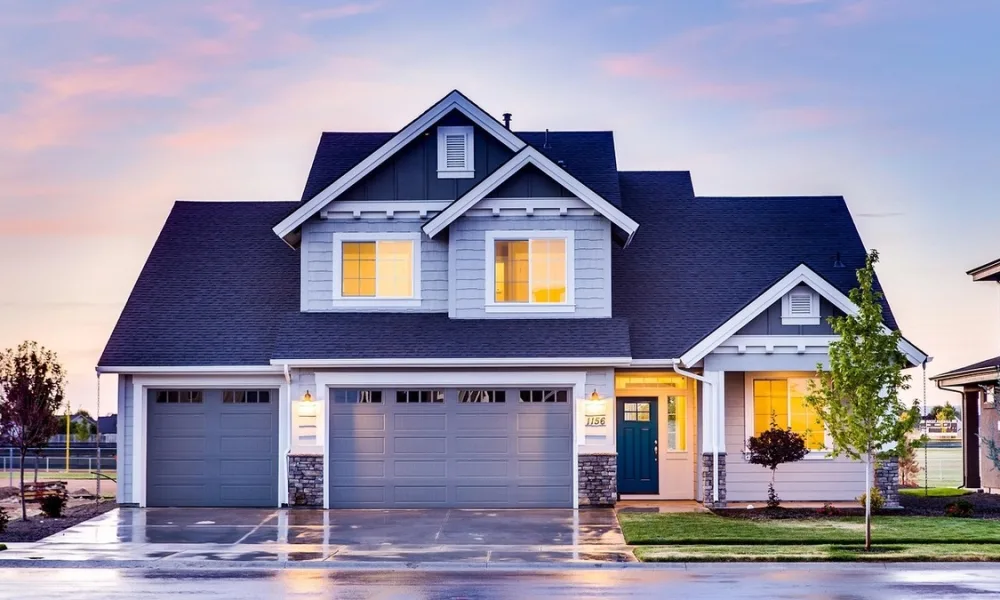
Exterior shade, reflective glazing, and better-insulated door systems can help reduce solar heat before it enters the home, improving indoor comfort during hot weather.

1. Cover Windows During Peak Sun Hours

One of the simplest ways to reduce solar heat inside the home is to cover windows that receive direct sunlight during the hottest hours of the day. Curtains, blinds, roller shades, or blackout coverings can help limit how much heat enters the interior, especially in rooms that face west or south.

While this step will not completely stop heat buildup, it can make a noticeable difference in daily comfort, especially during the summer. It is also a quick and accessible solution that can easily be combined with other improvements if you later want better long-term thermal performance.

2. Add Reflective Film to Windows With Heavy Sun Exposure

If some windows receive direct sunlight for a large part of the day, adding reflective film can be a practical way to reduce some of the heat and glare without replacing the entire glass. This type of solution helps reflect part of the sun’s radiation before it enters the interior, which can improve comfort in certain rooms.

It is a useful option when you want a quick improvement for existing windows. While it does not offer the same level of performance as a factory-integrated solution, it can still work well as a first step to limit solar heat gain and make indoor spaces feel more comfortable.

 3. Consider Reflective Glass as a More Durable Solution

For homeowners looking for a long-term upgrade, reflective glass can be a more durable option for reducing solar heat and glare. Unlike temporary films, this type of glass is designed to reflect part of the sun’s energy while also giving the exterior a cleaner, more modern appearance.

It can be especially useful in areas of the home with large windows or strong sun exposure for much of the day. It is a strong solution for projects where the investment makes sense, especially if you do not plan to move soon or if it is a commercial project designed to recover the investment over time.

4. Choose Tinted Glass to Better Control Light and Heat

Another useful option for reducing the feeling of heat inside the home is tinted glass. This type of glass helps reduce the intensity of sunlight entering the space, which can make certain rooms feel more comfortable, especially during the hours of strongest sun exposure.

In addition to helping with glare, tinted glass can also be a suitable alternative for those looking for a bit more privacy and a more uniform exterior appearance. In fact, it is an effective solution if you need a lower-cost renovation, since it is often more affordable than reflective options.

Upgrades such as Tinted Glass, Reflective Glass, and Thermally Broken systems help homeowners control sunlight, reduce heat gain, and improve long-term energy performance.

5. Check for Air Leaks Around Windows and Doors

Sometimes, the problem is not only the sun coming in directly but also the hot air that slips through small gaps around windows and doors. In very hot areas, humidity and warm air can make their way inside from places you would not expect.

Checking frames, joints, and seals can help you identify spots where cool indoor air is escaping or outdoor heat is entering without being immediately noticeable.

Fixing these leaks is often one of the simplest and most cost-effective improvements. Often, replacing the weather stripping or improving the sealing around certain areas can help maintain a more stable indoor temperature and reduce the strain on the air conditioning system.

6. Improve Door Performance, Not Just Windows

When trying to reduce heat inside the home, it is common to think about windows first. However, doors can also become an important entry point for heat, especially if they include large glass areas or are exposed to direct sunlight for much of the day.

That is why, in addition to looking at the type of glass, it is worth considering the overall performance of the door system. A better-insulated design can help limit heat transfer and improve indoor comfort, especially at main entrances, patio doors, or spaces with heavy sun exposure.

7. Consider Thermally Broken Doors and Systems for Better Thermal Protection

If you are looking for a more complete upgrade, doors and systems with thermally broken technology can help reduce heat transfer between the exterior and the interior. This is because they include a barrier inside the frame that helps limit how heat moves through the material, which is especially useful in hot climates or in areas with strong sun exposure.

This can make a more noticeable difference in projects where long-term comfort and efficiency are a priority. In addition to helping maintain a more stable indoor temperature, thermally broken systems can also better complement the performance of the glass, creating a more balanced solution for windows and doors exposed to the sun.

Many of these systems also include added protection against heavy rain, hurricane conditions, or even certain security risks.

8. Use Exterior Shade Whenever Possible

Exterior shade can be a great ally in reducing solar heat before it reaches the glass or the door. Elements such as awnings, pergolas, overhangs, louvers, or even well-placed trees can help block part of the sun’s direct radiation and keep certain areas of the home from overheating during the day.

In fact, well-planned shade not only improves visual comfort but can also have a real impact on temperature and energy use. The U.S. Department of Energy notes that a well-placed tree, shrub, or vine can help reduce the energy consumption of a typical household by up to 25%, while shade and evapotranspiration from trees can lower the surrounding air temperature by as much as 6°F.

Unlike interior solutions, exterior shade works before the heat enters the space. That is why it can be a very effective improvement for windows with heavy sun exposure, patio doors, or façades that receive intense sunlight for several hours a day.

 9. Open and Close Windows at the Right Time

On hot days, it is not always a good idea to keep windows open for long periods. If the temperature outside is higher than it is indoors, opening them can let heat in faster and cause the home to lose its cool air in a short time. That is why a simple strategy is to keep them closed during the hottest hours of the day and use the early morning or nighttime hours for ventilation.

This small habit can help maintain a more stable indoor temperature without requiring expensive changes. While it will not solve the problem of solar heat on its own, it works very well alongside other solutions such as exterior shade, curtains, or upgrades to glass and door systems.

In fact, this is often the first step you can take to begin improving the situation.

10. Combine Quick Fixes With Long-Term Upgrades

Some measures can help right away, such as closing curtains, sealing air leaks, or making better use of natural ventilation. However, when solar heat is a constant problem, it may also be worth thinking about more durable improvements that help keep the home comfortable over time.

Combining simple solutions with upgrades such as reflective glass, tinted glass, or thermally broken systems can provide a more complete result. This way, you are not only reducing heat during certain parts of the day but also improving the overall performance of windows and doors against continued sun exposure.

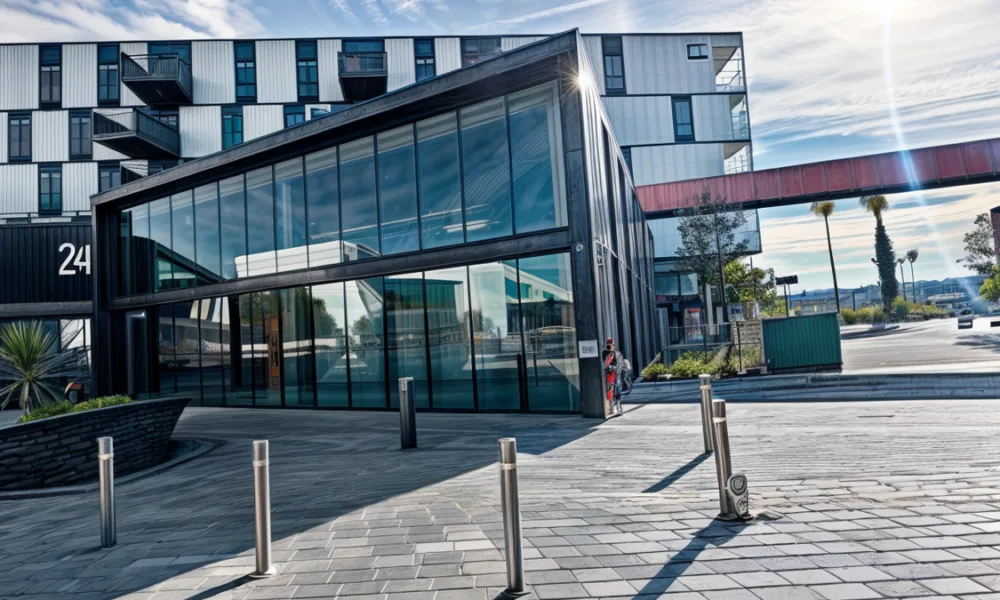
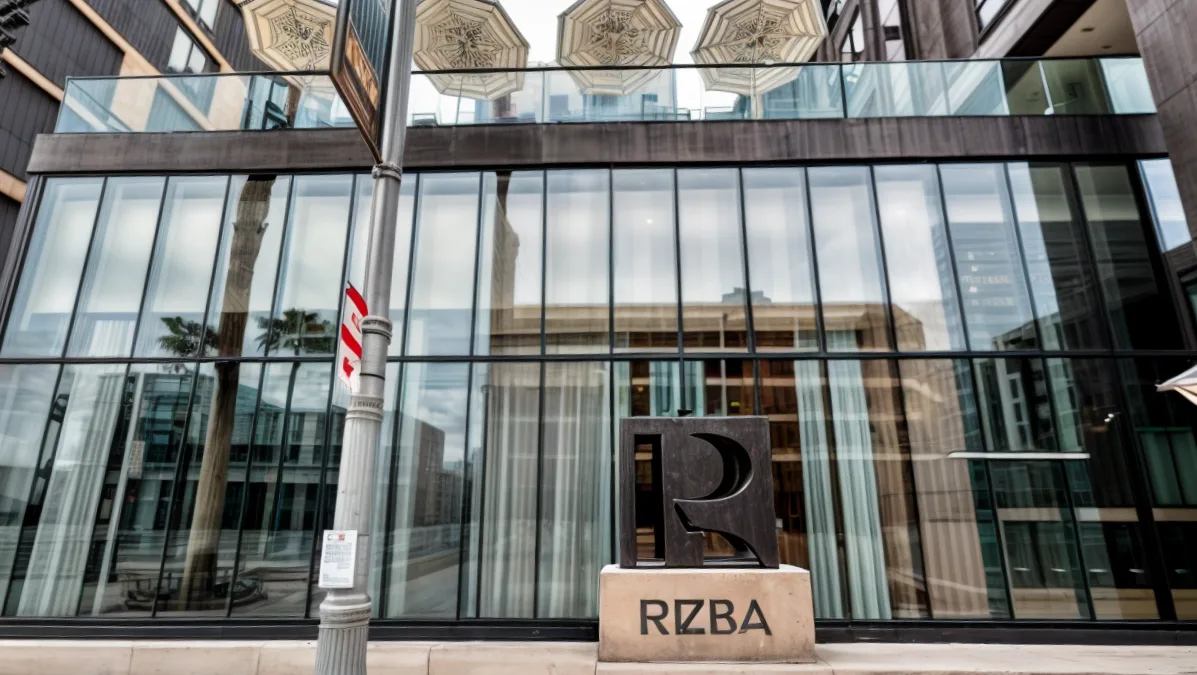
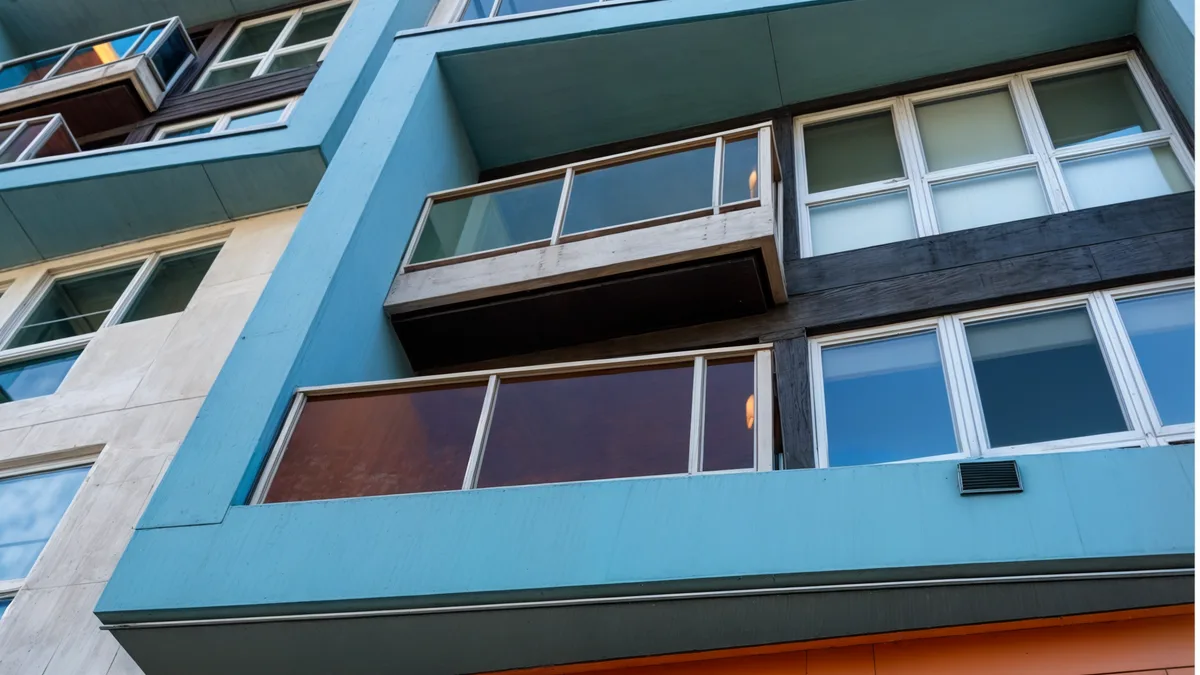
Mixed-use development with reflective glass façade reflecting the surrounding skyline, illustrating solar control and architectural integration in large urban projects.

Applications of Reflective Glass in Commercial Architecture

Home / 2026 / March

Many of the most recognizable commercial buildings in modern cities share one common element: large surfaces of reflective glass integrated into their façades.

Beyond its contemporary appearance, the use of reflective glass responds to very specific architectural design needs. In commercial projects, façade systems must manage factors such as solar radiation, interior comfort, energy efficiency, and the visual identity of the building.

Reflective glass allows architects to address these challenges simultaneously. Thanks to its reflective coating, this type of glass helps reduce solar heat gain, control glare, and create visually dynamic architectural envelopes.

For this reason, it has become a common material in many types of commercial projects, from office towers and mixed-use developments to institutional buildings and retail spaces.

In this article, we will explore where and why reflective glass is specified in commercial architecture, examining its most common applications in façade systems, its relationship with climate-driven building design, and how it integrates with modern aluminum and glass structures.

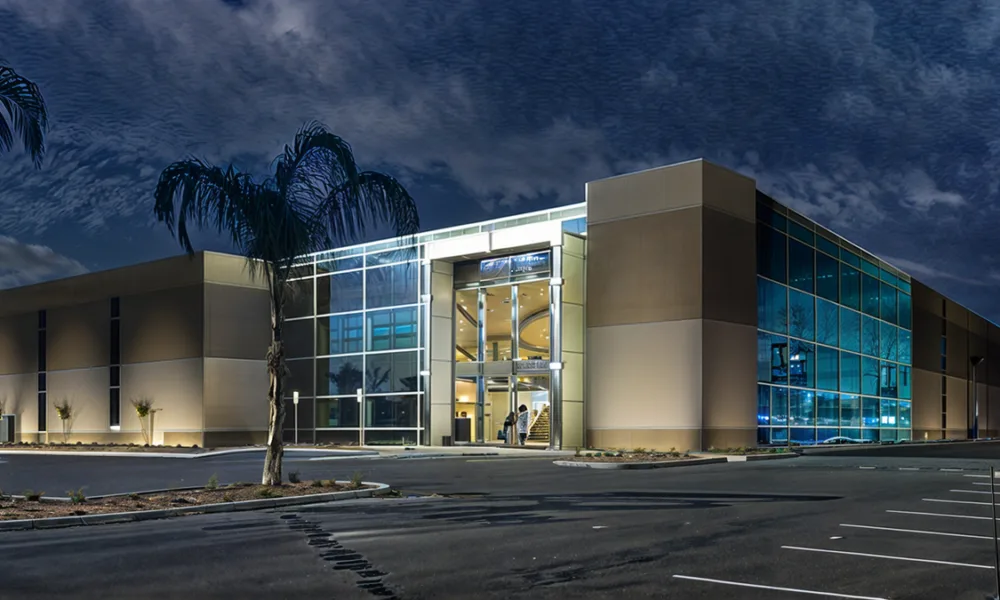
High-rise commercial building with reflective glass curtain wall façade designed to reduce solar heat gain and create a modern architectural appearance.

Reflective Glass in Curtain Wall Systems

One of the most common uses of reflective glass in commercial architecture is in curtain wall systems. In this type of façade, large glass panels form part of the building’s exterior envelope, making solar control and the thermal performance of the glass especially important, particularly when compared with tinted glass.

Reflective glass helps reduce the amount of solar radiation that enters the building, which is crucial in office towers and corporate buildings with extensive glazed surfaces. By reflecting part of the sun’s energy outward, the glass helps maintain more stable indoor temperatures and contributes to improving the building’s overall energy efficiency.

In addition to its technical benefits, reflective glass also influences the visual identity of the project. Reflective surfaces create uniform and contemporary façades that interact with the urban environment, mirroring the sky, nearby buildings, and the changing conditions of natural light.

For these reasons, they have become a common solution in high-rise commercial buildings, corporate centers, and modern urban developments where the façade serves both a technical and architectural role.

Reflective Glass in Storefront Systems

Another common application of reflective glass in commercial architecture is in storefront systems, particularly in urban buildings where glass façades play an important role in the visual identity of the space.

In retail stores, restaurants, hotels, and corporate spaces located at street level, glass serves a dual purpose: allowing visibility into the establishment while also managing the impact of solar radiation and glare.

Reflective glass can help balance these factors. Its ability to reflect part of the sunlight contributes to improving indoor comfort, which is especially important in areas with strong sun exposure or along avenues with large glazed surfaces.

At the same time, its reflective finish provides a contemporary appearance that integrates easily into modern commercial projects, where façade design plays a key role in the overall visual experience of the building. For this reason, it can also function as an effective marketing tool.

Because of these advantages, many storefront systems in urban developments, shopping centers, and mixed-use buildings incorporate reflective glass as part of their architectural design and performance strategy.

Reflective Glass in Office Buildings and Corporate Towers

Reflective glass is also widely used in office towers and corporate buildings, where glass façades play a key role in both the building’s performance and its architectural identity.

In these types of projects, glazed surfaces often occupy a large portion of the exterior envelope. This means that factors such as solar radiation, natural lighting, and indoor temperature must be carefully managed from the façade design stage.

Reflective glass helps address these challenges by reflecting a significant portion of solar energy before it enters the building. As a result, it contributes to maintaining more stable indoor conditions and can help reduce the demand for air conditioning in buildings with large glass areas.

At the same time, the reflective finish has become a defining feature of many modern corporate towers. Mirrored façades allow the building to visually interact with its surroundings, reflecting the sky, the urban landscape, and the changing conditions of natural light throughout the day.

Thanks to this, a better energy balance can be achieved, allowing large corporate buildings to save substantial costs on air conditioning, as interior temperatures remain stable for longer periods.

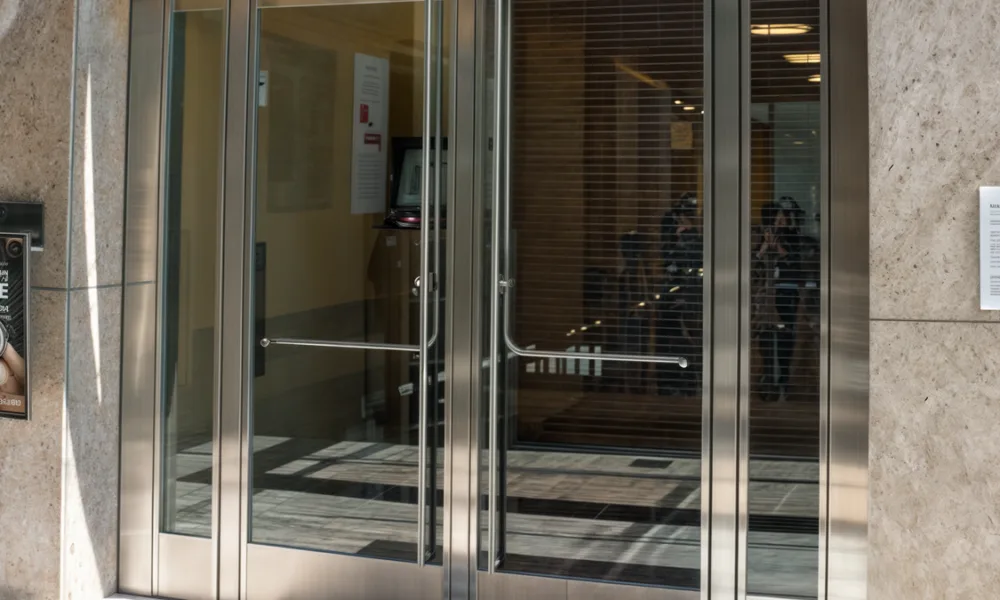
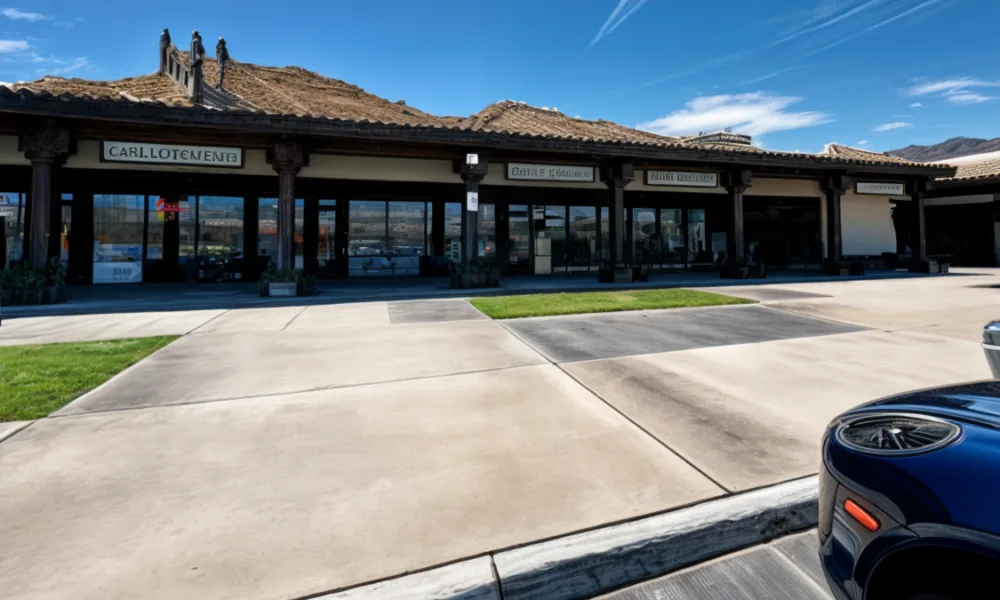
Urban retail building using reflective glass storefront systems to manage sunlight while maintaining a contemporary commercial façade.

Reflective Glass in Mixed-Use Developments and Institutional Buildings

Reflective glass is also commonly used in mixed-use developments and institutional buildings, where a single structure may combine offices, retail spaces, hospitality, or public areas.

In these types of projects, façades must respond to different building functions at the same time. Commercial areas require visibility and an attractive design, while office spaces or guest rooms need to control solar radiation and maintain comfortable indoor conditions.

Reflective glass helps balance these needs by providing solar control, natural lighting, and a consistent aesthetic across the building envelope. This allows complex projects to maintain a cohesive architectural identity even when they integrate multiple functions.

This type of glass is also frequently used in universities, hospitals, airports, and institutional buildings, where glazed façades help maximize natural daylight while controlling solar heat gain.

Reflective Glass Options for Architectural Projects

In commercial architecture, reflective glass is not a single solution. There are different variants that allow the performance of the glass and its visual appearance to be adjusted according to the needs of each project.

Architects typically choose between different tones, levels of reflectivity, and solar performance, depending on the climate, the building’s orientation, and the aesthetic goals of the façade.

Some options feature blue or blue-green tones, which create highly reflective and contemporary façades commonly seen in office towers and modern urban developments. Other variants incorporate bronze or gray tones, offering a warmer or more neutral appearance while still providing solar control and glare reduction.

There are also reflective glass options designed to create stronger mirror effects, often used in projects where the façade is intended to reflect the surrounding urban environment or landscape more prominently.

Specialized manufacturers such as PRL Glass & Aluminum offer a range of reflective glass solutions for architectural applications, including options like Bluegreen Eclipse, Bronze Eclipse, Solar Blue, Solar Gray, Pacifica, Azuria, and Mirro Pane.

These variants allow architects and developers to select the glass that best fits the goals of their project, balancing solar performance, aesthetic appearance, and compatibility with modern façade systems.

Reflective glass has become one of the most widely used materials in contemporary commercial architecture. Its ability to control solar radiation, improve interior comfort, and contribute to a distinctive visual identity makes it a key element in modern façade design.

From curtain wall systems and storefronts to corporate towers, mixed-use developments, and institutional buildings, this type of glass helps balance energy performance, natural lighting, and architectural aesthetics.

In addition, the variety of tones, levels of reflectivity, and performance options available allows each project to select the glass that best fits its climate conditions and design objectives.

For this reason, reflective glass continues to be a relevant solution in projects where glazed façades play a central role in building performance.

Specialized manufacturers such as PRL Glass & Aluminum provide different reflective glass options designed for architectural applications, allowing architects, developers, and contractors to integrate high-performance solutions into commercial projects of various scales.

Glass and Aluminum Manufacturers in University Park

Modern Glass & Aluminum Solutions for Homes & Businesses in University Park

University Park is one of Dallas’s most desirable residential communities, known for elegant homes, tree-lined streets, luxury renovations, and proximity to Southern Methodist University (SMU). Architecture in this neighborhood blends classic residential design with modern upgrades, requiring glass and aluminum systems that deliver performance, durability, and refined aesthetics.

At PRL Glass & Aluminum, we provide modern architectural solutions engineered for University Park’s residential and boutique commercial environments, supporting custom homes, renovations, and high-end design projects with premium materials and precision fabrication.

Building or Renovating in University Park? Connect with PRL Glass & Aluminum Today

Whether you’re renovating a luxury home, building a custom residence, or upgrading a boutique commercial space near SMU, PRL delivers custom fabrication, nationwide logistics, and expert technical support from California.

We proudly support projects throughout University Park, Highland Park, Uptown Dallas, and the greater Dallas metropolitan area.

Service 

Contact Number 

Aluminum Division 

📞 877-775-2586 

Glass Division 

📞 800-433-7044 

📍 Visit our locations in City of Industry, California and explore our wide range of innovative, high-quality aluminum and glass solutions!

Premium Glass & Aluminum Designs for University Park Homes

Homes in University Park emphasize natural light, elegant interiors, and modern functionality. PRL’s premium residential systems enhance these spaces while delivering long-term durability.

All residential systems meet ASTM and NFRC standards.

Glass & Aluminum Solutions for University Park Businesses

University Park includes boutique retail, restaurants, and professional offices that require architectural systems balancing elegance with performance.

  • Curtain Wall Systems: Ideal for office buildings and mixed-use developments
  • Storefront Systems: Clean, modern glass façades for retail and hospitality spaces.
  • Architectural Glass Solutions – Laminated and tempered glass for safety, acoustics, and energy efficiency

PRL systems support both new developments and renovation projects throughout the area.

PRL Glass Aluminum in University Park

Why University Park Developers and Homeowners Trust PRL Glass & Aluminum

University Park projects demand craftsmanship, precision, and long-term reliability—PRL consistently delivers these qualities.

  • Custom fabrication for luxury residential and boutique commercial projects
  • Premium aluminum finishes and large-format glass systems
  • Nationwide manufacturing with dependable delivery timelines
  • Technical support for architects, builders, and designers
  • Proven experience supporting high-end residential environments

Benefits of Glass and Aluminum Systems in University Park

University Park architecture thrives on elegance, comfort, and timeless design—glass and aluminum systems enhance these qualities.

  • Thermal Performance for comfort in Dallas’s warm climate
  • Noise Reduction, enhancing privacy in residential neighborhoods
  • Elegant Architectural Appeal aligned with modern and classic home designs
  • Durability suitable for long-term residential and commercial use
  • Eco-Friendly Materials, supporting sustainable construction practices
  • Battle Door Capability, offering reinforced security against break-ins or vandalism—especially valuable for street-facing retail and luxury homes

Transform Your Space with PRL Glass & Aluminum

Based in California and trusted nationwide, PRL serves Texas and all 50 states with luxury-grade architectural glass and aluminum systems.

From custom sliding doors to boutique storefronts, we deliver craftsmanship designed to elevate your next project.

We are present in the most important neighborhoods in the United States, offering the highest quality service.

Downtown Austin

South Congress (SoCo)

Highland Park

Queen Anne

Capitol Hill

Follow us on social media ✅

Stay tuned for news, events, discounts and new products through the different social media channels.