Loading

3 Design Decisions That Can Make a Small Living Room Feel Much Larger

Home / Articles posted byEduardo Savin

Most homeowners believe their living room’s square footage is a fixed limit. However, space is often more about perception than floor measurements. It’s not just about the area you walk on; it’s about how light moves and where your eyes can travel.

Think of a typical living room: the furniture fits, but the space feels “heavy.” Often, the culprit isn’t the size of your sofa but how the architecture of the room handles boundaries. Solid walls and traditional swing doors can act as visual roadblocks, cutting off light and stealing usable floor space.

If you want to open your home without a full-scale demolition, these three design decisions can shift how you perceive your space.

1. Connecting with the Outdoors: The Glass That Reclaims Space

The most common mistake in a small living room is treating it like a closed box. A traditional wood or metal door requires a “swing zone,” a radius of several feet that must remain empty just so the door can function. In a tight layout, that’s valuable real estate lost.

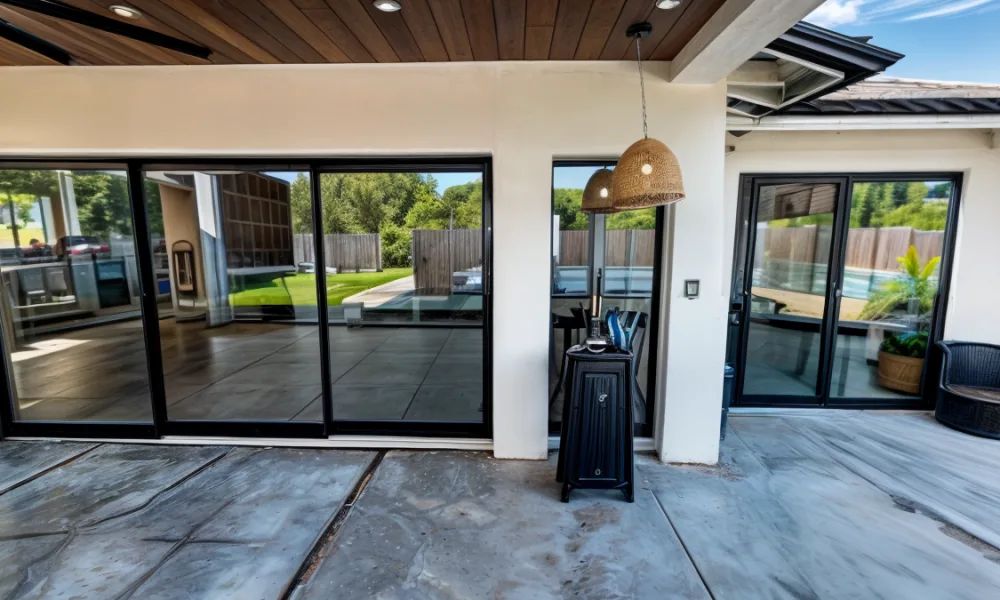
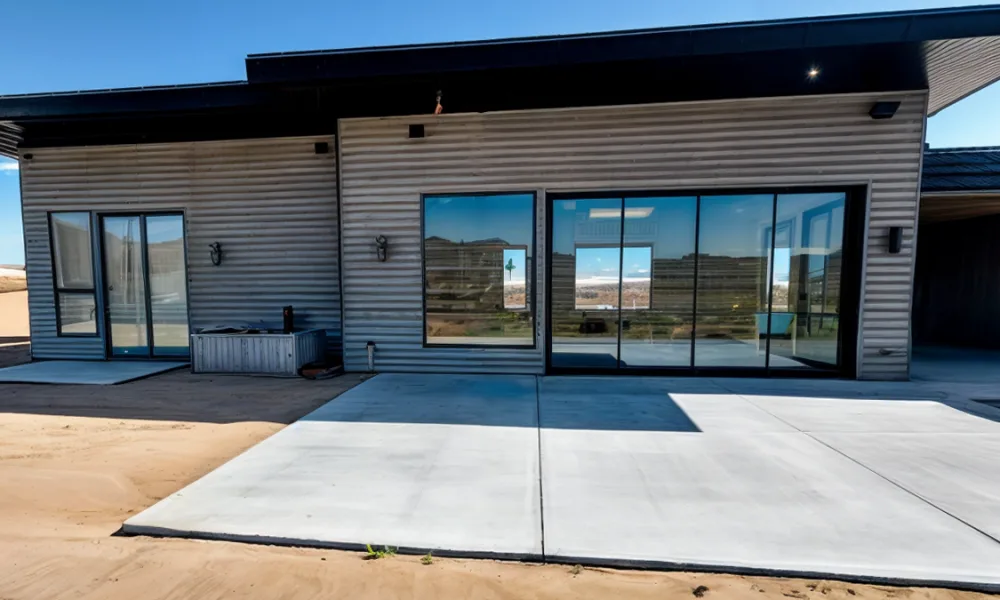
A more effective approach is integrating a large-format sliding door. By replacing an opaque wall or a standard door with a glass system, the physical boundary effectively disappears. Instead of your gaze hitting a solid wooden surface, it extends toward the garden, the patio, or the horizon.

This change allows natural light to reach the darker corners that usually make a room feel cramped. When the visual line between “inside” and “outside” is softened, the room feels as deep as the landscape beyond it.

2. Strategic Depth: Moving Beyond Basic White

While “painting it all white” is the standard advice for small spaces, a total-white look can sometimes feel clinical or flat. To make a room feel larger, you actually need a sense of depth to accompany the light.

Designers often use a palette of warm neutrals—like sand, soft grays, or ivory. These tones don’t just bounce light; they distribute it with warmth. The goal is to eliminate high-contrast shadows that “shrink” the corners of a room. When you pair these soft tones with a clear view of the outdoors, the walls seem to recede rather than close in, creating a more relaxed, airy atmosphere.

A small living room can feel significantly larger when natural light enters through a wide glass opening, extending the view toward a patio, garden, or outdoor area.

3. Mirrors as Visual Openings

A mirror is more than a utility; in a small room, it functions as an additional window. The key is placement. Instead of hanging a small mirror decoratively, consider a large-format piece positioned opposite a window or a glass sliding door.

By doing this, the mirror captures the exterior view and reflects it back into the living room. This creates the impression of a second opening on a solid wall. It’s a practical way to double the amount of natural light in the room and trick the eye into seeing more volume than the floor plan suggests.

A Shift in Perspective

Making a small living room feel spacious is less about adding square feet and more about removing visual barriers. The difference between a room that feels cramped and one that feels open often comes down to how you manage the connection with your surroundings.

The next time your living room feels a bit too tight, stop looking at the floor. Look at your walls and doors. Sometimes, the best way to “expand” your home is simply to let the outside world in.

Aluminum works especially well in stair and guardrail systems that need to combine clean architectural lines with long-term performance

Aluminum Handrail Systems: Why They Work for Modern Stair and Guardrail Projects

Home / Articles posted byEduardo Savin

In today’s stair and guardrail projects, material selection is not based on appearance alone. It also affects system durability, long-term maintenance, ease of installation, and the way the final solution fits into the overall architectural design. Aluminum has become one of the most practical choices for modern handrail systems in both residential and commercial applications.

Its popularity comes from a combination of advantages that is hard to ignore. Aluminum resists corrosion well, requires relatively little maintenance, weighs less than many other metals, and adapts easily to different design languages. That is why it appears more and more often in interior staircases, balconies, guardrails, and projects that call for a durable solution without adding unnecessary visual weight.

Aluminum handrail systems are valued for their lighter weight, corrosion resistance, and ability to support modern stair and guardrail designs.

What Makes Aluminum a Strong Choice for Handrail Systems

One of aluminum’s biggest advantages is the balance it offers between lightness and performance. It is easier to handle, transport, and install than heavier metals, yet it can still be integrated into well-designed, reliable systems. That quality also affects the overall look of a project, allowing for cleaner and more visually restrained solutions.

Its natural resistance to corrosion adds even more value. Compared with materials that may deteriorate more easily in humid or exposed environments, aluminum tends to perform well in both indoor and outdoor settings, as long as the system is properly specified.

Maintenance is another important factor. In many projects, it matters almost as much as the system’s initial appearance. A solution that preserves its finish and performance with less intervention can offer a clear advantage, especially in commercial, multifamily, or high-use residential properties.

Why Aluminum Works Well in Modern Stair and Guardrail Projects

Contemporary architecture often favors cleaner lines, visually lighter systems, and materials that work well alongside glass, concrete, steel, or wood. Aluminum fits naturally into that approach because it allows for restrained profiles, a wide range of finishes, and a more controlled visual presence than heavier materials.

That versatility makes it especially useful in projects where the handrail system should not feel like an added element but rather like part of the overall design. In modern staircases, balconies, and guardrail applications, aluminum works equally well in minimalist solutions and in more technical or customized configurations.

It also integrates especially well with glass systems. Many contemporary solutions combine aluminum with glass panels to take advantage of the openness of glass railing and the structural practicality of metal. That combination is particularly appealing in projects that aim to preserve clear views without giving up durability or reasonable maintenance.

Key Benefits of Aluminum Handrail Systems

  • Durability: Aluminum is valued for its ability to perform well in different environments and for its strong resistance to corrosion and wear. That consistency is one of the reasons it is frequently used in long-term architectural applications.
  • Low Maintenance: Compared with materials that require sanding, sealing, frequent painting, or more attention to rust, aluminum generally needs less maintenance. This can simplify system upkeep and reduce interventions over time.
  • Lighter Weight and Easier Handling: Its lower weight makes project logistics easier, from transportation to installation. This can be especially useful in jobs where installation efficiency matters or where reducing the complexity of handling components is a priority.
  • Design Flexibility: Aluminum can be manufactured in different profiles, dimensions, and finishes, which makes it adaptable to a wide range of architectural styles. That flexibility is especially valuable in projects that do not want to sacrifice design for practicality.
  • Long-Term Value: Although upfront cost should always be evaluated in the context of the project, aluminum is often seen as a competitive option because of its combination of durability, low maintenance, and good service life. In numerous instances, its real value becomes more evident over time.

Aluminum Compared with Other Common Materials

Comparing aluminum with other materials helps clarify where it makes the most sense.

Compared with wood, aluminum usually offers a clear advantage in maintenance and weather resistance. Wood can bring warmth to a space, but it generally requires more care over time, especially outdoors or in areas with greater exposure.

Compared with steel or wrought iron, aluminum tends to stand out for its lighter weight and its better resistance to corrosion. In many modern projects, it also creates a cleaner, lighter visual impression.

Compared with stainless steel, aluminum can be lighter and, in some cases, more cost-effective while still maintaining a contemporary appearance that works well for today’s stair and guardrail projects. The best choice will ultimately depend on budget, design language, and the expected performance of the system.

In residential and commercial projects, aluminum offers a practical balance of durability, low maintenance, and design flexibility.

Where Aluminum Handrail Systems Make the Most Sense

Aluminum handrail systems work especially well in modern interior staircases, exterior stairs, balconies, terraces, and guardrail applications where both durability and visual clarity matter. They are also a strong option for commercial circulation areas, multifamily buildings, and residential remodels where the goal is to balance performance and design.

In contemporary projects, aluminum becomes even more valuable when it is part of a broader system. It can be integrated with top caps, posts, custom profiles, or glass panels, which expands its possibilities in more specific architectural configurations.

What to Consider Before Choosing an Aluminum System

Although aluminum offers many advantages, that does not mean every system is right for every project. Before choosing one, it is important to evaluate whether the application will be indoors or outdoors, the level of environmental exposure, how the space will be used, the desired finish, and the level of customization required.

It is also important to understand whether the handrail will be part of a simple interior stair, an exposed guardrail, or a combined system with glass. That context affects both the design solution and the way the system should be fabricated and installed.

And while the material is a strong starting point, the final performance of the system still depends on sound design, proper fabrication, and well-executed installation. The material alone does not guarantee that the solution will perform as it should within the project.

Why Custom Fabrication Can Make a Difference

Not every project is well served by a standard solution. Staircases with unusual geometry, specific finishes, glass integration, non-standard heights, or more defined aesthetic requirements often call for a system that is more closely tailored to the actual conditions of the job.

That is where custom fabrication becomes valuable. Working with a manufacturer that understands not only the material but also the logic of the system as a whole can make it much easier to select profiles, finishes, and configurations that truly make sense for the project. In modern work, that ability to adapt is often just as important as the material itself.

Aluminum handrail systems work well in modern stair and guardrail projects because they combine durability, low maintenance, lighter weight, and design flexibility. For many residential and commercial applications, they offer a very attractive balance between practical performance and contemporary appearance.

Beyond the material itself, the key is choosing a system that responds well to the use, the environment, and the design language of the project. In that sense, aluminum stands out not only for how it looks but for how well it can adapt to current, customized solutions designed to last.

Why high-performance glass matters in commercial storefronts to improve comfort, reduce environmental stress, and support a better interior experience

Your storefront may look modern, but the glass could still be making the space uncomfortable

Home / Articles posted byEduardo Savin

A strong first impression does not always hold up inside

Glass facades naturally attract attention. They look clean, open, and contemporary. From the street, they can make a business feel bright, visible, and easy to approach.

But that first impression does not always hold up once people step inside.

A space can feel warmer, brighter, or more exposed than expected, even when nothing seems obviously wrong. Most visitors will not stop to explain that discomfort. They simply spend less time inside, move through the space more quickly, or leave sooner than planned.

In a commercial setting, those small changes in behavior matter.

The exterior does not stay outside

A glass facade may look like a clear boundary between indoors and outdoors, but in practice, the exterior environment still affects what happens inside.

On hot days, solar radiation passes through the glass and reaches floors, furniture, merchandise, and other interior surfaces. As that heat builds up, the space becomes harder to regulate and cooling systems have to work harder to keep up.

The effect is not always dramatic, but it is consistent. A space that gains heat too easily often becomes less comfortable to stay in, even if visitors never describe it that way.

When outdoor temperatures drop, the issue can shift in the opposite direction. Interior comfort becomes harder to maintain, and the space may feel less stable throughout the day.

Light also changes how people use the space

Temperature is only part of the problem.

When natural light enters without enough control, glare and reflections begin to affect how people move, sit, and interact with the space. Screens become harder to read. Display areas lose clarity. Customers change position to avoid direct light or move away from certain areas without really thinking about it.

These reactions may seem minor, but in commercial environments they add up quickly.

A table that stays empty. A seating area people avoid. A visitor who looks around briefly and leaves. In retail and hospitality, those patterns can directly affect dwell time, interaction, and conversion.

What discomfort inside a building can reveal

When a building stops moderating heat, light, and noise effectively, the impact often shows up first in occupant comfort.

This broader issue has been associated with what the World Health Organization described as sick building syndrome: situations in which people experience discomfort indoors and tend to feel better after leaving the space. In practice, the problem is rarely caused by one factor alone. It usually comes from several environmental conditions that are not being controlled well enough.

That is why appearance alone is not a reliable measure of performance. A facade may look polished from the outside and still create an uncomfortable interior experience over time.

How solar heat gain, glare, and uncontrolled light affect customer comfort, dwell time, and interior performance in glass-fronted spaces.

Why glass still matters in commercial spaces

None of this means glass is the problem.

Glass remains one of the most effective materials for commercial storefronts when it is used well. It improves visibility, makes interiors feel more accessible, and helps connect the activity inside with the street outside.

That is one reason it continues to shape storefront design in cities like New York, Chicago, and Miami, where visibility and openness are part of the commercial experience. The value of glass is clear. The real difference lies in whether the system is designed to perform, not just to look good.

What makes the difference

The difference between a storefront that performs well and one that only looks attractive usually comes down to how the glass system responds to real conditions.

Low-E coatings help reduce solar heat gain without blocking visibility. Insulated glazing improves thermal stability and helps reduce the strain on HVAC systems. Laminated glass can reduce outside noise and make the interior feel more controlled and comfortable.

In areas where direct light becomes disruptive, additional treatments such as tinting or patterned finishes can help manage glare more precisely.

These solutions do not need to stand out visually to make a difference. Their value shows up in how the space feels and in how people behave inside it.

The issue is not the material, it is the missed performance decision

A glass facade can look flawless from the street. But if people inside are constantly adjusting, avoiding certain areas, or leaving sooner than expected, then the space is not performing as well as it should.

The issue is not the presence of glass itself. It is the lack of decisions about how that glass should perform in real conditions.

Because in commercial architecture, a facade is not only part of the building’s image. It is part of the experience people have once they enter.

Residential, commercial, and workplace stairs are not always evaluated the same way, which is why local code verification remains essential

When Is a Handrail Required for Stairs? Key Safety and Code Considerations

Home / Articles posted byEduardo Savin

The short answer is that a handrail is often required once a stairway reaches certain safety thresholds under the applicable code. Often, the most commonly cited benchmark is a stairway with at least 4 risers, but that should not be treated as a universal rule for every project.

Requirements can change depending on the type of building, how the space is used, and which code has been adopted locally. OSHA, for example, sets stairway protection requirements for workplace settings, while ADA addresses how handrails must perform in accessible conditions.

For that reason, it is more useful to understand the situations in which a handrail is commonly required—and the features that are typically reviewed once it is—than to rely on a single rule of thumb.

Handrail requirements often depend on factors such as riser count, stair width, open-sided exposure, and the type of project involved.

When Is a Handrail Typically Required on Stairs?

In general, a handrail is usually required when a stairway goes beyond a minor change in level and begins to present a more meaningful circulation risk. In OSHA-regulated settings, that threshold is reached when a stair flight has at least 3 treads and 4 risers. From there, the type of protection required also depends on the width of the stairway and whether it has open or enclosed sides.

That does not mean stairways with fewer steps are automatically exempt in every project. In practice, the requirement may vary depending on how the building is used, whether the route must meet accessibility conditions, and which code applies in that jurisdiction. Even when a handrail is not strictly required, adding one may still be a smart safety decision.

Why Requirements Change from One Project to Another

One of the biggest mistakes in this topic is assuming the same rule applies to every staircase. It does not. Requirements change depending on whether the project is residential, commercial, public-facing, workplace-related, or part of an accessible route. OSHA regulates walking-working surfaces in workplace environments.

ADA, by contrast, sets accessibility criteria for certain spaces and circulation paths. On top of that, model codes must be adopted locally, and that process may include amendments or interpretations specific to a given jurisdiction.

In other words, it is not enough to ask how many steps a staircase has. It also matters what kind of project it is, who will use that circulation path, and which code framework applies in that location.

Considerations for Residential, Commercial, and Workplace Stairs

In residential projects, handrail requirements often depend on stair geometry and the code adopted by the local jurisdiction. Although a general rule based on the number of risers is often repeated, it is safer not to assume that every city or county applies the same threshold in the same way.

In commercial or public-facing projects, the review is usually stricter. Factors such as frequency of use, stair width, open-sided conditions, and the need to maintain safe circulation for a wider range of users tend to carry more weight.

In workplace environments, OSHA becomes especially relevant. Its stairway requirements distinguish between enclosed stairs, stairs with one open side, stairs with two open sides, and wider stairs that may require intermediate handrails. That distinction matters because it makes clear that the requirement is not based only on riser count, but also on the physical configuration of the stairway itself.

What Codes Are Commonly Reviewed Once a Handrail Is Required

Once a handrail is required, the question is no longer just whether one is needed. It also becomes a matter of how that system is designed and installed.

  • Height: Is one of the first things reviewers look at. ADA states that the top of the gripping surface should be placed between 34 and 38 inches above the walking surface, stair nosings, or ramp surface, and it must remain at a consistent height. OSHA uses a different range in certain workplace conditions, which is one more reason these frameworks should not be treated as interchangeable.
  • Continuity: Continuity is also essential. ADA requires the gripping surface to remain continuous along its run. In practical terms, that means a user should not lose support at a critical point along the stairway.
  • Clearance from the Wall or Adjacent Surfaces: The space between the handrail and the wall is another common review point. ADA requires a minimum clearance of 1.5 inches between the gripping surface and adjacent surfaces. OSHA, in some work environments, uses a different finger-clearance requirement from other objects. That difference alone shows why one number should not be presented as universally correct for every situation.
  • Graspability and Profile: A handrail must be easy to grip securely. ADA sets specific dimensions for circular and non-circular profiles to ensure that the rail functions as a true gripping surface rather than just a visual feature. From a project standpoint, profile design directly affects both safety and compliance.
  • Strength and Attachment: System strength is also part of the review. OSHA requires handrails and the top rail of certain stair rail systems to withstand a specified force under use. This is an important reminder that a handrail is not just an accessory. It is a functional safety component that must perform reliably in real conditions.
Once a handrail is required, codes commonly review height, continuity, clearance, graspability, and overall system strength

Is a Handrail Required on Both Sides of the Stairs?

Not always. The answer depends on the width of the stairway, whether the run is enclosed or open on one or both sides, and which code framework applies. Under OSHA, for example, stairway requirements distinguish between situations where one handrail is enough and others where both sides—or even intermediate handrails on wider stairs—may be required.

This is one of those points where absolute answers tend to be misleading. Saying a handrail is always required on both sides would be just as inaccurate as saying one side is always enough. The stair configuration and the project context are what determine the right requirement.

Why Verifying Local Code Still Matters

National standards and model codes are useful references, but they do not replace local verification. The authority having jurisdiction may have adopted a specific code edition, introduced amendments, or interpreted certain requirements in a particular way. A private residence, a commercial stairway, and an accessible route are not always reviewed under the same assumptions.

For that reason, this kind of information should be treated as general guidance rather than final approval. An experienced manufacturer can help teams evaluate system configurations, materials, and practical design options, but the final compliance review should always be completed by the responsible project professional and the local authority.

Conclusion

In many projects, a handrail is required when a stairway reaches certain safety thresholds related to riser count, stair width, open-sided exposure, or accessibility conditions. But the exact answer depends on the type of project and the code that actually applies in that location.

The key is not to rely on a quick rule alone, but to understand which conditions commonly trigger the requirement and what the system must do once it becomes mandatory. In that sense, a good handrail does more than satisfy a code provision. It must also provide real support, continuity, strength, and a solution that fits the design of the project.

The Triangle Shirtwaist Factory fire of March 25, 1911, became a turning point in industrial safety after blocked and inadequate exits contributed to the deaths of 146 workers

The Tragedy of 1911: It Wasn’t Only the Fire, but How the Exit Failed

Home / Articles posted byEduardo Savin

In an emergency, an exit is not judged by its appearance or by how well it seemed to work during installation. What matters is whether people can get through it immediately when panic sets in.

That is one reason the Triangle Shirtwaist Factory fire of 1911 is still remembered today. The fire was devastating, but so was the failure of the exits people depended on to escape.

Why the 1911 Factory Fire Still Matters

On March 25, 1911, a fire broke out at the Triangle Shirtwaist Factory in New York. Many workers on the upper floors could not get out. Some exits had been locked, reportedly to prevent theft, and others did not function in a way that matched the reality of a mass escape.

As workers tried to flee, the doors became part of the disaster. In a crowd, people do not evacuate calmly or one at a time. They move together, pressed forward by fear, urgency, and the force of others behind them.

That is what makes this tragedy more than a story about fire. It also revealed how badly exit design could fail when it did not account for real human behavior.

Why Emergency Behavior Changes Everything

For years, many doors were designed around a single user: someone who approaches, sees the hardware, understands it, and operates it correctly. But that is not how evacuations happen.

In a real emergency, no one stops to study a handle or think through how a mechanism works. People react. They head for the exit and push forward. Any system that depends on calm interpretation in that moment is already vulnerable to failure.

That is the lesson safety design had to learn: emergency egress must respond to instinct, not work against it.

Modern panic hardware exists in part because disasters like the 1911 Triangle fire showed that emergency exits must function under crowd pressure, urgency, and instinctive human behavior.

How Panic Hardware Changed Exit Design

Over time, tragedies like this helped reshape building safety standards. One of the most important changes was the wider use of panic hardware: a horizontal bar or touchpad installed on the interior side of a door that releases the latch when pushed.

Its value is straightforward. It follows the way people actually behave in an emergency. Instead of requiring a key, a turn of the wrist, or any precise movement, it allows the door to open through direct forward pressure.

That principle became essential in commercial and high-occupancy buildings, where exits need to work quickly, clearly, and reliably.

A Door Should Not Need to Be Figured Out in a Crisis

Today, the effectiveness of an emergency exit depends less on whether a person can figure it out and more on whether the system was designed to respond clearly in a chaotic moment.

That shift changed the way safe exits are built. Modern panic hardware is intended to reduce hesitation, support immediate egress, and keep a door functional even when several people are pushing toward it at once.

The lesson from 1911 is not just historical. It remains relevant now: in a real emergency, a door must work the way people actually move.