Loading

Archives March 2026

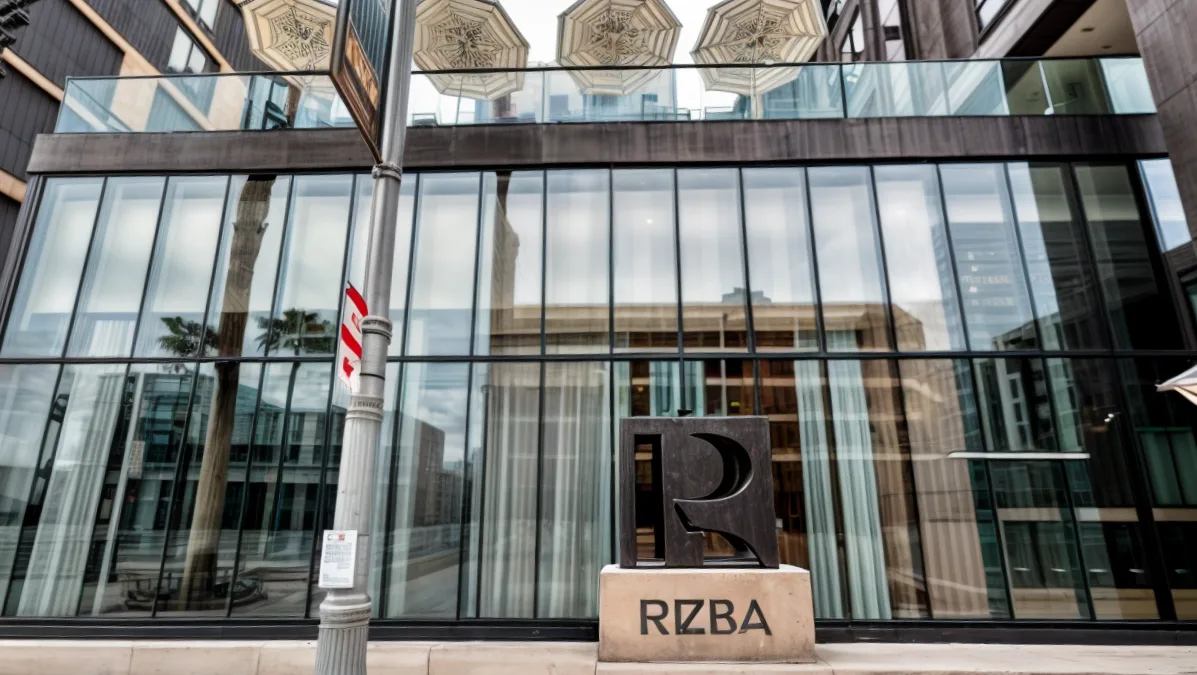
Mixed-use development with reflective glass façade reflecting the surrounding skyline, illustrating solar control and architectural integration in large urban projects.

Applications of Reflective Glass in Commercial Architecture

Home / 2026 / March

Many of the most recognizable commercial buildings in modern cities share one common element: large surfaces of reflective glass integrated into their façades.

Beyond its contemporary appearance, the use of reflective glass responds to very specific architectural design needs. In commercial projects, façade systems must manage factors such as solar radiation, interior comfort, energy efficiency, and the visual identity of the building.

Reflective glass allows architects to address these challenges simultaneously. Thanks to its reflective coating, this type of glass helps reduce solar heat gain, control glare, and create visually dynamic architectural envelopes.

For this reason, it has become a common material in many types of commercial projects, from office towers and mixed-use developments to institutional buildings and retail spaces.

In this article, we will explore where and why reflective glass is specified in commercial architecture, examining its most common applications in façade systems, its relationship with climate-driven building design, and how it integrates with modern aluminum and glass structures.

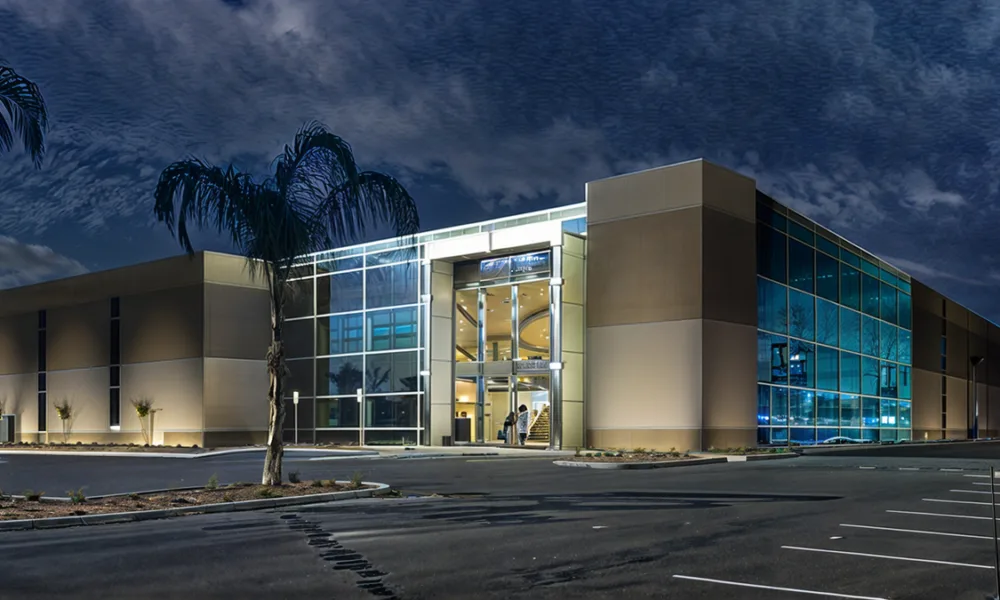
High-rise commercial building with reflective glass curtain wall façade designed to reduce solar heat gain and create a modern architectural appearance.

Reflective Glass in Curtain Wall Systems

One of the most common uses of reflective glass in commercial architecture is in curtain wall systems. In this type of façade, large glass panels form part of the building’s exterior envelope, making solar control and the thermal performance of the glass especially important, particularly when compared with tinted glass.

Reflective glass helps reduce the amount of solar radiation that enters the building, which is crucial in office towers and corporate buildings with extensive glazed surfaces. By reflecting part of the sun’s energy outward, the glass helps maintain more stable indoor temperatures and contributes to improving the building’s overall energy efficiency.

In addition to its technical benefits, reflective glass also influences the visual identity of the project. Reflective surfaces create uniform and contemporary façades that interact with the urban environment, mirroring the sky, nearby buildings, and the changing conditions of natural light.

For these reasons, they have become a common solution in high-rise commercial buildings, corporate centers, and modern urban developments where the façade serves both a technical and architectural role.

Reflective Glass in Storefront Systems

Another common application of reflective glass in commercial architecture is in storefront systems, particularly in urban buildings where glass façades play an important role in the visual identity of the space.

In retail stores, restaurants, hotels, and corporate spaces located at street level, glass serves a dual purpose: allowing visibility into the establishment while also managing the impact of solar radiation and glare.

Reflective glass can help balance these factors. Its ability to reflect part of the sunlight contributes to improving indoor comfort, which is especially important in areas with strong sun exposure or along avenues with large glazed surfaces.

At the same time, its reflective finish provides a contemporary appearance that integrates easily into modern commercial projects, where façade design plays a key role in the overall visual experience of the building. For this reason, it can also function as an effective marketing tool.

Because of these advantages, many storefront systems in urban developments, shopping centers, and mixed-use buildings incorporate reflective glass as part of their architectural design and performance strategy.

Reflective Glass in Office Buildings and Corporate Towers

Reflective glass is also widely used in office towers and corporate buildings, where glass façades play a key role in both the building’s performance and its architectural identity.

In these types of projects, glazed surfaces often occupy a large portion of the exterior envelope. This means that factors such as solar radiation, natural lighting, and indoor temperature must be carefully managed from the façade design stage.

Reflective glass helps address these challenges by reflecting a significant portion of solar energy before it enters the building. As a result, it contributes to maintaining more stable indoor conditions and can help reduce the demand for air conditioning in buildings with large glass areas.

At the same time, the reflective finish has become a defining feature of many modern corporate towers. Mirrored façades allow the building to visually interact with its surroundings, reflecting the sky, the urban landscape, and the changing conditions of natural light throughout the day.

Thanks to this, a better energy balance can be achieved, allowing large corporate buildings to save substantial costs on air conditioning, as interior temperatures remain stable for longer periods.

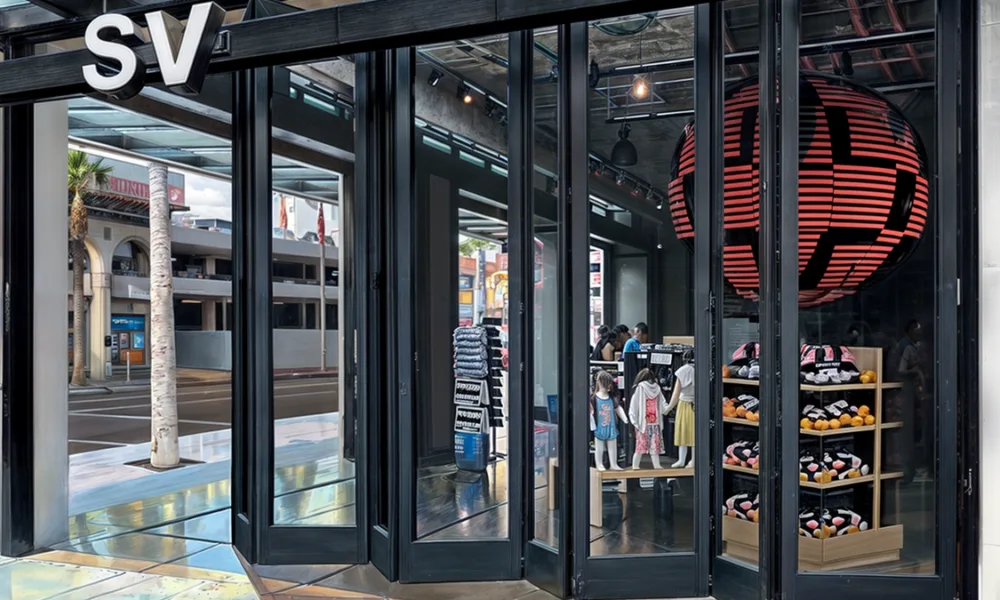
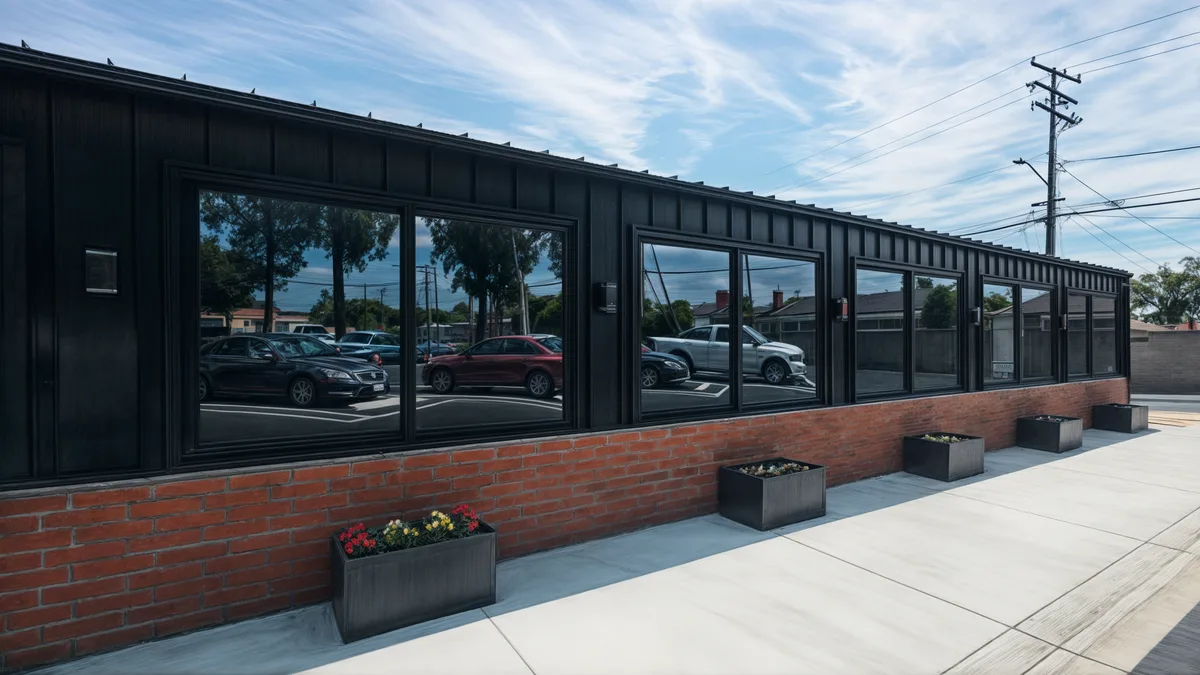
Urban retail building using reflective glass storefront systems to manage sunlight while maintaining a contemporary commercial façade.

Reflective Glass in Mixed-Use Developments and Institutional Buildings

Reflective glass is also commonly used in mixed-use developments and institutional buildings, where a single structure may combine offices, retail spaces, hospitality, or public areas.

In these types of projects, façades must respond to different building functions at the same time. Commercial areas require visibility and an attractive design, while office spaces or guest rooms need to control solar radiation and maintain comfortable indoor conditions.

Reflective glass helps balance these needs by providing solar control, natural lighting, and a consistent aesthetic across the building envelope. This allows complex projects to maintain a cohesive architectural identity even when they integrate multiple functions.

This type of glass is also frequently used in universities, hospitals, airports, and institutional buildings, where glazed façades help maximize natural daylight while controlling solar heat gain.

Reflective Glass Options for Architectural Projects

In commercial architecture, reflective glass is not a single solution. There are different variants that allow the performance of the glass and its visual appearance to be adjusted according to the needs of each project.

Architects typically choose between different tones, levels of reflectivity, and solar performance, depending on the climate, the building’s orientation, and the aesthetic goals of the façade.

Some options feature blue or blue-green tones, which create highly reflective and contemporary façades commonly seen in office towers and modern urban developments. Other variants incorporate bronze or gray tones, offering a warmer or more neutral appearance while still providing solar control and glare reduction.

There are also reflective glass options designed to create stronger mirror effects, often used in projects where the façade is intended to reflect the surrounding urban environment or landscape more prominently.

Specialized manufacturers such as PRL Glass & Aluminum offer a range of reflective glass solutions for architectural applications, including options like Bluegreen Eclipse, Bronze Eclipse, Solar Blue, Solar Gray, Pacifica, Azuria, and Mirro Pane.

These variants allow architects and developers to select the glass that best fits the goals of their project, balancing solar performance, aesthetic appearance, and compatibility with modern façade systems.

Reflective glass has become one of the most widely used materials in contemporary commercial architecture. Its ability to control solar radiation, improve interior comfort, and contribute to a distinctive visual identity makes it a key element in modern façade design.

From curtain wall systems and storefronts to corporate towers, mixed-use developments, and institutional buildings, this type of glass helps balance energy performance, natural lighting, and architectural aesthetics.

In addition, the variety of tones, levels of reflectivity, and performance options available allows each project to select the glass that best fits its climate conditions and design objectives.

For this reason, reflective glass continues to be a relevant solution in projects where glazed façades play a central role in building performance.

Specialized manufacturers such as PRL Glass & Aluminum provide different reflective glass options designed for architectural applications, allowing architects, developers, and contractors to integrate high-performance solutions into commercial projects of various scales.

Glass and Aluminum Manufacturers in University Park

Modern Glass & Aluminum Solutions for Homes & Businesses in University Park

University Park is one of Dallas’s most desirable residential communities, known for elegant homes, tree-lined streets, luxury renovations, and proximity to Southern Methodist University (SMU). Architecture in this neighborhood blends classic residential design with modern upgrades, requiring glass and aluminum systems that deliver performance, durability, and refined aesthetics.

At PRL Glass & Aluminum, we provide modern architectural solutions engineered for University Park’s residential and boutique commercial environments, supporting custom homes, renovations, and high-end design projects with premium materials and precision fabrication.

Building or Renovating in University Park? Connect with PRL Glass & Aluminum Today

Whether you’re renovating a luxury home, building a custom residence, or upgrading a boutique commercial space near SMU, PRL delivers custom fabrication, nationwide logistics, and expert technical support from California.

We proudly support projects throughout University Park, Highland Park, Uptown Dallas, and the greater Dallas metropolitan area.

Service 

Contact Number 

Aluminum Division 

📞 877-775-2586 

Glass Division 

📞 800-433-7044 

📍 Visit our locations in City of Industry, California and explore our wide range of innovative, high-quality aluminum and glass solutions!

Premium Glass & Aluminum Designs for University Park Homes

Homes in University Park emphasize natural light, elegant interiors, and modern functionality. PRL’s premium residential systems enhance these spaces while delivering long-term durability.

All residential systems meet ASTM and NFRC standards.

Glass & Aluminum Solutions for University Park Businesses

University Park includes boutique retail, restaurants, and professional offices that require architectural systems balancing elegance with performance.

  • Curtain Wall Systems: Ideal for office buildings and mixed-use developments
  • Storefront Systems: Clean, modern glass façades for retail and hospitality spaces.
  • Architectural Glass Solutions – Laminated and tempered glass for safety, acoustics, and energy efficiency

PRL systems support both new developments and renovation projects throughout the area.

PRL Glass Aluminum in University Park

Why University Park Developers and Homeowners Trust PRL Glass & Aluminum

University Park projects demand craftsmanship, precision, and long-term reliability—PRL consistently delivers these qualities.

  • Custom fabrication for luxury residential and boutique commercial projects
  • Premium aluminum finishes and large-format glass systems
  • Nationwide manufacturing with dependable delivery timelines
  • Technical support for architects, builders, and designers
  • Proven experience supporting high-end residential environments

Benefits of Glass and Aluminum Systems in University Park

University Park architecture thrives on elegance, comfort, and timeless design—glass and aluminum systems enhance these qualities.

  • Thermal Performance for comfort in Dallas’s warm climate
  • Noise Reduction, enhancing privacy in residential neighborhoods
  • Elegant Architectural Appeal aligned with modern and classic home designs
  • Durability suitable for long-term residential and commercial use
  • Eco-Friendly Materials, supporting sustainable construction practices
  • Battle Door Capability, offering reinforced security against break-ins or vandalism—especially valuable for street-facing retail and luxury homes

Transform Your Space with PRL Glass & Aluminum

Based in California and trusted nationwide, PRL serves Texas and all 50 states with luxury-grade architectural glass and aluminum systems.

From custom sliding doors to boutique storefronts, we deliver craftsmanship designed to elevate your next project.

We are present in the most important neighborhoods in the United States, offering the highest quality service.

Downtown Austin

South Congress (SoCo)

Highland Park

Queen Anne

Capitol Hill

Follow us on social media ✅

Stay tuned for news, events, discounts and new products through the different social media channels.

Glass and Aluminum Manufacturers in Highland Park

Modern Glass & Aluminum Solutions for Homes & Businesses in Highland Park

Highland Park is one of the most prestigious neighborhoods in the Dallas area, known for luxury estates, refined architecture, upscale retail, and beautifully planned residential streets. Projects here demand high-end glass and aluminum systems that combine elegance, durability, and modern performance.

At PRL Glass & Aluminum, we provide modern architectural solutions engineered for Highland Park’s luxury residential and boutique commercial environments, enhancing natural light, security, and architectural value while maintaining the neighborhood’s sophisticated aesthetic.

Building or Renovating in Highland Park? Connect with PRL Glass & Aluminum Today

Whether you’re building a luxury estate, renovating a high-end residence, or upgrading a boutique commercial space, PRL delivers custom fabrication, nationwide logistics, and expert technical support from California.

We proudly support projects throughout Highland Park, University Park, Uptown Dallas, and the greater Dallas metropolitan area.

Service 

Contact Number 

Aluminum Division 

📞 877-775-2586 

Glass Division 

📞 800-433-7044 

📍 Visit our locations in City of Industry, California and explore our wide range of innovative, high-quality aluminum and glass solutions!

Premium Glass & Aluminum Designs for Highland Park Homes

Homes in Highland Park emphasize elegance, natural light, and timeless design. PRL’s premium residential systems are engineered to enhance these luxury interiors and outdoor spaces.

All residential systems meet ASTM, NFRC and LEED standards, ensuring performance and energy efficiency.

Glass & Aluminum Solutions for Highland Park Businesses

Highland Park’s commercial spaces, boutique retail, professional offices, and upscale hospitality, require architectural systems that deliver both prestige and durability.

  • Curtain Wall Systems: Suitable for modern office buildings and mixed-use developments
  • Storefront Systems: Elegant glass façades for luxury retail and street-level commercial spaces
  • Architectural Glass Solutions – Laminated and tempered glass for safety, acoustic performance, and solar control

PRL supports both new developments and high-end renovations in this exclusive Dallas neighborhood.

PRL Glass and ALuminum in Highland Park

Why Highland Park Developers and Homeowners Trust PRL Glass & Aluminum

In one of Texas’s most exclusive residential markets, PRL is trusted for craftsmanship, customization, and reliability.

  • Custom fabrication for luxury residential estates and boutique commercial projects
  • Premium aluminum finishes and large-format glass systems
  • Nationwide manufacturing with dependable delivery timelines
  • Technical support for architects, builders, and designers
  • Proven experience in high-end residential environments

Benefits of Glass and Aluminum Systems in Highland Park

Highland Park architecture thrives on elegance, openness, and long-term value—glass and aluminum systems support these qualities seamlessly.

  • Thermal Performance for comfort in Dallas’s warm climate
  • Noise Reduction, enhancing privacy in residential streets
  • Elegant Architectural Appeal aligned with luxury home design
  • Durability suitable for long-term residential and commercial use
  • Eco-Friendly Materials, supporting sustainable construction practices
  • Battle Door Capability, offering reinforced security against break-ins or vandalism—especially valuable for luxury homes and street-facing retail

Transform Your Space with PRL Glass & Aluminum

Based in California and trusted nationwide, PRL serves Texas and all 50 states with luxury-grade architectural glass and aluminum systems.

From custom sliding doors to boutique storefronts, we deliver craftsmanship designed to elevate your next project.

We are present in the most important neighborhoods in the United States, offering the highest quality service.

Downtown Austin

South Congress (SoCo)

Beacon Hill

Queen Anne

Capitol Hill

Follow us on social media ✅

Stay tuned for news, events, discounts and new products through the different social media channels.

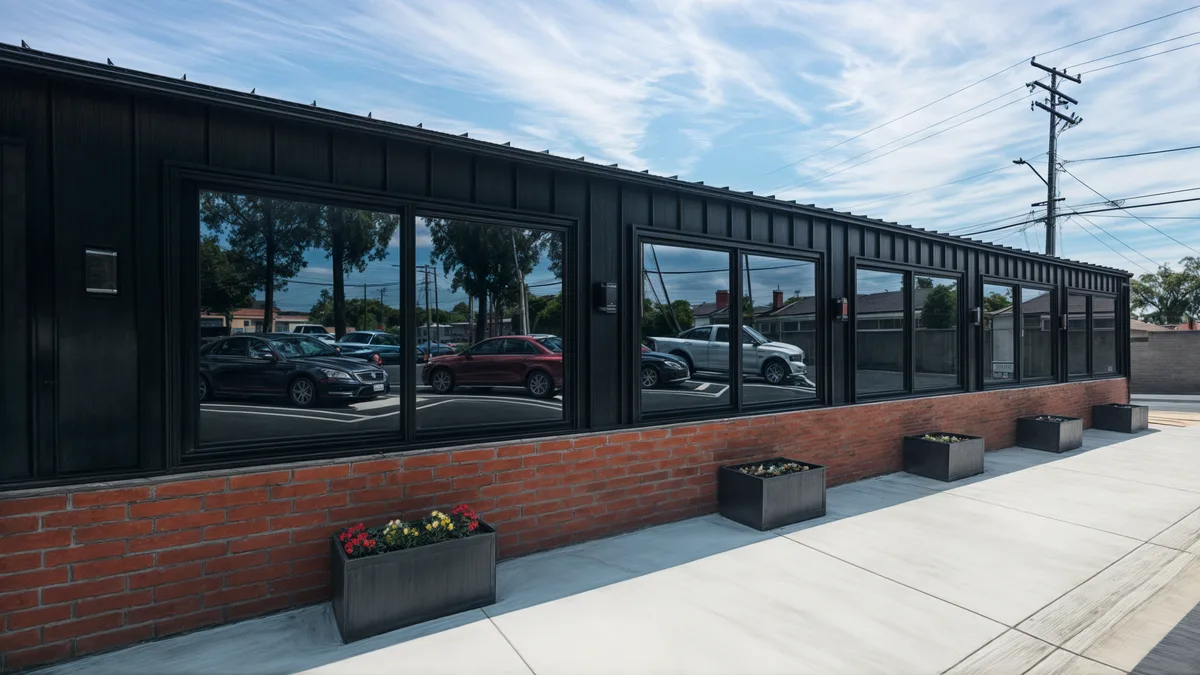
Modern office building façade using reflective glass to improve solar control and reduce heat gain in commercial architecture.

Reflective Glass vs Tinted Glass: Key Differences You Should Know

Home / 2026 / March

When designing a façade or selecting a glazing system for a building, it’s not enough to simply choose what looks good. The type of glass has a direct impact on solar control, indoor comfort, energy efficiency, and the overall appearance of the project.

Two of the most common options are reflective glass and tinted glass. At first glance, they may seem quite similar, since both help reduce the impact of solar radiation and improve the performance of standard clear glass. However, they work in very different ways, and that difference significantly affects how they perform in a building façade.

Reflective glass relies on a metallic coating that reflects a large portion of solar energy, while tinted glass achieves its effect through pigmentation within the body of the glass, absorbing part of the light and heat instead. The difference between reflecting and absorbing energy influences not only the building’s appearance, but also interior temperatures, privacy levels, and the overall performance of the glazing system.

In this article, we’ll break down the real differences between reflective glass and tinted glass, how each type works, and when one may be the better choice depending on the needs of a project.

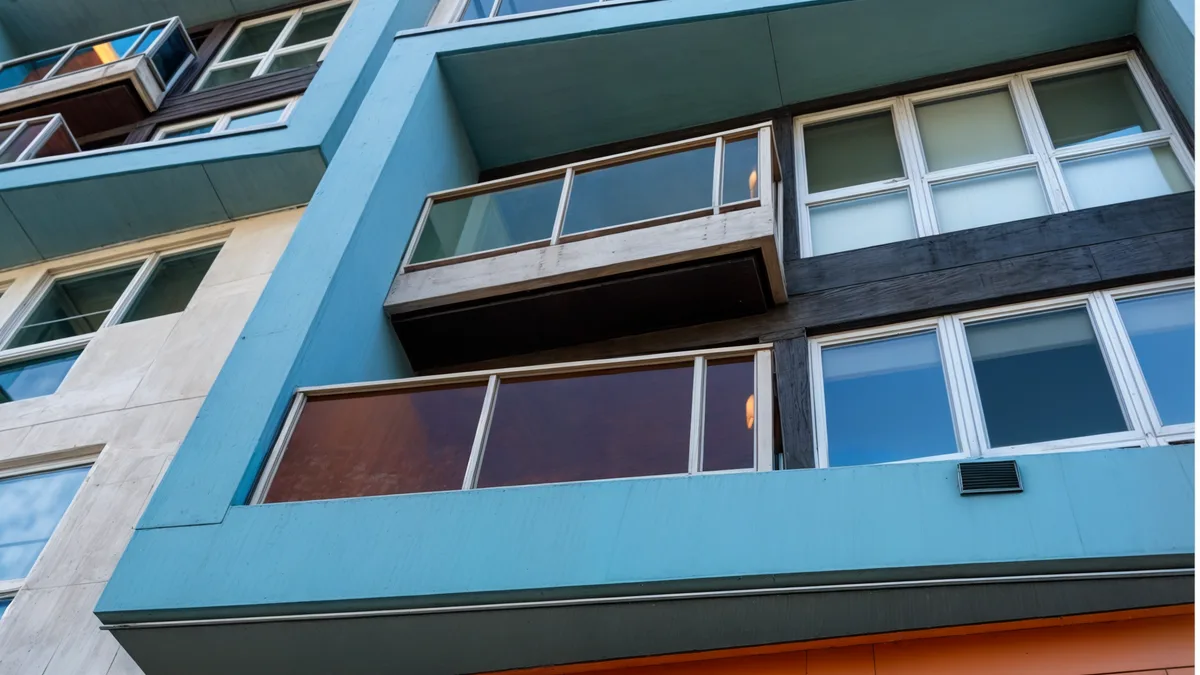
Comparison between reflective glass and tinted glass façades showing differences in solar reflection, color tone, and exterior appearance in modern architecture.

What Is Reflective Glass?

Reflective glass is a type of architectural glass that incorporates a very thin metallic coating on one of its surfaces. This coating changes the way solar radiation interacts with the glass, reflecting part of the energy back toward the exterior.

Because of this property, reflective glass helps reduce solar heat gain, minimize glare, and improve the overall energy performance of a building. At the same time, it creates the characteristic mirror-like appearance often seen on office towers and corporate building façades.

This type of glass is commonly used in curtain wall systems, commercial façades, and buildings with large glazed surfaces, where solar control and energy efficiency play an important role.

If you’d like to explore how this type of glass works in more detail and understand its architectural benefits, you can read our full article on what reflective glass is and how it works. 

What Is Tinted Glass?

Tinted glass is a type of architectural glass that incorporates pigments or metallic additives into the glass during the manufacturing process. These materials give the glass its characteristic color and alter the way it interacts with light and solar radiation.

Unlike reflective glass, which reflects part of the sun’s energy back toward the exterior, tinted glass reduces solar impact primarily by absorbing light and heat. This helps decrease glare and moderate the amount of solar radiation that enters the building interior.

Tinted glass is available in a range of tones, such as bronze, grey, green, or blue, which can also contribute to the overall aesthetic character of a façade or interior design.

Because of its uniform appearance and its ability to soften the intensity of natural light, tinted glass is commonly used in residential windows, commercial buildings, and projects where glare control is needed without creating a mirror-like exterior effect.

Reflective Glass vs Tinted Glass: Key Differences Between the Two Options

Although both reflective glass and tinted glass are used to improve how glass performs against solar radiation, the way they work is completely different. The main difference lies in how each one manages solar energy.

One relies on reflecting radiation, while the other works primarily through heat absorption. This distinction directly affects the building’s thermal performance, the appearance of the façade, and the level of privacy the glass can provide.

Reflection vs Absorption of Solar Energy

The most important difference between these two types of glass is how they control solar energy.

Reflective glass uses a metallic coating that reflects a significant portion of solar radiation back toward the exterior of the building. This reduces the amount of heat entering the interior and helps maintain more stable indoor temperatures.

Tinted glass, on the other hand, does not reflect solar radiation. Instead, it works by absorbing part of the sun’s energy within the glass itself, which reduces glare but can also cause the glass to heat up more.

Solar Heat Gain Control

Because of this operating principle, reflective glass typically provides better control of solar heat gain, especially in buildings with large glazed surfaces or in hot climates.

By reflecting a significant portion of solar energy, this type of glass helps reduce the building’s thermal load and can lower the need for air conditioning inside the space.

Tinted glass also helps reduce heat entering the building. However, because it works through absorption, part of that energy can later be transferred to the interior or to the surrounding area of the glass.

Appearance and Visual Effect on the Façade

Another noticeable difference between these types of glass is their appearance.

Reflective glass creates a mirror-like effect that reflects the surrounding environment, producing modern façades that visually change throughout the day depending on lighting conditions.

Tinted glass, by contrast, offers a more uniform and colored appearance. Instead of reflecting the surroundings, the glass maintains a consistent tone that can integrate easily into different architectural styles.

Daytime Privacy

In terms of privacy, reflective glass generally provides greater daytime privacy. When exterior lighting is stronger than interior lighting, the mirror effect makes it difficult for people outside to see inside the building.

However, this effect depends on lighting conditions. At night, when the building’s interior is illuminated, the glass may become more transparent from the outside.

Tinted glass provides a more moderate level of privacy, since its main function is to filter light rather than create a reflective surface.

Cost and Long-Term Value

Finally, cost is often another factor to consider.

Tinted glass is generally more affordable in terms of initial cost, as its manufacturing process is relatively simple.

Reflective glass may come with a higher cost due to its specialized coating. However, in many projects this can be offset by better solar control and potential long-term energy savings, particularly in commercial buildings or in climates with high solar exposure.

Modern office building façade using reflective glass to improve solar control and reduce heat gain in commercial architecture.

When to Choose Reflective Glass

Reflective glass is often the most suitable option in projects where solar control and energy efficiency are top priorities. Because it reflects a significant portion of solar radiation, this type of glass helps reduce the building’s thermal load and maintain more stable indoor conditions.

For this reason, it is frequently used in commercial buildings, office towers, and façades with large glazed surfaces, where sun exposure can significantly affect interior comfort and energy consumption.

It is also a common solution in curtain wall systems and modern architectural façades, where both performance and contemporary design are important. The mirror-like effect of reflective glass allows architects to create dynamic façades that reflect the surrounding urban environment and visually change throughout the day as lighting conditions shift.

In projects located in hot climates or areas with high solar exposure, reflective glass can improve the overall performance of the building envelope by limiting the amount of heat that enters the interior.

When to Choose Tinted Glass

Tinted glass can be a good option in projects where the main goal is to reduce glare and soften the intensity of natural light without creating a reflective effect on the façade.

Thanks to its uniform color, this type of glass is commonly used in residential windows, smaller-scale buildings, and projects where a more subtle aesthetic or a specific glass tone is desired.

It can also be suitable in temperate climates, where controlling solar heat gain is not as critical as in regions with intense sun exposure. In fact, in some locations, natural shading can already provide sufficient protection from direct sunlight.

Another factor that often influences the choice of tinted glass is the initial cost, since its manufacturing process is relatively straightforward compared to glass that uses specialized coatings.

Choosing the Right Glass for Each Project

Choosing between reflective glass and tinted glass largely depends on the project conditions, climate, and the performance goals of the building.

While tinted glass can be a suitable solution when the goal is to reduce glare and manage natural light in a simple way, reflective glass typically offers greater solar control, improved energy performance, and a more contemporary façade appearance.

In projects with large glazed surfaces, commercial buildings, or locations with high solar exposure, reflective glass often becomes a particularly effective option for improving the building’s thermal performance.

On the other hand, in applications where a more subtle aesthetic, a lower initial cost, or moderate light control is preferred, tinted glass can meet the project’s requirements effectively.

In any case, selecting the right glass should take into account factors such as building orientation, climate conditions, façade design, and the expected energy performance. Specialized manufacturers like PRL Glass & Aluminum provide glazing solutions in both reflective glass and tinted glass, designed for modern façade systems including curtain walls, storefront systems, and architectural projects that require different levels of solar control and performance.

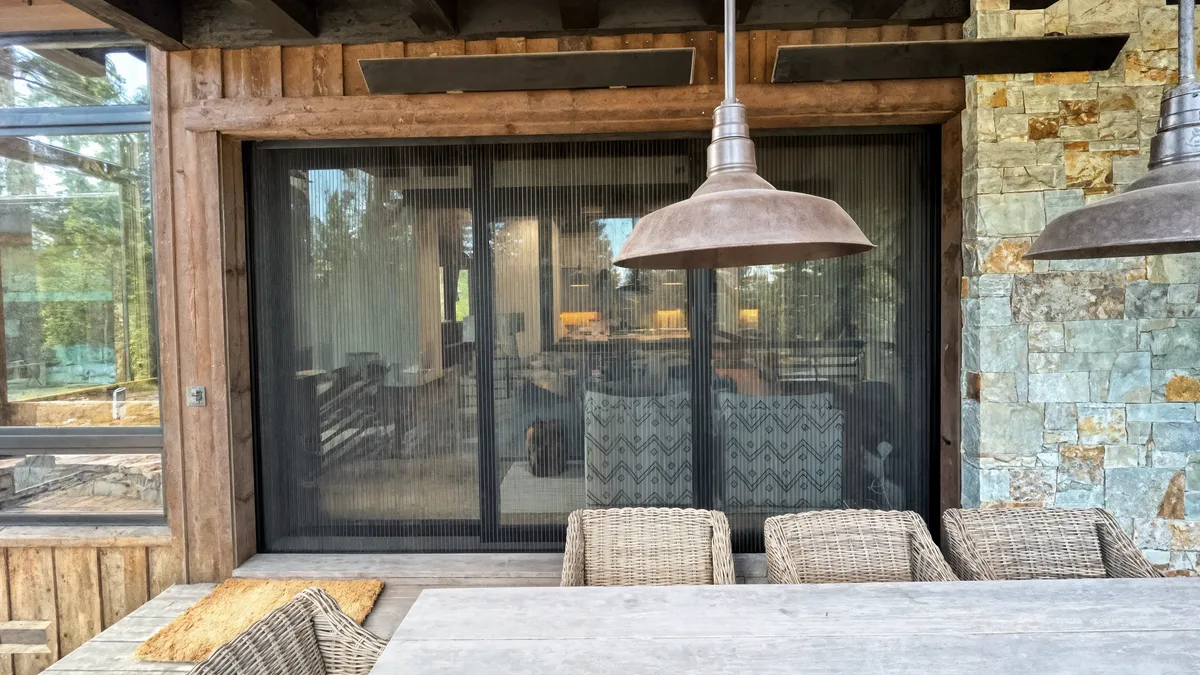
A practical look at how folding patio doors can improve layout, usability, and year-round comfort at home.

The “Open It Up” Dream, Without the Winter Regret

Home / 2026 / March

It’s easy to fall for the fantasy.

A wall of glass folds away, the patio feels like part of the room, and suddenly an ordinary Tuesday feels a little more like a getaway.

Then real-life steps in.

A chilly spot shows up right by the sofa. The handle feels too hot or too cold. The stacked panels take over the side of the room you actually use. And when guests come over, the wide opening somehow turns into an awkward bottleneck.

That’s the part people don’t always think about when choosing multi-panel folding patio doors. The best systems do more than look impressive when open. They need to feel comfortable, easy to use, and well integrated into the room every day, not just in perfect weather.

That is where thoughtful layout, glazing, and frame design start to matter. And when folding doors include thermally broken frames, the opening can feel more comfortable through seasonal temperature swings, which makes the space easier to enjoy year-round.

The Quick Way to Choose

Start with how you actually live in the room. Then choose the details.

Before comparing finishes, panel counts, or glass options, think about the basics:

  • how people move through the space
  • where you sit most often
  • when privacy matters
  • how much sun hits the opening
  • whether the room still needs to feel comfortable when the weather changes

Once those answers are clear, the right setup becomes much easier to identify.Here are a few “best for” ways to think about it.

Best For: Daily Comfort at the Handle and Along the Frame

This is one of the most noticeable benefits of a thermally broken system, because it shows up in the places you touch and use the most.

A thermally broken frame includes an insulating barrier inside the metal. In simple terms, that helps reduce how much outdoor temperature transfers to the interior side of the frame. The result is a door that tends to feel less extreme during hot afternoons, cold mornings, and seasonal swings.

That matters more than people expect.

  • Best for no-flinch mornings: the handle and interior frame are less likely to feel like the weather outside.
  • Best for high-use patio doors: when a doorway is part of your everyday routine, small comfort issues quickly become bigger annoyances.
  • Best for households that are constantly moving in and out: if the opening feels more comfortable to use, people naturally use it more often.

It is a practical difference, but it can shape the whole experience of the room.

Best For: Keeping the Room Functional When the Panels Are Open

Folding doors do not simply disappear. When open, the panels need somewhere to stack, and that stacked area becomes part of the room whether you plan for it or not.

That is why panel stacking should be treated like a layout decision, not an afterthought.

  • Best for protecting your favorite seat: keep the stack away from the chair, sofa corner, or dining spot you use most.
  • Best for cleaner sightlines: place the stack on the side of the room that matters less visually in daily life.
  • Best for fewer compromises later: think of the stacked panels as a tall piece of furniture and decide in advance where you want that “parking spot” to live.

When this is planned well, the opening feels natural. When it is not, the room can end up feeling slightly off every time the doors are open.

Best For: Better Insulation, Privacy, and Glare Control

The glass itself has a huge influence on how a folding door system performs, even though it often gets less attention than the frame.

This is where it helps to think in outcomes rather than technical jargon.

  • Best for a more stable-feeling doorway: pair thermally broken frames with insulated glazing.
  • Best for strong afternoon sun: choose glazing designed to reduce glare.
  • Best for a room that feels more comfortable near the glass: insulated glass options can help reduce that reactive feeling many people notice around large openings.
  • Best for privacy without shutting the room down: consider glazing choices that give you more privacy while still letting in light.

This is also where the system starts to work as a whole. When the frame helps limit temperature transfer and the glazing supports insulation, glare control, or privacy, the opening feels more balanced overall.

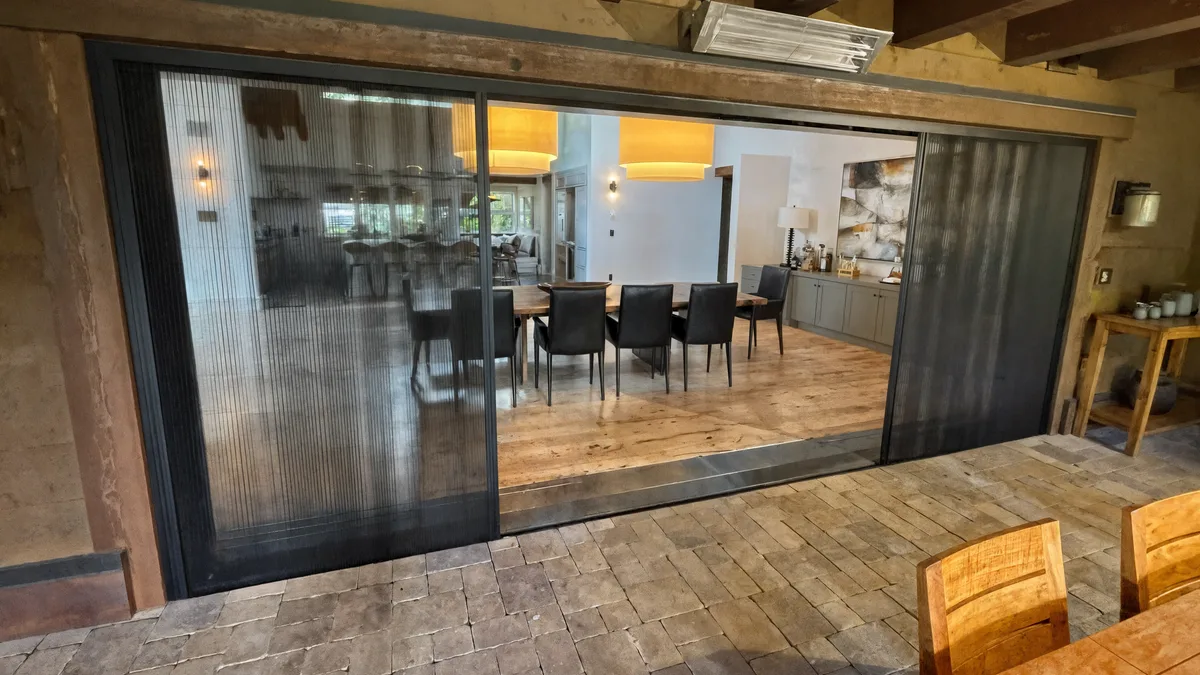
Folding patio doors designed for comfort, natural light, and better everyday flow between indoor and outdoor spaces.

Best For: Hosting Flow That Does Not Turn Into a Bottleneck

Many people choose a large folding opening for the view or the wow factor. In everyday life, though, you end up judging it by how people move through it.

Think about the real routes:

  • from the kitchen to the patio
  • from the patio back to the sink
  • from the dining area to outside
  • kids running in and out
  • someone carrying drinks, plates, or a tray with both hands full

That is where layout matters just as much as appearance.

  • Best for easy hosting: make sure the main walk-through area stays clear when the doors are fully open.
  • Best for everyday movement: create a natural path that does not require people to detour around furniture or stacked panels.
  • Best for flexible rooms: choose a configuration that preserves usable interior space instead of interrupting it.

A wide opening should make the room feel easier to use, not more awkward to navigate.

Best For: A Doorway Edge That Feels More Neutral Year-Round

One of the most overlooked details in large openings is the perimeter effect. Even when a room looks beautiful, people notice when the area near the frame feels warmer, colder, or less comfortable than the rest of the space.

Thermally broken frames are designed to reduce that contrast by helping the interior side of the frame feel less affected by outdoor conditions.

That can improve the room in subtle but important ways.

  • Best for sitting closer to the opening: the area near the frame can feel more usable and less like a “different zone.”
  • Best for a more consistent threshold: the doorway feels more integrated into the room instead of acting like a hard boundary.
  • Best for spaces that get ignored in winter or during weather extremes: the perimeter is less likely to become the part of the room people avoid.

This is not just about technical performance. It is about whether the opening still feels comfortable enough to be part of daily life.

The Part That Matters Most

Folding patio doors work best when they support the way you actually live.

That means thinking beyond the dramatic open-wall effect and asking a few more grounded questions:

  • Where do people sit most often?
  • How do they move through the room?
  • When does privacy matter?
  • What time of day does the sun hit the glass?
  • Will the doorway still feel comfortable when the weather is not ideal?
  • Will you actually use it in January, in summer, and on a completely normal weekday?

Those questions usually reveal more than style samples ever will.

A well-planned folding door system should not feel impressive only when everything is open and the weather is perfect. It should also feel easy on a regular day, when people are moving through the house, sitting near the glass, hosting friends, or simply walking outside with coffee in hand.

That is why frame design, panel stacking, and glazing choices all matter. And when thermally broken frames are part of the equation, the opening can feel more comfortable, more usable, and more consistent through changing conditions.

In the end, the best compliment is a simple one: the doorway gets used, the room feels good, and the big opening you dreamed about actually works in real life.

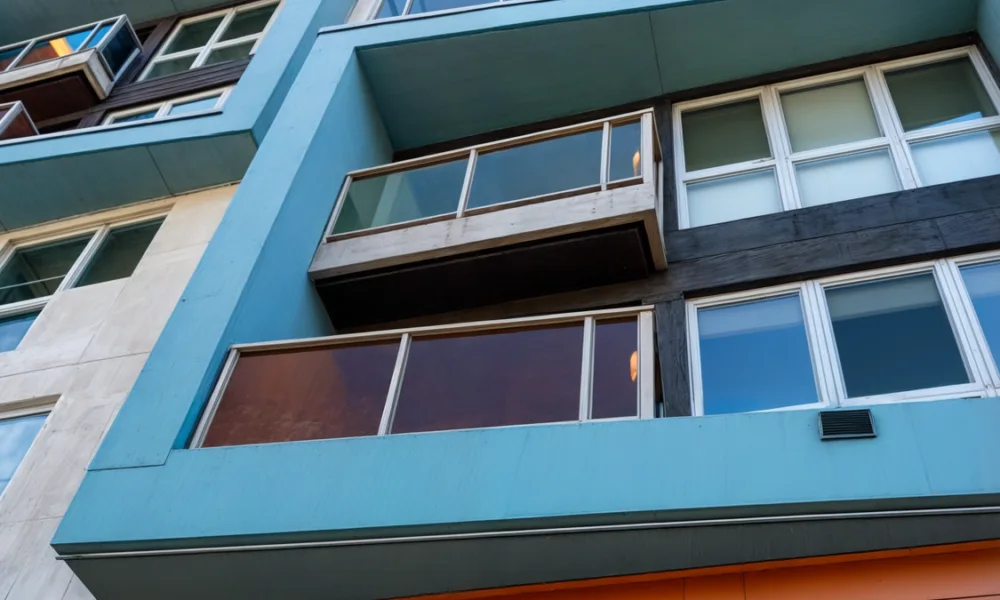
Spaces near windows react first to March weather changes. As outdoor temperatures shift throughout the day, sunlight, glass exposure, and frame materials can influence how quickly heat enters or leaves the room.

March Weather Swings. Why Your Favorite Spot Always Feels It First

Home / 2026 / March

You wake up to a cold floor and a room that feels a little biting. By midday, sunlight hits the glass and your favorite spot feels warmer than it should. Then the sun drops, the temperature falls off fast, and you’re back to hoodie mode.

March has a talent for making a home or building feel undecided.

In many regions, early spring can bring temperature swings of 20°F or more within a single day, which makes indoor spaces react faster than expected.

So, you might even find yourself cracking windows open, then closing them an hour later, just to keep the temperature from drifting.

And if it seems like one area reacts more than the rest, you’re not imagining it. That’s usually where sun, shade, and the perimeter are doing the most work.

Why March Feels So Variable Near Glass

Mornings start cold and slow. Midday conditions can flip quickly, especially on the perimeter. By evening, the room can feel like it’s recalibrating again.

And your HVAC can’t predict this zigzag. It can only respond.

So, comfort becomes less about the thermostat number and more about how quickly one area gains heat, loses heat, or feels different the moment you step closer to the perimeter.

Why One Room Can Feel Like Two

Most March discomfort isn’t across the whole room. It’s along the edges. That’s where you’ll notice things like:

  • A couch corner that feels colder than the center
  • A sunny patch that flips from pleasant to distracting
  • An entry area that feels fine until the weather changes again

Those are the “high-impact variables” in real life. Small, specific spots that swing first, even when the rest of the room feels mostly normal.

March just makes those contrasts easier to notice.

The Window Factor Behind March Swings

When outdoor conditions change hour to hour, the areas near windows and frames often feel it first.

One non-technical factor matters a lot here: how easily heat moves through the frame.

A thermally broken window is designed to slow that heat transfer by separating the inside and outside portions of the frame with a non-conductive barrier.

This type of design helps reduce what architects call thermal bridging, which is when heat quickly travels through conductive materials like aluminum.

Many modern aluminum window systems use thermally broken frames to make indoor spaces feel less reactive during fast temperature shifts.

Early spring temperature swings can cause indoor comfort to change quickly near windows. Sunlight warming the glass during the day and cooler outdoor air at night often make perimeter areas of a room feel colder in the morning and warmer by the afternoon.

Three Small Tweaks That Help Fast

No overhaul needed. The win is smoothing out the swings, not chasing perfect. March comfort usually improves with steady, low-key adjustments, not constant thermostat whiplash.

1) Treat Sunlight Like a Dimmer Switch

If afternoon sun is heating one side of the room fast, don’t wait until it feels unbearable.

Close window shades partway before the brightest stretch. Open them again once the sun shifts. You’re reducing the spike, not blocking daylight all day.

If glare is part of your March annoyance, notice when it hits. Morning glare and late-day glare usually call for different shade timing.

2) Pick One “Open Window” Plan and Stick With It

In March, people often flip settings constantly and wonder why the room feels inconsistent.

So, for one week, keep it simple. If you like fresh air, crack windows open the same way at the same time of day. If you don’t, keep them closed and let the HVAC do the work.

The goal is consistency, so the room stops feeling like it’s changing personalities every hour.

3) Don’t Force the Problem Areas to Be Your Main Areas

If one seat or work spot feels noticeably colder or warmer than everything else, don’t treat that as a flaw in the whole room.

Try moving the chair, desk, or small table a bit. Even a short shift can change how your body reads the space.

And if the “cold spot” is always near the same window wall, that’s useful information. It may point to what designers often call a cold wall effect, rather than a whole-house issue.

Thinking About Window Upgrades?

If you’re planning upgrades this spring, March is often when people start noticing how much their windows influence indoor comfort.

Insulated glass units (IGUs), for example, are designed to slow down rapid temperature changes by adding an extra layer of insulation between interior and exterior environments.

Double-glazed units with tempered glass are commonly used in modern aluminum window systems because they help stabilize indoor temperatures while maintaining durability and safety.

For projects that require additional protection, windows can also be manufactured with impact-resistant or anti-intrusion glass, depending on the needs of the building.

If March has you constantly adjusting shades, airflow, and seating spots, it may simply be a sign that your windows are working harder than they should.

And in many cases, improving glazing performance can help create a more stable and comfortable indoor environment throughout the changing seasons.