






-
Jan, Wed, 2026
Modern Glass & Aluminum Solutions for Homes & Businesses in River North
River North is one of Chicago’s most design-driven neighborhoods, home to luxury high-rise residences, boutique hotels, galleries, restaurants, and creative offices.
With its mix of iconic architecture and contemporary development, projects in River North demand high-performance glass and aluminum systems that deliver durability, energy efficiency, and refined aesthetics.
At PRL Glass & Aluminum, we provide modern architectural solutions engineered for River North’s urban environment, supporting luxury residential towers and high-visibility commercial spaces with precision and premium finishes.
Building or Renovating in River North? Connect with PRL Glass & Aluminum Today
Whether you’re upgrading a luxury condominium, developing a mixed-use project, or designing a street-level retail or hospitality space, PRL delivers custom fabrication, nationwide logistics, and expert technical support from California.
We proudly support projects throughout River North, The Loop, Streeterville, and the greater Chicago metro area.
Service | Contact Number |
Aluminum Division | 📞 877-775-2586 |
Glass Division | 📞 800-433-7044 |
📍 Visit our locations in City of Industry, California and explore our wide range of innovative, high-quality aluminum and glass solutions!
Premium Glass & Aluminum Designs for River North Residences
River North residences are defined by floor-to-ceiling windows, skyline views, and modern interiors. PRL’s premium residential systems are engineered to enhance these spaces while delivering long-term performance.
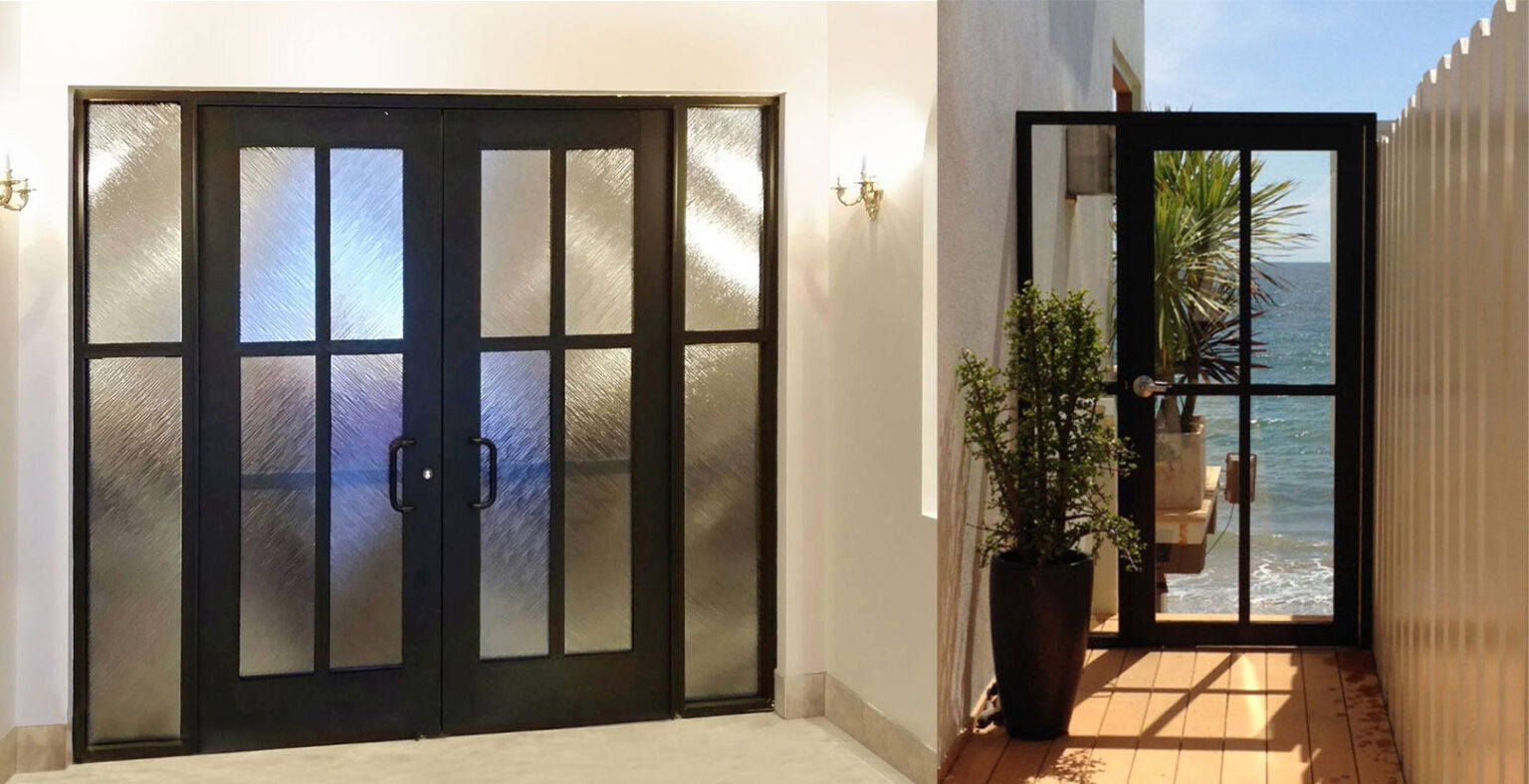
- Sliding Glass Doors: Large-format systems ideal for balconies and indoor–outdoor living in high-rise buildings
- Residential Aluminum Doors: High-performance profiles combining security, durability, and modern design
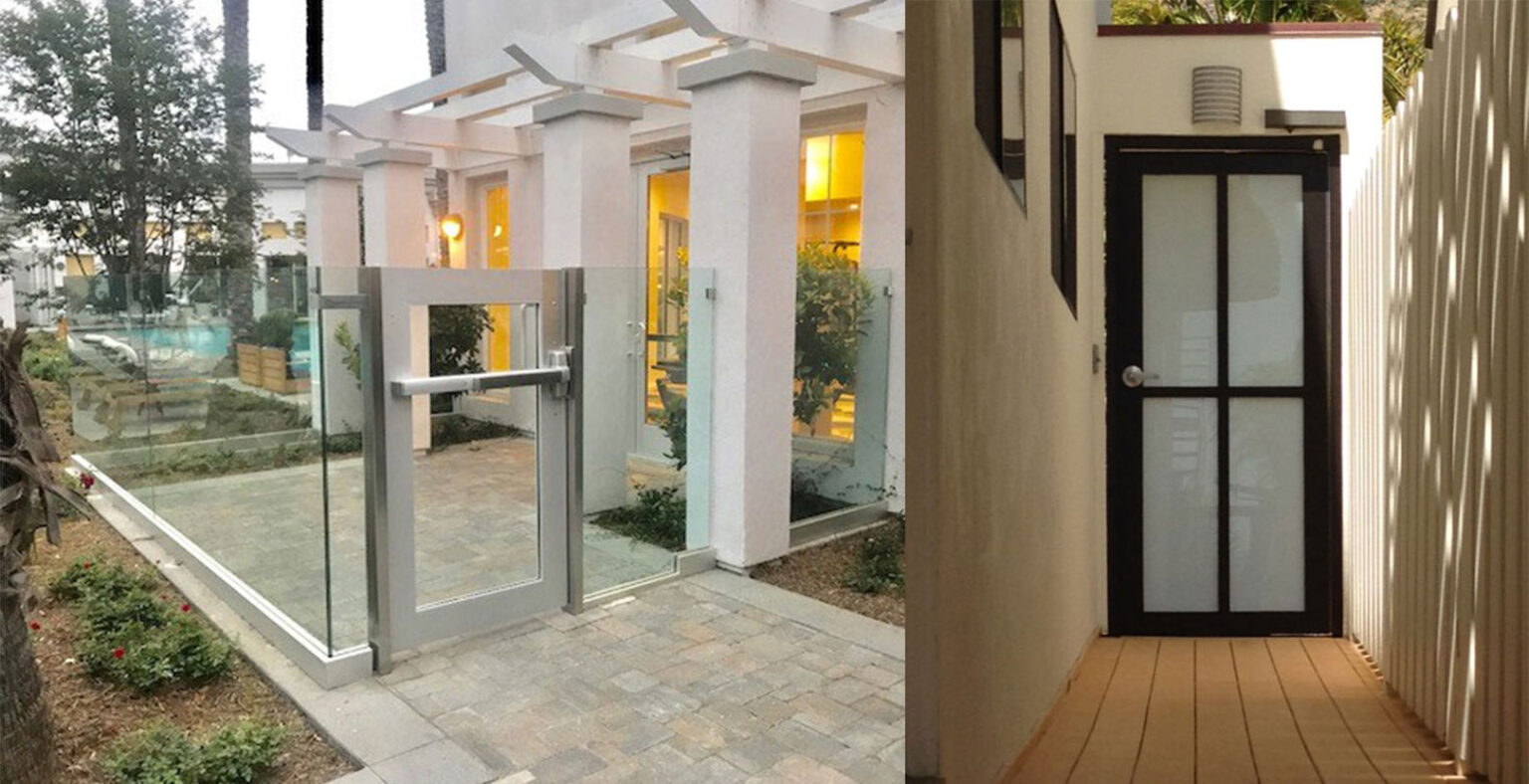
- Glass Handrails: Essential for balconies, terraces, and interior staircases without obstructing views
- Luxury Shower Sliders: Frameless, luxury systems for contemporary condominium bathrooms
- Custom Glass Table Tops: Custom architectural glass for refined interiors and modern furnishings
All residential systems meet ASTM and NFRC standards, supporting energy efficiency and code compliance.
Glass & Aluminum Solutions for River North Businesses
River North’s commercial landscape (boutique hotels, restaurants, galleries, and retail) demands architectural systems that combine visibility, branding, and durability.
- Curtain Wall Systems: Ideal for office buildings, hotels, and mixed-use developments
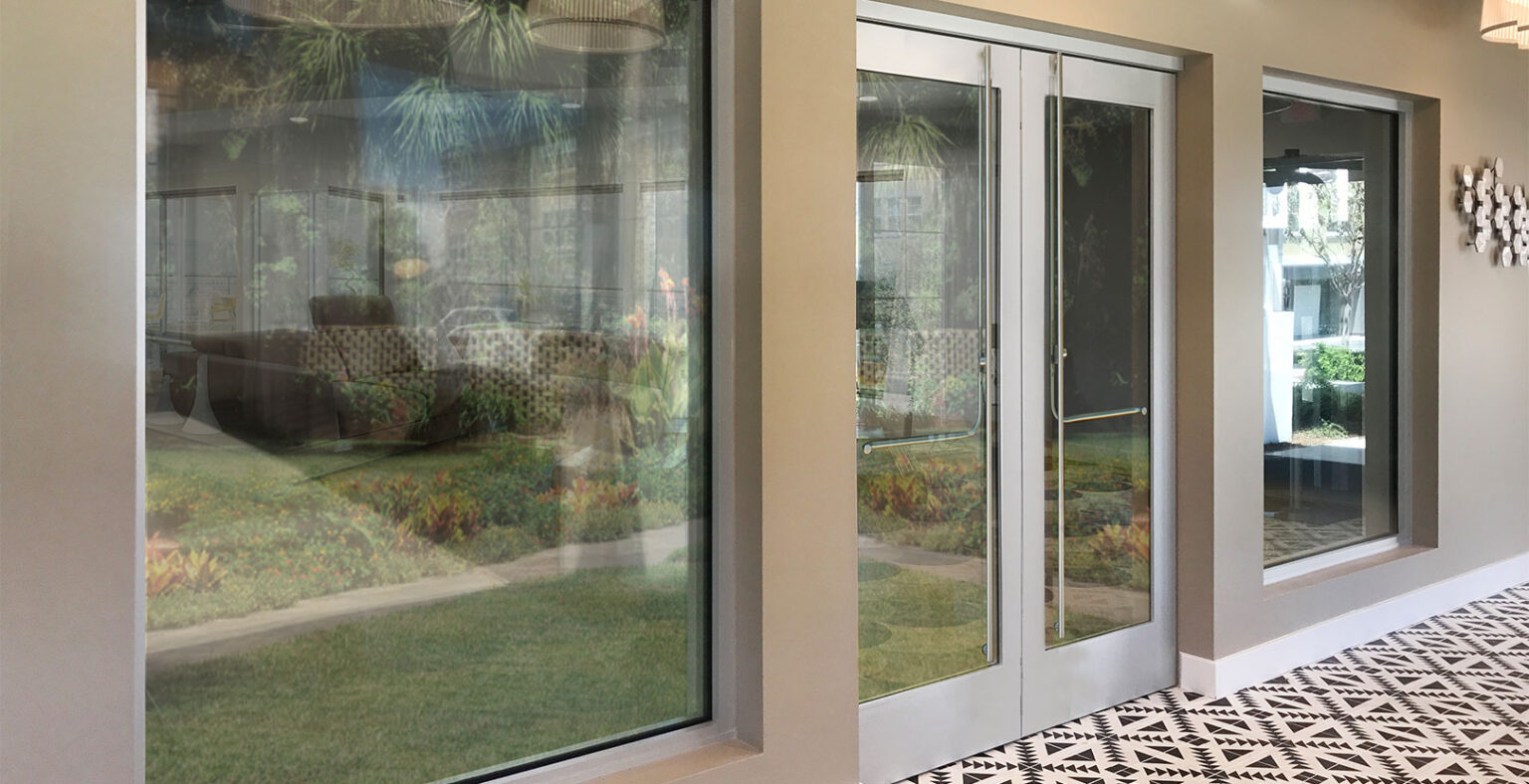
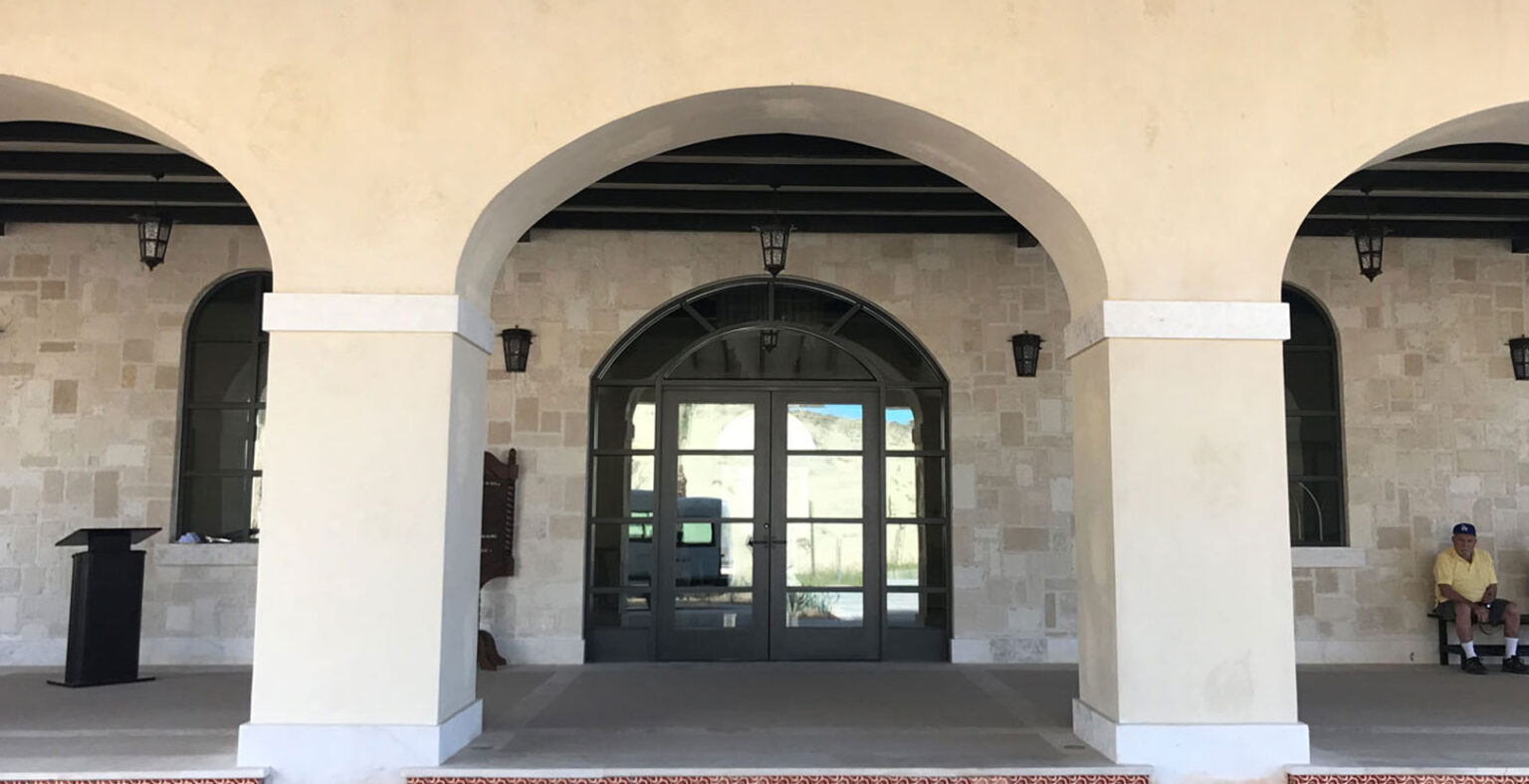
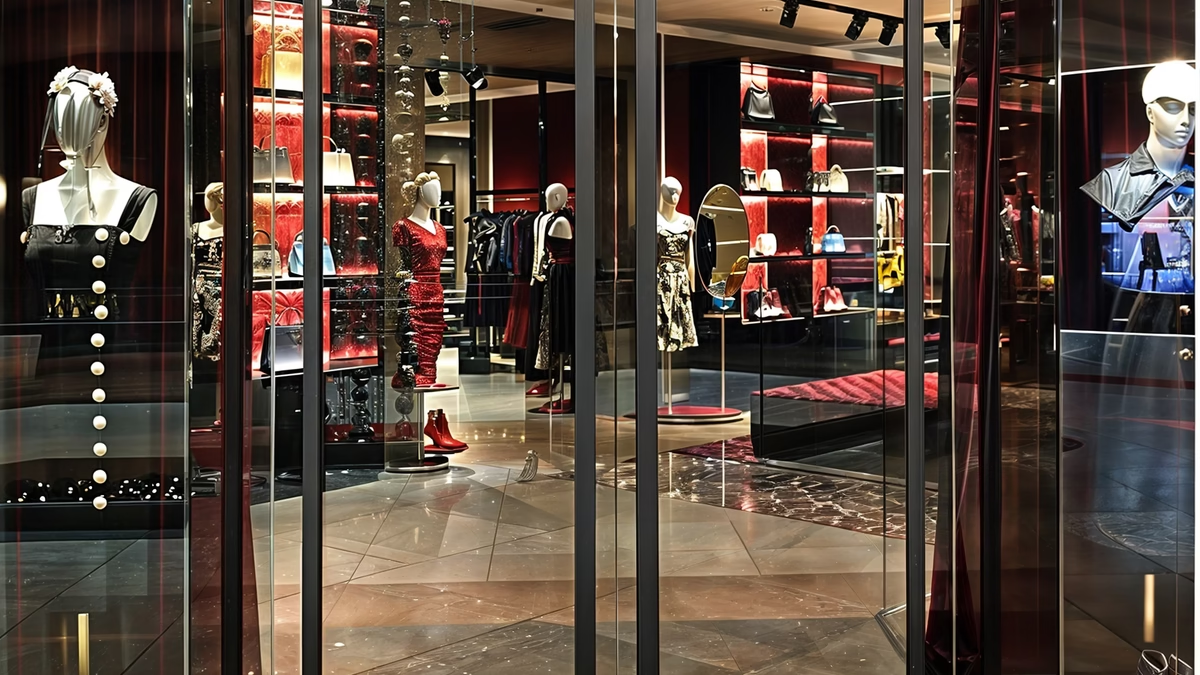
- Storefront Systems: Clean, modern façades for street-facing retail and hospitality spaces
Architectural Glass Solutions – Laminated and tempered glass for safety, acoustics, and solar control
PRL systems support both new construction and premium renovations in one of Chicago’s most competitive districts.

Why River North Developers and Homeowners Trust PRL Glass & Aluminum
River North projects require precision, speed, and a deep understanding of urban construction, PRL delivers on all fronts.
- Custom fabrication for luxury residential and boutique commercial projects
- Large-format glazing systems designed for urban density and climate demands
- Nationwide manufacturing with reliable lead times
- Technical support for architects, developers, designers, and builders
- Proven experience supporting high-profile, design-forward environments
Benefits of Glass and Aluminum Systems in River North
River North architecture thrives on transparency, verticality, and modern expression—glass and aluminum systems are essential to this identity.
- Thermal Performance for year-round comfort in Chicago’s variable climate
- Noise Reduction, critical in a dense, high-traffic urban environment
- Elegant Architectural Appeal aligned with contemporary residential and commercial design
- Durability suitable for high-rise residential and street-level commercial applications
- Eco-Friendly Materials, supporting LEED and sustainability-focused projects
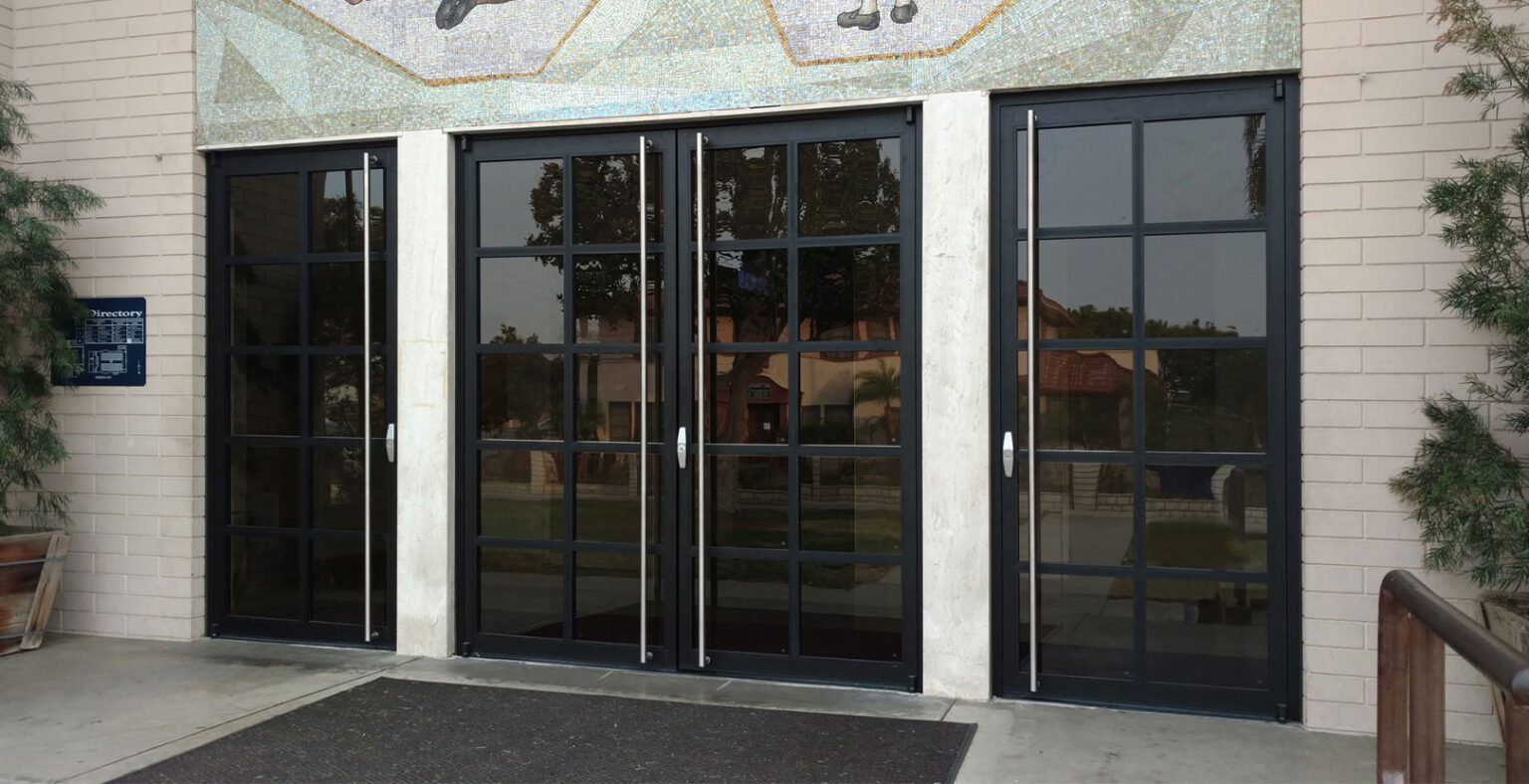
- Battle Door Capability, offering reinforced security against break-ins, vandalism, or protests—especially important for street-level retail and hospitality venues
Transform Your Space with PRL Glass & Aluminum
Based in California and trusted nationwide, PRL serves Illinois and all 50 states with luxury-grade architectural glass and aluminum systems.
From custom sliding doors to boutique storefronts, we deliver craftsmanship designed to elevate your next project.
We are present in the most important neighborhoods in the United States, offering the highest quality service.
✅ Wynwood
✅ Nob Hill
Follow us on social media ✅
Stay tuned for news, events, discounts and new products through the different social media channels.
-
Jan, Wed, 2026
Modern Glass & Aluminum Solutions for Homes & Businesses in the Mission District
The Mission District is one of San Francisco’s most dynamic neighborhoods, known for adaptive reuse projects, modern residential developments, creative offices, and vibrant street-level retail.
Architecture in the Mission blends historic structures with contemporary design, requiring glass and aluminum systems that deliver durability, flexibility, and strong visual impact.
At PRL Glass & Aluminum, we provide modern architectural solutions tailored to the Mission District’s evolving landscape, supporting residential upgrades, mixed-use developments, and design-driven commercial spaces with premium performance and finishes.
Building or Renovating in the Mission District? Connect with PRL Glass & Aluminum Today
Whether you’re renovating a classic building, developing modern apartments, or designing a high-visibility storefront, PRL delivers custom fabrication, nationwide logistics, and expert technical support from California.
We proudly support projects throughout Mission District, Potrero Hill, Bernal Heights, and the greater San Francisco Bay Area.
Service | Contact Number |
Aluminum Division | 📞 877-775-2586 |
Glass Division | 📞 800-433-7044 |
📍 Visit our locations in City of Industry, California and explore our wide range of innovative, high-quality aluminum and glass solutions!
Premium Glass & Aluminum Designs for Mission District Residences
Mission District residential projects prioritize openness, light, and modern functionality. PRL’s premium residential systems elevate interiors while delivering durability and comfort.
- Sliding Glass Doors: Large-format systems ideal for patios, courtyards, and indoor–outdoor transitions
- Residential Aluminum Doors: Clean, modern profiles designed for security and daily use
- Glass Handrails: Minimalist solutions for staircases, balconies, and mezzanines
- Luxury Shower Sliders: Contemporary, frameless designs for modern bathrooms
- Custom Glass Table Tops: Custom architectural glass for creative interiors and bespoke furnishings
All residential systems meet ASTM and NFRC standards, ensuring top-tier durability.
Glass & Aluminum Solutions for Mission District Businesses
The Mission’s commercial environment (restaurants, cafes, retail, studios, and creative offices) demands architectural systems that balance branding, transparency, and resilience.
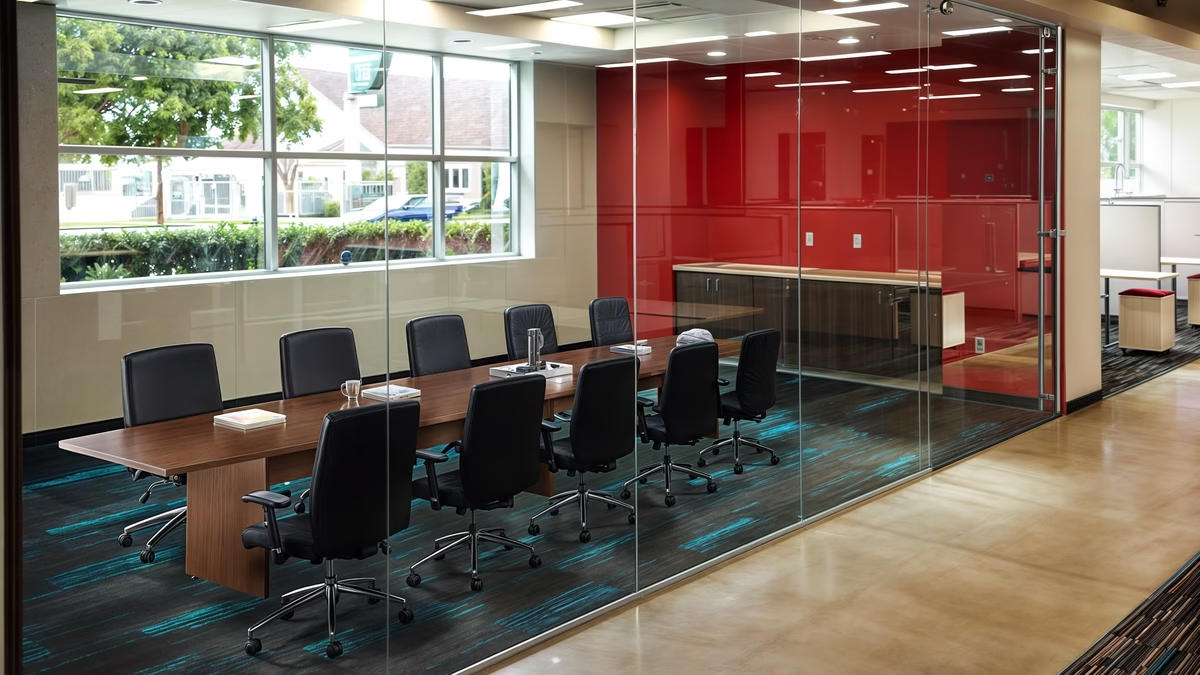
- Curtain Wall Systems: Ideal for mixed-use developments and modern commercial buildings
- Storefront Systems: High-clarity glass façades for street-facing retail and dining.
Architectural Glass Solutions – Laminated and tempered glass for safety, acoustics, and solar control
PRL systems support both new construction and renovation projects in high-traffic, urban settings.

Why Mission District Developers and Homeowners Trust PRL Glass & Aluminum
Mission District projects require adaptable systems and a partner experienced in urban construction, PRL delivers both.
- Custom fabrication for modern residential and adaptive reuse projects
- Premium aluminum finishes and large-format glazing options
- Nationwide manufacturing with reliable lead times
- Technical support for architects, designers, builders, and developers
- Proven experience in creative, mixed-use environments
Benefits of Glass and Aluminum Systems in the Mission District
Mission District architecture thrives on openness, flexibility, and modern expression, glass and aluminum systems support this seamlessly.
- Thermal Performance for year-round comfort in residential and commercial spaces
- Noise Reduction, important in active, high-density neighborhoods
- Modern Architectural Appeal aligned with contemporary and industrial design
- Durability suitable for high-traffic residential and retail environments
- Eco-Friendly Materials, supporting LEED and sustainability-focused projects
- Battle Door Capability, offering reinforced security against break-ins, vandalism, or protests, especially critical for street-level retail and hospitality spaces
Transform Your Space with PRL Glass & Aluminum
Based in California and trusted nationwide, PRL serves all 50 states with luxury-grade architectural glass and aluminum systems.
From custom sliding doors to boutique storefronts, we deliver craftsmanship designed to elevate your next project.
We are present in the most important neighborhoods in the United States, offering the highest quality service.
✅ Wynwood
✅ Nob Hill
Follow us on social media ✅
Stay tuned for news, events, discounts and new products through the different social media channels.
-
Jan, Wed, 2026
Modern Glass & Aluminum Solutions for Homes & Businesses in Nob Hill
Nob Hill is one of San Francisco’s most iconic neighborhoods, recognized for its historic buildings, luxury residences, boutique hotels, and refined streetscapes. Projects in Nob Hill demand architectural systems that respect classic character while delivering modern performance, particularly for renovations, seismic considerations, and comfort upgrades.
At PRL Glass & Aluminum, we provide modern glass and aluminum solutions engineered to integrate seamlessly into Nob Hill’s architectural fabric, enhancing light, energy efficiency, and durability without compromising elegance.
Building or Renovating in Nob Hill? Connect with PRL Glass & Aluminum Today
Whether you’re restoring a historic residence, upgrading a luxury apartment, or refining a boutique commercial space, PRL delivers custom fabrication, nationwide logistics, and expert technical support from California.
We proudly support projects throughout Nob Hill, Russian Hill, Union Square, and the greater San Francisco Bay Area.
Service | Contact Number |
Aluminum Division | 📞 877-775-2586 |
Glass Division | 📞 800-433-7044 |
📍 Visit our locations in City of Industry, California and explore our wide range of innovative, high-quality aluminum and glass solutions!
Premium Glass & Aluminum Designs for Nob Hill Homes
Nob Hill residences prioritize refinement, comfort, and long-term value. PRL’s premium residential systems are designed to elevate interiors while meeting modern performance standards.
- Sliding Glass Doors: Discreet, large-format systems for terraces and interior transitions
- Residential Aluminum Doors: Elegant profiles offering security, strength, and longevity
- Glass Handrails: Ideal for staircases, lofts, balconies, and terraces, our handrails merge safety with elegant transparency, popular for upscale interior remodels.
- Luxury Shower Sliders: Minimalist upgrades for luxury bathroom renovations
- Custom Glass Table Tops: Custom architectural glass for classic interiors and bespoke furnishings
All residential systems meet ASTM and NFRC standards, supporting compliance and performance.
Glass & Aluminum Solutions for Nob Hill Businesses
Nob Hill’s commercial presence (boutique hotels, professional offices, and street-level retail) requires architectural glazing that balances discretion with performance.
- Curtain Wall Systems: Suitable for low-rise commercial and hospitality renovations
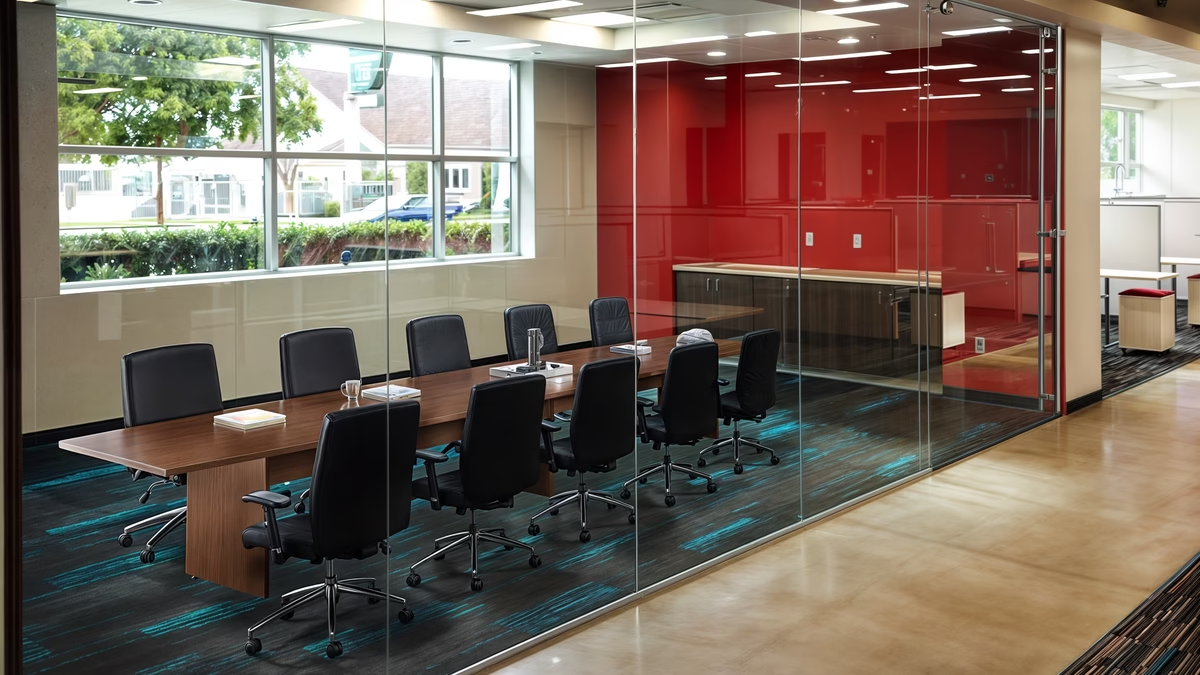
- Storefront Systems: Refined façades that complement historic streetscapes
Architectural Glass Solutions – Laminated and tempered glass for safety, acoustics, and thermal efficiency
PRL supports both renovations and selective new installations with precision and care.

Why Nob Hill Developers and Homeowners Trust PRL Glass & Aluminum
In a neighborhood where craftsmanship and detail define value, PRL is trusted for reliability and customization.
- Custom fabrication for historic renovations and luxury residences
- Systems designed to integrate with classic architecture and modern codes
- Nationwide manufacturing with reliable lead times
- Technical support for architects, builders, and designers
- Proven experience in high-end residential and hospitality environments
Benefits of Glass and Aluminum Systems in Nob Hill
Nob Hill architecture thrives on timeless design enhanced by modern comfort, glass and aluminum systems support this balance.
- Thermal Performance for year-round comfort in historic and renovated buildings
- Noise Reduction, essential for privacy in dense urban settings
- Elegant Architectural Appeal aligned with classic façades and refined interiors
- Durability suitable for long-term residential and boutique commercial use
- Eco-Friendly Materials, supporting LEED and sustainability-focused projects
- Battle Door Capability, offering reinforced security against break-ins or vandalism, important for street-facing residences and boutique hospitality spaces
Transform Your Space with PRL Glass & Aluminum
Based in California and trusted nationwide, PRL serves New all 50 states with luxury-grade architectural glass and aluminum systems.
From custom sliding doors to boutique storefronts, we deliver craftsmanship designed to elevate your next project.
We are present in the most important neighborhoods in the United States, offering the highest quality service.
✅ Wynwood
✅ Brickell
Follow us on social media ✅
Stay tuned for news, events, discounts and new products through the different social media channels.
-
Jan, Tue, 2026
Sound Resistant Glass for Doors and Windows: A Technical Guide for Architects
When discussing noise control in glazed façades, doors, and windows, the role of glass is often oversimplified or approached from a more commercial than technical perspective.
Glass is one of the most important and complex elements within a building’s acoustic envelope. Its acoustic performance doesn’t depend solely on thickness or the number of layers, but on how it interacts with the entire system: frames, seals, hardware, air cavities, and installation conditions.
This guide provides a clear, technical overview of what sound-resistant glass actually is, how it performs in doors and windows, and which configurations deliver consistent results in real-world projects.
The goal isn’t absolute silence, which is rarely viable or even desirable. Instead, it’s the conscious design of systems that achieve an appropriate level of acoustic comfort aligned with the building’s use, urban context, and overall project objectives.
How Sound Travels Through Glazed Systems
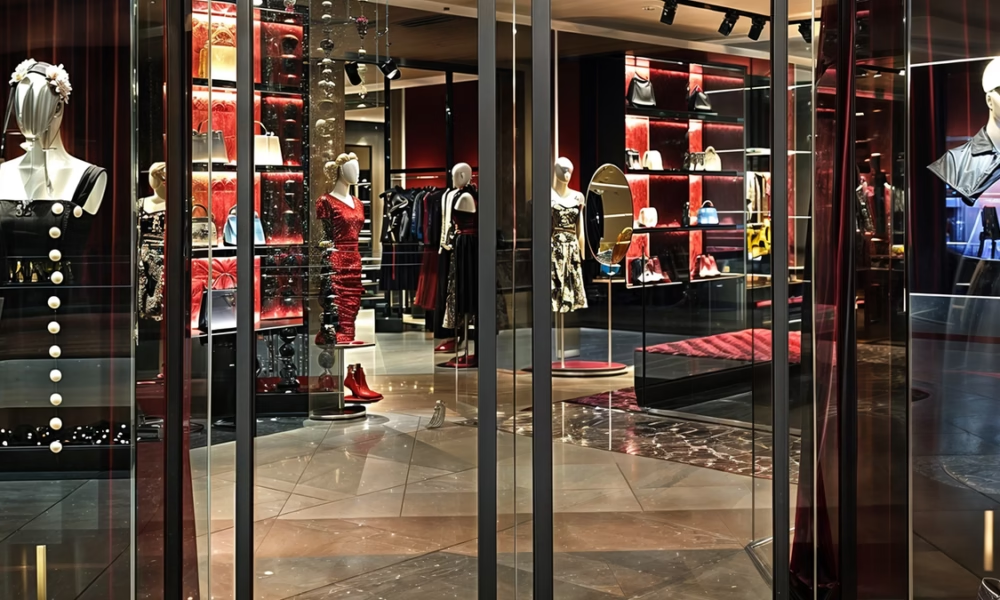
In doors and windows, sound doesn’t travel through the glass alone. It’s transmitted through the entire system, exploiting any weak points where vibration, discontinuity, or air leakage is present.
From an acoustic standpoint, sound can enter an interior space mainly through three mechanisms:
💡 Direct airborne transmission: Sound waves strike the glass and induce vibration. If the system lacks sufficient mass or effective vibrational control, that energy is transmitted indoors. This phenomenon is especially relevant in the presence of constant urban noise, such as vehicular traffic, voices, or commercial activity.
💡 Air leakage and inadequate sealing: Small breaks at joints, frame interfaces, or hardware locations allow noise to pass through with minimal reduction, even when the glass itself has good acoustic performance. In many cases, these weak points become the primary path for sound transmission.
💡 Structural transmission: In large-format doors and windows, part of the sound energy can travel through the frame, profiles, and fixing elements. This type of transmission is more common in sliding doors, poorly engaged systems, or façades with extensive glazed areas, where structural vibration plays a significant role.
For this reason, the acoustic performance of glass should never be evaluated in isolation. Sound resistant glass only performs as intended when it’s part of a coherent system that addresses:
- Compatibility between the glass and frame
- Continuous and properly controlled sealing
- Structural stability of the assembly
- Precision and quality of installation
For a deeper, technical analysis, you may refer to our study on how sound travels through doors and windows, which examines these mechanisms from a real-world, project-based perspective.
Sound Resistant vs. Soundproof: Technical Definitions Architects Should Know
In everyday language (and especially in marketing) the term “soundproof” is frequently used to describe any solution that reduces noise. From a technical and regulatory perspective, however, it isn’t a precise concept and isn’t appropriate for architectural specification.
Why Isn’t “Soundproof” a Technical Term? “Soundproof” implies the complete elimination of sound, something that doesn’t occur in practice in door and window systems. No glazed enclosure can guarantee absolute acoustic isolation, as sound is also transmitted through other building elements such as walls, slabs, structural junctions, and ventilation systems.
For this reason, “soundproof” doesn’t appear as a formal term in standards, technical data sheets, or specification documents. Its use often creates unrealistic expectations among both clients and project teams.
The technically correct terms are “sound resistant” or “sound insulation”, which refer to the measurable ability of a system to reduce sound transmission within a defined frequency range.
In specification, sound resistant glass or systems are defined by:
- Measured performance (STC, OITC, or other acoustic indices)
- Glazing configuration (laminated glass, air cavities, asymmetrical thicknesses)
- Integration with frames, seals, and hardware
- Actual installation conditions
In other words, “sound resistant” doesn’t describe an isolated product. It describes the acoustic behavior of a complete system, designed to reduce sound to levels compatible with the intended use of the space.
Acoustic Comfort as a Design Objective (Not Absolute Silence)
From an architectural perspective, the goal isn’t total silence, but acoustic comfort. This means reducing exterior noise to a level that doesn’t interfere with the function of the space—rest, concentration, communication, or user experience.
A successful acoustic design allows sound to stop being dominant or intrusive, even if a certain level of ambient noise remains. In urban contexts, this approach isn’t only more realistic, but also more consistent with how users perceive and inhabit spaces.
How Sound Travels Through Glass Systems
In doors and windows, sound doesn’t travel only through the glass itself. In practice, it spreads through the entire glazed system, exploiting any points where vibrations, structural continuity, or air leakages exist.
From an acoustic standpoint, sound reaches interior spaces primarily through three paths, which often act simultaneously.
Airborne Transmission vs. Structural Transmission
Airborne transmission occurs when sound waves travel through the exterior air and strike the glass surface. The glass responds by vibrating, allowing part of that energy to pass into the interior. This is the dominant mechanism for common urban noise such as traffic, voices, commercial activity, and constant background sound.
Structural transmission, on the other hand, happens when sound doesn’t pass directly through the glass but instead travels through solid elements of the system. This includes frames, profiles, tracks, anchors, or connections to the building structure. This type of transmission is especially relevant in sliding doors, large-format systems, and façades with extensive glazed areas.
Improving the glass alone doesn’t eliminate structural transmission if the rest of the system remains rigid or poorly decoupled acoustically.
Glass Vibration and Resonance Phenomena
Glass behaves as a vibrating element when exposed to sound waves. Within certain frequency ranges, it can reverberate, amplifying sound instead of reducing it.
This effect is more common in:
- Thin monolithic glass
- Symmetrical glazing configurations
- Systems without reverberation control
For this reason, simply increasing glass thickness doesn’t always improve acoustic performance. Controlling vibration is just as important as adding mass. This is where laminated glass with acoustic interlayers plays a key role, as it absorbs part of the vibrational energy and reduces resonance across a broader range of frequencies.
The Role of Frames, Seals, and Hardware in Final Performance
Even high-performance sound resistant glass can fail acoustically if the surrounding system is not properly designed.
- Frames must be structurally compatible with the glass configuration and support its weight without creating rigid bridges that transmit sound.
- Seals and gaskets are critical, as sound requires air to propagate. Small breaks along the perimeter allow noise to pass with minimal attenuation.
- Hardware and operable systems, especially in doors and windows, often become weak points if they’re not properly detailed or acoustically muffled.
For this reason, acoustic performance should never be evaluated at the glass level alone. A sound–resistant system performs correctly only when glass, frames, seals, hardware, and installation methods work together as a coordinated whole.
Types of Sound Resistant Glass Used in Architectural Projects
Not all glass solutions designed for acoustic control operate under the same principles or deliver the same level of performance. In architectural projects, selecting the appropriate solution depends on the type of noise, the complete door or window system, and the acoustic objectives of the space, particularly since window pricing and specifications can vary significantly over time.
Below are the most commonly used sound resistant glass configurations in architecture, explaining how they work and outlining their real-world capabilities and limitations.
Laminated Acoustic Glass
Laminated acoustic glass is one of the most effective and reliable materials for noise control in architectural applications.
Its defining feature is the incorporation of acoustic interlayers, typically based on acoustic-grade PVB, placed between two sheets of glass. Unlike standard laminated glass, these interlayers are specifically engineered to absorb and dissipate vibrational energy when sound waves impact the glass surface.
From an acoustic standpoint, its key advantage is not simply increased mass, but active vibration control. By reducing glass resonance across a broad range of frequencies, the system limits sound transmission into the interior more effectively—particularly in environments with continuous urban noise.
Typical applications for laminated acoustic glass include:
- Facades exposed to traffic, major roads, or dense urban environments
- Glazed doors where acoustic control must coexist with safety and transparency
- Systems with high acoustic performance requirements, such as residential buildings, offices, hotels, and institutional spaces
Due to its stable and predictable behavior, laminated acoustic glass is often the solution when exterior noise is constant or dominated by low- to mid-frequency sound.
Insulated Glass Units (IGU’s) for Acoustic Control
Insulated Glass Units (IGU’s), or double-glazed units, can also contribute to acoustic control, but their performance depends largely on how they are specified.
It’s essential to distinguish between standard double–glazing, primarily designed for thermal efficiency, and double–glazing engineered specifically for acoustic performance.
In acoustic applications, the most relevant factors include:
- Asymmetrical glass thicknesses: using panes of different thicknesses reduces frequency and improves sound attenuation.
- Air cavity depth: cavities that are too narrow limit the system’s ability to weaken sound waves, particularly at low frequencies.
- Integration with seals and frames: even a well-designed IGU loses effectiveness if the surrounding system isn’t airtight, or it’s structurally rigid and poorly sealed.
Common acoustic limitations of poorly specified IGU’s include:
- Symmetrical glass configurations that amplify certain frequencies
- Air cavities optimized solely for thermal performance
- Unrealistic expectations when facing intense urban noise
For these reasons, not every double-glazed system can be considered sound resistant from an architectural perspective.
Triple Glazing: Benefits and Acoustic Limitations
Triple glazing is often associated with high overall performance, but its acoustic value must be evaluated carefully. Its primary benefits are typically related to:
- Significant thermal performance improvements
- Increased overall system mass
- Additional noise reduction in specific scenarios
However, from an acoustic standpoint, triple glazing does not always outperform a properly specified laminated glass system. In many triple-glazed configurations, the air cavities are relatively small, which can limit their effectiveness against low-frequency noise such as heavy traffic or urban vibration.
Triple glazing adds acoustic value when:
- It incorporates asymmetrical glass thicknesses
- Laminated glass is used in one or more panes
- It’s part of a properly sealed and acoustically muffled system
Frequent mistakes in architectural projects include:
- Assuming that more layers automatically result in better acoustic performance
- Prioritizing thermal efficiency without evaluating sound behavior
- Failing to assess the vibrational response of the glazing system
In many cases, a well-configured laminated acoustic glass system delivers more consistent and reliable acoustic performance than a generic triple-glazed assembly.

Sound Resistant Glass for Doors: Design and Specification Challenges
Glazed doors represent one of the most complex elements within a building’s acoustic envelope. Unlike windows, doors must open, close, and operate continuously, introducing variables that significantly complicate sound control.
For this reason, an acoustic solution that performs well in windows doesn’t always deliver the same results when applied to doors, particularly in large-format systems or high-traffic applications.
Why Are Glazed Doors More Critical Than Windows? From an acoustic standpoint, doors present three primary challenges:
- System mobility: As operable elements, doors require clearances to allow movement. These necessary tolerances make it difficult to achieve fully airtight seals.
- Multiple junctions and interfaces: Frames, door leaves, thresholds, and hardware introduce additional connection points, each representing a potential path for sound leakage.
- Functional and regulatory constraints: Accessibility requirements, egress codes, impact resistance, and durability standards limit the types of acoustic solutions that can be implemented.
As a result, the acoustic performance of a glazed door depends far more on the design of the complete system than on the glass alone.
Common Issues in Acoustic Glazed Doors
- Inadequate perimeter sealing: One of the most frequent failures is a lack of continuity in perimeter seals. Even small interruptions at side or head joints allow sound to pass through with minimal attenuation, effectively negating much of the benefit provided by sound resistant glass.
- Poorly resolved thresholds: Thresholds are among the most critical points in door systems. Accessibility, drainage, and circulation requirements often force designers to leave open gaps that become direct sound transmission paths. In many cases, the threshold is the weakest link in the acoustic system.
- Conflict between mobility and airtightness: Greater airtightness typically increases resistance to movement. Designs that prioritize acoustic sealing alone can lead to operational issues, premature wear, or non-compliance with building codes. Achieving the right balance between sealing performance and functionality is essential.
Viable Solutions Without Compromising Operation or Code Compliance
Effective acoustic design for glazed doors requires a holistic approach:
- Laminated acoustic glass as the foundation of the system, prioritizing dampened vibration over simple increases in glass thickness.
- Continuous perimeter seals specifically designed for operable doors, using resilient materials that maintain contact without excessive friction.
- Acoustic thresholds or automatic drop seals that engage upon door closure, meeting accessibility requirements while avoiding permanent air gaps.
- Structurally compatible frames capable of supporting the glass weight and accommodating multiple sealed layers without deformation.
- Early coordination between architectural design, hardware selection, and acoustic specification, to prevent improvised or compromised solutions in later project stages.
Secondary Glazing and Interior Glass Systems
Secondary glazing systems consist of installing an additional layer of glass on the interior side of an existing door or window, while keeping the original exterior enclosure intact. From an acoustic standpoint, this approach is one of the most effective solutions when intervention on the exterior façade isn’t possible.
Their performance isn’t based solely on the type of glass used, but the creation of a large, acoustically decoupled air cavity between the existing system and the new interior glass plane. This separation significantly reduces sound transmission into the interior space.
Unlike conventional double or triple-glazed units integrated into a single assembly, secondary glazing introduces a much greater separation between layers. This increased distance weakens sound waves more effectively, particularly in the case of low-frequency noise.
From a physical perspective, these systems perform well because they:
- Significantly increase the distance between vibrating surfaces
- Reduce direct sound transmission caused by frequency coincidence
- Allow the new system to be structurally unassociated from the existing one
- Enable the use of laminated acoustic glass without modifying the exterior envelope
When properly designed and sealed, interior glazing systems can match or even exceed the acoustic performance of many exterior window replacement solutions. Secondary glazing systems are particularly well suited for the following scenarios:
- Rehabilitation projects: They improve acoustic performance without altering the original building structure or requiring demolition or complex replacements.
- Existing buildings: They’re an effective solution when existing windows or doors can’t be replaced due to technical, economic, or operational constraints.
- Protected or heritage façades: In historic buildings or those subject to preservation regulations, secondary glazing provides substantial acoustic improvement without changing the exterior appearance or compromising conservation requirements.
- Technical Trade-Offs to Consider: Despite their acoustic advantages, these systems also involve trade-offs that must be carefully evaluated during the design phase:
- Double operation: The presence of two independent systems requires users to operate two panels, which may affect usability in certain spaces.
- Maintenance and cleaning: The intermediate cavity introduces additional surfaces that require access and periodic maintenance, particularly in residential or hospitality applications.
- Interior visual impact: The addition of a second glass plane can alter interior spatial perception, reducing visual depth or affecting aesthetics if not properly integrated into the architectural design.
Acoustic Metrics Architects Actually Use (STC and OITC)
To evaluate the acoustic performance of glass, doors, and windows, architects and specifiers rely on standardized metrics that allow objective comparison between different solutions. The most commonly used metrics in architectural projects are STC and OITC.
However, understanding what each metric measures, when it’s relevant, and its limitations is essential to avoid incorrect interpretations during the specification process.
What STC (Sound Transmission Class) Measures
STC is an index that measures a system’s ability to reduce airborne sound in the mid-frequency range, primarily associated with:
- Human voices
- Conversations
- Interior or neighbor noise
- General office noise
It’s expressed as a single numerical value: the higher the STC, the greater the sound reduction within that frequency range. STC is particularly useful for evaluating acoustic performance in:
- Interior separations between rooms
- Facades exposed to moderate urban noise
- Residential and office applications where voices are the main source of disturbance
However, STC doesn’t adequately represent performance against low-frequency noise, such as heavy traffic or constant vibrations.
What OITC (Outdoor/Indoor Transmission Class) Measures
OITC is specifically designed to evaluate sound transmission from the exterior to the interior, with emphasis on low and mid-low frequencies.
It’s more representative of noise sources such as:
- Vehicular traffic
- Buses and trucks
- Trains
- High-energy, continuous urban noise
For this reason, OITC is often a more relevant indicator for:
- Facades exposed to major roads or highways
- Projects in dense urban environments
- Buildings located near transportation infrastructure
Although it isn’t always reported as frequently as STC, OITC provides a more realistic assessment of acoustic performance in critical exterior noise conditions.
When to Use STC Vs. OITC
- STC is more useful when the primary concern is voices, general ambient noise, or acoustic separation between interior spaces.
- OITC is more relevant when the dominant noise source comes from outside and includes a strong low-frequency component.
In many projects, both values should be analyzed together, as they describe different acoustic behaviors of the same system.
One of the most common specification mistakes is evaluating a glass product or system solely based on its STC or OITC value, without considering the real project context.
These indices:
- Are obtained under laboratory conditions
- Don’t account for installation losses
- Don’t reflect air leakage, rigid connections, or structural transmission
- Don’t consider interaction with frames, seals, and hardware
A system with high laboratory ratings can perform poorly on site if the overall design, sealing strategy, or execution is inadequate.
Common Mistakes in Specifying Glass for Acoustic Control
Many acoustic performance issues don’t stem from the material itself, but from incorrect assumptions made during the specification process. Below are the most common mistakes that undermine effective noise control in the best glazed systems.
- Prioritizing the number of layers over vibration control: Assuming that adding more glass layers automatically delivers better sound insulation often leads to inefficient solutions. Without proper vibration control, systems with symmetrical glass configurations can amplify certain frequencies. In many cases, a well-specified laminated acoustic glass provides more stable and predictable performance than a generic triple-glazed unit.
- Ignoring seals and overall system behavior: Evaluating the glass in isolation—without considering frames, perimeter seals, hardware, and structural connections—is one of the most critical errors. Even small air leaks or discontinuities around the perimeter allow sound to pass with minimal attenuation, effectively negating much of the acoustic benefit of the glazing.
- Specifying triple glazing without prior acoustic analysis: Triple glazing is often selected by default, without assessing whether its configuration actually addresses the project’s dominant noise sources. Small air cavities, designs optimized only for thermal performance, or symmetrical configurations can limit effectiveness against low-frequency urban noise, resulting in higher costs without proportional acoustic improvement.
- Assuming glass can compensate for installation errors: No sound resistant glass can overcome poor installation. Misaligned frames, interrupted seals, excessive tolerances, or unintended rigid connections can drastically reduce real-world performance. In acoustic control, installation quality is an integral part of the system—not a secondary consideration.
Coordination Between Disciplines: The Key to Real-World Performance
Effective integration of sound resistant glass requires early and ongoing coordination among the different stakeholders involved in a project.
- Architect: Defines the acoustic comfort objectives, the intended use of the space, and the applicable regulatory and aesthetic constraints.
- Façade consultant or system provider: Translates those objectives into technically viable solutions, selecting glass configurations, frames, and sealing systems that are compatible with the design intent and the project’s context.
- Installer: Executes the system on site. This role is critical, as tolerances, alignment, and the continuity of seals directly affect the final acoustic performance.
When these decisions are made in isolation or too late in the process, improvised solutions often emerge, reducing system effectiveness and leading to unnecessary cost overruns.
Sound resistant glass should be understood as a design tool for acoustic control, not as a standalone solution. Its effectiveness depends on how it’s specified, integrated, and executed within the broader building envelope.
Glass alone doesn’t solve noise problems. Real acoustic performance emerges from the interaction between glazing configuration, frames, seals, detailing, and installation quality. Treating sound control glass as an isolated product often leads to disappointing results and misaligned expectations.
For architects, conscious specification is essential. This means selecting glass systems based on the actual noise profile of the site, understanding the limitations of acoustic metrics, and coordinating early with façade specialists and installers. Decisions driven solely by marketing terms or generic performance numbers rarely translate into effective acoustic outcomes.
Ultimately, the goal of architectural acoustics is not absolute silence, but acoustic comfort. Well-designed sound resistant systems reduce noise to a level that supports rest, concentration, communication, and overall spatial quality, without compromising transparency, functionality, or design intent.
Having access to suppliers like PRL Glass & Aluminum is essential. They offer a range of laminated sound control glass and understand glazing as part of a complete façade or door system. This will ensure more informed design decisions and more predictable acoustic results.
When integrated thoughtfully, sound resistant glass becomes part of the architectural language of comfort, contributing not only to acoustic performance, but the overall experience and livability of the environment.
You may also be interested in reading 👇

-
Jan, Fri, 2026
Modern Glass & Aluminum Solutions for Homes & Businesses in Pacific Heights
Pacific Heights is one of San Francisco’s most prestigious neighborhoods, known for historic mansions, refined townhomes, and panoramic Bay views. Projects here demand architectural systems that respect classic design while delivering modern performance, especially for renovations, seismic upgrades, and luxury interiors.
At PRL Glass & Aluminum, we provide modern glass and aluminum solutions engineered to complement Pacific Heights’ architectural character, enhancing light, comfort, and durability without compromising elegance.
Building or Renovating in Pacific Heights? Connect with PRL Glass & Aluminum Today
Whether you’re restoring a historic residence, upgrading a luxury condo, or refining a boutique commercial space, PRL delivers custom fabrication, nationwide logistics, and expert technical support from California.
We proudly support projects throughout Pacific Heights, Nob Hill, Russian Hill, and the greater San Francisco Bay Area.
Service | Contact Number |
Aluminum Division | 📞 877-775-2586 |
Glass Division | 📞 800-433-7044 |
📍 Visit our locations in City of Industry, California and explore our wide range of innovative, high-quality aluminum and glass solutions!
Premium Glass & Aluminum Designs for Pacific Heights Homes
Pacific Heights residences require systems that blend seamlessly into refined interiors while meeting modern performance expectations.
- Sliding Glass Doors: Discreet, large-format systems ideal for terraces and garden-facing openings
- Residential Aluminum Doors: Elegant profiles offering strength, security, and longevity
- Glass Handrails: Perfect for staircases, balconies, and split-level layouts
- Luxury Shower Sliders: Clean, minimalist solutions for luxury bathroom upgrades
- Custom Glass Table Tops: Custom architectural glass for classic interiors and bespoke furnishings
All residential systems meet ASTM and NFRC standards, supporting both performance and compliance.
Glass & Aluminum Solutions for Pacific Heights Businesses
While primarily residential, Pacific Heights includes boutique offices, professional services, and street-level retail that benefit from refined architectural glazing.
- Curtain Wall Systems: Ideal for low-rise commercial and institutional upgrades
- Storefront Systems: Subtle, elegant façades that respect neighborhood aesthetics
Architectural Glass Solutions – Laminated and tempered glass for safety, acoustics, and thermal performance
PRL systems support renovations and new installations with precision and care.
Why Pacific Heights Developers and Homeowners Trust PRL Glass & Aluminum
In a neighborhood defined by craftsmanship and detail, PRL is trusted for quality, customization, and reliability.
- Custom fabrication for historic renovations and luxury residences
- Systems designed to integrate with classic architecture
- Nationwide manufacturing with reliable lead times
- Technical support for architects, builders, and designers
- Proven experience in high-end residential environments
Benefits of Glass and Aluminum Systems in Pacific Heights
Pacific Heights architecture thrives on timeless design enhanced by modern comfort—glass and aluminum systems support this balance.
- Thermal Performance for year-round comfort in historic and renovated homes
- Noise Reduction, essential for privacy in dense urban settings
- Elegant Architectural Appeal aligned with classic façades and refined interiors
- Durability suitable for long-term residential use and seismic considerations
- Eco-Friendly Materials, supporting LEED and sustainability-focused projects
- Battle Door Capability, offering reinforced security against break-ins or vandalism, important for street-facing residences and boutique commercial spaces
Transform Your Space with PRL Glass & Aluminum
Based in Los Angeles and trusted nationwide, PRL serves California and all 50 states with luxury-grade architectural glass and aluminum systems.
From custom sliding doors to boutique storefronts, we deliver craftsmanship designed to elevate your next project.
We are present in the most important neighborhoods in the United States, offering the highest quality service.
✅ Wynwood
✅ Brickell
Follow us on social media ✅
Stay tuned for news, events, discounts and new products through the different social media channels.