Loading

How Safe are aluminum doors for residential and Commerce

How Safe are Aluminum Doors? Proven Safety and Resistance

Home / Archive by category "BLOG"

In today’s world, security is no longer something to take lightly. The front door plays a crucial role, it’s the barrier between the inside and the outside. It’s not just the main point of entry, but also the first line of defense against break-ins, vandalism, natural disasters, or even accidents like fires.

A common concern among those considering aluminum doors is whether this lightweight, modern material can truly offer the protection needed against such threats. In fact, we’ve already explored how aluminum compares to materials like wood and uPVC.

In this article, we’ll take a closer look at how safe aluminum doors really are, how they compare to other materials, and what technologies exist to reinforce their strength in demanding environments.

👉 You may also be interested in reading: 7 Reasons For Choosing An Aluminum Door For Your Project 

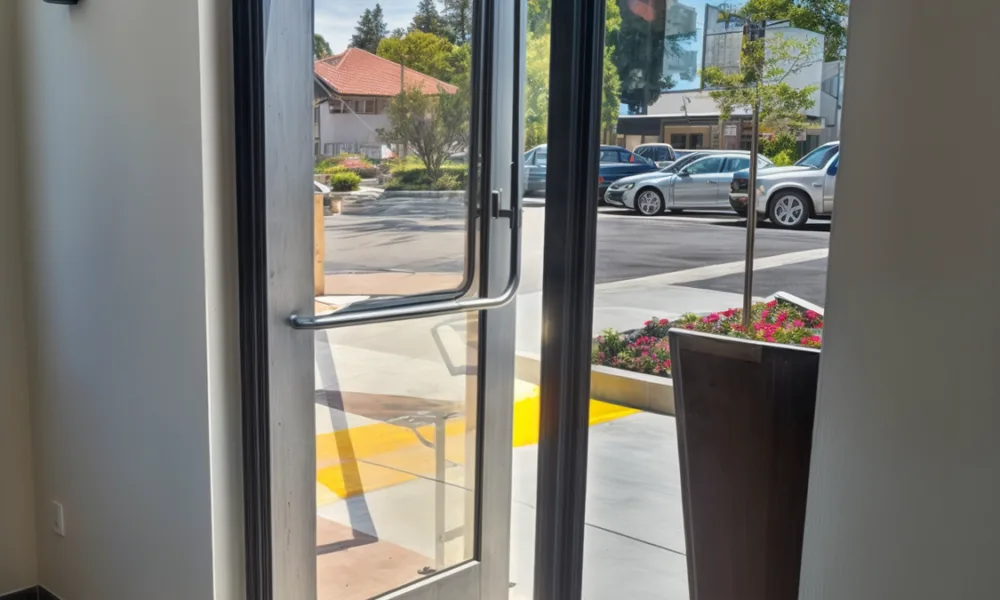
An aluminum door, besides being resistant and with technologies, can imitate styles such as wood.

Are Aluminum Doors Safe?

Although aluminum is traditionally associated with lightweight construction and modern aesthetics, doors made from this material can actually be surprisingly strong and secure.

Architectural aluminum doors are not thin sheets like those used in cans or tabletop décor, they’re reinforced structures built with high-strength profiles, multi-point locking systems, and advanced anchoring mechanisms. They are widely used in commercial entrances, office buildings, residential complexes, and even in high-risk areas due to their combination of structural rigidity and impact resistance.

👉 You may also be interested in reading: How Thick Is an Aluminum Frame?

Additionally, aluminum doors integrate seamlessly with modern security technologies such as electronic locks and access control systems, making them an ideal choice for those seeking a balance of design and protection. Best of all, they can be paired with laminated high-resistance glass, creating a complete and secure entry solution.

 Types of Resistance Aluminum Can Offer

Aluminum doors are known not only for their sleek, modern design but also for their ability to withstand a wide range of threats, both environmental and human. Below are the key types of resistance this material provides:

  • Impact resistance: Thanks to their reinforced profiles and solid structure, aluminum doors offer excellent protection against forced entry or vandalism. When combined with multi-point locks and laminated glass, they become a highly secure barrier that is difficult to breach.
  • Extreme weather resistance: Unlike other materials, aluminum won’t warp in the heat or crack in the cold. Its structural stability makes it ideal for areas prone to hurricanes, storms, or sudden temperature shifts.
  • Fire resistance: Aluminum is non-combustible. In the event of a fire, an aluminum door won’t fuel the flames like a wood door might. This makes it a safer choice for regions where fire risk is a concern—such as wildfire-prone areas like California.
  • Corrosion resistance: With anodized or powder-coated finishes, aluminum can resist humidity and aging extremely well, even in coastal or industrial environments.

In fact, there are advanced systems like Battle Door that combine architectural-grade aluminum and glass to withstand human impact, severe weather conditions, and even fire, delivering a complete and reliable protection solution.

Technologies That Enhance Aluminum Door Security

One of the greatest advantages of aluminum doors is their ability to integrate with advanced security systems, without compromising design or functionality. Here are some of the most common technologies used to reinforce their protection:

  • Multi-point locking systems: Unlike traditional locks, these systems secure the door at multiple points along the frame, making forced entry significantly more difficult. They’re ideal for main entrances and high-traffic areas.
  • Reinforced profiles and thicker frames: Aluminum doors can be manufactured with thicker profiles or internal reinforcements, increasing their structural resistance to impacts or external pressure.
  • Electronic access control systems: Aluminum easily accommodates digital locks, biometric readers, RFID cards, and smart home integrations. This is especially useful in offices, corporate buildings, or modern residences.
  • Thermally Broken System: While originally designed to improve thermal insulation, this technology also adds structural rigidity to the door, making it more solid and resilient to external stress.
  • PRL Glass Battle Door: This system combines aluminum and high-security glass in a fully integrated architectural solution, engineered to withstand physical attacks, extreme weather, and even fire. It’s ideal for those seeking a high-security solution without sacrificing aesthetics.
Aluminum is a very versatile material in terms of cost. You can have a very functional one with an average budget

Recommended Use Cases

Aluminum doors stand out not only for their security but also for their versatility. Thanks to their design and structural strength, they can adapt to a wide range of spaces and needs. Here are some of the environments where their use is especially recommended:

  • Main entrances in homes: They offer an excellent first impression without compromising security. They also withstand varying weather conditions and require minimal maintenance.
  • Entrances in residential or corporate buildings: Ideal for high-traffic entry points where durability, design, and compatibility with access control systems are essential.
  • Retail stores and commercial spaces: Provide strong protection against theft or vandalism while allowing for integrated glass displays or storefronts without sacrificing safety.
  • Areas exposed to extreme weather: Their resistance to corrosion, fire, and impact makes them a solid choice for regions prone to hurricanes, wildfires, or coastal environments.
  • Modern architectural projects: Their ability to be customized in finishes, colors, and structural systems allows them to blend seamlessly into contemporary designs.

Aluminum doors have moved far beyond the perception of being just a lightweight and aesthetic option. Today, thanks to advances in design, technology, and materials, they offer a high-security solution that can compete with, and even outperform, traditional alternatives like wood, uPVC, or even steel.

Whether it’s for a home, a corporate building, or a space exposed to extreme conditions, aluminum delivers a powerful combination that’s hard to beat: strength, low maintenance, tech integration, and customizable design. On top of that, aluminum doors are competitively priced, with system options available to fit a wide range of budgets.

Looking for a door that protects what matters most, without compromising on style? At PRL Glass, we manufacture aluminum doors built to the highest standards of safety and innovation. Explore solutions like our Battle Door line and Thermally Broken System, and discover how to turn your entrance into a truly intelligent barrier.

Aluminum vs Wood vs uPVC Doors

Aluminum, Wood or uPVC Doors? Which Lasts Longer and Saves More Energy?

Home / Archive by category "BLOG"

When it comes to choosing the ideal door for your home or business, the material should be one of the key factors in your decision. The three most common options on the market, aluminum, wood, and uPVC, each offer different advantages in terms of durability, maintenance, and energy efficiency. 

But which of these alternatives truly stands the test of time and helps reduce energy consumption the most? In this article, we provide a clear and practical comparison to help you make the right choice based on your needs and regional climate. 

Which is better between choosing aluminum, wood or PVC for your next door?

Quick Comparison: Aluminum, Wood & uPVC Doors 

Before diving into the details, here’s a side-by-side comparison of the three most popular materials for residential and commercial doors. This table highlights key features to give you a quick overview: 

Feature 

Aluminum 

Wood 

uPVC 

Durability 

Very high (resistant to rust and corrosion) 

High (but vulnerable to moisture and pests) 

Medium (can warp over time) 

Maintenance 

Low 

High (requires regular painting or sealing) 

Low 

Energy Efficiency 

High (with thermal break technology) 

High (naturally insulating material) 

Medium (insulating, but less efficient overall) 

Aesthetics 

Modern and customizable 

Classic and warm 

Limited design options 

Approx. Cost 

Low to high 

High 

Low 

This table serves as a starting point to help you identify which material best fits your priorities, whether you’re focused on durability, appearance, insulation, or budget. 

👉 You may be also interested in reading: How Thick Is an Aluminum Door? 

Which Door Lasts the Longest? A Look at Long-Term Durability 

One of the most important factors when choosing an exterior door is its ability to withstand time and environmental conditions. Each material responds differently to prolonged exposure to sunlight, rain, humidity, pests, or extreme temperature changes. 

Here’s how each material performs: 

  • Aluminum doors: Highly resistant to corrosion, rust, and impact. Thanks to their composition and modern surface treatments, they can last for decades without warping or losing functionality—even in coastal or humid climates. They can also be reinforced with technologies to withstand riots or hurricanes, for example. 
  • Wood doors: Offer excellent structural strength but require constant care. Exposure to moisture can lead to swelling, cracks, or pest infestations such as termites. Their lifespan depends heavily on maintenance, but if made of high-quality wood (not particleboard), they can last a long time—especially indoors. 
  • uPVC doors: While they resist moisture and don’t rust, they can degrade over time when exposed to strong sunlight. Warping and loss of rigidity are common after several years, particularly in hot regions. In cold areas, they may lose significant strength. 

In short, if you’re looking for a door with maximum durability and minimal maintenance, aluminum is one of the best long-term investments. 

👉 You may be interested in reading: 7 Reason for Choosing an Aluminum Door 

Energy Efficiency: Which Material Provides Better Insulation? 

The energy efficiency of a door is directly related to its ability to insulate a space both thermally and acoustically. This not only impacts indoor comfort but also affects energy consumption for heating or air conditioning. 

  • Aluminum doors: Traditionally, aluminum was criticized for being a poor thermal insulator. However, recent advances like thermally broken technology have changed that perception. This feature involves an internal barrier that reduces heat transfer between the exterior and interior, significantly improving the energy performance of modern aluminum doors. 
  • Wood doors: Wood is a naturally excellent insulator. Its porous structure helps retain warmth in winter and keep interiors cool in summer. It doesn’t require additional technology to offer solid insulation, although it can lose effectiveness over time if not properly maintained—especially in humid environments. 
  • uPVC doors: These also offer a good level of thermal insulation due to their low conductivity. They’re an efficient choice for mild climates, although performance may decline if the material degrades or if the frames are poorly sealed. 

In summary, all three options can provide good insulation when properly manufactured and installed. However, aluminum doors with thermal break technology offer an ideal combination of modern design, energy efficiency, and long-term durability. 

Aluminum doors offer good protection against weather and damage and are low maintenance.

Maintenance and Aesthetics: Which Material Fits Your Lifestyle Best? 

Beyond durability and insulation, choosing the right door also means considering required maintenance and how well it complements the architectural style of your space. 

  • Aluminum doors: An excellent option for those seeking low maintenance. They don’t rust, swell, or crack, and can be easily cleaned with water and mild soap. Aesthetically, they offer a modern and versatile look, with finishes that mimic wood or custom colors to suit any type of façade. 
  • Wood doors: While they offer a warm, traditional aesthetic that works well in classic or rustic designs, they require more care. Regular application of varnish, sealant, or paint is necessary to protect the wood from moisture, sunlight, or pests. Without this maintenance, they can deteriorate quickly—though there are now user-friendly products available at most supermarkets. 
  • uPVC doors: These also require little maintenance, as they don’t need paint or special treatments. However, their appearance tends to be more generic and limited in design options. Over time, they may yellow or lose their shine when exposed to prolonged sunlight, requiring them to be replaced. 

When it comes to aesthetics and ease of maintenance, aluminum doors strike an excellent balance between contemporary design, customization, and low upkeep. 

So, Which Type of Door Should You Choose? 

When comparing aluminum, wood, and uPVC doors, it’s clear that each material offers specific advantages depending on your needs, climate, and preferred style. 

  • If you value a classic aesthetic and don’t mind dedicating time to maintenance, wood can be a suitable option, especially for indoor use. 
  • If you’re looking for a budget-friendly choice for mild climates and are okay with replacing it over time, uPVC might work. 

Ready to upgrade your space with a door that blends design, durability, and energy efficiency? At PRL Glass, we’ll help you choose the best aluminum door for your home or commercial project. 

We offer cutting-edge technologies like thermally broken systems and Battle doors, perfect for those who need a complete and secure solution. 

How Much Do Glass Doors Cost and Where to Buy Them?

Home / Archive by category "BLOG"

Are you wondering how much glass doors cost and where to buy them? In 2025, prices can range from $200 to over $2,000, depending on the type of glass, design, dimensions, and whether installation is included.

Glass doors not only bring a modern style and a sense of spaciousness, but they are also an investment in durability and security. However, before installing one, it’s important to consider:

  • The average prices of the most common models (sliding, hinged, frameless, etc.).
  • The best places to buy glass doors, whether online or in physical stores.
  • Tips for choosing the perfect door and estimating installation costs.

If you’re at the stage of comparing options and making a purchase decision, this guide will give you all the key information to buy with confidence.

💡 Pro tip: Avoid trying to install the system yourself. Trust specialized companies and manufacturers like PRL Glass, which work with top-quality materials to ensure a safe and professional installation.

A glass door can be for home, office, business or even conference rooms.

How Much Do Modern Glass Doors Cost?

The price of a glass door can vary widely depending on its type, glass thickness, finishes, and whether it includes professional installation. For example, as of 2025, the average range is $200 to over $2,000, especially for custom models or those with premium hardware.

What influences the price? There are several key factors to consider:

  • Type of door: Sliding doors are usually more expensive than hinged ones due to their track system.
  • Glass thickness and type: Tempered, laminated, or safety glass increases the cost.
  • Design and finishes: Aluminum frames, stainless steel, or special finishes can raise the price.
  • Installation: Professional installation can represent 15% to 30% of the total cost. This is highly recommended, since an accident can represent a much greater expense.
  • External factors: Policies such as tariffs on certain materials can temporarily cause significant price increases.

Where to Buy Glass Doors in the US?

Knowing where to buy glass doors is just as important as understanding their price. Today, you can find a wide variety of options both in specialized physical stores and online platforms.

Main purchase options:

  • Direct manufacturers: Companies like PRL Glass offer customized glass doors made with high-quality materials and factory warranties.
  • Home improvement stores: Chains like Home Depot, Lowe’s, or Menards have standard models ready for installation.
  • Online platforms: Sites like Wayfair, Amazon, or eBay feature diverse catalogs and fast shipping options.
  • Local distributors: Many regional distributors offer competitive prices and include professional installation services. They also often partner with companies like PRL Glass to provide the best pricing on both products and installation.

What to consider before buying?

  • Check precise measurements to avoid costly adjustments. This is fully avoided with professional installation.
  • Compare the quality of the glass and hardware (tempered, laminated, stainless steel, etc.).
  • Evaluate the store or manufacturer’s warranty and after-sales service.
  • Confirm if they offer professional installation or just sell the product.

Tips for Choosing the Perfect Glass Door

Choosing the right glass door not only depends on your budget but also on the space, style, and security you need. Here are some key tips to help you make the best decision:

1. Define the purpose and location

Will it be a main door, a patio door, or for interiors? Each area requires a different type of glass and opening system.

2. Prioritize security

Choose tempered or laminated glass for greater impact resistance. For exterior doors, consider stainless steel hardware and reinforced locks.

3. Pick a design that complements your space

Sliding models maximize light and space, while hinged doors are ideal for larger areas.

4. Think about maintenance and cleaning

Glass with anti-stain treatment or aluminum frames makes long-term maintenance easier, but it’s still important to set aside time each week to keep them clean.

5. Consult an expert before buying

A specialist can help you determine the right glass thickness, exact measurements, and hardware. This not only improves the aesthetic but also prevents installation issues.

Professional installation is necessary to ensure that the glass door fits properly and does not wear prematurely.

Glass Door Installation Costs and Why You Should Hire a Professional

The price of a glass door does not always include installation, and this service can vary depending on the complexity of the project, customization, and location. On average, professional installation can cost between $100 and $500, but this cost is often much more beneficial than attempting a DIY installation.

Why is it better to hire a professional?

  • Guaranteed safety: Handling glass (regular, tempered, or laminated) requires expertise and specialized tools to prevent breakage or accidents.
  • Perfect adjustments: A professional installer ensures the door is perfectly leveled, avoiding closing issues or premature wear of the mechanism.
  • Long-term savings: Incorrect installation can cause damage to the glass or frames, leading to much higher repair costs.
  • Complete guidance: Specialized companies, architects, developers, and contractors work with manufacturers like PRL Glass, offering the highest-quality products.
  • Service warranty: Professional work includes a warranty, giving you peace of mind against any potential issues.

Frequently Asked Questions (FAQ)

How much do glass doors cost on average?

In 2025, the average price of a glass door ranges from $200 to over $2,000, depending on the type of glass, design, dimensions, and hardware. Custom doors with premium finishes can exceed this range.

What type of glass door is best for exteriors?

Sliding tempered or laminated glass doors are the most recommended for exterior use as they combine durability, safety, and modern design.

Where is the best place to buy glass doors in the U.S.?

The most reliable options are:

  • Direct manufacturers like PRL Glass.
  • Architects, developers, and contractors, who work with direct manufacturers such as PRL Glass to get the best price.
  • Home improvement stores (Home Depot, Lowe’s).
  • Online stores like Amazon, Wayfair, or eBay.

Is it worth paying for professional installation?

Yes. Although it adds an extra cost ($100–$500), professional installation prevents future issues, ensures a perfect fit, and includes service warranties.

Can I customize the design of my glass door?

Yes. Many companies, including PRL Glass, offer custom-made doors with various design options, finishes, hardware, and special glass treatments.

Types of Glass Doors

Types of Glass Doors: What Are, Pros and Cons

Home / Archive by category "BLOG"

Glass doors are one of the most elegant and versatile architectural elements for transforming both residential and commercial spaces. They allow natural light to flow, visually connect indoor and outdoor environments, and enhance the modern aesthetics of any setting. 

However, not all glass doors are the same. There are different types, each designed for specific uses, styles, and functional needs. Choosing the right option not only enhances the look of a space but can also improve its energy efficiency, security, and durability. 

In this guide, we’ll explore the most popular types of glass doors, their pros and cons, and how to choose the best option for your next project—whether you’re planning a renovation, a new construction, or a custom design. 

There are several types of glass doors, but it all depends on what you need.

What is a Glass Door? 

A glass door is, essentially, a door made partially (or entirely) from glass panels. While the definition may be simple, its impact on architecture and interior design is significant. 

These doors not only serve the basic function of dividing or connecting spaces, but they also bring in natural light, create a sense of visual openness, and add a contemporary touch. They can also be adapted for different opening mechanisms, such as sliding, hinged, pivot, or folding systems, and may feature frames made from various materials, or even be completely frameless. 

Thanks to this versatility, glass doors are used both indoors to separate rooms, offices, or common areas and outdoors, where they typically connect interiors with terraces, gardens, or balconies. 

👉 You may also be interested in reading: 5 New Trends for Glass Doors in 2025

What Are the Most Popular Types of Glass Doors? 

There are multiple types of glass doors, each designed to meet different aesthetic and functional needs. The right choice will depend on the available space, architectural style, frequency of use, and the type of connection you want between environments. 

Below, we present the most popular types of glass doors, along with their pros and cons, to help you make an informed decision based on your specific project. 

Sliding Glass Doors 

Sliding glass doors are one of the most common options for connecting indoor and outdoor spaces, such as terraces, patios, or gardens. They operate on a track system that allows the glass panels to slide horizontally over one another, optimizing space without the need for an inward or outward swing. 

This type of door is ideal for those looking to maximize natural light and maintain unobstructed views even when the doors are closed. 

Advantages of Sliding Glass Doors: 

Space-saving design by sliding horizontally instead of opening on hinges. 

Available with slim frames or completely frameless for a minimalist look. 

Create a smooth transition between indoor and outdoor areas. 

Disadvantages of Sliding Glass Doors: 

Tracks can accumulate dirt or debris, making sliding less smooth. 

Glass surfaces can easily get dirty from frequent contact. 

Glass can compromise privacy unless paired with curtains or frosted films. 

Lift and Slide Glass Doors 

Lift and slide glass doors are a more sophisticated variation of traditional sliding doors. While they look similar, their opening mechanism is different. They feature a special handle that, when turned, slightly lifts the glass panel off the track, allowing for smooth and precise sliding. When closed, the panel lowers back down to create a tight seal, enhancing thermal and acoustic insulation. 

This type of door is ideal for projects that require large glass panels combined with an efficient and secure system. 

Advantages of Lift and Slide Glass Doors: 

Provides a tight seal that improves energy efficiency. 

Easy and smooth operation, even with large, heavy panels. 

Space-saving, as they don’t require swing clearance. 

Disadvantages of Lift and Slide Glass Doors: 

Typically more expensive than traditional sliding doors. 

The internal mechanism may require specialized maintenance. 

Like other glass doors, they require regular cleaning. 

Accordion or Folding Doors 

Folding glass doors, also known as accordion doors or bifold doors, are made of multiple panels connected by hinges that fold onto themselves when opened. They’re a popular choice for efficiently opening up large spaces, allowing doorways to virtually open to full capacity. 

These doors combine functionality with a modern visual impact, making them ideal for dividing interior spaces or connecting indoor areas with the outdoors. 

Advantages of Folding Glass Doors: 

Allow for a wide opening that fully integrates spaces. 

Compact design that doesn’t require large clearance areas. 

Available in framed or frameless versions for a contemporary look. 

Disadvantages of Folding Glass Doors: 

Can be more expensive than other types of sliding doors. 

Often require additional maintenance on hinges and tracks. 

Their multiple panels may slightly obstruct views even when closed. 

Hinged Glass Doors 

Hinged glass doors are the most common and traditional design. They operate with side hinges that allow the door to open inward, outward, or both ways depending on the space configuration. 

They’re ideal for main entrances, offices, or interior partitions where a wide opening isn’t required, but easy and elegant access is desired. 

Advantages of Hinged Glass Doors: 

Simple, functional design that’s easy to operate. 

Suitable for small spaces where only limited openings are needed. 

Low maintenance requirements. 

Disadvantages of Hinged Glass Doors: 

Require clearance to open fully. 

May need additional structural support for heavy glass. 

Less suitable for connecting large spaces or outdoor areas. 

Pivot Glass Doors 

Pivot glass doors differ from traditional hinged doors in their opening mechanism. Instead of side hinges, they use a pivot axis installed at the top and bottom of the panel. This allows the door to rotate on its own axis, creating an elegant and distinctive movement. 

They’re an excellent choice for main entrances, commercial spaces, or architectural projects that seek a refined, sophisticated, and visually striking effect. 

Advantages of Pivot Glass Doors: 

Modern and eye-catching design that adds a unique architectural touch. 

Ideal for wide openings or oversized doors. 

Allows doors to open in both directions. 

Disadvantages of Pivot Glass Doors: 

Requires clearance on both sides for comfortable opening. 

Less efficient thermal and acoustic protection compared to other systems. 

Can be more expensive due to their specialized mechanism and custom design. 

Remember that there can be systems where there is only glass, giving elegant styles for facades.

Stacking Glass Doors 

Stacking glass doors, also known as stacker doors, are similar to sliding doors but with added functionality. They consist of multiple panels that slide and “stack” behind one another when opened, allowing for a wider and more flexible opening. 

This system is ideal for large spaces to control the degree of opening while maintaining a seamless connection between indoor and outdoor areas. 

Advantages of Stacking Glass Doors: 

Allow you to control the width of the opening based on the space’s needs. 

Provide panoramic views with minimal framing when closed. 

Versatile design that maximizes space without sacrificing functionality. 

Disadvantages of Stacking Glass Doors: 

Multiple moving panels require more maintenance. 

Tracks can accumulate dirt, affecting the sliding mechanism. 

Installation can be more complex and costly. 

French Glass Doors 

French glass doors are a classic element of architectural design. They consist of a pair of hinged doors that typically open inward or outward from the center, often featuring slim frames and multiple glass panels. 

They’re perfect for elegant entrances, access to terraces or balconies, or as dividers between living and dining rooms, adding a traditional and sophisticated touch. 

Advantages of French Glass Doors: 

Classic style that adds elegance and distinction. 

Allows for full openings without floor tracks. 

Versatile for both interior and exterior use. 

Disadvantages of French Glass Doors: 

Lower thermal and acoustic insulation efficiency. 

Require clearance for both doors to open fully. 

May not be ideal for extreme climates due to limited sealing. 

Fixed Frame Glass Doors 

Fixed frame glass doors, also known as fixed panels, have no opening mechanism. They’re primarily used as complements to other movable doors or as permanent dividers within a space. 

They’re ideal for creating visual separations without blocking natural light and are commonly found in offices, lobbies, or modern residential designs. 

Advantages of Fixed Frame Glass Doors: 

Allow continuous natural light to enter. 

Provide a minimalist and elegant design. 

Require no mechanical maintenance since there are no moving parts. 

Disadvantages of Fixed Frame Glass Doors: 

Don’t allow physical passage between spaces. 

Serve only as visual dividers, with no opening function. 

May require frequent cleaning to maintain clarity. 

As you’ve seen, there are many types of glass doors, each with unique features that can transform any space in terms of functionality, design, and elegance. The right choice will depend on your project’s needs, architectural style, and the kind of connection you want to create between spaces. 

At PRL Glass & Aluminum, we specialize in manufacturing high-quality glass solutions. We offer the best options in sliding doors, accordion bifold doors, and all-glass doors perfect for residential, commercial, or large-scale projects. 

If you’re looking for glass doors that combine design, durability, and efficiency, contact us today. Our team is ready to help you choose the best solution and guide you through every stage of your project. 

Total Transparency for Professional Office Spaces

5 New Trends for Glass Doors in 2025: Elevate Architecture with Style and Functionality

Home / Archive by category "BLOG"

Glass doors have become an excellent trend for creating modern, bright, and elegant spaces. Whether in residences, offices, or commercial projects, Glass Doors not only serve a practical function but also enhance the aesthetic of any environment, even making a space feel more “premium” when needed.

In 2025, new trends are shaping the future of glass door design, materials, and functionalities. These innovations address not only aesthetic preferences but also the growing demands for efficiency, safety, and customization.

In this article, we explore the 5 most important trends in Glass Doors for 2025, perfect for those seeking contemporary solutions that combine style and functionality in every architectural project.

👉 You may also be interested in reading: What Do You Need to Know About Bifold Doors?

Trend 1: Total Transparency for Professional Office Spaces

Total Transparency for Professional Office Spaces

One of the strongest trends in Glass Doors for 2025 is the use of fully transparent systems that divide spaces without sacrificing openness and amplitude. In modern offices, especially those located on higher floors with panoramic views, glass without heavy frames or visible profiles creates a clean, elegant, and functional environment.

This system of glass doors and walls enhances flexibility in corporate space design, allowing open areas to be transformed into meeting rooms, private offices, or collaborative zones without completely isolating teams. Additionally, glass maximizes the entry of natural light, optimizing illumination and contributing to employee well-being.

Companies seeking contemporary, minimalist, and efficient office spaces are increasingly adopting these solutions, which can also be complemented with acoustic control glass or smart finishes like switchable privacy glass.

Trend 2: High-End Glass Doors for Elegance and Security

High-End Glass Doors for Elegance and Security

In the luxury retail sector, Glass Doors have become an essential feature to convey sophistication and exclusivity right from the entrance. Premium brands incorporate large glass doors with refined hardware that allow a smooth transition into the space without compromising security.

In 2025, the trend is to design glass entrances that combine transparency with metallic or mirrored finishes on the bases or frames, creating an elegant contrast that enhances the store’s architecture. This type of door allows brands to project an open yet controlled image, where customers perceive luxury from the outside—even before stepping in.

Additionally, many of these solutions integrate discreet access control technologies and reinforced locking systems that preserve a clean aesthetic while ensuring the necessary protection for high-value stores.

Trend 3: Pivot Glass Doors to Define Premium Entrances

Pivot Glass Doors to Define Premium Entrances

Pivot glass doors are gaining prominence in 2025 as a preferred solution for the entrances of stores, hotels, and corporate buildings. Unlike traditional doors with side hinges, the pivot system allows the door to rotate on a central or offset axis, offering an elegant and fluid motion.

This design not only maximizes the visual opening but also creates an architectural experience that is memorable from the very first step inside. Combined with slim metallic frames or even concealed hardware, pivot doors strike a balance between minimalism and sophistication, enhancing the perceived value of the property or brand.

Additionally, this trend meets the demand for secure solutions without compromising aesthetics, making it ideal for areas with high foot traffic.

Trend 4: Partial Transparency: Privacy Without Losing Aesthetic Appeal

Partial Transparency: Privacy Without Losing Aesthetic Appeal

Another standout trend in Glass Doors for 2025 is the combination of clear glass panels with sections of frosted or satin-finish glass. This technique strikes a balance between the need for privacy in certain areas and maintaining brightness and visual connection with the exterior.

In stores, offices, or showrooms, this solution helps define strategic areas or entrances without completely blocking the view. The mix of textures and finishes creates a sophisticated visual effect that can also reinforce the architectural identity of the space.

This type of design is especially valued in projects where it’s important to control interior visibility without breaking the visual continuity, while also adding a modern and elegant touch to commercial facades.

Trend 5: Glass Doors with Minimalist Hardware and Maximum Visibility

Glass Doors with Minimalist Hardware and Maximum Visibility

In 2025, glass doors with minimalist hardware are solidifying their place as an essential choice in store design. The trend aims to eliminate any visual elements that might interfere with product display, making the glass almost invisible and allowing for full visibility from the outside.

This approach is ideal for brands that prioritize visual merchandising and open design, as it invites customers in without visual or structural barriers. Fixings, hinges, and handles are integrated discreetly, preserving both aesthetic cleanliness and the functionality required in a commercial space.

Additionally, these doors are often paired with automatic opening systems or soft-close mechanisms, enhancing the premium experience without the need for large, visible devices.

How to Install Bifold Doors the Right Way

How to Install a Bifold Door: Why It’s Important to Consider a Manufacturer

Home / Archive by category "BLOG"

Bifold doors are one of the most attractive options when it comes to renovating your space. This type of system allows you to create open environments, maximize natural light, and seamlessly connect indoor and outdoor areas. 

That’s why, if you’ve been wondering how to install bifold doors, it’s important to know  the real secret isn’t just in the installation. It starts with choosing the right manufacturer. A specialized provider not only guarantees a custom-made system but also makes the installation process easy, safe, and ensures results that will last for years. 

In this article, we’ll explain the basics of installing bifold doors and why working with an expert manufacturer like PRL Glass & Aluminum makes all the difference. 

It is often necessary to have a specialized installation company to ensure that systems such as the BiFold Door work properly.

What Are Bifold Doors and Why Are They So Popular? 

Bifold doors, also known as folding doors, are systems made up of multiple panels connected by hinges that fold like an accordion when opened. This design allows the doors to slide along a track and tuck neatly off to the side, creating wide, unobstructed openings. 

Their popularity has grown in both residential and commercial spaces for several reasons: 

  • Space-saving: They allow an entire wall or divider to open without taking up extra space when folded. 
  • Modern aesthetics: Their minimalistic and elegant design fits perfectly with contemporary architectural trends. 
  • Indoor-outdoor connection: Ideal for connecting living rooms, terraces, gardens, or common areas to the outdoors. 
  • Natural light: Mostly made of glass, they allow abundant natural light to fill spaces. 
  • Versatility: Suitable for homes, restaurants, offices, hotels, or retail stores. 

However, to truly benefit from all these advantages, the quality of materials, system design, and proper installation are essential factors. This is where choosing the right manufacturer can make the difference between a successful project or a failed one. 

Learn all about our Bifold Door 

How to Install Bifold Doors: The Traditional Step-by-Step Process 

When it comes to how to install bifold doors, the traditional process requires precision and expertise to ensure proper functionality and a flawless finish. These are the basic steps that professionals typically follow: 

Accurate space measurement: Before any purchase or fabrication, it’s essential to precisely measure the opening where the doors will be installed. 

Selecting the right system: Choose the type of bifold door, materials, number of panels, and finishes that best suit the project. 

Preparing the opening: Condition the frame or structure that will support the system, ensuring it’s level and structurally sound. 

Installing tracks and guides: Install the components that allow the panels to slide and fold. This includes at the top and, if required by design, at the floor. 

Mounting the panels: Place the panels onebyone, to ensure proper alignment, adjustment, and functionality for each section. 

Final adjustments and testing: Once the system is fully assembled, perform the necessary adjustments to ensure smooth operation, perfect alignment, and stability. 

The Risks of Poor Installation 

While these steps may seem simple in theory, any mistake in measurements, assembly, or leveling can lead to: 

Misaligned or uneven panels. 

Difficulty opening or closing the doors. 

Premature damage to the system due to improper stress. 

Loss of aesthetics or airtight sealing. 

Serious accidents, as the system could collapse and injure people. 

That’s why, even if you understand the installation process, the best decision to ensure a professional and long-lasting result is to work with a specialized manufacturer. They can provide a custom-made system and technical guidance from the very beginning. 

Bifold doors are a complete system, so professional installation is required.

Why You Should Work with a Bifold Door Manufacturer 

Beyond knowing the installation process, working with a specialized bifold door manufacturer is the best way to ensure your project is successful from day one. Here are the key reasons: 

  • Custom-made systems: A manufacturer designs and produces a system tailored exactly to your space, avoiding improvised adjustments that complicate installation. 
  • High-quality materials: These ensure durability, resistance to everyday wear and tear, and smooth operation over time. 
  • Full compatibility: All components, glass, aluminum, hardware and tracks are designed to work seamlessly together with no risk of mismatches. 
  • Specialized technical support: Manufacturers can provide recommendations for the best installation methods, offer certified installation services, or assist your contractor directly. 
  • Compliance with regulations: Experienced providers ensure that the system meets all necessary safety and efficiency standards required for your project. 

Instead of worrying about how to install bifold doors on your own, or using a generic system, a manufacturer like PRL Glass & Aluminum can become your strategic partner. They’ll ensure every detail, from fabrication to installation, is perfectly executed. 

Ready to Install Bifold Doors? Start with the Right Manufacturer 

Now that you know how to install bifold doors and why professional installation is so important, the next step is the most crucial: work directly with a specialized manufacturer that can guarantee a complete, functional, and long-lasting system. 

At PRL Glass & Aluminum, we don’t just manufacture custom bifold door systems, we support you throughout the entire process: 

We help you select the perfect design, materials, and finishes for your space, thanks to our team of specialized craftsmen. 

  • We fabricate made-to-order solutions using the highest quality aluminum and glass. 
  • We provide expert installation guidance or connect you with certified professionals. 
  • We guarantee a robust, elegant system built to last for years. 
  • We offer market-leading delivery times. 

👉 Have a project in mind? Contact us today and transform your space with bifold doors designed to last and impress.