Loading

Glass and aluminum manufacturers in Salt Lake City

Premium Glass & Aluminum Solutions for Salt Lake City

Salt Lake City’s dynamic growth in tech, healthcare, and residential construction calls for building systems that combine durability, efficiency, and contemporary design.

At PRL Glass & Aluminum, we provide premium solutions tailored to Utah’s unique climate and construction standards—from modern offices downtown to high-end homes and institutional projects across the Wasatch Front.

Our products deliver strength, energy savings, and sleek aesthetics, making them ideal for Salt Lake City’s evolving skyline.

Building in Salt Lake City? Connect with PRL Glass & Aluminum Today

Whether your project is a tech campus in Lehi, a hospital expansion, or mixed-use development downtown, PRL offers fast delivery, expert fabrication, and nationwide support for Utah builders.

We proudly serve Salt Lake City, West Valley City, Provo, Ogden, and the entire Wasatch Front region.

Service 

Contact Number 

Aluminum Division 

📞 877-775-2586 

Glass Division 

📞 800-433-7044 

📍 Visit our locations in City of Industry, California and explore our wide range of innovative, high-quality aluminum and glass solutions!

Advanced Glass & Aluminum Designs for Salt Lake City Builders

Our systems are engineered to handle Utah’s seasonal extremes and support modern, energy-efficient construction.

All PRL systems comply with ASTM, NFRC, and LEED standards meeting Utah’s energy and sustainability codes.

Why Salt Lake City Developers Trust PRL Glass & Aluminum

Utah’s construction market moves fast and demands precision, PRL provides dependable products and technical expertise.

Why local professionals rely on PRL:

✅ Fast nationwide shipping and competitive lead times

✅ Custom solutions for tech, healthcare, and residential builds

✅ Energy-efficient, LEED-compatible systems for sustainable construction

✅ Full technical support from design through installation

PRL Glass and Aluminum Manufacturers in Salt Lake City

Benefits of Glass and Aluminum Systems in Salt Lake City

Glass and aluminum systems are the perfect fit for Salt Lake City’s growth and eco-conscious design culture.

  • Thermal Efficiency – Keeps interiors comfortable during hot summers and snowy winters
  • Noise Reduction – Ideal for busy urban and mixed-use areas
  • Modern Aesthetics – Matches Salt Lake City’s innovative and clean architectural style
  • Durability – Built to withstand Utah’s dry climate and seasonal storms
  • Eco-Friendly – Fully recyclable and supports green certifications
  • Battle Door Capability – Reinforced systems for added protection against vandalism, protests, and severe weather

PRL Glass & Aluminum, your National Supplier

From our location in California, PRL Glass & Aluminum serves Utah and all 50 states in the United States.

We offer service in major cities across the country:

Albuquerque

Tucson

Fresno

Atlanta

Indianapolis

Follow us on social media ✅

Stay tuned for news, events, discounts and new products through the different social media channels.

Glass and aluminum manufacturers in Indiana

Premium Glass & Aluminum Solutions for Indianapolis

Indianapolis is a thriving hub for corporate offices, healthcare expansion, and residential development.

At PRL Glass & Aluminum, we deliver premium architectural systems designed for the Midwest, combining strength, energy efficiency, and contemporary style.

From revitalization projects in Downtown Indy to large-scale healthcare and education builds, our solutions provide the performance and reliability developers need.

Building in Indianapolis? Connect with PRL Glass & Aluminum Today

Whether your project is a hospital, mixed-use complex, corporate headquarters, or high-end apartments, PRL offers fast lead times, nationwide delivery, and expert fabrication tailored to Indiana’s codes and climate.

We proudly serve Indianapolis, Carmel, Fishers, Greenwood, and the greater Central Indiana region.

Service 

Contact Number 

Aluminum Division 

📞 877-775-2586 

Glass Division 

📞 800-433-7044 

📍 Visit our locations in City of Industry, California and explore our wide range of innovative, high-quality aluminum and glass solutions!

Advanced Glass & Aluminum Designs for Indianapolis Builders

Our systems are built for strength, thermal performance, and design flexibility, perfect for Indianapolis’s diverse construction needs.

All PRL systems comply with ASTM, NFRC, and LEED standards.

Why Indianapolis Developers Trust PRL Glass & Aluminum

Indianapolis builders need speed and dependability, PRL delivers both, backed by decades of industry expertise.

Why Indiana professionals rely on PRL:

✅ Fast nationwide shipping and competitive lead times

✅ Custom-engineered systems for healthcare, education, and commercial projects

✅ Energy-efficient, sustainable products meeting Indiana’s green building goals

✅ Full technical support from design to installation

PRL Glass and Aluminum Manufacturers in Indianapolis

Benefits of Glass and Aluminum Systems in Indianapolis

Glass and aluminum provide resilience, energy performance, and design flexibility essential for Indianapolis’s evolving skyline.

  • Thermal Efficiency – Keeps interiors comfortable year-round in Indiana’s variable climate
  • Noise Reduction – Perfect for projects near busy highways and downtown corridors
  • Contemporary Aesthetics – Fits both historic preservation and modern builds
  • Durability – Built to handle Midwest weather and seasonal changes
  • Eco-Friendly – Recyclable and LEED-compatible materials
  • Battle Door Capability – Reinforced systems add protection against vandalism, break-ins, and severe storms

PRL Glass & Aluminum, your National Supplier

From our location in California, PRL Glass & Aluminum serves Indiana and all 50 states in the United States.

We offer service in major cities across the country:

Albuquerque

Tucson

Fresno

Atlanta

Milwaukee

Follow us on social media ✅

Stay tuned for news, events, discounts and new products through the different social media channels.

How Wide Is a Sliding Glass Door? Standard & Custom Sizes

How Wide Is a Sliding Aluminum Glass Door? Standard Sizes, Dimensions & Rough Openings

Home / Articles posted byEduardo Savin

A standard sliding aluminum glass door in the U.S. typically ranges from 60 to 96 inches wide (5 to 8 feet) for two-panel systems. Larger configurations expand to 108 to 144 inches (9 to 12 feet) for three panels and up to 192 inches (16 feet) for four-panel layouts. The listed width refers to the total unit size, not the clear walking opening.

Choosing the correct width involves more than selecting a standard size. Panel configuration, rough opening dimensions, structural framing, and glass specifications all influence how wide a sliding aluminum door can be in a real-world installation.

In this guide, we break down standard widths, height options, rough opening requirements, and when a custom aluminum sliding system may be necessary for your project.

👉 You may also be interested in reading: Advantages of Using Aluminum Sliding Doors in U.S. Homes 

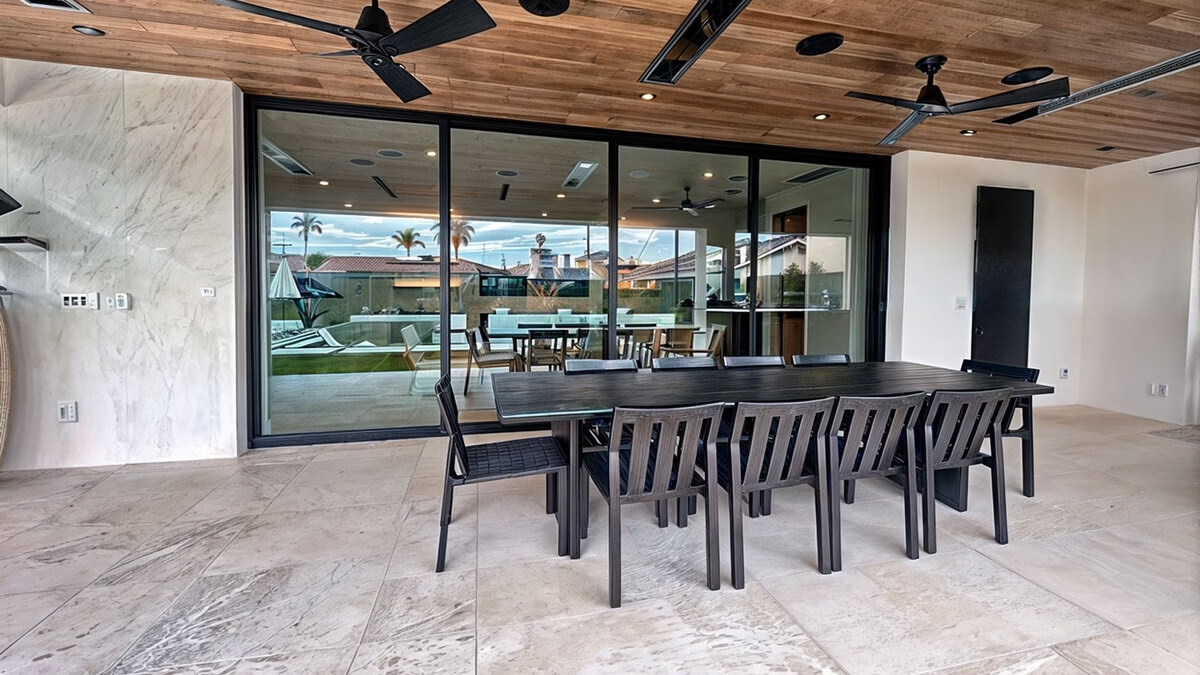
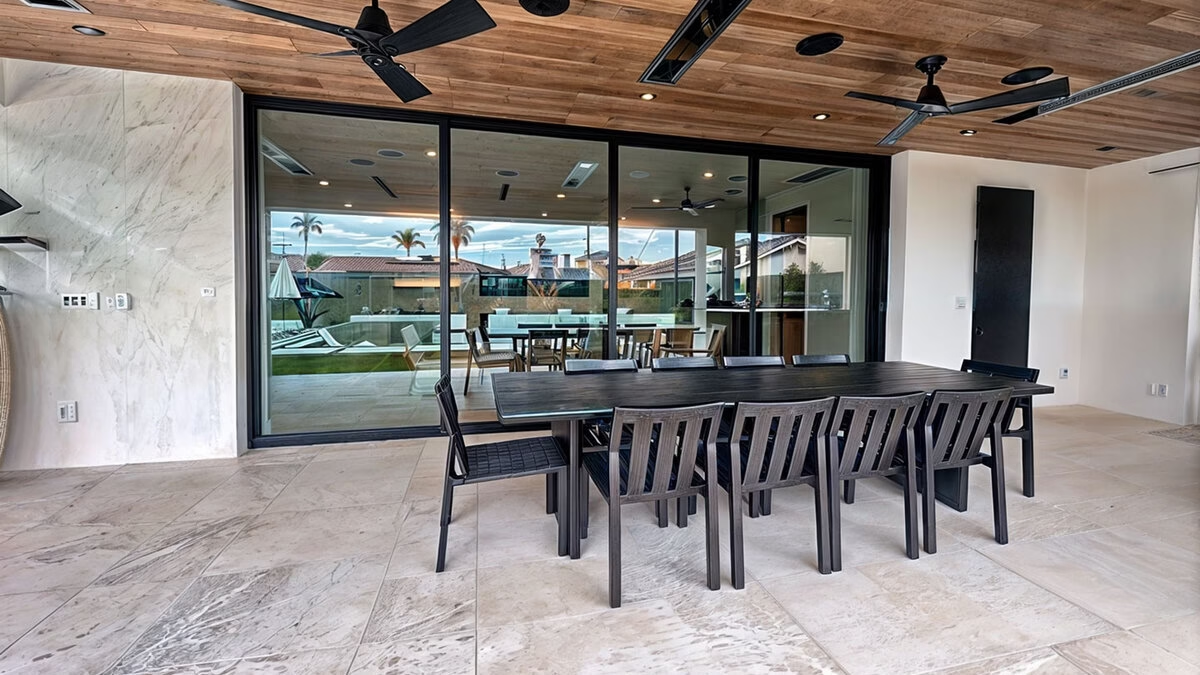
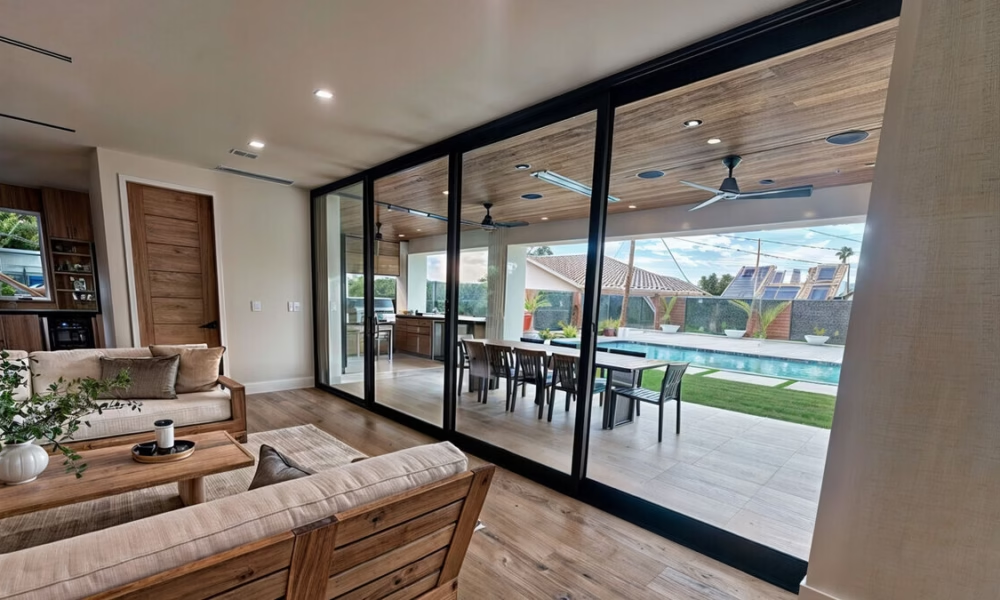
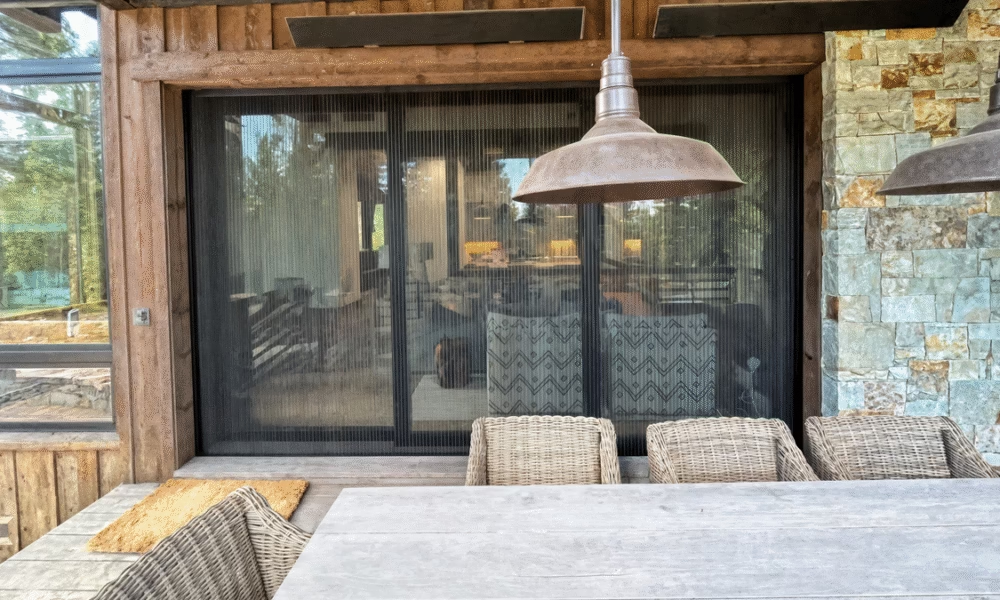
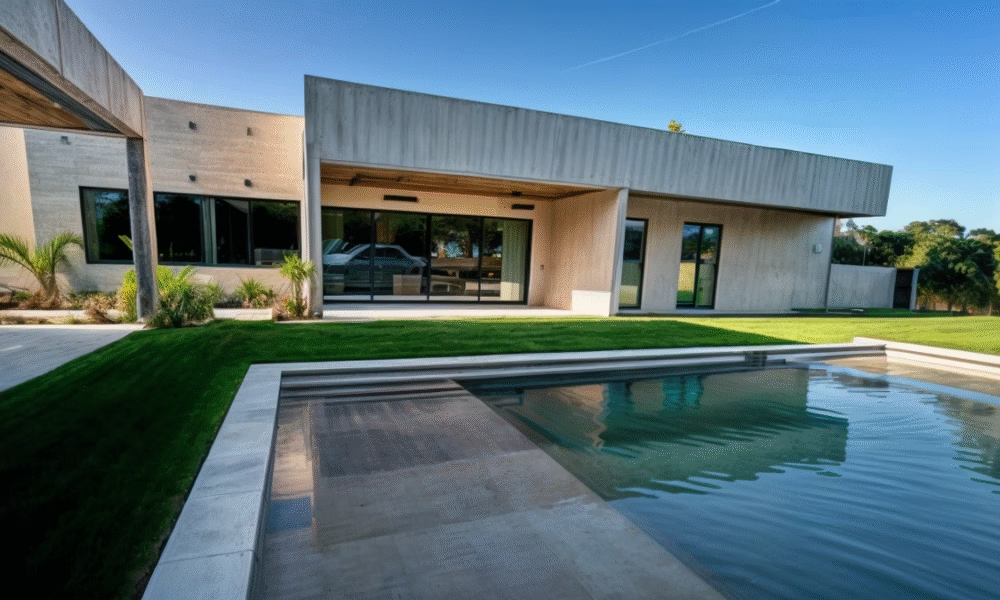
Aluminum sliding doors can be incorporated into any standard project.

Standard Sliding Door Widths in the U.S.

In the United States, standard sliding aluminum glass door widths depend on the number of panels. The measurements below refer to the total unit width (including the frame):

ConfigurationCommon Widths (inches)Width (feet)Typical Use
2-Panel60″, 72″, 96″5′, 6′, 8′Most common patio doors
3-Panel108″, 144″9′, 12′Wider openings & panoramic views
4-Panel144″, 192″12′, 16′Large-format residential projects

The stated width refers to the full door unit, not the clear walking opening. In most two-panel systems, the actual clear opening is slightly less than half of the total width due to panel overlap and frame components.

Standard Sliding Aluminum Door Sizes by Panel Configuration

While standard widths provide a quick reference, the practical performance and clear opening of a sliding aluminum door depend on the panel layout and track configuration. Below is a breakdown of the most common systems used in U.S. residential construction.

2-Panel Sliding Aluminum Doors (Most Common Configuration)

Two-panel systems are the most widely used sliding patio doors in residential projects. They consist of one fixed panel and one operable panel, typically installed on a two-track system.

Common total unit widths:

  • 60″ (5 ft)
  • 72″ (6 ft)
  • 96″ (8 ft)

Standard heights:

  • 80″
  • 82″
  • 96″

In a standard 72″ two-panel configuration, the clear walking opening is usually slightly under half of the total width due to panel overlap and frame components. This makes 6-foot sliders a practical choice for everyday patio access without major structural modifications.

Two-panel aluminum systems are ideal for:

  • Replacement projects
  • Standard framed openings
  • Remodels where maintaining the existing header is preferred

3-Panel Sliding Aluminum Doors (Wider Openings)

Three-panel sliding doors are commonly used when homeowners want a broader view or increased natural light without moving into fully custom wall systems.

Common total unit widths:

  • 108″ (9 ft)
  • 144″ (12 ft)

Typical heights:

  • 80″
  • 96″

Most three-panel systems operate with one fixed center panel and two operable side panels, although multi-track configurations are also available depending on the manufacturer.

These systems are often selected for:

  • Large patios
  • Open-concept living spaces
  • Homes with extended exterior views

Because the overall span increases, structural header capacity and hardware load ratings become more important considerations.

4-Panel Sliding Aluminum Doors (Large-Format Systems)

Four-panel sliding doors are typically used in luxury residential projects or homes designed for expansive indoor-outdoor transitions.

Common total unit widths:

  • 144″ (12 ft)
  • 192″ (16 ft)

Typical heights:

  • 80″
  • 96″

In standard layouts, the two center panels are fixed and the outer panels slide open. However, multi-track aluminum systems can allow additional operable configurations for larger clear openings.

As door width increases:

  • Panel weight increases significantly
  • Glass thickness may need to increase
  • Hardware capacity becomes critical
  • Structural framing must support the span

At widths approaching 16 feet, professional consultation and engineered specifications are strongly recommended to ensure long-term performance.

Sliding Door Height Options (Standard vs. Tall Systems)

While width is often the primary focus, height plays an equally important role in performance, proportions, and structural requirements.

Standard Sliding Aluminum Door Heights

In most U.S. residential construction, sliding aluminum glass doors are available in the following standard heights:

  • 80 inches (6’8″) – Most common residential height
  • 82 inches (6’10”) – Slightly taller replacement option
  • 96 inches (8 feet) – Popular in homes with higher ceilings

These standard heights are designed to align with typical framing dimensions, making replacement and new construction more straightforward.

For most two-, threeand four-panel configurations, 80″ and 96″ remain the most widely specified heights.

When Taller Doors Become a Structural Consideration

Sliding doors exceeding 96 inches in height move beyond standard framing conditions and typically require engineered planning.

Custom heights of 100 to 120 inches (8’4″ to 10 feet) are increasingly requested in modern residential design to create floor-to-ceiling openings and maximize natural light. However, as height increases:

  • Glass panels become significantly heavier
  • Aluminum profiles may require reinforcement
  • Hardware load capacity must be verified
  • Wind load and building code compliance become critical

Unlike standard patio replacements, tall sliding aluminum systems should always be evaluated based on structural framing, header design, and local building codes.

For projects approaching 10 feet in height or greater, consultation with the manufacturer and construction professional is strongly recommended to confirm system capacity and performance ratings.

👉 You may also be interested in reading: Aluminum, Wood or uPVC Doors? Which Lasts Longer and Saves More Energy? 

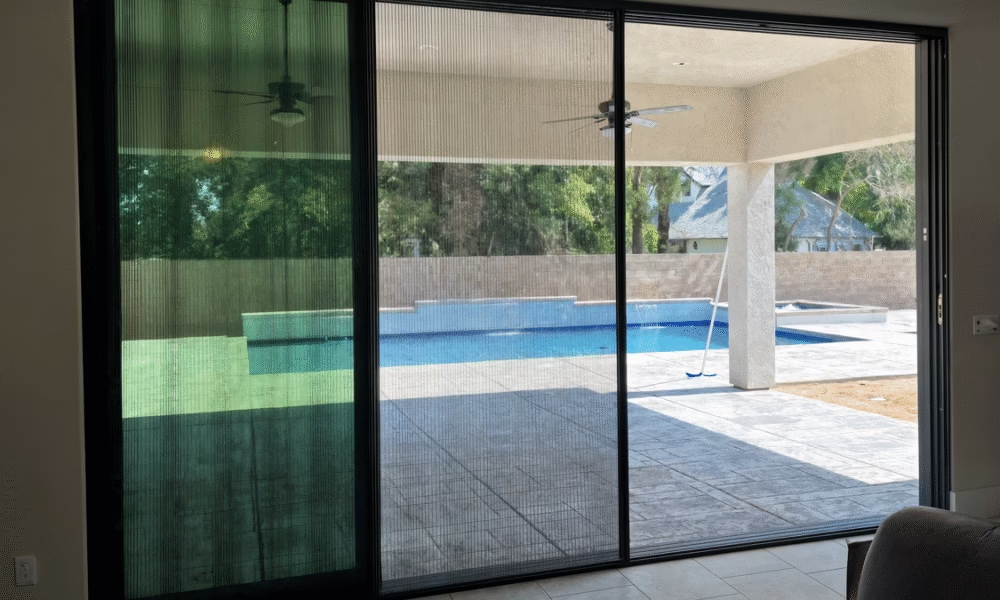
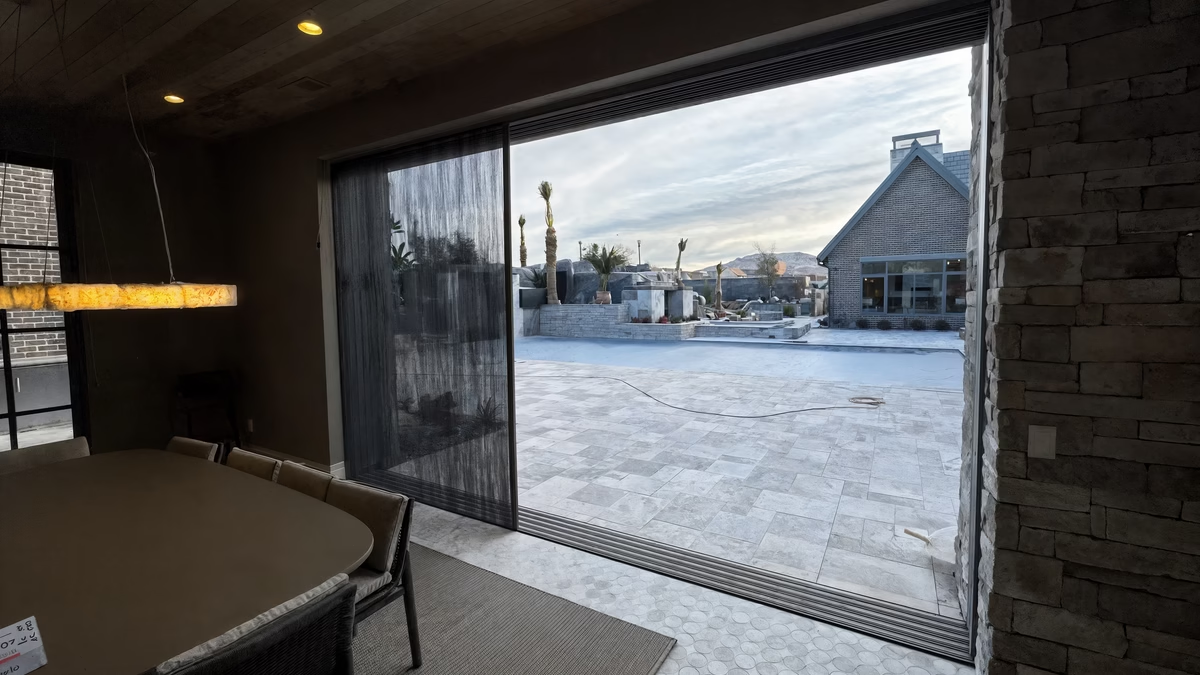
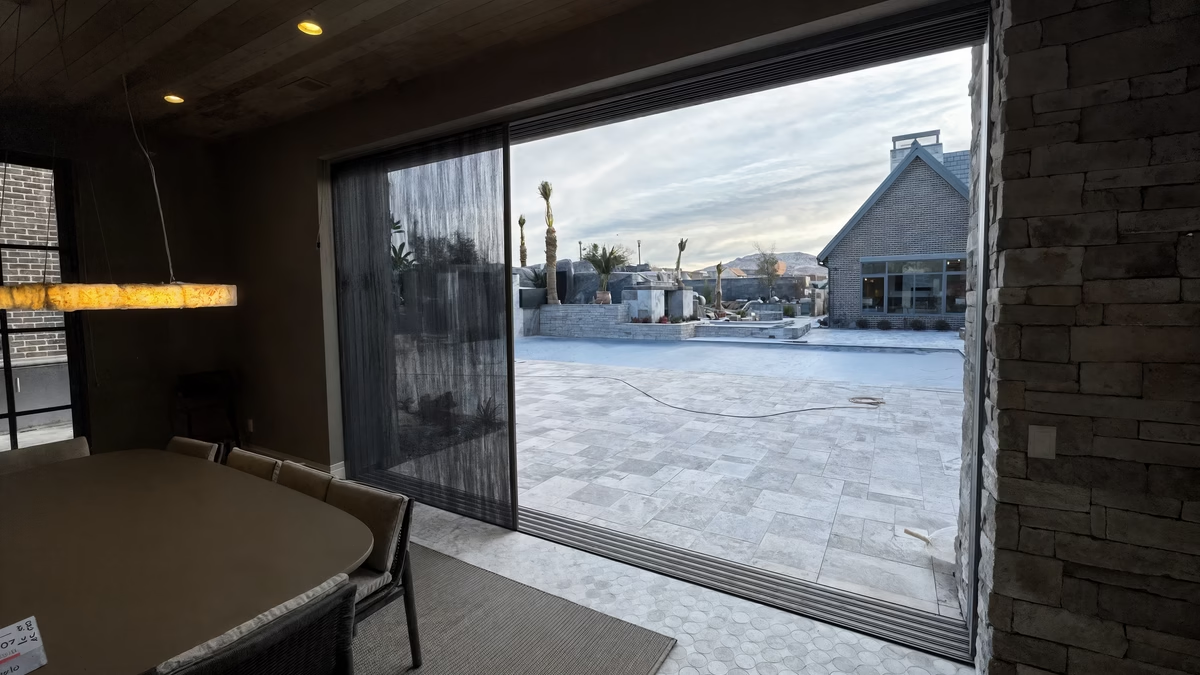
Max slider is one of the best products, as it is a sliding door but with wide views.

Unit Width vs. Clear Opening (What You Actually Walk Through)

When reviewing sliding aluminum glass door sizes, it’s important to understand that the listed width refers to the full unit dimension, including the frame and panel overlap, not the actual walking space.

The clear opening is the usable passage width once the door is fully open.

Example: How Much Opening Do You Get From a 6-Foot Sliding Door?

A standard 72-inch (6-foot) two-panel sliding door does not provide a full 36-inch opening.

Because one panel remains fixed and the operable panel slides behind it, the typical clear opening is:

  • Slightly less than half of the total width
  • Reduced by panel overlap
  • Reduced by frame components

In most standard systems, the usable opening for a 72″ door is generally several inches less than 36 inches, depending on the manufacturer and frame design.

For projects where clear passage width is critical (for accessibility, moving furniture, or high-traffic areas), verifying the exact clear opening dimension with the manufacturer’s technical drawings is essential.

Why Clear Opening Matters

Understanding clear opening is especially important when:

  • Designing for accessibility requirements
  • Replacing a hinged door with a sliding system
  • Planning furniture flow or large item movement
  • Complying with local building codes

For example, replacing a 36-inch hinged door with a sliding door requires careful planning, since even a 60-inch sliding unit may not provide equivalent walking clearance.

Rough Opening vs. Actual Unit Size (And Why It Matters)

When specifying a sliding aluminum glass door, three different measurements are involved and confusing them is one of the most common installation mistakes.

Understanding the difference between nominal size, actual unit size, and rough opening ensures proper fit, structural alignment, and long-term performance.

Here some key definitions

  • Nominal Size: The advertised door size (for example, 72″ x 80″). This typically represents the intended rough opening size in standard construction.
  • Actual Unit Size: The physical measurement of the manufactured door unit, including the frame. This is usually slightly smaller than the nominal size to allow for installation adjustments.
  • Rough Opening (RO): The framed structural opening in the wall where the door will be installed. It must accommodate the actual unit size plus space for leveling, shimming, and insulation.

Typical Rough Opening Allowances

While exact requirements vary by manufacturer and system, most sliding door installations follow a general industry guideline:

  • The rough opening is slightly larger than the actual unit size
  • Clearance is needed on all sides for shimming and alignment
  • Finished floor height must be considered before ordering

Below is a simplified example of how these measurements typically relate:

Nominal Door SizeTypical Actual Unit Size*Typical Rough Opening Target*
60″ x 80″Slightly under nominalSlightly larger than unit
72″ x 80″Slightly under nominalSlightly larger than unit
96″ x 80″Slightly under nominalSlightly larger than unit
108″ x 96″Slightly under nominalSlightly larger than unit

*Always verify exact dimensions using manufacturer shop drawings and system specifications.

Why Rough Opening Precision Is Critical

Incorrect rough opening dimensions can lead to:

  • Frame misalignment
  • Air and water infiltration
  • Hardware strain
  • Structural stress on the header

For wider systems (9 to 16 feet), rough opening accuracy becomes even more critical due to increased weight and structural load distribution.

Before finalizing framing, reviewing manufacturer specifications and confirming tolerances with the door supplier is strongly recommended.

When to Choose a Custom Sliding Aluminum Door Width

Standard sliding aluminum glass door sizes cover most residential applications. However, certain projects require custom dimensions to meet architectural, structural, or performance goals.

Choosing a custom width is not simply about aesthetics, it often involves engineering considerations and system selection.

Renovations With Non-Standard Openings

Older homes or remodeled properties frequently have framed openings that do not align with modern nominal door sizes.

In these cases, a custom aluminum sliding system can:

  • Reduce the need for structural reframing
  • Preserve existing header conditions
  • Provide a cleaner retrofit solution

Custom manufacturing allows the door to fit the opening, rather than forcing the opening to fit a standard door.

Large-Format and Panoramic Designs

Modern residential architecture increasingly favors wide, uninterrupted openings that connect indoor and outdoor spaces.

Projects may require:

  • 12-foot to 16-foot spans
  • Multi-panel or multi-track configurations
  • Corner sliding systems without fixed center mullions

In these situations, standard two- or three-panel systems may not provide the desired clear opening or visual impact. Custom aluminum systems allow greater flexibility in panel width, track layout, and structural integration.

Accessibility and Functional Requirements

When designing for increased accessibility or high-traffic flow, clear opening width becomes more important than total unit width.

Custom sizing may be necessary to:

  • Achieve specific minimum clear passage requirements
  • Improve furniture movement clearance
  • Enhance usability in open-concept layouts

Because aluminum frames can support larger glass panels compared to some alternative materials, they are often selected for projects requiring wider operable sections.

Projects With Taller or Non-Standard Proportions

Custom widths are frequently paired with:

  • 8-foot or taller door heights
  • Floor-to-ceiling openings
  • Integrated transoms or fixed side panels

As proportions change, engineering coordination becomes essential to ensure proper weight distribution, hardware capacity, and structural support.

What Limits the Maximum Width in Aluminum Sliding Systems?

While standard sizes provide useful benchmarks, the maximum width of a sliding aluminum glass door is ultimately determined by engineering constraints, not just design preference.

As overall width increases, structural load, glass weight, and hardware performance all become critical factors.

Panel Weight and Hardware Capacity

Each sliding panel carries significant weight, especially as width and height increase. Larger panels require:

  • Higher-capacity roller systems
  • Reinforced tracks
  • Precision alignment to prevent long-term sagging

If hardware load ratings are exceeded, the system may experience premature wear, difficult operation, or track deformation.

For wide-span doors, hardware capacity often becomes the primary limiting factor before frame size does.

Glass Type and Thickness

As panel size increases, glass thickness must often increase to maintain structural integrity and safety compliance. Common considerations include:

  • Tempered or laminated safety glass
  • Increased thickness for larger spans
  • Impact-resistant glazing in wind-prone regions
  • Energy-efficient Low-E or insulated glass units

Heavier glazing significantly increases total panel weight, directly affecting hardware requirements and operability.

Structural Header and Framing Support

The wall opening must support the load transferred by the sliding system. For doors exceeding 8 feet in width (and especially beyond 12 feet) header design becomes increasingly important. Considerations include:

  • Properly sized structural beams
  • Load distribution across studs
  • Deflection limits over wider spans
  • Compliance with local building codes

Insufficient header capacity can lead to structural movement, affecting door alignment and long-term performance.

Wind Load and Code Compliance

In certain regions, particularly coastal or high-wind zones, sliding aluminum doors must meet specific performance standards.

As door width increases:

  • Wind load pressure increases
  • Frame deflection must remain within code limits
  • Anchoring requirements may become more demanding

Wide-span sliding systems should always be evaluated against local building codes to ensure safety and compliance.

Measurement Checklist (Pro Tips Before Ordering)

Accurate measurements are essential when specifying a sliding aluminum glass door. Even small discrepancies in width, height, or framing conditions can affect installation, alignment, and long-term performance.

Before ordering or manufacturing a system, professionals typically follow this checklist:

Measure Width at Three Points: Measure the opening at the top, middle, and bottom. Use the smallest measurement to account for irregular framing.

Measure Height at Multiple Points: Measure from the subfloor or finished floor level to the header at the left, center, and right side of the opening. If flooring will be installed later, factor in the final floor height before confirming door dimensions.

Check Plumb and Level: Verify that the sides of the opening are vertical and the sill area is level. Uneven framing can cause: Improper panel alignment, increased roller wear and Air and water infiltration

Confirm Structural Support: For wider openings (9 feet and above), verify that the header and framing are designed to support the system’s weight. This is especially important for multi-panel or tall configurations.

Review Manufacturer Specifications: Always confirm: Actual unit dimensions, required rough opening, anchor spacing requirements and Performance ratings.

Selecting the correct sliding aluminum glass door width involves more than choosing a standard size. Panel configuration, clear opening requirements, structural framing, and performance specifications must all align with the realities of the project.

Whether you’re working within a standard framed opening or planning a large-format multi-panel system, confirming exact dimensions through manufacturer documentation is essential to ensure smooth installation and long-term durability.

For projects requiring:

  • Custom widths
  • Tall configurations
  • Multi-track layouts
  • Structural performance verification

Consulting directly with the door manufacturer allows you to confirm unit sizing, rough opening requirements, hardware capacity, and system ratings before fabrication begins.

If you are designing or specifying a sliding aluminum system and need guidance on standard or custom sizing, reviewing technical drawings and system specifications early in the process can prevent framing adjustments and installation delays.

FAQ: Sliding Aluminum Door Width & Sizing

What is the standard width of a sliding aluminum glass door?

In the U.S., standard two-panel sliding aluminum doors are typically 60″, 72″, or 96″ wide. Three-panel systems commonly measure 108″ or 144″, while four-panel doors range from 144″ to 192″ wide.

How wide is a 6-foot sliding door?

A 6-foot sliding door is 72 inches wide in total unit width. However, the clear walking opening is usually slightly less than half of that measurement due to panel overlap and frame components.

What is the rough opening for a 72″ x 80″ sliding door?

The rough opening must accommodate the actual unit size plus installation clearance. Exact dimensions vary by manufacturer, so always verify required tolerances using official system specifications before framing.

Does the listed width include the frame?

Yes. The listed width refers to the entire door unit, including the frame. It does not represent the clear opening or walking space.

What is the maximum width for a sliding aluminum door?

Standard configurations typically reach 192 inches (16 feet) in four-panel layouts. Wider openings may require custom multi-track or engineered systems, depending on structural and hardware capacity.

Are 8-foot-tall (96″) sliding doors considered standard?

Yes. While 80 inches remains common in many homes, 96-inch (8-foot) sliding doors are widely available and frequently specified in modern residential construction.

Can sliding aluminum doors be custom-sized?

Yes. Custom widths and heights are available for non-standard openings, large-format designs, and accessibility requirements. Custom systems should be reviewed for structural support and performance compliance.

Can I replace a hinged patio door with a sliding door?

Yes, but the wall opening will likely need to be widened. A standard hinged door opening (36 inches) is significantly narrower than most sliding door configurations, which typically start at 60 inches.

Glass and Aluminum Manufacturers in Atlanta

Premium Glass & Aluminum Solutions for Atlanta

Atlanta’s booming economy and expanding skyline demand innovative, durable, and efficient building systems.

At PRL Glass & Aluminum, we provide premium solutions tailored for Georgia’s diverse construction market, from luxury residential towers in Midtown to corporate campuses, healthcare facilities, and retail spaces across the metro area.

Our products combine strength, modern aesthetics, and energy performance, making them the ideal choice for Atlanta’s fast-paced development.

Building in Atlanta? Connect with PRL Glass & Aluminum Today

Whether you’re constructing mixed-use developments, hospitals, universities, or commercial buildings, PRL delivers custom fabrication, fast lead times, and nationwide shipping to support Georgia’s builders.

We proudly serve Atlanta, Sandy Springs, Alpharetta, Marietta, Decatur, and the greater metro region.

Service 

Contact Number 

Aluminum Division 

📞 877-775-2586 

Glass Division 

📞 800-433-7044 

📍 Visit our locations in City of Industry, California and explore our wide range of innovative, high-quality aluminum and glass solutions!

Advanced Glass & Aluminum Designs for Atlanta Builders

Our systems meet the demands of Atlanta’s climate and diverse architectural projects, offering resilience and design flexibility.

All PRL systems comply with ASTM, NFRC, and LEED standards, meeting Georgia’s sustainability and energy codes.

Why Atlanta Developers Trust PRL Glass & Aluminum

In a fast-growing market like Atlanta, builders need reliable partners—PRL delivers precision, speed, and support from concept to completion.

Why Georgia professionals rely on PRL:

✅ Fast nationwide shipping with competitive lead times

✅ Custom-engineered systems for corporate, healthcare, and residential projects

✅ Energy-efficient and LEED-compatible solutions

✅ Expert guidance from design through installation

PRL Glass and Aluminum Manufacturers in Atlanta

Benefits of Glass and Aluminum Systems in Atlanta

Glass and aluminum are the foundation of modern Atlanta construction, durable, energy-efficient, and design-friendly.

  • Thermal Efficiency – Keeps buildings comfortable through Georgia’s hot summers and mild winters
  • Noise Reduction – Crucial for urban projects in busy metro areas
  • Modern Aesthetics – Matches Atlanta’s mix of historic and contemporary architecture
  • Durability – Resists humidity, storms, and seasonal weather challenges
  • Eco-Friendly – Fully recyclable and compliant with green building standards
  • Battle Door Capability – Reinforced options for enhanced protection against vandalism, protests, and severe weather events

PRL Glass & Aluminum, your National Supplier

From our location in California, PRL Glass & Aluminum serves Georgia and all 50 states in the United States.

We offer service in major cities across the country:

Albuquerque

Tucson

Fresno

Baltimore

Milwaukee

Follow us on social media ✅

Stay tuned for news, events, discounts and new products through the different social media channels.

Glass and Aluminum Manufacturers in Fresno

Premium Glass & Aluminum Solutions for Fresno

Fresno’s growing residential and commercial development demands reliable, efficient, and modern building systems.

At PRL Glass & Aluminum, we supply premium glass and aluminum solutions tailored for California’s Central Valley, from retail centers and hospitals to universities and luxury housing.

Our products are designed to handle the region’s hot summers and expanding urban infrastructure while maintaining strong aesthetic appeal.

Building in Fresno? Connect with PRL Glass & Aluminum Today

Whether you’re working on healthcare facilities, educational buildings, multifamily housing, or retail spaces, PRL provides fast turnaround, expert fabrication, and nationwide delivery for Central California projects.

We proudly serve Fresno, Clovis, Visalia, Madera, and the broader Central Valley.

Service 

Contact Number 

Aluminum Division 

📞 877-775-2586 

Glass Division 

📞 800-433-7044 

📍 Visit our locations in City of Industry, California and explore our wide range of innovative, high-quality aluminum and glass solutions!

Advanced Glass & Aluminum Designs for Fresno Builders

Our solutions are engineered to provide performance, style, and durability in the challenging Central Valley climate.

All PRL systems comply with ASTM, NFRC, and LEED and title 24 standards

Why Fresno Developers Trust PRL Glass & Aluminum

Fresno’s construction industry values efficiency, code compliance, and reliable supply, PRL delivers on all fronts.

Why Central California builders choose PRL:

✅ Fast production and dependable nationwide delivery

✅ Custom solutions designed for hot, dry climates

✅ Energy-efficient systems aligned with California’s green building codes

✅ Technical support from design through installation

PRL Glass and Aluminum Manufacturers in Fresno

Benefits of Glass and Aluminum Systems in Fresno

Glass and aluminum provide Fresno developers with long-lasting performance and aesthetic flexibility.

  • Thermal Efficiency – Helps reduce cooling loads in extreme summer heat
  • Noise Reduction – Ideal for growing urban corridors and mixed-use zones
  • Clean Modern Design – Complements Fresno’s expanding residential and commercial areas
  • Durability – Built for Central Valley’s climate and environmental challenges
  • Eco-Friendly – Fully recyclable and LEED-compatible
  • Battle Door Capability – Reinforced options for added safety against vandalism, protests, and severe weather

PRL Glass & Aluminum, your National Supplier

From our location in California, PRL Glass & Aluminum serves California and all 50 states in the United States.

We offer service in major cities across the country:

Albuquerque

Tucson

Louisville

Baltimore

Milwaukee

Follow us on social media ✅

Stay tuned for news, events, discounts and new products through the different social media channels.

Glass and Aluminum Manufacturers in Tucson

Premium Glass & Aluminum Solutions for Tucson

Tucson’s unique mix of desert climate, university-driven growth, and expanding residential and commercial sectors makes it a key market for durable and efficient construction systems.

At PRL Glass & Aluminum, we deliver premium solutions designed to withstand Arizona’s environment while offering sleek design and long-lasting performance.

From commercial centers near Downtown to student housing around the University of Arizona and residential communities in Oro Valley, our systems bring strength, sustainability, and style to every project.

Building in Tucson? Connect with PRL Glass & Aluminum Today

Whether you’re developing healthcare facilities, retail spaces, educational institutions, or luxury housing, PRL provides custom fabrication, reliable delivery, and nationwide support for Arizona projects.

We proudly serve Tucson, Oro Valley, Marana, Sahuarita, and the broader Pima County area.

Service 

Contact Number 

Aluminum Division 

📞 877-775-2586 

Glass Division 

📞 800-433-7044 

📍 Visit our locations in City of Industry, California and explore our wide range of innovative, high-quality aluminum and glass solutions!

Advanced Glass & Aluminum Designs for Tucson Builders

Our systems are tailored for the challenges of Southern Arizona’s climate and the needs of modern developments.

All PRL systems comply with ASTM, NFRC, and LEED standards

Why Tucson Developers Trust PRL Glass & Aluminum

Tucson’s builders face unique demands for efficiency, resilience, and aesthetics, PRL delivers all three.

Why Arizona professionals rely on PRL in Tucson:

✅ Fast shipping with competitive lead times

✅ Custom-engineered products designed for desert conditions

✅ LEED-compatible systems for sustainable projects

✅ Expert support from design to installation

PRL Glass and Aluminum in Tucson

Benefits of Glass and Aluminum Systems in Tucson

Glass and aluminum are ideal for Tucson’s combination of hot climate, modern growth, and sustainability goals.

  • Solar and Heat Control – Essential for energy savings in desert environments
  • Noise Reduction – Valuable in dense residential and campus areas
  • Modern Aesthetics – Complements Tucson’s blend of desert and urban design
  • Durability – Built to perform in extreme heat and seasonal monsoons
  • Eco-Friendly – Recyclable and sustainable systems
  • Battle Door Capability – Reinforced systems enhance protection against vandalism, protests, and severe storms

PRL Glass & Aluminum, your National Supplier

From our location in California, PRL Glass & Aluminum serves Arizona and all 50 states in the United States.

We offer service in major cities across the country:

Albuquerque

Memphis

Louisville

Baltimore

Milwaukee

Follow us on social media ✅

Stay tuned for news, events, discounts and new products through the different social media channels.