Loading

Diagram showing how Low-E glass reflects heat and blocks UV radiation in modern window systems

What Is Low-E Glass and Why Is It Essential in Modern Windows?

Home / Articles posted byEduardo Savin

Glass is one of the most important materials in any modern façade or window system. It not only defines the visual identity of a project, but also has a direct impact on interior comfort, energy consumption, and the long-term durability of surrounding finishes. 

Among today’s high-performance solutionslow-E glass (low-emissivity glass) has become the industry standard for projects seeking better thermal performance and improved energy efficiency, both in residential applications and commercial buildings. 

In simple terms, low-E glass is a type of glass with a microscopic, transparent coating that controls how heat moves through the glass. This coating allows visible light to pass through but reduces the transmission of infrared (heat) and ultraviolet (UV) radiation. This helps interior spaces maintain a more stable temperature and better protection against solar exposure. 

Below, we explain what low-E glass is and why it’s essential if your aluminum and glass systems require high performance. 

Diagram showing how Low-E glass reflects heat and blocks UV radiation in modern window systems.

Low-E Glass Meaning: A Simple Explanation for Architects and Homeowners 

The term low-E comes from low emissivity. Emissivity refers to a material’s ability to emit energy in the form of heat. 

  • A material with high emissivity easily releases the heat it absorbs. 
  • A material with low emissivity (low-E) reflects a large portion of that heat instead of allowing it to pass through. 

Applied to architectural glass, this means that low-E glass is designed to reflect infrared heat back toward where you want to retain it: 

  • In winter: it reflects interior heat back inside. 
  • In summer: it reflects exterior heat away from the building. 

At the same time, low-E glass maintains high levels of visible light transmission, ensuring natural daylight without compromising interior comfort. It also reduces UV radiation, helping prevent fading and deterioration of furniture, flooring, and textiles. 

In other words, when someone searches for “low E glass meaning” or “What is low E glass”, the simplest and most accurate explanation is: It’s a glass with a special coating that improves the energy efficiency of windows and façades by controlling heat transfer, without sacrificing natural daylight. 

How Low-E Glass Works: Solar Spectrum, Emissivity, and Thermal Control 

To truly understand why low-E glass is so efficient, it’s important to examine how glass interacts with solar energy. Sunlight isn’t a single type of energy. It’s composed of three distinct ranges that affect windows and façades in different ways. 

  1. Ultraviolet Radiation (UV): This is the portion of the spectrum responsible for fading and deterioration of furniture, flooring, textiles, and interior finishes. Although it represents only a small percentage of solar energy, its long-term impact is significant in spaces with high sun exposure. 
  1. Visible Light: This is the part of the spectrum we perceive as natural daylight. High-quality glass should allow visible light to enter without causing excessive glare. 
  1. Infrared Radiation (IR): This is the energy we experience as heat. It’s divided into two types: short-wave IR, coming directly from the sun; and long-wave IR, emitted by warm objects inside a building like people, appliances, heating systems, and warm surfaces. 

The Role of Emissivity 

Emissivity refers to a material’s ability to emit energy in the form of heat. 

  • Standard glass has high emissivity, allowing heat to transfer freely. 
  • Low-E glass has low emissivity, meaning it controls thermal radiation and reflects heat toward the most beneficial side depending on the season. 

low-E coating is up to 500 times thinner than a human hair, yet it drastically improves the glass’s thermal performance. 

How Low-E Works Throughout the Year 

  • In Winter: Low-E glass reflects interior heat back into the room, reducing heat loss and helping maintain a stable indoor temperature with less reliance on heating systems. 
  • In Summer: It reflects a large portion of the sun’s heat away from the building, reducing solar heat gain and lowering the cooling load on HVAC systems. 

Because of how it interacts with the solar spectrum, low-E glass provides: 

  • Better energy efficiency in any climate 
  • Reduced heat transfer through the glass 
  • UV protection 
  • Improved interior comfort 
  • Lower energy costs 
  • Natural daylight without compromising thermal insulation 

Types of Low-E Coatings: Passive Low-E vs. Solar Control Low-E 

Not all low-E glass performs the same. Its efficiency depends largely on the type of coating applied and the manufacturing process behind it. In modern architecture, selecting the correct low-E coating is essential to achieve the right thermal performance based on climate and project needs. 

There are two main categories of low-E glass:

1. Passive Low-E (Hard-Coat)

This coating is applied during the float glass manufacturing process, when the glass is still at very high temperatures. The coating “fuses” into the glass surface, creating a durable and resilient layer. 

Key features: 

  • Highly durable and scratch-resistant 
  • Allows more solar heat gain 
  • Ideal for cold climates that benefit from passive heating 
  • Can be installed on surface #3 or #4 of an IGU 

✅ When it’s Recommended: In regions with long, cold winters where capturing solar heat is advantageous.

2. Solar Control Low-E (Soft-Coat)

This coating is applied after the glass is manufactured, using a process called MSVD (Magnetron Sputter Vacuum Deposition) inside vacuum chambers. It delivers superior thermal performance but must be protected inside an IGU. 

Key features: 

  • Much lower emissivity (better insulation) 
  • Excellent solar control: blocks heat and UV radiation more effectively 
  • Higher overall energy efficiency in most climates 
  • Typically installed on the #2 surface of the IGU 

 When it’s Recommended: In almost all regions of the U.S. and Latin America, where reducing cooling loads and improving energy efficiency is a priority. 

Feature: 

Hard-Coat (Passive): 

Soft-Coat (Solar Control): 

Durability: 

Very high 

Must be inside an IGU 

Solar Control: 

Low 

Excellent 

Heat Gain: 

High 

Low 

Energy Efficiency: 

Medium 

Very high 

Ideal Application: 

Cold climates 

Warm or mixed climates 

Visible Light: 

High 

Slightly lower 

In most modern residential and commercial projects, soft-coat solar control low-E coatings are the most efficient choice because they provide: 

  • Superior thermal insulation 
  • Lower UV radiation 
  • Reduced solar heat gain 
  • Better indoor comfort and energy savings 

Low-E hard coats continue to be used, but mainly in applications where maximizing solar heat gain is beneficial in cold environments. 

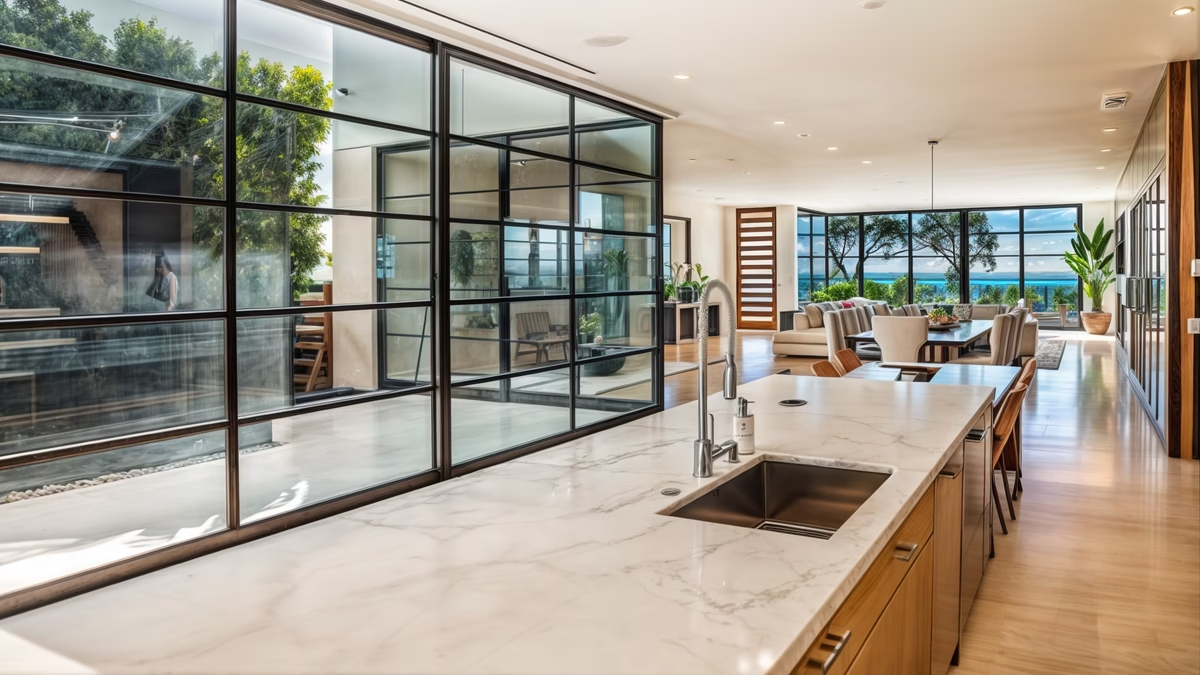
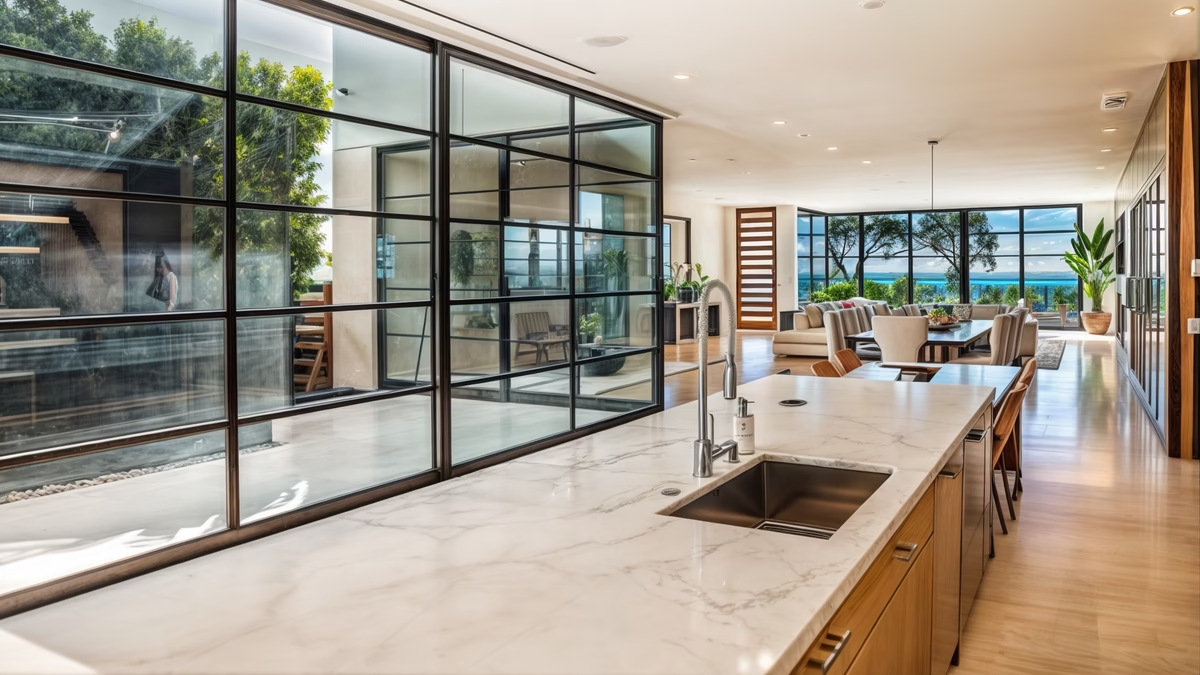
Low-E windows installed in a contemporary home façade, highlighting energy efficiency and natural light transmission

Where Low-E Coatings Are Placed Inside an IGU (and Why It Matters) 

For low-E glass to perform correctly, it’s not enough to select the right type of coating. Its placement inside the insulated glass unit (IGU) is equally important. 

standard double-pane IGU has four possible surfaces: 

  • Surface #1: the exterior face exposed to the outdoor climate 
  • Surface #2: the internal face of the first lite, facing the airspace 
  • Surface #3: the internal face of the second lite, also facing the airspace 
  • Surface #4: the interior face of the glass, inside the building 

Thermal and solar performance can change significantly depending on which surface receives the low-E coating. 

Solar Control Low-E → Best on Surface #2 

  • Soft coat solar control low-E coatings perform best on surface #2, because they: 
  • Block most of the infrared radiation entering from the exterior 
  • Reduce solar heat gain in warm or mixed climates 
  • Maintain high visible light transmission while lowering heat load 

For this reason, low-E coatings are applied to this surface for most modern residential and commercial windows. 

Passive Low-E (Hard-Coat) → Best on Surface #3 or #4 

Passive low-E coatings are designed to retain heat and often allow some short-wave solar energy to enter. They are typically applied to: 

  • Surface #3: ideal for conserving interior heat while still benefiting from solar gain 
  • Surface #4: excellent for cold climates, reflecting interior radiant heat back inside 

This configuration allows windows to function as passive solar collectors during winter months. 

Climate: 

Recommended Low-E Type: 

Ideal Surface: 

Very Cold Climates: 

Passive (hard-coat) 

#3 or #4 

Mixed Climates: 

Solar control (soft-coat) 

#2 

Hot Climates: 

Solar control (soft-coat) 

#2 

High Solar Exposure: 

Solar control (soft-coat) 

#2 

North-Facing Cold Façades: 

Passive (hard-coat) 

#3 

Choosing the right surface ensures: 

  • Better energy efficiency 
  • Improved solar control 
  • Reduced thermal transfer 
  • Longer IGU lifespan 
  • Optimized UV protection 

Many window performance issues, such as condensation, overheating, or poor insulation, occur when low-E coatings are applied to the wrong surface. 

Benefits of Low-E Glass in Modern Windows and Facades 

Far beyond the technical aspects, low-E glass has become a defining trend in modern U.S. architecture. This is due to the real, measurable benefits it brings to window and facade systems. These are the most important ones:

1. Greater energy efficiency and reduced consumption

Low-E glass minimizes heat transfer into the interior during summer and prevents heat from escaping during winter. 

This results in: 

  • Reduced heating demand 
  • Lower annual energy costs 

Even small improvements in U-factor and SHGC values can generate significant savings in extreme climates.

2. Year-round thermal comfort

Windows maintain a more stable interior temperature. With low-E glass you avoid: 

  • Excessive heat near sun-exposed windows 
  • “Cold wall effect” during winter 

The result is a more comfortable and consistent indoor environment.

3. UV protection and reduced interior fading

Low-E glass blocks a significant portion of ultraviolet radiation, the main cause of: 

  • Fading of wood floors 
  • Deterioration of textiles and carpets 
  • Damage to furniture and interior finishes 

This is one of the most valued advantages in premium residential projects.

4. Better visual comfort without sacrificing natural light

Unlike tinted or reflective glass, low-E maintains high visible light transmission: 

  • Reduces glare 
  • Maintains more balanced color rendering 
  • Preserves visual clarity 

It’s ideal for large windows, curtain walls, or any architecture that relies on natural daylight.

5. Improved overall performance when used in IGUs

When paired with insulated glass units (IGU), low-E coatings enhance: 

  • Thermal insulation 
  • Acoustic insulation 
  • Solar control 
  • Durability of seals and components 

This is why low-E glass has become the standard choice for modern high-performance window systems. 

Low-E Windows by Climate: How to Choose the Right Type 

The ideal type of low-E glass depends directly on the climate where it will be installed. Although all low-E coatings improve energy efficiency, each performs better under specific environmental conditions. 

Cold climates (long winters) 

  • Goal: retain interior heat and maximize passive solar gain 
  • Recommendedhard coat low-E (pyrolytic) 

Why it works: 

✅ Allows more solar heat gain (higher SHGC) 

✅ Reduces interior heat loss 

✅ Ideal for homes with constant heating needs 

Warm climates or regions with high solar exposure 

  • Goal: block solar heat gain and reduce air-conditioning consumption 
  • Recommendedsoft coat low-E (solar control) 

Why it works: 

 Low SHGC to minimize incoming heat 

 Better UV protection 

 Cooler and more stable interior environments 

Mixed climates (most of the U.S.) 

  • Goal: balance performance between hot and cold seasons 
  • Recommendedhigh-performance soft coat low-E 

Why it works: 

 Optimal insulation during winter 

 Advanced solar control in summer 

 Excellent efficiency-to-cost ratio 

Coastal regions or areas prone to storms 

In addition to low-E glass, the system should be reinforced with: 

  • IGU with argon gas 
  • Laminated glass for increased impact resistance 
  • High-performance seals 

Ideal configuration: 

 Soft coat low-E + IGU + laminated glass 

 Projects requiring maximum visual clarity 

 For large window walls or façade systems where aesthetics are a priority: 

 Soft coat low-E with high visible light transmission (VLT) 

 Neutral coatings without noticeable blue-green tint 

Low-E Glass vs. Clear Glass: When Is It Worth the Investment? 

Although clear glass is still a common choice for standard residential windows, its thermal and solar performance is extremely limited. The difference between a system with low-E glass and one with clear glass is so significant that, in most modern projects, low-E is no longer a luxury, it’s a technical requirement. 

Below is a direct comparison that explains when and why low-E glass is worth the investment. 

Criterion: 

Clear Glass: 

Low-E Glass: 

Which One Is Better?: 

Thermal Performance: 

High heat transfer. Hot in summer, cold in winter 

Reflects infrared heat, stabilizes indoor temperatures 

Low-EIdeal for any climate 

Energy Efficiency: 

No impact on energy savings 

Reduces HVAC usage and lowers energy bills 

Low-EPays for itself over time 

UV Protection: 

Allows most UV rays to enter. Causes fading in interiors 

Blocks a significant portion of UV radiation 

Low-EProtects floors, furniture, and textiles 

Visual Comfort: 

Can cause glare. No solar control 

Allows natural light with reduced glare. No need for heavy tints 

Low-EBetter clarity and light balance 

Interior Comfort: 

Noticeable hot/cold spots near windows 

More consistent temperatures year-round 

Low-EOffers superior comfort 

IGU Performance: 

Relies solely on the spacer and seals 

Enhances overall IGU performance (thermal + solar). 

Low-EEssential for modern systems. 

Durability of Interiors: 

Interior materials degrade faster due to UV exposure 

Helps preserve finishes and extend interior lifespan 

Low-EEspecially in premium projects 

Best Use Cases: 

Low-budget projects or interior partitions without sun exposure 

Residential, commercial, energy-efficient buildings, large glazing areas 

Low-E: For any modern façade or window system 

Low-E glass is no longer considered a “premium” option. It’s become a technical requirement for today’s windows, doors, and façade systems. 

Its ability to reduce energy consumption, improve thermal comfort, block UV radiation, and maintain optimal levels of natural light makes low-E one of the most efficient materials for residential and commercial applications 

Whether in warm, cold, or mixed climates, low-E glass acts as an intelligent thermal regulator, delivering measurable benefits to both building design and long-term performance. 

For architects, developers, and contractors, specifying low-E glass means: 

  • Better energy performance 
  • More stable indoor comfort throughout the year 
  • Extended protection for interiors and finishes 
  • More durable and efficient IGU systems 
  • A real value-add for any project 

This is why low-E glass has become the industry standard. It’s also why PRL Glass offers one of the most complete low-E product lines that’s adaptable to every climate, system type, and performance requirement. 

👉 Request low-E samples and technical sheets for your next project. Our team can help you select the right low-E configuration. Whether it’s a hard coat, soft coat, or IGU with a laminated interlayer or argon-filled gas, we can help you maximize energy performance and comfort in your designs. 

Glass and aluminum manufacturers in Sioux Falls

Premium Glass & Aluminum Solutions for Sioux Falls

Sioux Falls is one of the fastest-growing metro areas in the Midwest, driven by strong development in healthcare, financial services, education, industrial facilities, and expanding residential communities.

Builders in South Dakota need durable, energy-efficient systems that perform in a climate with cold winters, hot summers, and strong winds.

At PRL Glass & Aluminum, we manufacture high-performance glass and aluminum systems engineered for long-term reliability, ideal for commercial buildings, hospitals, universities, retail centers, and residential developments throughout South Dakota.

Building in Sioux Falls? Connect with PRL Glass & Aluminum Today

PRL supports Sioux Falls, area construction with fast nationwide shipping, custom fabrication, and expert project guidance.

We proudly serve Sioux Falls, Rapid City, Aberdeen, Brookings, and construction teams across South Dakota.

Service 

Contact Number 

Aluminum Division 

📞 877-775-2586 

Glass Division 

📞 800-433-7044 

📍 Visit our locations in City of Industry, California and explore our wide range of innovative, high-quality aluminum and glass solutions!

Advanced Glass & Aluminum Designs for Sioux Falls Builders

Our systems are designed to meet South Dakota’s environmental demands, delivering strength, insulation, and modern architectural appeal.

All PRL systems comply with ASTM, NFRC, and LEED standards, ensuring high performance for both new construction and renovations.

Why Sioux Falls Developers Trust PRL Glass & Aluminum

Builders in Sioux Falls rely on PRL for precision-made systems, dependable delivery, and expert support tailored to Midwest conditions.

Why South Dakota professionals choose PRL:

✅ Fast, reliable nationwide shipping from U.S. mainland facilities

✅ Custom-engineered systems built for cold climates and high winds

✅ Energy-efficient solutions crucial for year-round temperature variations

✅ Comprehensive design and installation support

PRL Glass and Aluminum in Sioux Falls

Benefits of Glass and Aluminum Systems in Sioux Falls

Glass and aluminum provide long-lasting value and performance across South Dakota’s diverse construction needs.

  • Superior Thermal Efficiency – Critical for freezing winters and warm summers
  • Noise Reduction – Ideal for busy commercial corridors and expanding residential neighborhoods
  • Weather Durability – Withstands snow, wind, hail, and drastic temperature swings
  • Modern Architectural Appeal – Suitable for both contemporary and traditional Midwest styles
  • Sustainable Materials – Recyclable and LEED-compatible
  • Battle Door Capability – Reinforced options protect against break-ins, vandalism, protests, and severe weather events

PRL Glass & Aluminum, your National Supplier

From our location in California, PRL Glass & Aluminum serves South Dakota and all 50 states in the United States.

We offer service in major cities across the country:

Cheyenne

Honolulu

Fargo

Burlington

Charleston, West Virginia

Follow us on social media ✅

Stay tuned for news, events, discounts and new products through the different social media channels.
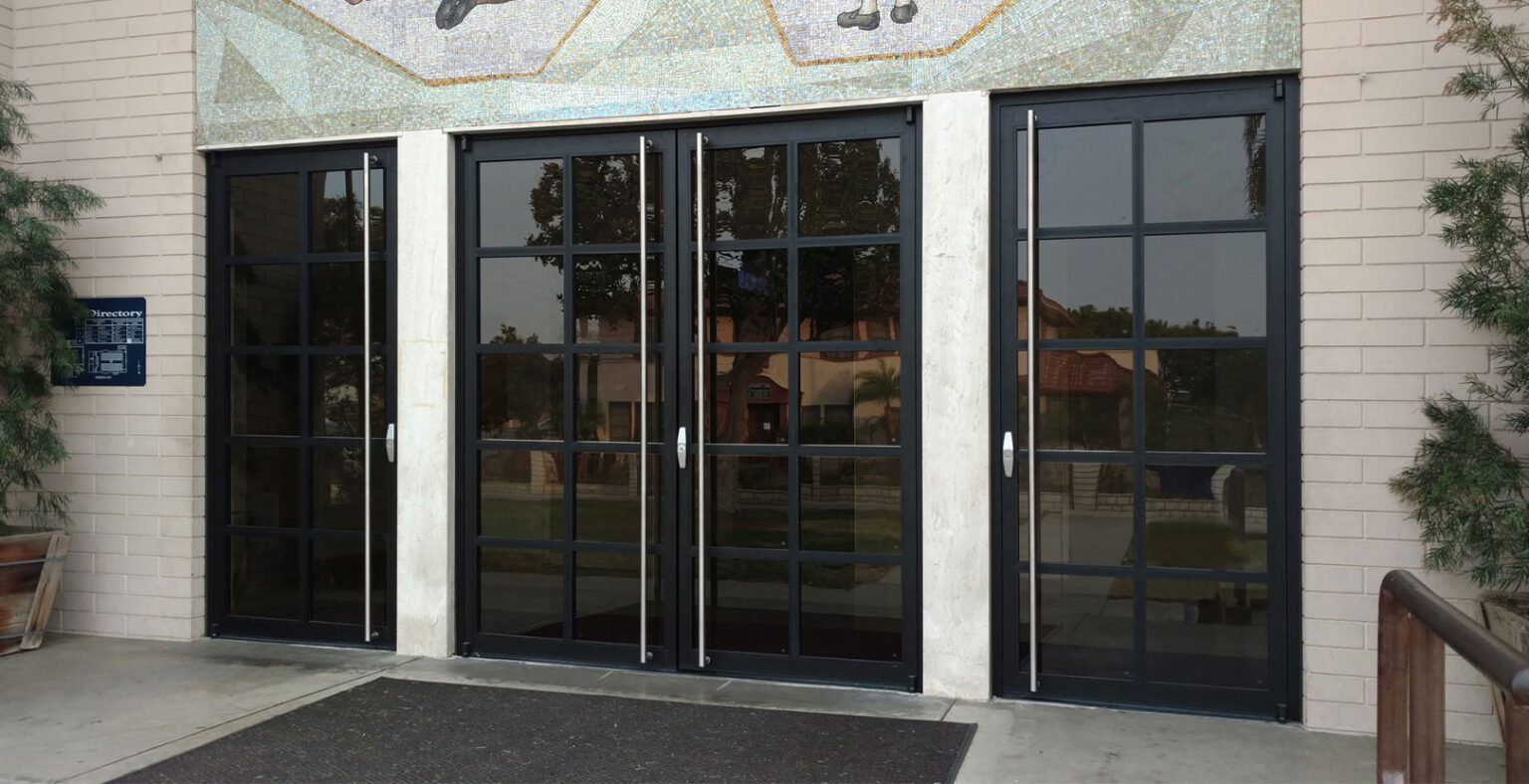
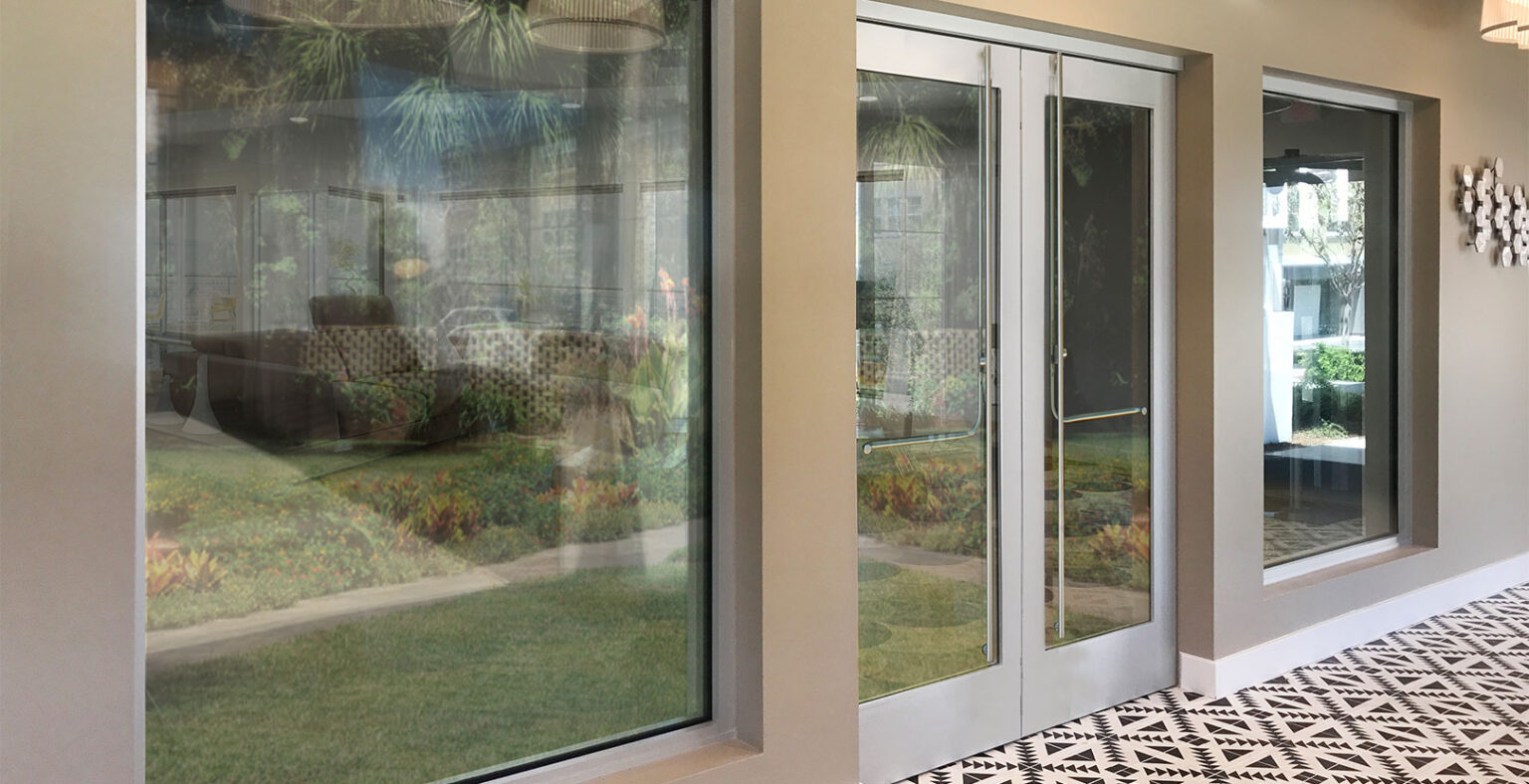
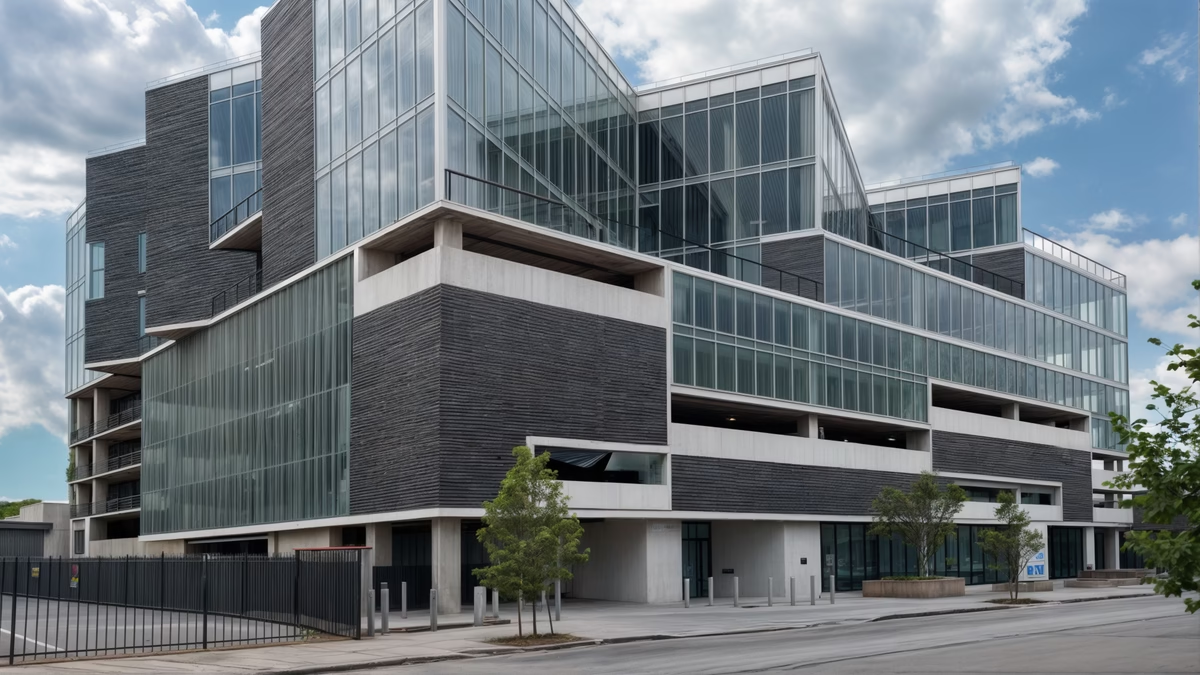
Glass and aluminum manufacturers in Honolulu

Premium Glass & Aluminum Solutions for Honolulu

Honolulu’s construction market is defined by its coastal environment, hospitality-driven economy, and ongoing development in commercial, residential, and mixed-use projects.

Builders in Hawaii require materials engineered for humidity, salt exposure, intense UV radiation, and tropical storms, conditions that demand superior durability and performance.

At PRL Glass & Aluminum, we manufacture premium architectural systems designed to withstand Honolulu’s climate while delivering modern aesthetics for hotels, resorts, luxury residences, retail centers, and public buildings across Oʻahu.

Building in Honolulu? Connect with PRL Glass & Aluminum Today

We provide nationwide shipping, custom fabrication, and technical support for construction professionals throughout Hawaii.

We proudly serve builders in Honolulu, Waikīkī, Kapolei, Kaneohe, Kailua, and throughout the Hawaiian Islands.

Service 

Contact Number 

Aluminum Division 

📞 877-775-2586 

Glass Division 

📞 800-433-7044 

📍 Visit our locations in City of Industry, California and explore our wide range of innovative, high-quality aluminum and glass solutions!

Advanced Glass & Aluminum Designs for Honolulu Builders

Our systems are engineered to perform in Hawaii’s tropical climate while delivering energy savings and contemporary design.

All PRL systems comply with ASTM, NFRC, and LEED standards, an excellent fit for Hawaii’s sustainability-driven development.

Why Honolulu Developers Trust PRL Glass & Aluminum

Honolulu’s construction demands precision, weather resistance, and superior craftsmanship, PRL delivers on every front.

Why Hawaii builders choose PRL:

✅ Fast U.S. mainland fabrication and reliable freight shipping

✅ Corrosion-resistant aluminum and glass ideal for tropical, coastal environments

✅ Custom solutions for hotels, resorts, and multi-family developments

✅ LEED-friendly, energy-efficient systems to meet Hawaii’s green building goals

PRL Glass and Aluminum in Honolulu

Benefits of Glass and Aluminum Systems in Honolulu

Glass and aluminum are leading materials for Hawaii’s high-end and high-performance construction needs.

  • Salt-Air Resistance – Aluminum and finished glass withstand corrosion from ocean exposure
  • UV & Heat Protection – Specialized coatings reduce heat gain and protect interiors
  • Wind & Storm Durability – Engineered for high winds and tropical weather conditions
  • Coastal Aesthetics – Clean lines and transparency complement beachfront and ocean-view architecture
  • Eco-Friendly Materials – Recyclable and compatible with LEED construction
  • Battle Door Capability – Reinforced systems offer added protection from break-ins, vandalism, protests, and severe storm conditions

PRL Glass & Aluminum, your National Supplier

From our location in California, PRL Glass & Aluminum serves Hawaii and all 50 states in the United States.

We offer service in major cities across the country:

Cheyenne

Manchester

Fargo

Burlington

Charleston, West Virginia

Follow us on social media ✅

Stay tuned for news, events, discounts and new products through the different social media channels.
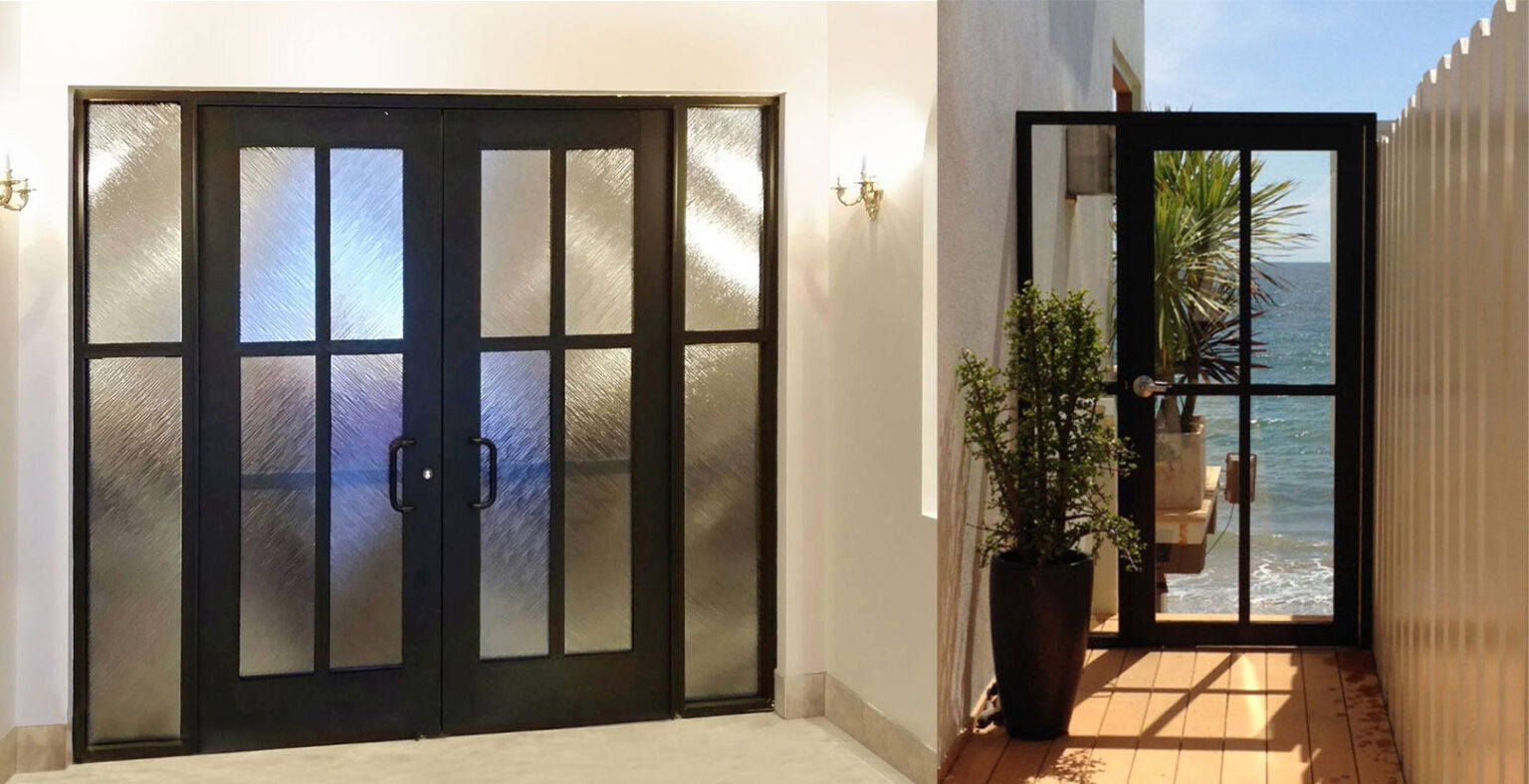
Glass and Aluminum Manufacturers in Cheyenne

Premium Glass & Aluminum Solutions for Cheyenne

Cheyenne, the capital of Wyoming, is a growing center for government facilities, commercial construction, logistics infrastructure, and residential development. Wyoming builders need architectural systems that deliver durability, energy efficiency, and strong performance in a climate known for heavy winds, cold winters, and intense temperature shifts.

At PRL Glass & Aluminum, we supply high-performance glass and aluminum systems engineered for long-term reliability and clean, modern architectural design.

From public-sector projects to commercial buildings and multifamily developments, PRL systems help Cheyenne builders meet today’s standards in safety, sustainability, and architectural quality.

Building in Cheyenne? Connect with PRL Glass & Aluminum Today

PRL provides nationwide delivery, custom fabrication, and technical support to contractors, developers, and architects throughout Wyoming.

We proudly serve Cheyenne, Casper, Gillette, Laramie, and communities across the state.

Service 

Contact Number 

Aluminum Division 

📞 877-775-2586 

Glass Division 

📞 800-433-7044 

📍 Visit our locations in City of Industry, California and explore our wide range of innovative, high-quality aluminum and glass solutions!

Advanced Glass & Aluminum Designs for Cheyenne Builders

Our systems are engineered to handle Wyoming’s challenging weather conditions, including windstorms, snow, and cold temperatures, while providing energy efficiency and visual appeal.

All PRL systems comply with ASTM, NFRC, and LEED standards, ideal for Wyoming’s safety and energy requirements.

Why Cheyenne Developers Trust PRL Glass & Aluminum

Builders in Wyoming require systems that balance strength, energy performance, and modern design, PRL delivers exactly that.

Why professionals in Cheyenne choose PRL:

✅ Fast nationwide shipping and dependable production schedules

✅ Custom-engineered systems for public, commercial, and residential projects

✅ Energy-efficient, LEED-compatible solutions

✅ Technical support throughout planning, specification, and installation

PRL Glass and Aluminum in Cheyenne

Benefits of Glass and Aluminum Systems in Cheyenne

Glass and aluminum provide Wyoming builders with versatility, efficiency, and resilience—critical for year-round weather challenges.

  • Thermal Performance – Helps maintain interior comfort during harsh winters and warm summers
  • Noise Reduction – Ideal for government districts, commercial centers, and growing residential areas
  • Wind & Weather Durability – Built to withstand strong winds, snow, and dramatic temperature shifts
  • Modern Architectural Appeal – Complements Wyoming’s mix of rustic and contemporary design
  • Recyclable & Sustainable – Supports environmentally conscious construction
  • Battle Door Capability – Reinforced systems protect against vandalism, break-ins, protests, and extreme storms

PRL Glass & Aluminum, your National Supplier

From our location in California, PRL Glass & Aluminum serves Wyoming and all 50 states in the United States.

We offer service in major cities across the country:

Jackson

Manchester

Fargo

Burlington

Charleston, West Virginia

Follow us on social media ✅

Stay tuned for news, events, discounts and new products through the different social media channels.
Contemporary aluminum front door with slim sightlines and thermally broken frame, enhancing curb appeal and energy efficiency.

10 Smart Upgrades to Increase Your Home’s Value

Home / Articles posted byEduardo Savin

Increasing your home’s value doesn’t always require an expensive renovation or large-scale construction projects. In many cases, a strategic combination of aesthetic and functional improvements can have an immediate impact on the property’s appearance, comfort, and overall market value. 

Today, homeowners are looking to balance three key factors: a home that looks modern, performs better, and offers greater energy efficiency. Some upgrades are simple and affordable, while others require a larger investment. But all of them can be completed in stages depending on the needs of each household. 

Additionally, elements such as modern doors, glass systems, or aluminum solutions can completely transform the look and performance of a home. Therefore, increasing its value without the need to remodel every space. 

Whether you plan to sell your property in the future, need to increase its appraised value for a mortgage, or simply see it as a long-term investment, raising your home’s value is always a smart move. Here are some worthwhile improvements to consider. 

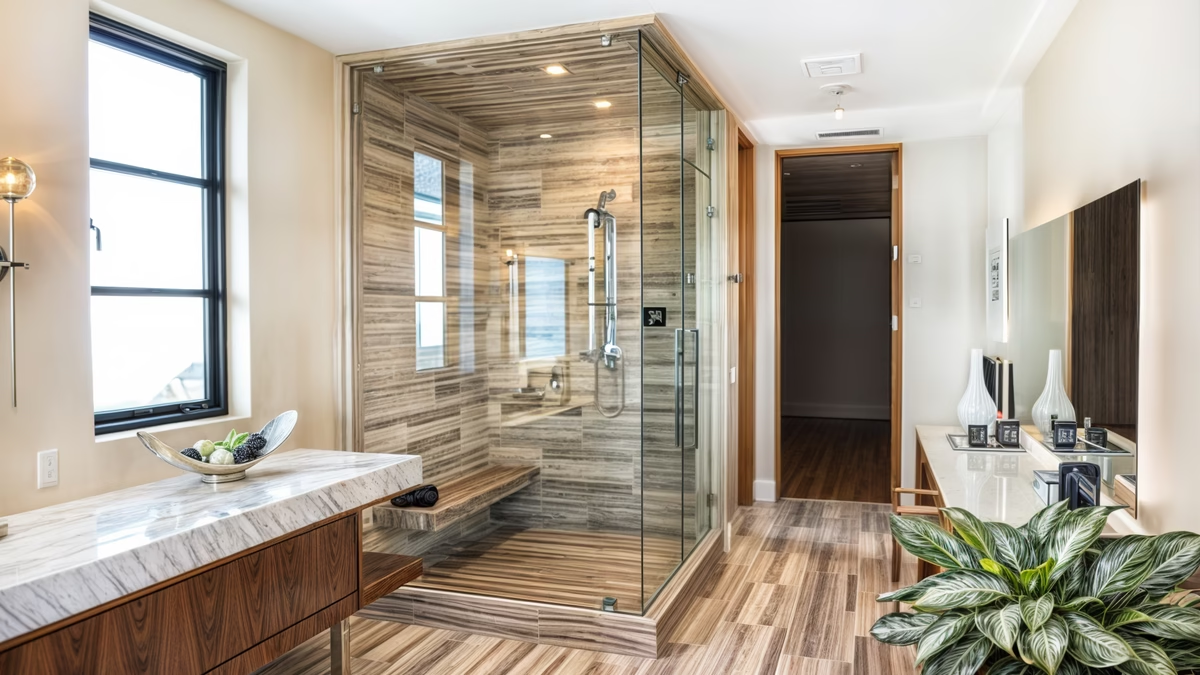
Frameless glass shower with premium hardware and a clean, spa-inspired bathroom design that elevates home value.

10 Ways to Boost Your Home’s Value to New Heights 

Real estate remains one of the smartest ways to grow your money quickly, and the best part is that even small improvements can significantly amplify that effect.

1. Declutter, Repair, and Deep Clean Before Anything Else

Before considering major renovations, the first step to increasing your home’s value is bringing it to a basic pristine condition. A clean, organized, and well-maintained space creates an immediate impression of higher value—even before any aesthetic upgrades. 

Take time to organize each room, remove unnecessary items, and perform a thorough deep clean that includes windows, floors, bathrooms, and the kitchen. Small repairs, such as fixing leaks, replacing loose handles, patching cracks, or updating caulking and seals, can completely change how well-maintained your home feels. 

These improvements are affordable, quick to complete, and create the ideal foundation for any upgrades that follow. A well-kept home also signals to buyers and appraisers that the property has been properly maintained over the years, something that always adds value. 

You can also take this a step further, especially if your home is 30–40 years old. Updating the electrical system, replacing old plumbing, or giving the entire house a fresh coat of paint are additional steps that can dramatically improve its condition and market value.

2. Upgrade Your Front Doorwith a Modern Aluminum Entrance

The front door is one of the most influential elements in how any home is perceived. It’s the first thing visitors, buyers, or appraisers see. So, it works almost like a visual “handshake,” communicating the home’s age, style, and level of maintenance within seconds. 

An old, worn, or poorly functioning door can lower the perceived value of the property, while a modern, secure, clean-lined entrance creates an immediate impression of quality. 

This is where residential aluminum doors, especially contemporary models with slim frames, make a remarkable difference. A door like Sunny Lux, for example, features an ultra-slim profile that completely refreshes the façade while improving key aspects of the home’s performance. 

Some of its most notable benefits include: 

  • Superior thermal insulation: Thanks to its thermally broken frame, it helps maintain stable indoor temperatures, reducing the need for heating and air conditioning 
  • Enhanced security: Options such as impact-resistant glass and a multi-point locking system significantly increase protection 
  • Modern aesthetics: Clean lines, a minimalist design, and premium finishes that elevate the home’s exterior appeal 

3. Refresh Walls and Key Surfaceswith Light, Neutral Colors

One of the quickest and most affordable ways to transform the look of a home is with a fresh coat of paint. Neutral colors (such as white, beige, soft gray, or sand tones) not only brighten up spaces but also create a sense of openness and cleanliness that is very appealing to buyers and appraisers. 

Updating walls, interior doors, trim, or even surfaces like the kitchen backsplash can make the home look more modern and well-maintained without requiring a full renovation. 

These tones also photograph beautifully, which is especially important if you plan to list your property. 

Additionally, a neutral palette helps future homeowners picture themselves living in the space, as it works like a blank canvas that pairs well with any décor style. It’s a simple, accessible upgrade with a surprisingly strong impact on your home’s perceived value.

4. Improve Energy Efficiencywith Thermally Broken Window and Door Systems

Energy efficiency has become one of the most important factors for buyers, appraisers, and homeowners looking to reduce long-term costs. And one of the most effective ways to improve it is by upgrading your windows and doors to thermally broken systems. 

This term refers to a frame that incorporates an insulating barrier between the interior and exterior, preventing heat or cold from easily transferring through the material. In other words, it helps maintain more stable indoor temperatures and reduces energy loss, which are especially valuable in extreme climates or regions with harsh seasons. 

Upgrading your doors or windows to thermally broken systems can offer immediate benefits: 

  • Energy savings: By minimizing thermal transfer, the need for heating and cooling decreases 
  • Improved indoor comfort: More stable temperatures and fewer drafts 
  • Less condensation and moisture: Helps prevent mold or damage to frames and walls 
  • Greater durability: These systems, especially in aluminum, resist corrosion, weather changes, and long-term wear 

5. Turn Your Bathroomintoa Spa-Like Space with Frameless Shower Doors 

Bathrooms are one of the areas with the highest influence on a home’s perceived value. A bathroom that looks modern, clean, and well-lit can completely change a buyer’s impression, often without requiring a full remodel. One of the most effective upgrades to achieve this is installing frameless glass shower doors. 

Unlike curtains or traditional systems with heavy profiles, a frameless shower enclosure creates visual openness, allows light to flow more freely, and delivers a contemporary look that instantly elevates the bathroom. 

This is where glass shower door systems make a big difference. By offering a complete package, tempered glass, hardware, hinges, and pull handles, they simplify installation and ensure an elegant, long-lasting finish. 

Additionally, PRL offers protective technologies that increase long-term value: 

  • Diamond Seal: A coating that keeps glass brighter for longer, reducing hard-water stains and minimizing the need for harsh cleaning chemicals 
  • Shower Glass (permanent coating): A factory-applied seal that protects the glass against moisture, heat, and discoloration, to help maintain a like-new appearance for years
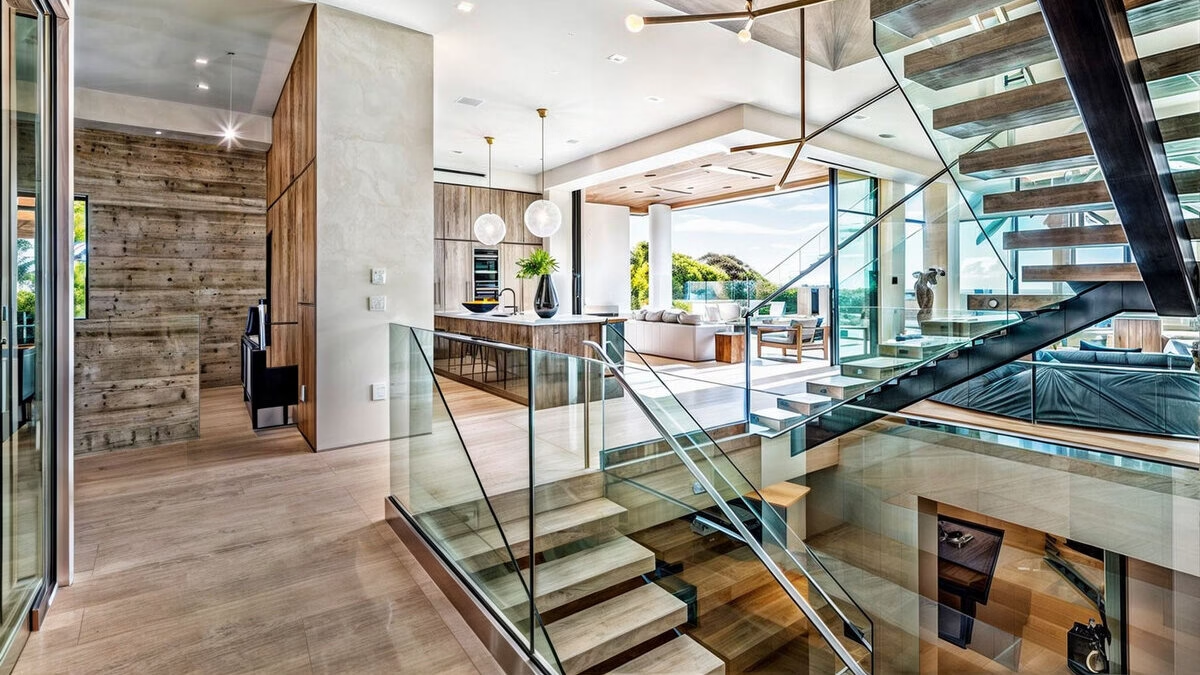
Modern sliding patio doors connecting the living room with the backyard, showcasing natural light and a seamless indoor–outdoor transition.

6. Boost Your Home’s Curb Appeal with Small Exterior Upgrades 

The exterior of your home is the first thing everyone seesAnd that initial impression has a major impact on your property’s perceived value. The good news is that you don’t need a large investment to completely refresh your façade and elevate your curb appeal. 

Small, strategic changes can make an immediate difference: 

  • Refresh landscaping: Adding new plants, well-maintained grass, decorative stones, or mulch can instantly make your home look more modern and well cared for 
  • Update house numbers and your mailbox: These may seem like minor details, but they are surprisingly influential. Replacing them with clean, modern versions refreshes your entryway without significant cost 
  • Add exterior lighting: Pathway lights, tree uplighting, or entry lighting can make your home look safer, more welcoming, and more valuable 
  • Pressure washing: Sometimes all a façade, driveway, or patio needs is a deep clean. Removing dirt, mold, and stains can rejuvenate the entire home in minutes 

7. Open Your Living Room to the Outdoors with Sliding Patio Doors 

The connection between indoor and outdoor spaces has become one of the most desirable features in modern homes. Living rooms that open toward a patio or garden feel brighter, more spacious, and significantly increase a home’s perceived value. 

One of the most effective ways to achieve this is by installing large-format sliding doors. These systems allow natural light to flood your living spaces, provide expansive views, and create a modern, high-end atmosphere. 

This is where a system like Max slider truly stands out. More than just a sliding door, it’s an architectural solution designed to maximize light, efficiency, and openness. Its key benefits include: 

  • Modern design and expansive views: Large glass panels, slim frames, and a low-profile sill create an almost seamless transition between the interior and exterior 
  • Energy efficiency: The thermally broken version minimizes temperature transfer, keeping your home more comfortable year-round 
  • Strength and durability: Options for hurricane, pressure, and extreme-climate resistance make it ideal for coastal regions or areas with variable weather 
  • Versatile configurations: From standard sliding setups to multi-track, pocket-style, or 90° corner systems, it adapts to virtually any architectural design 

8. Use Mirrors to Add Light, Space, and a High-End Designer Look

Mirrors are one of the most effective and accessible design tools for transforming a space without major construction. They not only amplify natural light but also create the impression of larger, more elegant, and more modern rooms—directly boosting your home’s perceived value. 

Placing mirrors strategically in hallways, living rooms, home gyms, dressing rooms, or entryways can completely change how a home is experienced and perceived. It’s a high-impact, low-effort upgrade, ideal for homeowners and anyone preparing a property for sale. 

This is where PRL’s glass and mirror solutions provide a clear advantage: 

  • Custom Mirror Glass: Available in multiple thicknesses and tones (clear, low-iron, bronze, gray), allowing each design to match the home’s interior style. With options like polished or beveled edges, sandblasted patterns, and lighting integrations, mirrors become architectural elements rather than simple accessories 
  • MirroView™(Technology and design in a single material): This innovative glass works as a mirror when the screen is off and turns transparent when the display is on. It’s perfect for concealing TVs or monitors in living rooms, suites, bars, or luxury spaces, creating a seamless and sophisticated aesthetic 

9. Choose Low-Maintenance Materials That Stay Beautiful Longer

When it comes to increasing your home’s value, it’s not only about immediate aestheticsMany buyers look for homes that look great today but are also easy to maintain in the years ahead. 

A space that ages well, requires less cleaning, and resists everyday wear and tear will always be more attractive and valuable. 

Investing in durable, low-maintenance materials can reduce future costs, prevent unnecessary repairs, and eliminate common objections during inspections or the selling process. 

Some key upgrades include: 

  • Surfaces that resist stains and moisture: Glass coatings such as Diamond Seal or PRL’s permanent protective coatings help keep shower enclosures and glass surfaces looking pristine longer, reduce hard-water stains, and minimize the need for harsh cleaning chemicals 
  • Weather-resistant aluminum systems: High-quality aluminum doors and windows—especially those with thermally broken systems—not only boost energy efficiency but also resist corrosion, temperature shifts, and daily wear 
  • Glass and metal that keep their appearance: Modern materials such as tempered glass, anodized aluminum, and powder-coat finishes maintain their color and shine for years, even in coastal environments or extreme climates 

10. Plan Your Upgrades Strategically: Budget, ROI, and Professional Support 

Not all home improvements generate the same impact or return. To increase your home’s value intelligently, it’s important to prioritize and plan each upgrade with a clear strategy. 

Before investing, consider this recommended order: 

  1. Address functional issues first: Leaks, moisture problems, outdated wiring, filtration issues, or aging systems should be fixed before thinking about aesthetics. A home with structural or functional problems loses value immediately—no matter how modern it looks 
  2. Then focus on energy efficiency and security: Upgrading windows, doors, and insulation systems not only lowers monthly utility costs but also increases appraisal value and attracts buyers interested in long-term savings 
  3. Finally, add high-impact visual upgrades: Modern entry doors, patio sliding systems, frameless glass showers, and decorative mirrors elevate the perception of luxury and modernity without requiring major renovations 

Additionally, working with professionals can help you select the right materials, avoid installation errors, and ensure each improvement actually adds measurable value. 

Why Increasing Your Home’s Value Is Worth It 

Raising your home’s value isn’t only important when you plan to sell. There are several strategic and financial reasons why investing in upgrades can be one of the smartest decisions for any homeowner. 

Here are some of the most important benefits: 

  1. Higher profit when selling: A home with updated finishes, better energy efficiency, and visible maintenance can command a significantly higher price on the market. Even small upgrades can lead to a notable increase in the final offer. 
  1. More access to capital or financing: When your home’s value goes up, so does your equity. This gives you access to better mortgage options, refinancing opportunities, or home equity credit lines backed by the increased value of your property. 
  1. Protection against market fluctuations: If the housing market dips, a home with strategic updates, such as energy-efficient systems or modern finishes, tends to hold its value better than properties that haven’t been upgraded. 
  1. Potential elimination of mortgage insurance (PMI): If a new appraisal shows higher home value and your equity surpasses certain thresholds, you may reduce or eliminate PMI, resulting in immediate monthly savings. 
  1. Better comfort and day-to-day enjoyment: Not all upgrades are for future buyersMany enhance your quality of life today: less noise, better lighting, more open spaces, lower maintenance needs, and a home that feels more modern and functional. 

If you’re ready to take the next step and upgrade your home with improvements that truly enhance its value, PRL Glass & Aluminum is here to help. 

From modern aluminum entry doors and thermally broken systems to frameless shower doors, architectural mirrors, and fully customized glass solutions, PRL designs and manufactures products that elevate the aesthetics, efficiency, and long-term durability of any space. 

With in-house manufacturing, fast lead times, and the ability to customize every component, our team can support your vision and bring your project to the next level. 

Planning a remodel, an upgrade, or a new architectural design? Contact us today and discover how PRL can deliver quality, performance, and lasting value to your home. 

Glass and Aluminum Manufacturers in Charleston, West Virginia

Premium Glass & Aluminum Solutions for Charleston, West Virginia

Charleston, the capital and largest city of West Virginia, continues to grow across healthcare, government, education, and commercial sectors. Builders and architects in the region need durable, energy-efficient systems that can handle the state’s four-season climate, from humid summers to cold winters.

 At PRL Glass & Aluminum, we provide premium glass and aluminum solutions engineered for long-term performance and modern aesthetics, ideal for both renovations and new development across West Virginia.

Whether it’s hospital expansion, state buildings, retail projects, or residential construction, PRL systems deliver the strength, insulation, and design flexibility that Charleston builders demand.

Building in Charleston? Connect with PRL Glass & Aluminum Today

PRL delivers nationwide fabrication, fast shipping, and project support to contractors and developers throughout West Virginia.

We proudly serve Charleston, Huntington, Morgantown, Parkersburg, and communities across the state.

Service 

Contact Number 

Aluminum Division 

📞 877-775-2586 

Glass Division 

📞 800-433-7044 

📍 Visit our locations in City of Industry, California and explore our wide range of innovative, high-quality aluminum and glass solutions!

Advanced Glass & Aluminum Designs for Charleston Builders

Our systems are engineered to support a wide range of commercial and institutional applications, with performance suited to West Virginia’s seasonal weather patterns.

All PRL systems comply with ASTM, NFRC, and LEED standards, ideal for both public and private construction projects.

Why Charleston Developers Trust PRL Glass & Aluminum

West Virginia builders rely on PRL for dependable production schedules, precision fabrication, and strong product performance.

Why professionals in Charleston choose PRL:

✅ Fast, reliable nationwide shipping

✅ Custom-engineered systems suitable for institutional and commercial developments

✅ Energy-efficient products essential for year-round climate variation

✅ Technical support from planning to installation

PRL Glass and Aluminum in Charleston, West Virginia

Benefits of Glass and Aluminum Systems in Charleston

Glass and aluminum offer durability, clean aesthetics, and long-term performance, important for the growing construction needs of West Virginia.

  • Energy Efficiency – Improves indoor comfort in both hot summers and cold winters
  • Noise Reduction – Ideal for government districts, medical centers, and busy commercial zones
  • Weather Durability – Built to handle snow, rain, humidity, and strong seasonal winds
  • Timeless Architectural Appeal – Fits both traditional Southern design and modern developments
  • Eco-Friendly Materials – Supports LEED projects and sustainable building initiatives
  • Battle Door Capability – Reinforced systems offer enhanced protection from break-ins, vandalism, protests, and severe weather

PRL Glass & Aluminum, your National Supplier

From our location in California, PRL Glass & Aluminum serves West Virginia and all 50 states in the United States.

We offer service in major cities across the country:

Jackson

Manchester

Fargo

Burlington

New Orleans

Follow us on social media ✅

Stay tuned for news, events, discounts and new products through the different social media channels.