Loading

Archives February 2026

Glass and Aluminum Manufacturers in Beacon Hill

Modern Glass & Aluminum Solutions for Homes & Businesses in Beacon Hill

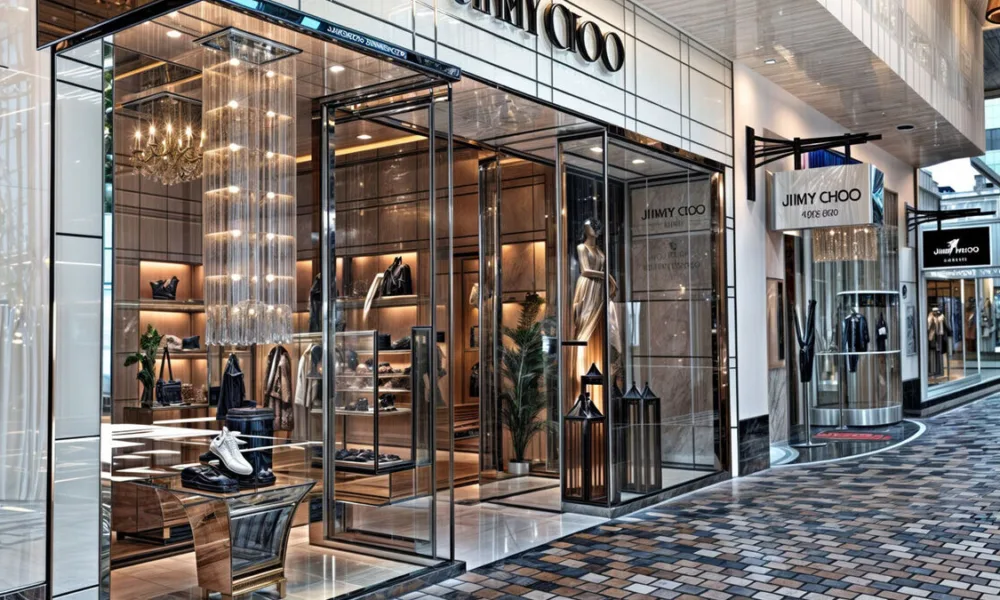
Beacon Hill is one of Boston’s most historic and distinguished neighborhoods, known for its Federal-style townhouses, cobblestone streets, refined interiors, and boutique commercial spaces. Projects here demand glass and aluminum systems that preserve historic character while delivering modern performance, security, and comfort.

At PRL Glass & Aluminum, we provide modern architectural solutions engineered to integrate seamlessly into Beacon Hill’s timeless aesthetic, supporting high-end residential renovations and discreet commercial upgrades with premium precision.

Building or Renovating in Beacon Hill? Connect with PRL Glass & Aluminum Today

Whether you’re restoring a historic townhouse, upgrading a luxury residence, or refining a street-facing boutique space, PRL delivers custom fabrication, nationwide logistics, and expert technical support from California.

We proudly support projects throughout Beacon Hill, Back Bay, Downtown Boston, and the greater Boston metropolitan area.

Service 

Contact Number 

Aluminum Division 

📞 877-775-2586 

Glass Division 

📞 800-433-7044 

📍 Visit our locations in City of Industry, California and explore our wide range of innovative, high-quality aluminum and glass solutions!

Premium Glass & Aluminum Designs for Beacon Hill Homes

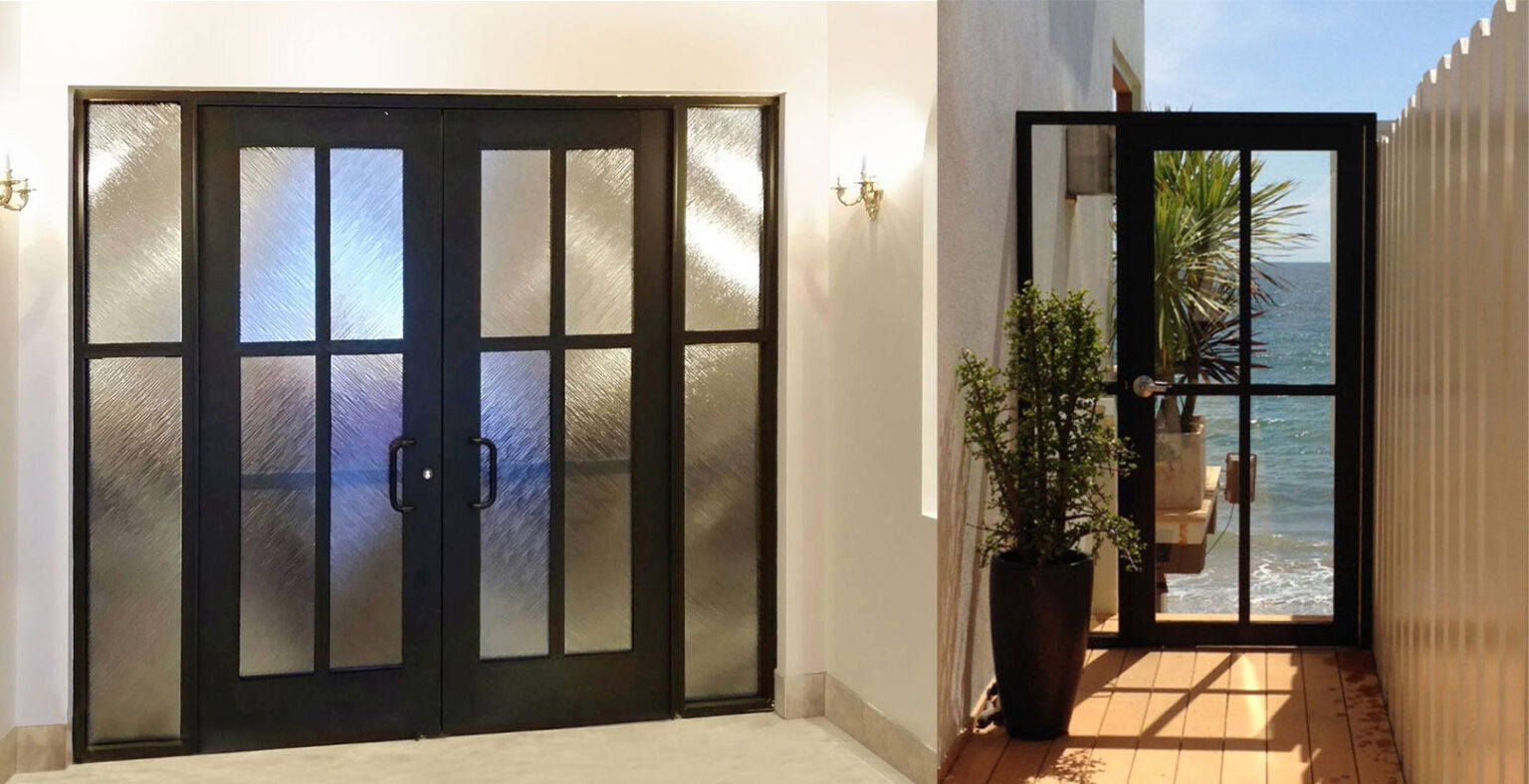
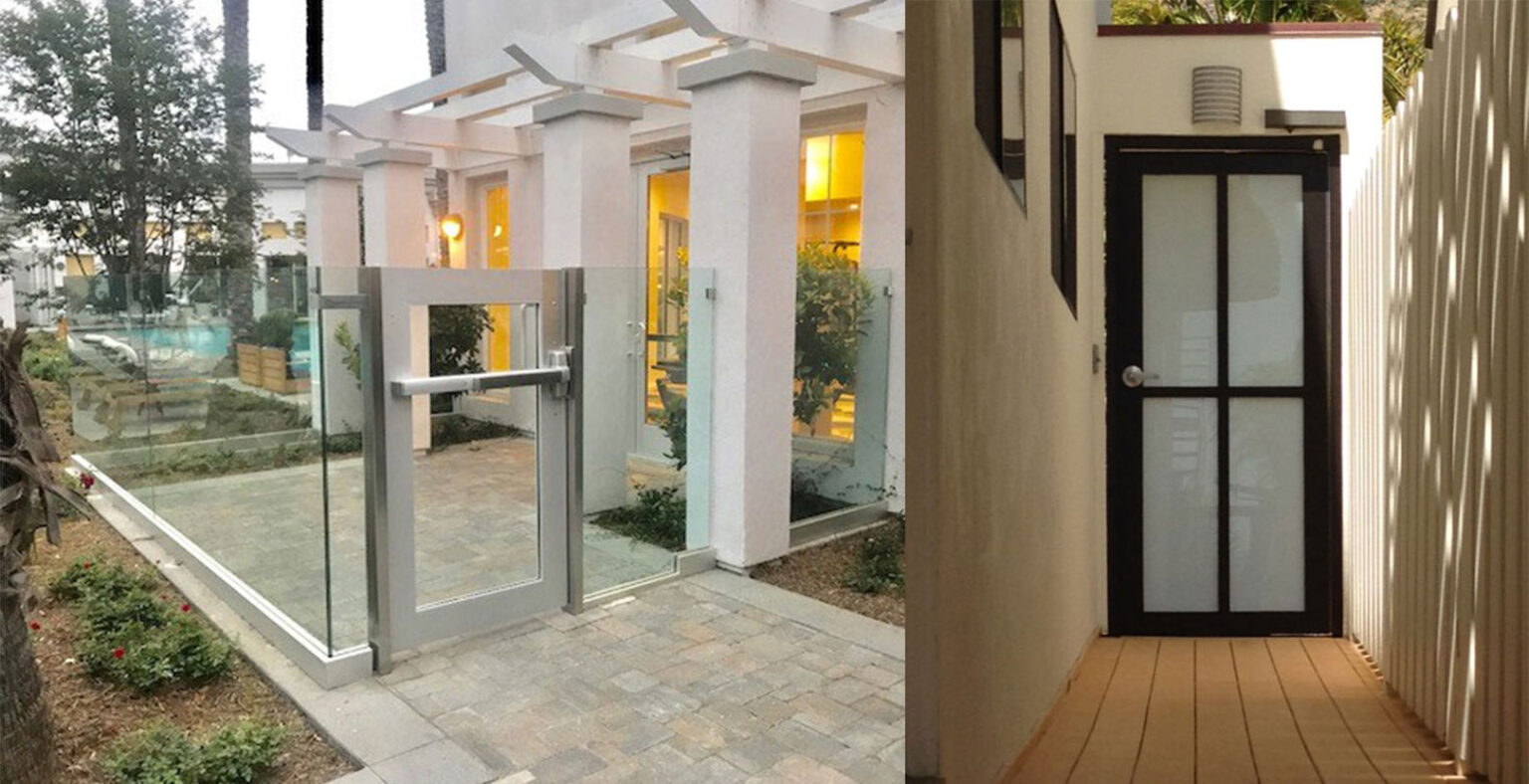
Beacon Hill residences prioritize craftsmanship, privacy, and architectural harmony. PRL’s premium residential systems enhance interiors while respecting historic façades.

All residential systems meet ASTM and NFRC standards, ensuring performance and code compliance.

Glass & Aluminum Solutions for Beacon Hill Businesses

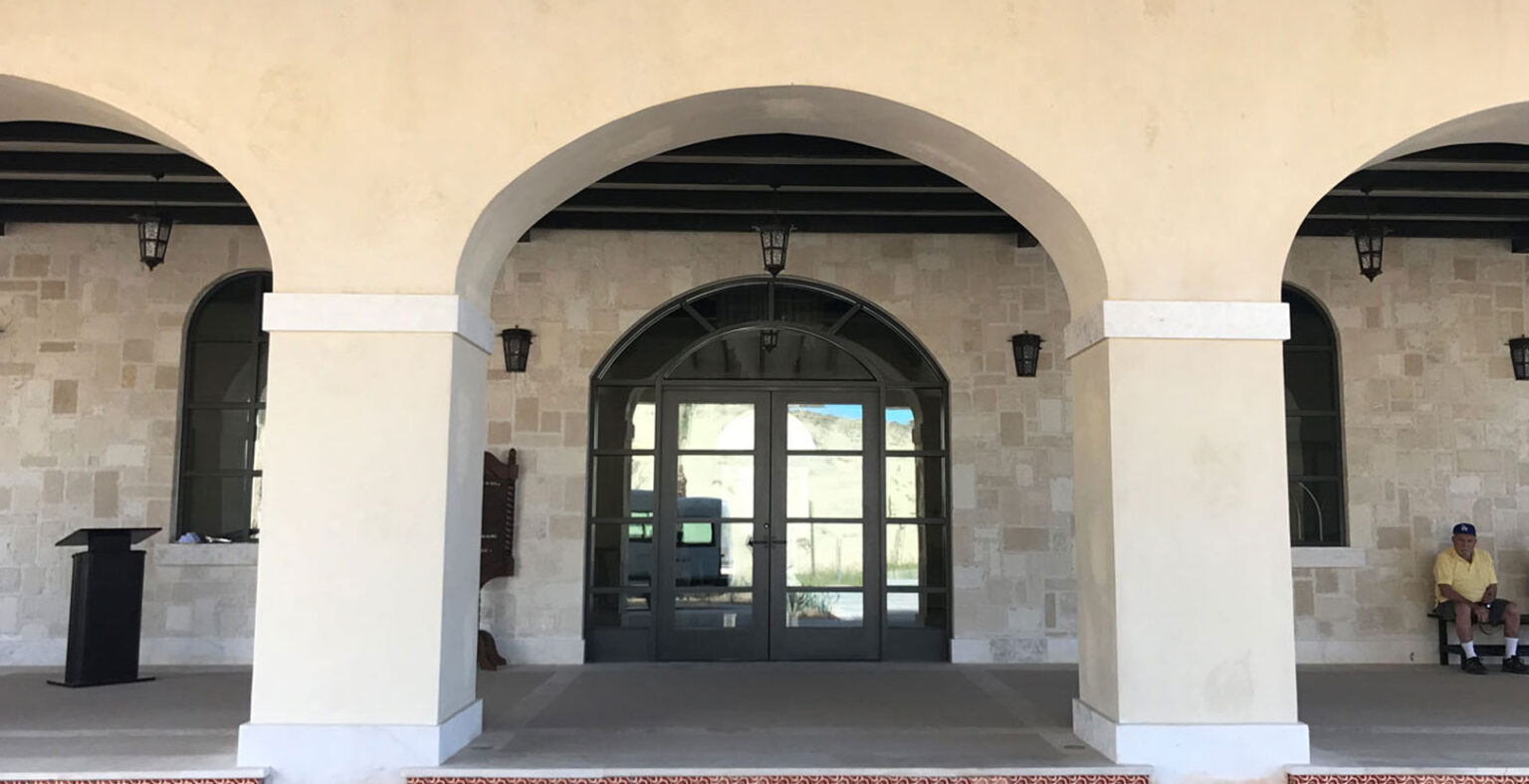
Beacon Hill’s commercial presence (boutique retail, professional offices, and hospitality) requires architectural systems that balance subtle elegance with durability.

  • Curtain Wall Systems: Suitable for selective commercial upgrades and institutional improvements
  • Storefront Systems: Refined glass façades that complement historic streetscapes
  • Architectural Glass Solutions – Laminated and tempered glass for safety, acoustic control, and thermal performance

PRL supports renovations and modernizations with precision and respect for architectural context.

PRL Glass and Aluminum Manufacturers in Beacon Hill

Why Beacon Hill Developers and Homeowners Trust PRL Glass & Aluminum

In one of Boston’s most architecturally sensitive neighborhoods, PRL is trusted for craftsmanship and customization.

  • Custom fabrication for historic renovations and luxury residences
  • Systems designed to integrate with classic architecture and preservation standards
  • Nationwide manufacturing with reliable lead times
  • Technical support for architects, builders, and designers
  • Proven experience in high-end residential and boutique commercial environments

Benefits of Glass and Aluminum Systems in Beacon Hill

Beacon Hill architecture thrives on historic charm enhanced by modern comfort, glass and aluminum systems support this balance.

  • Thermal Performance for year-round comfort in Boston’s variable climate
  • Noise Reduction, essential in dense residential streets
  • Elegant Architectural Appeal aligned with classic façades and refined interiors
  • Durability suitable for long-term residential and boutique commercial use
  • Eco-Friendly Materials, supporting LEED and sustainability-focused projects
  • Battle Door Capability, offering reinforced security against break-ins or vandalism—important for street-facing residences and retail

Transform Your Space with PRL Glass & Aluminum

Based in California and trusted nationwide, PRL serves Illinois and all 50 states with luxury-grade architectural glass and aluminum systems.

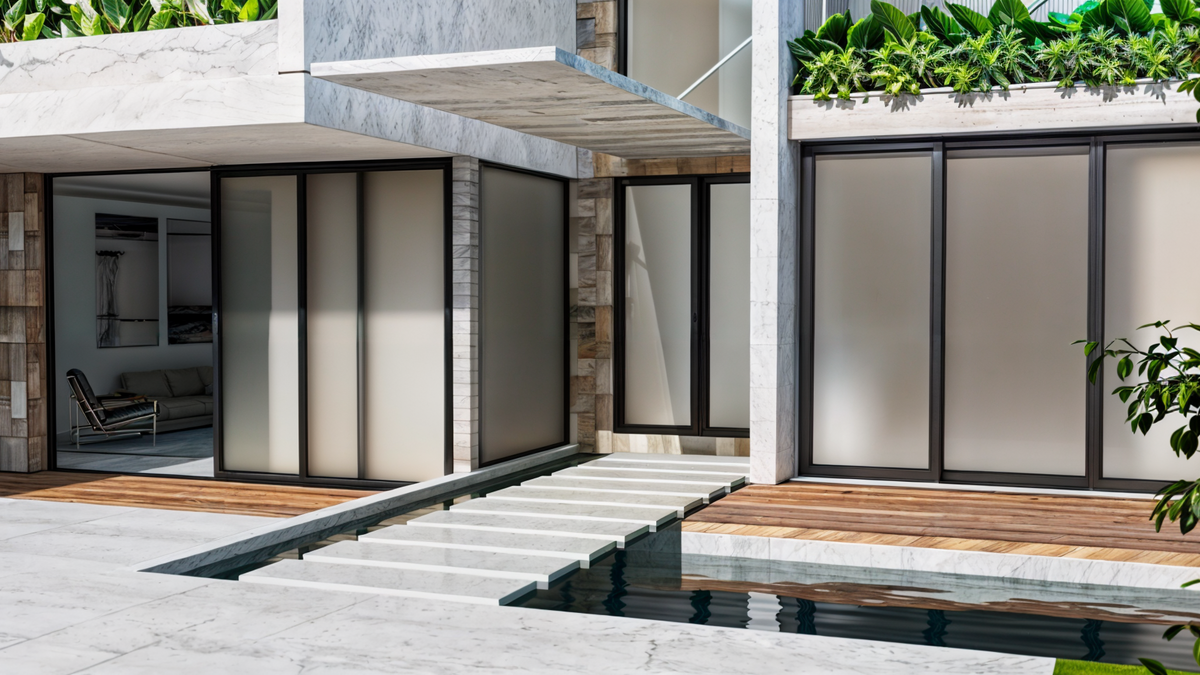
From custom sliding doors to boutique storefronts, we deliver craftsmanship designed to elevate your next project.

We are present in the most important neighborhoods in the United States, offering the highest quality service.

Dupont Circle

Back Bay

Lincoln Park

Gold Coast

Georgetown

Follow us on social media ✅

Stay tuned for news, events, discounts and new products through the different social media channels.

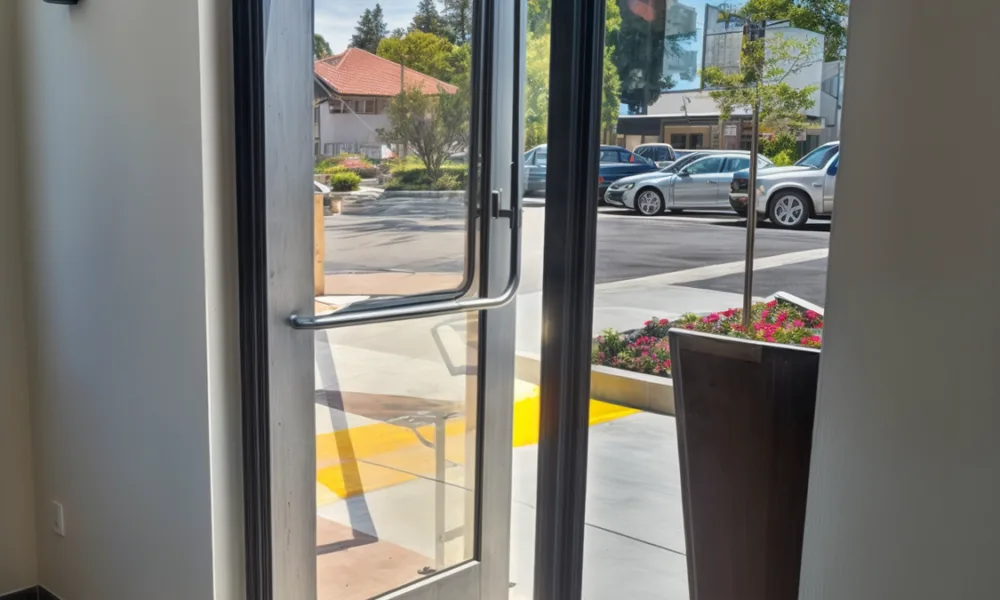
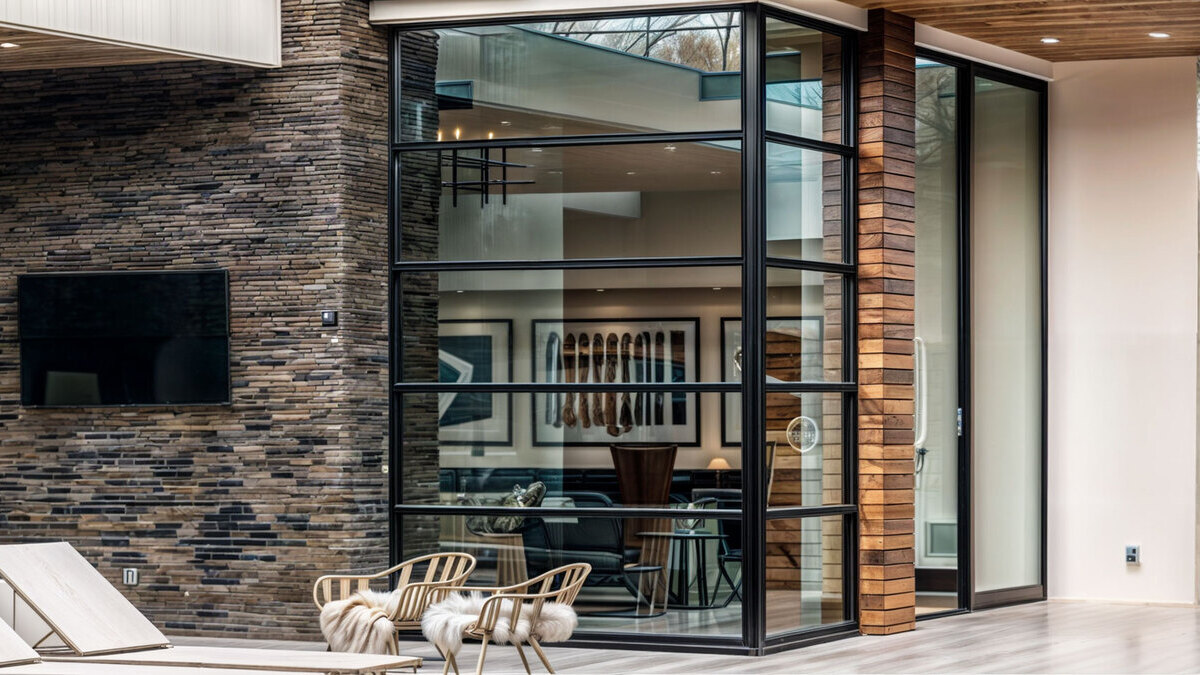
Without thermal separation inside the frame, aluminum patio doors may transfer outdoor temperatures inward, affecting comfort near the glass and subtly influencing how living spaces are used in colder seasons.

Why That One Spot in Your Living Room Is Always Freezing in Winter

Home / 2026 / February

You know that one spot.

  • In August, it’s the best seat in the house. Sunlight, view, breeze.
  • In January, it’s suddenly the “decorative chair” no one actually sits in.

You can feel the temperature shift when you walk toward it. Sit down for a minute and you’re reaching for a blanket. It’s not your imagination and it’s not your furniture’s fault.

When large openings like patio doors or glass entries aren’t properly insulated at the frame, they can create what homeowners quietly call the cold corner problem. One part of the room feels like a different climate. And once that happens, winter starts picking your floor plan.

❄️ When Winter Redesigns the Room

It rarely feels dramatic at first: The sofa shifts slightly away from the glass, rugs layer up, the play area migrates to the center and the thermostat gets nudged higher because “something feels off.”

The room might technically be heated. But the perimeter (especially near the frame) feels noticeably colder. That’s usually not a whole-room problem, it’s a heat-transfer problem.

❓ What “Thermally Broken” Actually Means

In simple terms, a thermally broken system has an insulating barrier built inside the metal frame. That barrier interrupts the path heat normally takes through aluminum.

Without that separation, cold outdoor temperatures can conduct directly through the frame and radiate inward. With it, that transfer is significantly reduced.

It’s not magic, it doesn’t replace proper glazing or good installation. But it changes how the space feels near the glass and that’s where comfort complaints usually live.

🌡️ Why It Matters More Than You Think

Most people don’t complain that their entire room is freezing. They complain about:

  • The chair no one uses in winter
  • The drafty feeling near the entrance
  • The temperature drop right by the sliding wall

When frames transfer cold into the room, your HVAC system often works harder to compensate, even if you don’t consciously notice it. Comfort and energy use are more connected than they seem.

Thermally broken framing helps stabilize the perimeter so the space near the opening feels usable, not just technically heated.

Large glass openings can create localized temperature shifts near the frame, often leading to what homeowners describe as a “cold corner” during winter months, even when the rest of the room feels heated.

⏱️ 60-Second Reality Check: Cold Corner or Cold Room?

Try this: 

  • Stand in the “cold corner” for a full minute.
  • Then walk to the center of the room and do the same.

If the space feels fine until you’re next to the glass, that’s usually a cold-corner issue. But, if the entire room feels consistently chilly, that’s a bigger insulation or HVAC question.

Either way, it’s useful information before making layout or system decisions.

🚫 The Common Mistake

Choosing thermally broken framing and then designing the rest of the room by accident. Comfort isn’t just about the frame. It’s about how the space is used.

  • Seating placed directly beside the opening
  • Daily traffic crossing the coldest zone
  • Glare hitting the exact chair you wanted to use
  • Privacy needs that keep blinds closed all winter

Thermally broken systems are a strong start. But comfort is always part system, part layout, part planning.

A Better Winter Layout Starts Early

If you’re planning a remodel or new opening, it’s worth asking about thermal performance from the beginning not after the furniture starts moving. Because winter shouldn’t decide which parts of your room get used.

Both casement and awning windows use compression seals and multi-point locks, improving energy efficiency and security compared to sliding systems.

Aluminum Casement vs Awning Windows: Which Configuration Makes the Most Sense for Your Project?

Home / 2026 / February

Once a project has already selected aluminum as its base material, the next important decision it’s functional. Specifically, choosing between a casement window (side-hinged) and an awning window (top-hinged) can completely change ventilation performance, day-to-day usability, and how the system behaves in real-world conditions.

Both typologies share important advantages: compared to sliding windows, their hardware typically allows tighter compression when closed, they tend to deliver stronger seals, and they support designs with a larger uninterrupted glass area.

However, their key difference (the hinge location and the way the sash opens) ultimately determines how air enters the space, how the window responds to rain or wind exposure, and which locations each type is best suited for.

We compare aluminum casement and awning windows from a practical perspective, ventilation, climate exposure, recommended placements, and typical limitations. The goal is to help you choose the right configuration based on how the space is used and the project’s conditions, not just visual preference.

By the way, if you still haven’t decided which window material to choose, you can also read our vinyl vs aluminum comparison.

Casement windows provide wider opening angles and stronger cross-ventilation, making them ideal for tall openings and living spaces.

What Is the Main Difference Between Casement and Awning Windows? Hinge Position and Opening Type

Although both belong to the category of hinged windows and share a compression sealing system, the fundamental difference between a casement and an awning window lies in the hinge position and opening direction. This seemingly simple characteristic directly influences ventilation, accessibility, and overall performance under varying climate conditions.

Aluminum Casement Windows

Casement windows are hinged on one of the vertical sides and open outward like a door. Depending on the system, they can open up to 90 degrees or more, allowing for a wide and direct opening.

Their main structural characteristics include:

  • Side hinge (left or right)
  • Greater clear opening when fully extended
  • Best suited for openings that are taller than they are wide
  • Available in multiple configurations (paired or combined units)

This design supports effective cross ventilation and allows the window to “capture” side breezes when properly oriented.

Aluminum Awning Windows

Awning windows are hinged at the top and open outward from the bottom, creating a canopy-like effect similar to an awning.

Their structural characteristics include:

  • Bottom-outward opening
  • Better suited for openings that are wider than they are tall
  • Partial protection against light rain when open
  • Frequently combined with fixed windows

Because they open downward, airflow enters in a more controlled and stable manner, though with a smaller effective opening compared to a casement window.

Comparison Based on Ventilation and Airflow Direction

Although both casement and awning windows provide better ventilation than traditional sliding windows, the way they allow air to enter the space differs. This distinction can be important depending on the building’s orientation and the location of the opening.

Casement Windows: Greater Ability to Capture Side Breezes

Thanks to their side-hinged design, casement windows can act like a “sail” when positioned toward the direction of the wind. As they open outward, the sash can capture and redirect lateral air currents into the interior space.

This makes them particularly effective for:

  • Areas where cross ventilation is desired
  • Main living spaces, bedrooms, and common areas
  • Projects where continuous air renewal is a priority

Additionally, because they can open at a wide angle, casement windows allow for a more direct and higher volume of airflow

However, in regions with very strong winds, a wide opening may require careful consideration of system sizing and hinge quality.

Awning Windows: Controlled Ventilation with Rain Protection

Awning windows create a more stable, downward airflow pattern. When opened outward from the bottom, the glass panel acts as an overhead shield while allowing air to enter.

Their main advantage is the ability to remain open during light rain without allowing direct water intrusion, making them well suited for:

  • Kitchens
  • Bathrooms
  • Basements
  • Spaces where consistent ventilation is needed even when weather conditions change

That said, their opening angle is typically smaller than that of a casement window, which slightly limits the total volume of air that can enter.

Energy Performance and Sealing: Is There a Real Difference?

In terms of energy efficiency, both casement and awning windows typically outperform traditional sliding systems. The main reason is that both use a compression sealing system, where the sash presses firmly against the frame when closed.

This type of seal reduces air infiltration and helps maintain more stable indoor temperatures.

Compression Sealing

Unlike sliding windows (which rely on tracks and weatherstripping) hinged windows create direct pressure between the sash and the frame when the hardware is engaged.

This allows for:

  • Reduced air leakage
  • Better control of unwanted drafts
  • Greater thermal stability when closed

In this regard, both casement and awning windows can deliver similar performance levels, provided the system is properly engineered and manufactured.

What Truly Impacts Efficiency

The energy performance difference between a casement and an awning window is generally not significant on its own. What most strongly influences overall thermal performance is:

  • Glass quality (double or triple glazing)
  • The presence of a thermal break in the aluminum profile
  • The quality of seals and gaskets
  • Installation precision

In other words, from an energy standpoint, the choice between casement and awning depends less on the configuration and more on the overall system design.

Awning windows allow ventilation during light rain, offering practical airflow solutions for kitchens, bathrooms, and basements.

Security: Are There Differences Between Casement and Awning Windows?

In terms of security, both casement and awning windows offer a higher level of protection compared to traditional sliding systems. This is primarily due to their locking mechanisms and the way the sash integrates with the frame.

Multi-Point Locking System

Most modern casement and awning systems incorporate multi-point locks. Unlike a single latch positioned at one point, this mechanism engages multiple locking points distributed along the frame when the crank is operated.

This allows for:

  • More uniform pressure against the frame
  • Improved structural sealing
  • Greater resistance against forced entry attempts

By comparison, many sliding windows rely on a single locking point or less robust mechanisms, which can make them more vulnerable to intrusion.

Interior Operation

Both casement and awning windows are operated exclusively from the interior using a crank or integrated hardware. This adds an additional layer of security, as access to the opening mechanism from the exterior is significantly more restricted.

When closed, the system also creates compression between the sash and the frame, making external manipulation more difficult.

Does the Casement Have an Advantage?

While both systems are secure when properly specified, casement windows may offer a slight advantage in certain common scenarios:

  • They allow more precise control of the opening angle
  • They can incorporate reinforced hardware in larger configurations
  • In some designs, the perimeter frame provides additional anchoring points

However, actual security performance depends far more on system quality, glass specification (for example, laminated or tempered glass), and proper installation than on the opening style itself.

Ideal Placement Within a Project: Where Does Each System Perform Best?

Although both casement and awning windows can be used in a variety of spaces, their design and opening mechanism make them better suited for specific architectural applications.

Casement Windows: When View and Ventilation Are the Priority

Thanks to their wide side-opening design and the absence of central rails, casement windows are particularly well suited for areas where the goal is to:

  • Maximize exterior views
  • Allow more direct and abundant ventilation
  • Capture side breezes for effective cross-ventilation

For this reason, they are an excellent choice in:

✅ Living rooms and social areas, where visual connection to the outdoors is important

✅ Bedrooms, where fresh air circulation enhances comfort

✅ Tall windows and vertical openings, where their proportions complement the architectural design

Awning Windows: Practical Performance in Technical or Complementary Spaces

Due to their top-hinged design, awning windows are especially practical in areas where ventilation needs to be maintained even under more demanding weather conditions.

They perform particularly well in:

  • Above kitchen sinks, where frontal access may be limited
  • Bathrooms, where continuous ventilation helps control humidity
  • Basements, where their compact size is functional
  • Combination with fixed windows, especially above large glass panels

Practical Limitations: What Should Be Considered Before Specifying Each System?

Although both casement and awning windows offer clear advantages in ventilation, sealing performance, and security, they also present practical limitations that should be evaluated during the design and specification phase.

Casement Windows: Require Clear Exterior Space

Because casement windows open outward like a door, they require unobstructed exterior clearance to operate properly.

This may present limitations in:

  • Areas near exterior walkways, balconies, or terraces
  • Facades with obstacles such as railings, vegetation, or projecting architectural elements
  • Urban projects where outward projection could interfere with pedestrian circulation or local building regulations

Additionally, in high-wind regions, large panels may require reinforced hardware and careful sizing to prevent excessive stress on hinges.

Awning Windows: Size Constraints and Emergency Egress

Awning windows generally perform best in small to medium openings. As size increases, the sash weight can become a limiting factor for comfortable and safe operation.

They are not ideal for:

  • Large openings where maximum ventilation is desired
  • Situations where the window must serve as an emergency egress

Because they are top-hinged and open outward from the bottom, awning windows typically do not meet egress requirements unless specifically engineered to comply with local codes.

So, Which One Should You Choose?

The decision between a casement and an awning window should not be based solely on aesthetics, but on the performance expected from the system within the project.

Both types offer strong sealing, security, and energy efficiency when properly specified. The real difference lies in how they interact with space, climate conditions, and ventilation requirements.

Choose Casement When:

  • Maximum ventilation is the priority
  • The opening is taller than it is wide
  • Capturing side breezes for cross-ventilation is important
  • Exterior views are a key design element
  • A wide, direct opening is desired

Casement windows are typically better suited for primary living areas such as living rooms and bedrooms, where continuous air renewal is a priority.

Choose Awning When:

  • Ventilation is needed even during light rain
  • The opening is wider than it is tall
  • The window is located in a higher or hard-to-reach area
  • Controlled, steady airflow is preferred
  • The system is used in combination with large fixed windows

Awning windows perform particularly well in kitchens, bathrooms, basements, or when paired with large fixed glass panels.

Ultimately, the decision depends on:

  • Wind orientation
  • Opening proportions and height
  • Intended use of the space
  • Ventilation requirements
  • Local climate conditions

Rather than determining which option is “better,” the goal is to specify the right system based on architectural and functional context.


Lifecycle cost comparison between vinyl and aluminum windows depends on structural demands, climate exposure, and maintenance conditions.

Vinyl vs Aluminum Windows: Which Material Performs Better Over Time?

Home / 2026 / February

One of the most common comparisons in the construction industry is between vinyl and aluminum windows in both residential and commercial projects. Both materials dominate today’s market, but for different reasons.

Vinyl is typically associated with energy efficiency and a lower upfront cost, while aluminum is often perceived as a more complete and architecturally flexible solution.

However, the true difference between the two is not always reflected in price or initial performance. The key question is: which material maintains its performance better over time?

Beyond thermal insulation or appearance, factors such as dimensional stability, response to temperature changes, structural strength, and long-term maintenance directly influence the real durability of a window system.

In this analysis, we compare vinyl and aluminum from a technical and practical perspective, evaluating how each material performs over the years and across different climate and construction contexts.

Aluminum frames provide higher structural rigidity for large-format glazing, while vinyl relies on internal reinforcements to maintain stability

Structural Performance and Dimensional Stability: What Aluminum and Vinyl Offer

One of the most important factors when comparing vinyl and aluminum windows is how each material performs structurally over time. While both can function properly in standard applications, their differences become more evident as project demands increase.

Rigidity and support for large openings

Aluminum stands out for its high structural rigidity. Its strength-to-weight ratio allows manufacturers to produce slimmer profiles capable of supporting larger glass panes without compromising stability.

This becomes especially relevant in:

  • Large-format windows
  • Designs featuring slim frames and expanded glass surface areas
  • Projects exposed to significant wind loads

Vinyl, on the other hand, is less rigid. To compensate for this structural limitation, many systems incorporate internal reinforcements (often metal) which increase the thickness of the profile. This can slightly reduce visible glass area and alter the overall design aesthetic.

In standard-size residential applications, vinyl can perform adequately. However, in wider openings or more demanding configurations, aluminum typically provides greater long-term stability.

Thermal movement and deformation

Another critical factor is how each material responds to temperature changes. PVC, the base material used in vinyl windows, has a higher coefficient of thermal expansion than aluminum. This means it expands and contracts more significantly as temperatures fluctuate.

In climates with marked temperature variations or intense solar exposure, this movement may lead to:

  • More frequent hardware adjustments
  • Progressive misalignment of sashes or frames
  • Increased stress on seals and locking points

Aluminum also expands and contracts with temperature changes, but to a lesser extent and with greater dimensional stability. This helps maintain more consistent tolerances over time.

Energy Efficiency and Thermal Performance

If there is one area where vinyl often stands out in direct comparisons, it is thermal insulation. This is largely due to the nature of the material: PVC is non-conductive, which reduces heat transfer through the frame.

Vinyl’s natural advantage in insulation

In standard systems, vinyl offers:

  • Lower thermal conductivity in the frame profile
  • Improved energy performance without requiring additional solutions
  • Reduced transfer of heat or cold through the frame

For this reason, in residential projects located in moderate or cold climates, vinyl is often perceived as an energy-efficient and cost-effective option.

However, it is important to remember that a window’s thermal performance does not depend solely on the frame material. Glazing, seals, and installation quality play a significant role in the overall result.

When thermally improved aluminum competes

In its basic form, aluminum conducts heat more easily. However, modern systems incorporate thermal break technology, which significantly reduces thermal transfer between the exterior and interior.

When combined with:

  • Double- or triple-glazed units
  • Low-E coatings
  • Air or insulated gas-filled chambers

A thermally improved aluminum system can achieve levels of energy efficiency comparable to vinyl in many contexts.

In this sense, the comparison should not focus solely on the material itself, but on the complete system configuration. Aluminum without a thermal break may underperform in energy efficiency; a properly engineered system can compete while maintaining structural strength and durability.

Durability in Extreme Climate and Exposure: When to Use Vinyl and When to Use Aluminum

Beyond thermal insulation, one of the most influential factors when choosing between vinyl and aluminum is how each material performs under demanding climate conditions, especially in cities where summers are hot and winters are cold.

Not all projects face the same environmental loads, and it is in these contexts where the differences between both materials become more apparent.

Performance in extreme heat and high solar exposure

In regions with intense sun exposure or consistently high temperatures, material behavior becomes especially relevant.

Because vinyl is made from PVC, it has a higher coefficient of thermal expansion. Under prolonged extreme heat, this may result in:

  • Minor profile deformation
  • Progressive misalignment
  • Increased stress on seals and hardware

Although modern vinyl systems have improved considerably in formulation and internal reinforcement, thermal movement remains a factor to consider in climates with significant temperature fluctuations.

Aluminum, on the other hand, maintains greater structural stability under continuous solar exposure. While it also expands when heated, its behavior is more predictable and less prone to deformation that could affect system operation. Under properly engineered conditions, structural damage due to temperature is unlikely except in extreme scenarios.

Coastal areas, wind, and aggressive environments

In coastal areas or regions exposed to high wind loads, structural rigidity becomes a critical factor. Aluminum often offers clear advantages in:

  • Buildings exposed to strong winds
  • High-rise installations
  • Projects with more demanding structural requirements

Regarding corrosion, aluminum requires proper finishes, such as anodizing, painting, or specialized coatings, to ensure protection in saline environments. When correctly treated, aluminum can deliver reliable performance even under aggressive conditions.

Vinyl, being non-metallic, does not corrode. However, its structural performance under high-pressure or impact scenarios may not match that of aluminum in more demanding applications.

Thermal expansion differences between PVC and aluminum can influence long-term alignment and seal performance in extreme climates.

Maintenance and Lifecycle Costs: When One Outperforms the Other

The initial cost of a window is only part of the equation. For many projects (particularly commercial or multifamily developments) the true financial impact is measured by the total cost of ownership over time.

This is where the differences between vinyl and aluminum require closer evaluation.

Maintenance requirements

Vinyl is frequently marketed as “maintenance-free.” Under normal conditions, it does not require painting or additional treatments, and cleaning is typically limited to water and mild detergent.

Aluminum is also considered a low-maintenance material, but it may require more attention in aggressive environments. In coastal areas or regions with high humidity, it is advisable to:

  • Perform periodic cleaning to prevent the buildup of contaminants
  • Inspect protective finishes
  • Conduct basic checks of hardware and seals

In standard environments, both materials can offer reduced maintenance demands. The differences become more noticeable in locations with constant exposure to salt air, industrial dust, or severe weather conditions.

Initial cost vs long-term cost

In general, vinyl tends to have a lower upfront cost. This makes it an attractive option for budget-conscious projects or standard residential developments.

Aluminum (especially in thermally broken, high-performance configurations) may require a higher initial investment. However, in projects that demand:

  • Large-format windows
  • Greater structural stability
  • Extended service life under demanding conditions

The additional cost may be justified by sustained performance and a lower likelihood of structural deformation over time.

Realistic Service Life: How Long Can Each Material Last?

When comparing vinyl and aluminum, it is common to find broad claims about durability. However, the real service life of a window depends not only on the frame material, but also on system quality, installation standards, and environmental conditions.

Service life of vinyl

Vinyl windows typically have an estimated lifespan ranging from 10 to 25 years, depending on the manufacturer, PVC formulation, internal reinforcements, and climate exposure.

In standard residential environments and with basic maintenance, vinyl can deliver adequate performance for several decades. However, prolonged exposure to extreme heat or significant temperature fluctuations may accelerate wear or gradually affect profile stability over time.

Service life of aluminum

Aluminum windows generally have an estimated service life of 20 to 40 years or more, particularly when equipped with appropriate protective finishes and properly installed.

In commercial, multifamily, or high-exposure applications, aluminum tends to maintain its structural integrity more consistently, provided the system is well engineered and protected against corrosion.

The determining factor: system quality

Beyond estimated ranges, it is important to emphasize that service life does not depend solely on the material itself. Elements such as:

  • Seal quality
  • Glazing performance
  • Manufacturing precision
  • Proper installation

Directly influence how long the system will maintain its original performance.

In practical terms, both vinyl and aluminum can provide decades of service when correctly specified. The difference typically becomes evident in projects requiring greater structural stability, tighter tolerances, or consistent performance under demanding conditions.

So, Which Material Performs Better Over Time?

There is no universal answer that declares vinyl or aluminum as the “superior” material in every scenario. Long-term performance depends on the type of project, climate conditions, window size, and structural demands.

Vinyl can be an efficient and cost-effective solution for standard residential applications in moderate climates, where structural loads are not extreme and thermal insulation at a lower upfront cost is the primary priority.

Aluminum, on the other hand, often provides clear advantages when a project requires:

  • Large-format windows
  • Slimmer frames with expanded glass areas
  • Greater dimensional stability under temperature changes
  • Reliable performance in high-wind or high-exposure environments

From a lifecycle perspective, aluminum tends to maintain more consistent structural tolerances in demanding applications, while vinyl can perform adequately in less intensive configurations.

The final decision should not be based solely on frame material, but on a comprehensive evaluation of the system, profile design, glazing, seals, installation quality, and the real conditions of the project. Now you may need to know whether you need a casement window or an awning window.

Making the right choice does not mean selecting the most popular material, but the one that best aligns with the technical and environmental requirements of the building. 

Glass and Aluminum Manufacturers in Back Bay

Modern Glass & Aluminum Solutions for Homes & Businesses in Back Bay

Back Bay is one of Boston’s most prestigious and architecturally refined neighborhoods, known for historic brownstones, luxury condominiums, high-end retail along Newbury Street, and landmark commercial properties.

Projects in Back Bay require glass and aluminum systems that respect classic architectural detail while delivering modern performance, comfort, and durability.

At PRL Glass & Aluminum, we provide modern architectural solutions engineered to integrate seamlessly into Back Bay’s elegant urban landscape, supporting residential renovations, boutique commercial upgrades, and design-forward improvements with premium craftsmanship.

Building or Renovating in Back Bay? Connect with PRL Glass & Aluminum Today

Whether you’re restoring a historic townhouse, upgrading a luxury condominium, or refining a street-facing retail space, PRL delivers custom fabrication, nationwide logistics, and expert technical support from California.

We proudly support projects throughout Back Bay, Beacon Hill, Fenway, and the greater Boston metropolitan area.

Service 

Contact Number 

Aluminum Division 

📞 877-775-2586 

Glass Division 

📞 800-433-7044 

📍 Visit our locations in City of Industry, California and explore our wide range of innovative, high-quality aluminum and glass solutions!

Premium Glass & Aluminum Designs for Back Bay Homes

Back Bay residences prioritize architectural harmony, natural light, and long-term value. PRL’s premium residential systems enhance interiors while preserving historic character.

All residential systems meet ASTM and NFRC standards, ensuring top-tier durability.

Glass & Aluminum Solutions for Back Bay Businesses

Back Bay’s commercial environment (boutique retail, professional offices, and hospitality) demands architectural systems that balance prestige, performance, and subtlety.

  • Curtain Wall Systems: Suitable for low-rise commercial and institutional upgrades
  • Storefront Systems: Refined glass façades complementing historic streetscapesThese systems enhance visibility, elevate brand presence, and meet the demanding requirements of Manhattan’s architectural landscape.
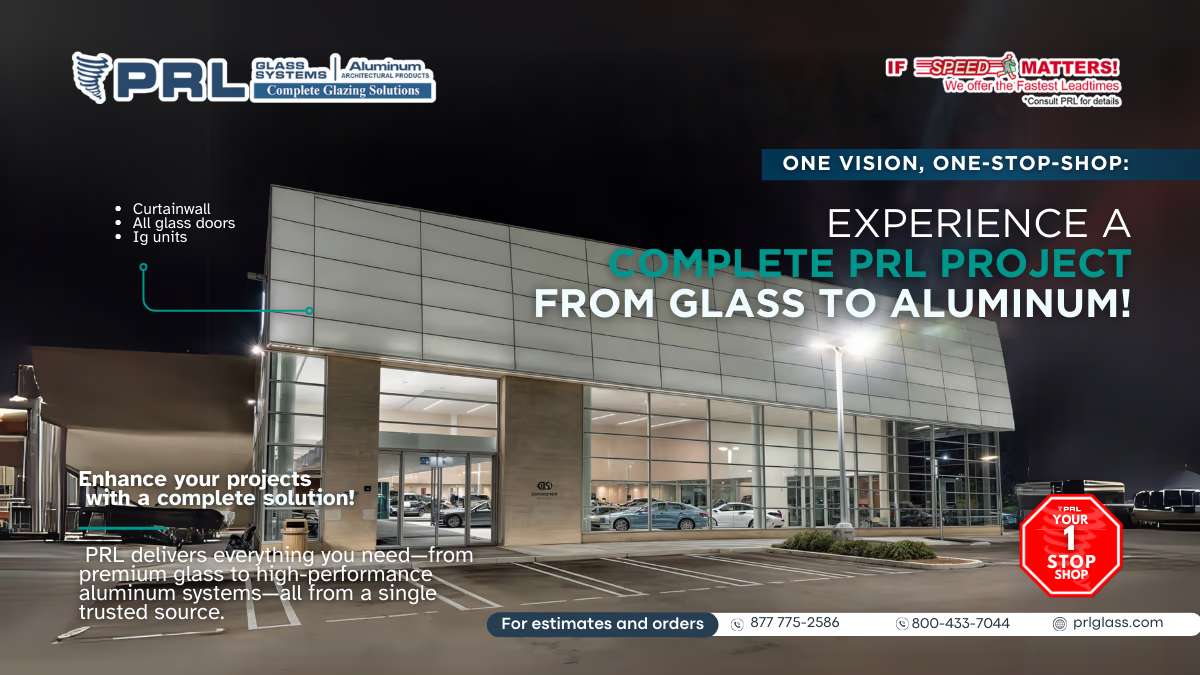
  • Architectural Glass Solutions – Laminated and tempered glass for safety, acoustic control, and thermal performance

PRL supports both renovations and selective new installations with precision and compliance awareness.

Glass and Aluminum Manufacturers in Back Bay

Why Back Bay Developers and Homeowners Trust PRL Glass & Aluminum

In a neighborhood where heritage and performance must coexist, PRL is trusted for quality, customization, and engineering expertise.

  • Custom fabrication for historic renovations and luxury residences
  • Systems designed to integrate with classic architecture and modern building codes
  • Nationwide manufacturing with reliable lead times
  • Technical support for architects, builders, and designers
  • Proven experience in high-end residential and boutique commercial environments

Benefits of Glass and Aluminum Systems in Back Bay

Back Bay architecture thrives on timeless elegance enhanced by modern efficiency, glass and aluminum systems support this balance seamlessly.

  • Thermal Performance for year-round comfort in Boston’s seasonal climate
  • Noise Reduction, essential in dense residential and retail corridors
  • Elegant Architectural Appeal aligned with classic façades and refined interiors
  • Durability suitable for long-term residential and commercial use
  • Eco-Friendly Materials, supporting LEED and sustainability-focused projects
  • Battle Door Capability, offering reinforced security against break-ins or vandalism—important for street-facing retail and high-value residences

Transform Your Space with PRL Glass & Aluminum

Based in California and trusted nationwide, PRL serves Massachusetts and all 50 states with luxury-grade architectural glass and aluminum systems.

From custom sliding doors to boutique storefronts, we deliver craftsmanship designed to elevate your next project.

We are present in the most important neighborhoods in the United States, offering the highest quality service.

Dupont Circle

The Loop

Lincoln Park

Gold Coast

Georgetown

Follow us on social media ✅

Stay tuned for news, events, discounts and new products through the different social media channels.
Glass and ALuminum Manufacturers in Circle Business

Modern Glass & Aluminum Solutions for Homes & Businesses in Dupont Circle

Dupont Circle is one of Washington, DC’s most vibrant and architecturally rich neighborhoods, home to historic townhouses, luxury condominiums, embassies, boutique offices, and refined retail corridors.

Projects here demand glass and aluminum systems that respect historic character while delivering modern performance, security, and energy efficiency.

At PRL Glass & Aluminum, we provide modern architectural solutions engineered to complement Dupont Circle’s elegant urban fabric, supporting residential upgrades, commercial renovations, and design-forward improvements with premium precision.

Building or Renovating in Dupont Circle? Connect with PRL Glass & Aluminum Today

Whether you’re restoring a classic rowhouse, upgrading a condominium, or refining a street-facing retail space, PRL delivers custom fabrication, nationwide logistics, and expert technical support from California.

We proudly support projects throughout Dupont Circle, Georgetown, Logan Circle, and the greater Washington, DC metropolitan area.

Service 

Contact Number 

Aluminum Division 

📞 877-775-2586 

Glass Division 

📞 800-433-7044 

📍 Visit our locations in City of Industry, California and explore our wide range of innovative, high-quality aluminum and glass solutions!

Premium Glass & Aluminum Designs for Dupont Circle Homes

Dupont Circle residences emphasize elegance, natural light, and long-term value. PRL’s premium residential systems enhance interiors while maintaining harmony with historic façades.

All residential systems meet ASTM and NFRC standards.

Glass & Aluminum Solutions for Dupont Circle Businesses

Dupont Circle’s commercial presence (boutique offices, cultural institutions, hospitality, and street-level retail) requires architectural systems that balance aesthetics, security, and durability.

  • Curtain Wall Systems: Suitable for low-rise commercial and institutional renovations
  • Storefront Systems: Refined façades that complement historic streetscapes
  • Architectural Glass Solutions – Laminated and tempered glass for safety, acoustics, and thermal efficiency

PRL supports both renovations and selective new construction with precision and care.

PRL Glass and Aluminum in Dupont Circle

Why Upper East Side Developers and Homeowners Trust PRL Glass & Aluminum

PRL is a top choice for luxury construction and renovation because we deliver:

  • Custom fabrication for boutique and high-end projects
  • Fast, reliable nationwide shipping
  • Energy-efficient and acoustically sound designs
  • Premium finishes and hardware crafted for longevity
  • Expert engineering support from planning to installation
  • Solutions that align with both historic and modern architectural styles

Whether preserving a classic aesthetic or introducing contemporary upgrades, PRL provides unmatched quality and precision.

Benefits of Glass and Aluminum Systems in Dupont Circle

Dupont Circle architecture thrives on historic elegance enhanced by modern comfort—glass and aluminum systems support this balance.

  • Thermal Performance for year-round comfort in renovated historic properties
  • Noise Reduction, essential in active commercial and residential corridors
  • Elegant Architectural Appeal aligned with classic façades and refined interiors
  • Durability suitable for long-term residential and commercial use
  • Eco-Friendly Materials, supporting LEED and sustainability-focused projects
  • Battle Door Capability, offering reinforced security against break-ins or vandalism—important for street-facing retail, offices, and embassies

Transform Your Space with PRL Glass & Aluminum

Based in California and trusted nationwide, PRL serves Washington DC and all 50 states with luxury-grade architectural glass and aluminum systems.

From custom sliding doors to boutique storefronts, we deliver craftsmanship designed to elevate your next project.

We are present in the most important neighborhoods in the United States, offering the highest quality service.

River North

The Loop

Lincoln Park

Gold Coast

Georgetown

Follow us on social media ✅

Stay tuned for news, events, discounts and new products through the different social media channels.