Loading

Bifold Doors Trend

5 New trends for Bifold Doors in 2025

Home / Archive by category "BLOG"

Are you about to change or undertake a new project? Well, Bifold Doors will be important to offer style, maintain temperature and of course create a very energy efficient place.

This 2025 we have some of the best trends in architecture and design, and here are some of the best designs that PRL has done.

👉 You may also be interested in reading: Bifold Doors vs Sliding Doors: What’s the Best Option for Your Project?

Trend 1: a resort at home

Bifold Trend 1: a resort at home

The image reflects several of the main trends that will mark the design of bifold doors in 2025:

  • Total indoor-outdoor connection: the aim is to eliminate visual and physical barriers, integrating terraces, living rooms and bedrooms into a single spatial flow.
  • Panoramic opening: multi-panel systems allow opening almost the entire wall, ideal for ventilation and natural light.
  • Minimalist aesthetics: slim black or anthracite frames add elegance without overloading.
  • Resort-like design at home: bifolds elevate the architectural experience, inspiring a boutique hotel lifestyle.

In short, bifold doors evolve into a perfect combination of functionality, design and well-being, becoming a central element in high-end residential projects. For that reason, we know it as a resort at home.

Trend 2: elegance but privacy

Bifold Trend 2: elegance but privacy

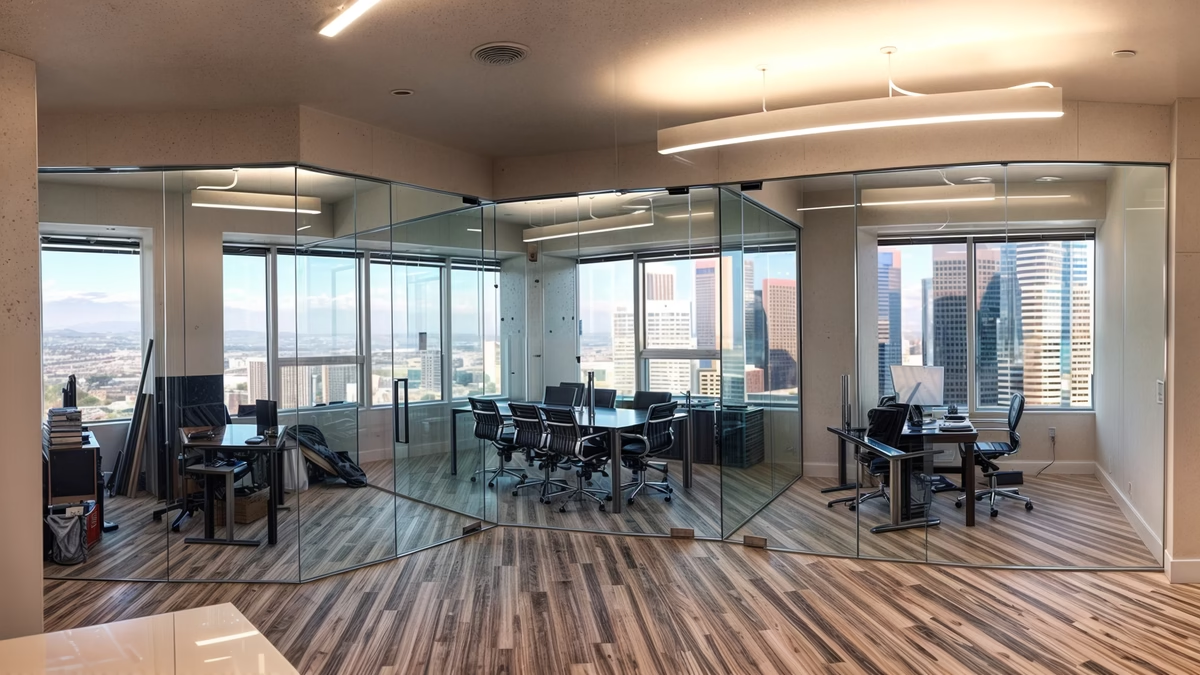
This image reflects a set of clear trends that are gaining momentum in interior design for 2025:

  • Elegant room separation: bifold doors are establishing themselves as an ideal solution for dividing spaces without losing brightness or style.
  • Glass with privacy: the use of translucent panels or satin glass responds to the growing demand for privacy without total visual isolation.
  • Dark aluminum finishes: a trend that is making a strong comeback, combining the classic with the contemporary and generating a warm contrast with neutral interiors.
  • Quiet design and no visible top track: ideal for residential and corporate environments that value minimalist aesthetics and discreet functionality.

Taken together, this configuration demonstrates how bifold doors are no longer just an exterior solution but become a protagonist inside the home or office as well, providing versatility, design and adaptable privacy.

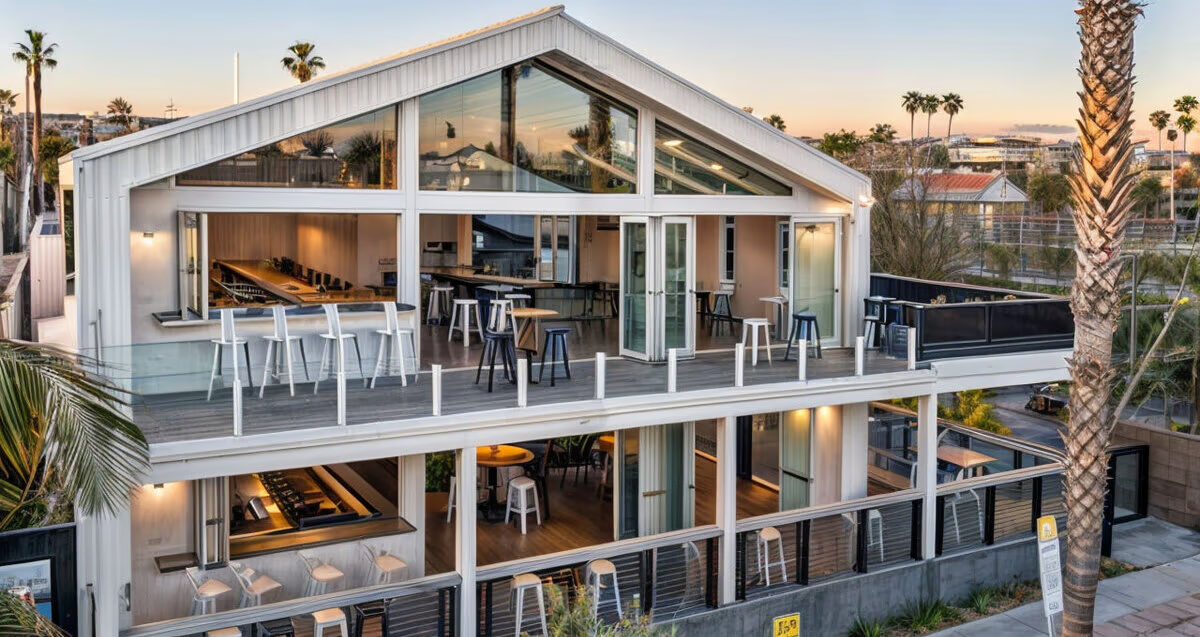
Trend 3: complete facades with Bifold

Bifold Trend 3: complete facades with Bifold

This image highlights another major trend for 2025: the incorporation of bifold doors in full facades and double-height structures. Here we can notice:

  • Wide ground-floor openings: bifold doors integrate discreetly with the structure, reinforcing the idea of “disappearing walls” when open.
  • Clean design with dark vertical lines: slim black frames emphasize the verticality of the design and harmonize with the natural aesthetics of the exterior wood.
  • Functionality in the evening: the use of warm lighting accentuates the indoor/outdoor connection even in the evening hours, a feature that architects increasingly value.
  • Doors as protagonists of the facade: instead of being relegated, bifold doors become an essential part of the visual language of the home.

This trend confirms that bifold doors are no longer a complementary element but a strategic architectural decision that enhances aesthetics, functionality and lifestyle.

Trend 4: Black frames and maximum transparency

Bifold Trend 4: Black frames and maximum transparency

The image shows a modern bifold door installation that responds to several key trends for 2025:

  • Ultra-thin black frames: this finish remains a favorite for contemporary style projects. It brings visual contrast, elegance and aesthetic continuity with the interior and exterior design.
  • High-performance glass: full transparency allows a permanent visual connection with the exterior, even when doors are closed.
  • Integration with decorative flooring: the floor design plays a leading role, generating a visual continuity that amplifies the space. The bifold doors act as a non-interruptive threshold.
  • Symmetrical configuration: panels are arranged in uniform modules, providing architectural order and customized functionality according to the desired opening.

This configuration is ideal for those seeking spaciousness, clarity and barrier-free design in high-end single-family homes.

Trend 5: Infinite kitchen

Bifold Trend 5: Infinite kitchen

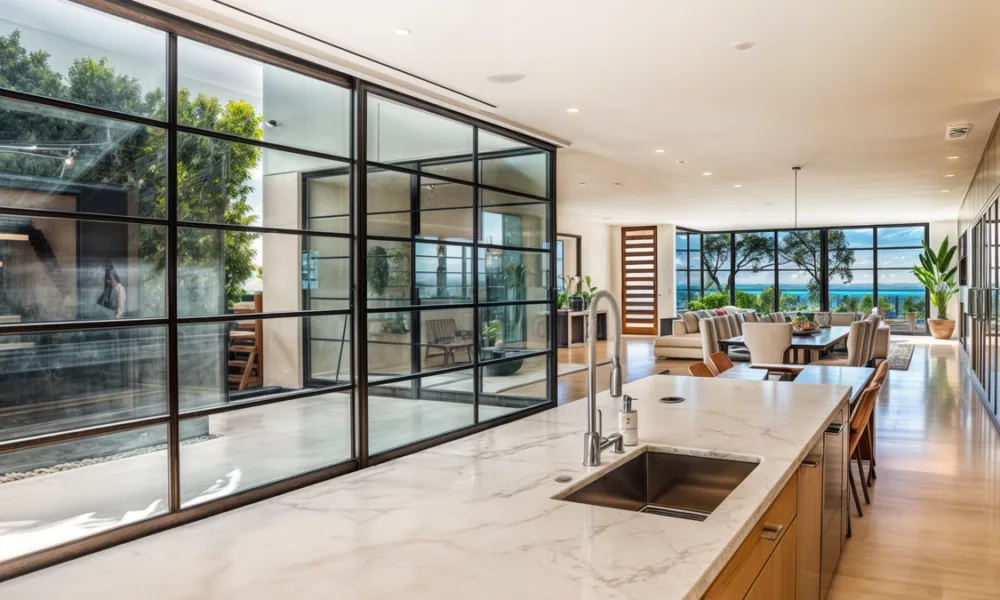
This image reinforces a key trend: using bifold doors to integrate interior kitchens with outdoor spaces, such as patios, terraces or pool areas, with these features

  • Direct opening from kitchen to pool: a perfect example of how bifold doors allow for fluid living areas, ideal for gatherings and social lifestyle.
  • Design with no visible thresholds: the transition is smooth and safe, designed for barefoot or reduced mobility.
  • Warm and natural aesthetics: the light wood finishes inside the kitchen harmonize with the neutral texture of the exterior walls and the stone of the pool.
  • Functionality in warm climates: this solution favors cross ventilation, the use of natural light and the enjoyment of the house as if it were a single large environment.
  • This trend reaffirms the value of bifold doors as a lifestyle investment: they not only connect spaces, they transform the way we live them.
Bifold vs Sliding Doors

Bifold Doors vs Sliding Doors: What’s the Best Option for Your Project?

Home / Archive by category "BLOG"

If you’re renovating a space or designing a new construction, you’ve probably asked yourself, “Which is better, a bifold door or a folding door?”

Bifold doors and folding doors are popular choices when looking to connect interior and exterior spaces, maximize natural light and create modern, functional environments. Although they are often used synonymously, they are not exactly the same.

In this guide, you’ll discover the key differences between a bifold door and a folding door:

✅ Their advantages

✅ Common materials

✅ Which is the best choice for your residential or commercial project

Bifold and Folding doors are very similar, but have some notable differences in construction.

Main Differences Between Bifold and Folding Doors 

 First of all, let’s put their main differences in a table for a better understanding. 

Features: Bifold Doors: Folding Doors: 
System Accordion/Hinges Variable sizes according to design 
Panels Generally larger More variety and flexibility 
Design Compact and uniform Interior and exterior 
Application Outdoor patios and terraces usually Exterior usually 
Installation Relatively simple Can be more complex depending on model 
Customization Tall, but more standard Very high in shapes, directions etc. 


Bifold Doors: When to Choose Them 

Bifold doors consist of two or more panels connected by hinges. These panels fold in an accordion fashion along a track, allowing the door to open fully to one side. 

Some of the main features of bifold doors are as follows, so you can get to know them better: 

  • Large panels: Usually have larger panels, ideal for maximizing light and views. 
  • Open fully: They allow a barrier-free transition between indoors and outdoors. 
  • Custom configurations: Can be manufactured with an odd or even number of panels. 
  • Common materials: Aluminum and glass for cost-effectiveness. 
  • Typical uses: Patios, terraces, gardens, restaurants or spaces that seek a direct connection to the outdoors. 

Folding Doors: When to Choose Them 

The term folding door is broader and includes various opening systems where the panels slide and fold, either inward, outward, or in both directions. In fact, bifold doors are a type of folding door, but not all folding doors are bifold. 

But they have some different characteristics, which we mention below. 

  • Variety of mechanisms: Includes sliding and folding systems with multiple configurations. 
  • Variable panels: Can have a few, or numerous, depending on the design. 
  • Design flexibility: Greater customization in direction, number of leaves and opening shape. 
  • Materials: Like bifolds, they can be made of aluminum and glass, with various technologies. 
  • Common applications: Residential, offices, commercial spaces or internal partitions.  

So, Which Door Should I Choose? 

As we saw, both products are very similar to each other, so here are some recommendations depending on your needs: 

🏠 For small spaces or with direct access to the garden: Bifold doors. They take up little space when opened and offer excellent connection to the outside. 

🏢 For offices, internal partitions or unconventional configurations: Folding doors. They’re more adaptable and fit custom, and even less expensive, designs for those massive projects. 

🌞 If your priority is natural light and views: Both options are suitable. However, bifolds have larger panels that usually offer broader views. They may also have thermally broken technology to help save electricity and maintain stable temperatures. 

💰If you are looking for the best price: Both can be accommodated, but the cost will depend more on the material and installation than the system itself. Standard bifolds are often less expensive for simple projects, but the total price of these doors depends on several factors 

There are several aspects to consider, but undoubtedly the type of project is the best thing to take into account.

Conclusion: Which Option is Best for You? 

Both options have great advantages and can improve both the functionality and design of your space. Bifold doors are ideal if you’re looking for a clean, minimalist and highly functional solution. Folding doors, on the other hand, offer greater flexibility and adaptability for smaller, more complex, or custom spaces. 

Before deciding, evaluate the space available, your design style, practical needs and budget. At PRL, we offer personalized advice to choose the best option for you, with budgets tailored to your needs and fast delivery throughout the United States.  

Frequently Asked Questions (FAQ’s) 

Here are some frequently asked questions to help you choose the best project

Are Bifold Doors the Same as Sliding Doors? 

No. Sliding doors slide on top of each other and do not fold. Bifold doors combine sliding with accordion folding. Although they are very similar, there are differences depending on the design. 

Can I Use Folding Doors as Interior Partitions? 

Yes, folding doors are excellent for separating rooms without losing openness or light. 

What Material is Best for Exteriors? 

Aluminum is an excellent choice for exteriors due to its weather resistance and low maintenance. When combined with high quality glass, your investment will last for many years. 

Are Folding or Bifold Doors Safe? 

Yes, as long as they are installed with multipoint security locks and quality materials. 

How Much Do Folding Patio Doors Cost

How Much Do Folding Patio Doors Cost? Many Factors Influence the Price of Installation

Home / Archive by category "BLOG"

Folding patio doors (also known as accordion doors or sliding folding doors) are an excellent choice for those looking for a beautiful and stylish element for their home.  

Its design allows the opening of large spaces in an elegant way, providing natural light, ventilation and a feeling of spaciousness that transforms any environment. In addition, there are some technologies such as thermally broken that also make energy efficiency better.  

But before installing them, it’s essential to understand how much they cost and what factors can influence their price, as it all depends on you.  

Folding Door cost and aspects to consider

What Influences the Price of Folding Doors? 

Many people mention that prices for folding patio doors range from $800 to $1200, but this changes a lot.  

But don’t worry, we are going to explain all the factors included in the price so you can know how much it costs to install them.   

Factor 1: Aperture Size  

First you need to consider the size of what you need. The larger the opening, the greater the number of panels needed and, therefore, the higher the cost.  

For example, standard systems typically have:  

  • Heights from 7′ to 10′  
  • Widths from 9′ to over 18′ wide  
  • Configurations ranging from 2 to more than 20 panels, reaching up to 20 meters wide.  

But, this is one hundred percent custom, as they can be much smaller or even have somewhat odd angles to account for in the lengths.  

In addition, some configurations include a dailyuse door for convenience without the need to open the entire system, so it’s taken as a different panel.   

Factor 2: Frame Material 

The frame of a door (which can have different thicknesses, depending on the project) is an essential part of the construction and therefore an important part of the final price.  

The material has a significant influence on the final price 

  •  Aluminum: The most economical, light and resistant option, and undoubtedly the favorite for homes and businesses. There are thermally broken options for greater energy efficiency and weather resistance.  
  • Fiberglass: A mid-range alternative with good insulation. 
  • Natural wood: More expensive but with great aesthetic value  
  • Steel: Not as common due to weight, but some projects require it.  

 ✅ Usually the combination of glass and aluminum is the most economical and functional choice for most home and business projects. 

Factor 3: Glass Types and Finishes 

Glass defines not only aesthetics, but also thermal insulation and safety. You can choose between: 

  • Double or triple glazing for better insulation  
  • Decorative or UV-treated glass 

👉  Glass type and custom options can increase the cost by 10% to 30% depending on the type of glass or finish selected. 

Factor 4: Additional Customizations 

As we mentioned, if you need non-standard sizes or configurations, the price will go up. Custom doors are ideal for unique architectural projects, but they require more production time and a higher investment.   

Usually, this cost is considered from the beginning of the project and customizations are offered by dedicated companies such as PRL Glass & Aluminum.   

Folding patio doors are a new trend in architecture

Where to Buy High Quality Folding Glass Doors? PRL Glass is the Answer 

If you’re looking for strong, stylish, custom-made folding glass doors, PRL Glass & Aluminum is an excellent choice. Headquartered in California with national distribution, PRL is known for manufacturing high-end glass and aluminum products for residential and commercial projects.  

What sets PRL apart is its rapid custom fabrication capabilities. We produce and install folding doors, sliding doors, entry systems and more, in standard or fully custom configurations. The team works directly with architects, builders and designers, guaranteeing personalized service and record-time deliveries.  

In addition, their folding doors can be manufactured with different types of glass (tempered, laminated, low emissivity, etc.) and aluminum finishes to suit any architectural style.  

Why choose PRL Glass & Aluminum 

Best prices in the market  

  • 100% U.S.A. manufacturing and installation  
  • Custom options for size, color and type of glass  
  • Fast, efficient, nationwide shipping  
  • Expert advice and direct customer service  

Are you designing a new space or renovating your home? Consult with PRL Glass and transform your environment with modern, safe and functional folding doors. 

Conclusion: Is it Worth Investing in Folding Doors? 

Yes, if you’re looking for a modern, functional and aesthetic solution to integrate your indoor and outdoor spaces. The prices are very different depending on what you require, but rest assured that their durability, energy efficiency and architectural value more than compensate for the investment.  

Thinking of installing a folding patio door in your home or business? Our experts will help you quote your project. Contact us and we’ll provide you with an efficient solution.   

Bullet-resistant glass is a trend for homes

Why Choose Bulletproof Bullet Resistant Glass for Homes or Small Businesses?

Home / Archive by category "BLOG"

Your home should be the safest place for you and your family. However, growing concerns about home invasions, gun incidents and burglaries have made security a top priority for homeowners. 

In fact, in the last decade, more than one million people have suffered with shootings in the United States. Many of these incidents occurred in homes. 

So how can you protect your home? Bullet resistant glass is one of the most effective ways to fortify your home, offering unparalleled protection against burglary, gunfire and even natural disasters. 

In this guide, let’s learn about: 

✅ How bullet resistant glass works. 

✅ The best places to install it in your home. 

✅ The different levels of protection available. 

✅ How it increases the value of your home and reduces insurance costs. 

How Does Bullet Resistant Glass Work? 

Bulletproof glass is not like normal glass. It’s made up of multiple layers of glass and plastic materials, designed to absorb and distribute the impact of bullets or high velocity projectiles. The composition usually includes: 

  • Hard glass layers – Flatten bullets and reduce their velocity. 
  • Polycarbonate layers – Absorb energy and prevent penetration. 

By combining rigid and flexible layers, bullet-resistant glass prevents bullets from passing through, making it one of the most effective home security solutions available. 

Understanding Bulletproof Glass Ratings: The UL 752 Standard 

Not all bullet-resistant glass is the same. UL 752 classifies bullet-resistant glass into 10 levels of safety, ranging from Level 1 (small arms fire resistance) to Level 10 (military-grade protection). 

Want more protection? Business, banks, military and government buildings use level 5-10 bullet resistant lass for extreme threats. 

At PRL, we have bullet resistant glass from levels 1 to 8, so we can offer you the most important security solutions. 

Choosing the Right Level of Bulletproof Glass for Your Home 

Since higher levels of bulletproof glass cost more, it’s essential to find the right balance between cost and security. 

Security Level 

Protection 

Recommended For 

Level 1 

9mm. handgun 

Suburban homes, standard security 

Level 2 

.357 Magnum 

Urban homes and high risk areas 

Level 3 – 4  

.44 Magnum and Rifle 

Luxury homes and commercial applications 

Each home’s risk factors and budget should be evaluated before deciding. 

Bullet-resistant glass are ideal for homes and small businesses

Why Install Bulletproof Bullet Resistant Glass in Your Home? 

The main reason to use bullet resistant glass is security, but it offers additional benefits beyond firearm protection.  

Some of the main reasons are as follows: 

Increased Security Against Burglary 

One of the biggest vulnerabilities in homes is glass windows and doors. Traditional glass can be easily broken, allowing intruders to break in in a matter of seconds. Bullet resistant glass prevents forced entry, giving you and your family valuable time to react or call for help. 

But it can also protect your windows and doors from accidents, such as a ball from children playing, an impact from your pets and even accidents due to sudden weather changes. 

Protection Against Natural Disasters 

Bullet resistant glass not only helps stop bullets, but it also provides strong resistance against extreme weather conditions. Whether it’s hurricanes, tornadoes or flying debris, this glass is designed to withstand high impact forces, reducing property damage and keeping occupants safe. 

Energy Efficiency and UV Protection 

Many people don’t realize that bullet resistant glass can also improve home insulation. It helps to: 

  • Reduce UV exposure, protecting furniture and artwork from sun damage. 
  • Improve temperature regulation, keeping homes cooler in summer and warmer in winter. 

Increased Home Value and Reduced Insurance Costs 

Installing bulletproof glazing can significantly increase the value of a property. Many insurance providers offer premium discounts for homes equipped with advanced security features, making it a smart financial decision. 

Long-Term Durability 

Unlike standard glass, bullet resistant glass is built to last for decades. It requires minimal maintenance and remains resistant to environmental factors, ensuring long-term security benefits. 

👉  If your main problem is extreme weather, there are other solutions such as thermally broken systems. 

Best Places to Install Bulletproof Glass in a Home 

For maximum protection, bulletproof glass should be installed in high-risk areas that could provide intruders with easy access. Here are the key locations: 

  • Windows – Reinforce key entry points without compromising natural light. 
  • Entry Doors & Patio Doors – Prevent break-ins without affecting aesthetics 
  • Safe Rooms & Panic Rooms – Create an impenetrable space during emergencies. 
  • Garage Windows – Protect vehicles and stored valuables. 

By strategically placing bullet resistantglass in these locations, you can fortify your home against potential security threats while maintaining comfort and design. 

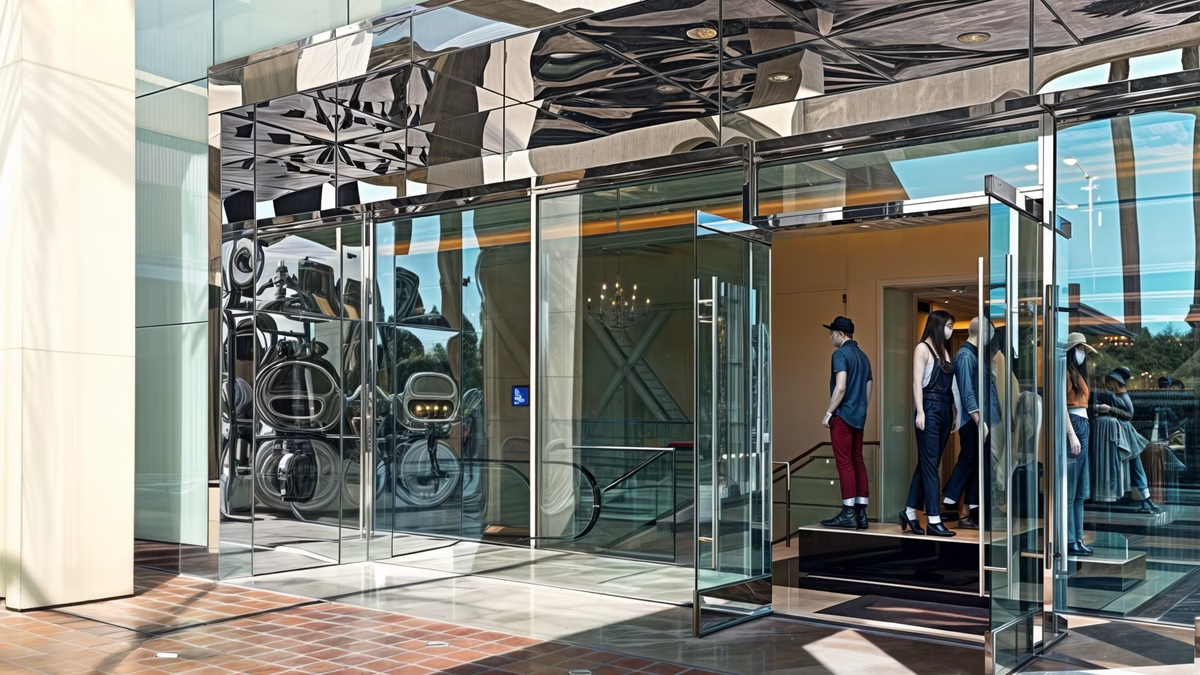
Bullet-proof glass has an extra coating that prevents weapons from penetrating it so easily

Final Thoughts: Is Bullet Resistant Glass Worth It? 

If home security is a priority, Bulletproof Bullet Resistant Glass is one of the best investments you can make. 

✅ Stops break-ins & forced entry attempts 
Helps withstand bullets, debris, and extreme weather 
✅ Reduces energy bills & UV damage 
✅ Increases home value & lowers insurance costs 
✅ Requires little maintenance & lasts decades 

🏡 Want to upgrade your home security? Contact our specialists today for expert advice on bulletproof glass installation. 

PRL’s Bullet Resistant Glass. The Rugged and Elegant Option 

When it comes to securing your home, not all bullet resistantglass is created equal. At PRL, we offer cutting-edge bullet-resistant glass designed to provide maximum security with minimum weight and thickness. 

  • Protection Levels 1-8 – Defend against a wide range of firearms and threats. 
  • Thinner & Lighter – Our exclusive PVB and polycarbonate blend creates a superior strength-to-weight ratio. 
  • Custom & Standard Sizes – Available up to 60” x 96” to fit residential and commercial applications. 
  • High Ballistic Resistance – Guards against multiple rounds without excessive bulk. 
  • NIJ 0108.01 Certified – Meets industry standards for ballistic protection. 

Perfect for windows, entry doors, cashier areas, and high-risk access points, our bulletproof laminated glass offers the security your home deserves—without compromising visibility or aesthetics. 

Want to learn more? Contact our experts today! 

FAQs About Bullet Resistant Glass for Homes 

Some questions our users have asked us about bulletproof glass

How effective is bullet resistant glass?

Bullet Resistant glass is highly effective against break-ins and firearm threats, providing multiple layers of protection.

How much does bullet resistant glass cost?

Prices vary based on thickness, security level, and customization. While it’s more expensive than standard glass, the security benefits outweigh the cost in high-risk areas.

Does bullet resistant glass look different from regular glass?

No! Modern bulletproof glass maintains clear visibility and doesn’t alter the aesthetics of your home.

Can bullet resistant glass be repaired?

Yes, but repairs depend on the extent of damage. In severe cases, replacing the panel might be the best option.

Can bullet resistant glass be installed in existing homes?

Absolutely! Bulletproof Bullet Resistant Glass can be retrofitted into existing window frames, making it an excellent upgrade for enhanced security. 

If you use air conditioning in the summer, you may want to consider our Thermally Broken Systems.

How Can I Reduce My Energy Bill If I Use Air Conditioning?

Home / Archive by category "BLOG"

As temperatures rise during the summer months, keeping the home cool can become a challenge, especially when the use of air conditioning significantly increases electricity consumption 

According to the U.S. Department of Energy (DOE), air conditioning accounts for approximately 6% of all electricity consumed in the country, which equates to $29 billion spent annually by homeowners.  

According to the U.S. Energy Information Administration (EIA), it is estimated that U.S. households will spend an average of $176 per month on electricity during the summer months, with a significant portion of this consumption attributed to air conditioning use. In states with hot and humid climates, such as Florida or Louisiana, air conditioning can account for up to 27% of monthly energy consumption.  

In addition, many electric companies are implementing rate increases during the summer. The EIA projects that, on average, U.S. households will pay 2% more on their electricity bills this year, making it even more important to look for strategies to optimize air conditioning use and reduce energy costs. 

Why Is My Energy Bill So High? 

In 2025, the average electric bill in California will reach $186 per month, which represents a 29% increase compared to the national average of $144. 

This increase has made California’s electric rates some of the highest in the country, primarily due to increases approved by the California Public Utilities Commission (CPUC). As a result, customers of the three major utilities in the state often pay much more per kilowatt-hour (kWh) than the statewide average. 

  • Pacific Gas & Electric (PG&E) 
  • Southern California Edison (SCE)  
  • San Diego Gas & Electric (SDG&E) 

But this doesn’t just happen in California. Residents across the United States have mentioned that year after year their electricity rates are gradually increasing. This is because the weather has become much more extreme than it was a few years ago. 

Climate change is having a direct impact on electricity demand. According to the Environmental Protection Agency (EPA), summers are getting hotter and hotter, putting more pressure on power grids. Studies by the American Geophysical Union indicate that energy demand for air conditioning could increase by 8% to 13% over the next decade. 

But the problem isn’t just the hot summer temperatures. Winters are also harsher, and much colder than before, causing us to rely on heating even more. In short, we must use electrical energy practically all year round. 

In summer, electricity bills are usually much higher due to air conditioners.

How Many Watts Does an AC Unit Use? 

As we have seen, air conditioners and heaters have become one of the most important household appliances, along with refrigerators, televisions and washing machines 

The problem is that, despite the fact that companies have reduced the consumption of these devices, they still represent a high consumption and impact on our electricity bills 

Average AC Unit Wattages:  

  • Window air conditioners: Ideal for cooling small rooms up to 1,000 square feet. They are compact, easy to install and energy efficient, with an expenditure of  500 and 1,400 watts per hour, depending on size. 
  • Portable air conditioners: Offer mobility and can cool larger areas, although they require a drain hose and consume more energy than other systems (2,900 to 4,100 watts per hour). 
  • Mini-split and ductless air conditioning systems: They allow cooling different areas of the house without the need for ducts, with a consumption of 700 to 2,000 watts per hour in mini-split and 2,000 watts per hour in ductless systems. 
  • Central air conditioning: The most efficient option for whole-house air conditioning, with an average consumption of 1,000 watts per ton of cooling capacity. For a 2,000-square-foot home, approximately 3.5 tons are needed, which equals 3,500 watts per hour. 
  • Fan-only mode in central air conditioning: Allows the system to circulate air without activating the cooling cycle, consuming 750 watts per hour. 

What’s the Best AC Temperature for Energy Efficiency? 

Every year, when temperatures start to rise, the same question comes up: What temperature should I set my air conditioner to in the summer? According to the U.S. Department of Energy, the ideal recommendation for achieving a balance between comfort and energy efficiency is to keep it at 78°F (25°C) when we are at home. 

However, the answer is not universally applicable. The optimal temperature can vary depending on factors such as humidity, home insulation, air conditioning efficiency and personal heat tolerance.  

Some people prefer to lower the temperature a few degrees for comfort, while others choose to keep it higher and supplement it with fans or blinds to reduce energy consumption. 

How to Save Energy on Air Conditioning In Summer 

When looking at these numbers and consumptions, U.S. citizens always wonder how to save on energy costs if we use AC or heating. Obviously, the thing to do is not to use them, but in many cases this is impossible. 

For that reason, you can try the following: 

Install an Efficient Window and Door System 

More than 30% of the temperature and humidity currently in our homes is lost and/or gained through windows and doors. For example, in summer heat enters through them, and in the winter stable indoor temperatures escape through our window and door systems. 

So, this causes us to use A/C much longer to control these extreme weather changes. Fortunately, we can use a protective barrier to prevent outside temperature changes from affecting our comfort 

There are door and window systems, usually made of aluminum and glass, that form a technical barrier to prevent the interior temperature from dropping and the exterior temperature (usually extreme) from entering your home. 

Solutions such as PRL’s thermally broken systems offer a technological and elegant barrier for those who need to save on electrical energy costs.  

A thermal break is a type of technology designed to improve insulation in windows and doors. It consists of an insulating barrier integrated into the frame, separating the interior and exterior sections to minimize the transfer of heat and cold. This reinforcement prevents outside temperature changes from affecting the interior environment, significantly improving energy efficiency. 

In traditional systems, heat and cold easily pass through the frame materials, making them poor thermal insulators. This causes heat loss in winter and heat gain in summer, affecting the comfort of the space and reducing the efficiency of even high-performance glazing. 

Thermally broken systems incorporate an insulating strip between the inner and outer profiles, creating an effective thermal barrier. This technology drastically reduces thermal conductivity, maintaining a stable temperature inside the home or building and reducing energy consumption. 

This means that the initial investment will be recovered in a few months due to a 30% reduction in the use of air conditioners. 

Systems such as the Thermally Broken System help prevent the ingress of external temperatures, such as heat or cold, allowing electrical energy savings.

Set Your Thermostat Wisely 

The ideal temperature to save energy and maintain comfort is 78°F (25°C) when you’re at home and higher when you go out. 

For greater efficiency, install a smart thermostat that automatically adjusts the temperature and reduces energy consumption by up to 10%. 

Take Advantage of Lower Energy Rates 

Many electric companies offer: 

  • Time-based rate plans, to pay less at certain times of the day. 
  • Energy efficiency programs, with rebates for home improvements. 

Check with your supplier to find out what options are available to you. 

Use Natural Shades and Sun Protection 

The sun is the main source of heat at home. To block it: 

✅ Plant leafy trees around the house. 

✅ Install awnings or pergolas on balconies and patios. 

✅ Use thermal blinds, blackout shades or reflective window coverings. 

These actions can reduce indoor heat gain by up to 30%. 

Optimize Use of Windows and Ventilation 

Let fresh air in at night and close it during the day to keep the environment cool. 

  •  If you live in a dry climate: Use ceiling fans in counterclockwise mode to generate a cooling breeze. 
  • If it’s humid: Use dehumidifiers to improve the wind chill and ease the load on the air conditioner. 

Reduce Use of Hot Appliances  

The oven, stove and dryer generate extra heat. To avoid this 

✅ Cook at night or use the microwave.  

✅ Use the dryer only when necessary.  

✅ Consider an outdoor kitchen to minimize heat buildup. 

Keep Your Air Conditioner in Optimum Condition 

An efficient air conditioner can reduce energy consumption by 5% to 15%. 

Maintenance checklist: 

  • Change or clean filters every 1-2 months. 
  • Check and clean evaporator and condenser coils. 
  • Keep the area around the outdoor unit clear. 

Key Fact: Lack of maintenance can cause an air conditioner to work 20% longer than necessary. 

Seals Leaks and Improve Insulation 

A leaky house is an inefficient house. 

  • Use weather stripping on doors and windows. 
  • Apply sealant in cracks and gaps where cold air escapes. 
  • If possible, improve insulation in ceilings and walls to maintain stable temperatures. 

Benefit: Up to 30% less energy consumption. 

Use Efficient Appliances and Turn Unused Appliances Off 

Choose Energy Star-certified devices, which consume up to 40% less energy. Unplug chargers, TVs and computers when not in use, as they continue to consume energy. 

💡 Tip: Use power strips with automatic shut-off to avoid phantom power consumption. 

Consider a More Efficient Cooling System 

If your air conditioner is more than 10 years old, it probably consumes more energy than necessary. 

More efficient options: 

✅ Mini-splits or ductless systems, which reduce consumption by up to 50%. 

✅ Air conditioners with inverter technology, which regulate consumption and reduce energy consumption peaks. 

Use Cooler Areas of the House 

If you have a basement or first floor, use these areas during the hottest hours. 

✅ Cool air tends to descend, so lower spaces tend to stay 5-10°F cooler than upper floors. 

Avoid Indoor Heat with LED Lighting 

Incandescent bulbs generate more heat than you think. 

  • Replace them with LED lights, which consume 80% less energy and generate less heat. 
  • Not only will this reduce the temperature in your home, but it will lower your electric bill. 

Install Solar Panels for Long-Term Savings 

If you‘re looking for a definitive solution to reduce your electricity consumption, consider installing solar panels. 

✅ Reduction of energy consumption by up to 70%. 

✅ Protection against increases in electricity rates. 

✅ Greater energy independence. 

💡Some states offer incentives and tax credits for solar energy installation. 

Aluminum doors and how to clean them

How to Clean Your Aluminum Door: Tips & Tricks

Home / Archive by category "BLOG"

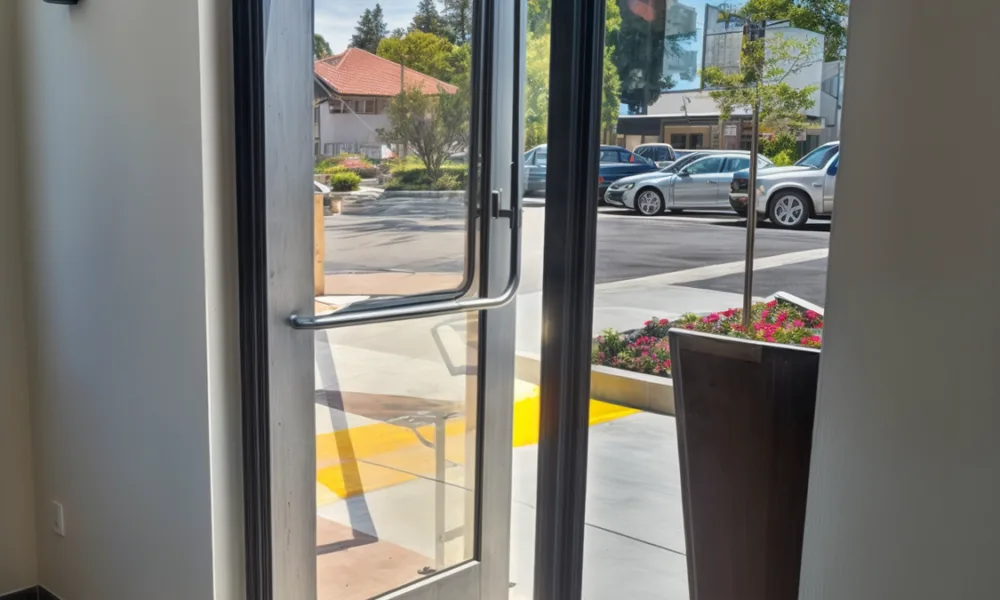
Aluminum doors are an ideal choice for both homes and businesses due to their strength, durability and modern aesthetics. However, to keep them in perfect condition, it’s important to perform proper maintenance and avoid the accumulation of dirt, stains or corrosion.  

Here are 8 steps to effectively clean and protect your aluminum door, ensuring it looks impeccable and prolonging its lifespan. 

Why is it Important to Clean Our Aluminum Doors? 

Aluminum doors are designed to last for many years, but their constant exposure to external agents such as dust, moisture, grease and contamination can deteriorate them over time 

Maintaining a cleaning routine not only contributes to the aesthetics of the home or business, but also brings the following benefits: 

Greater durability: Regular cleaning prevents the accumulation of dirt and debris that can generate corrosion or wear on aluminum. 

Prevents rust and corrosion: Although aluminum is a tough material, lack of maintenance can lead to staining or corrosion in humid climates. 

Improve appearance: Clean, shiny doors make any space look more modern and cared for. 

Improved functionality: Dust and dirt-free frames and hinges allow the door to function properly without obstructions. 

Hygiene and safety: Keeping doors clean prevents the accumulation of bacteria and germs, especially in high-traffic areas. 

Now that we know the importance of maintenance, let’s continue with the steps to properly clean and protect our aluminum doors. 

8 Steps to Clean & Protect Your Aluminum Doors 

Aluminum is one of the most widely used building materials because it is cheap, strong and stylish. But this does not mean that they don’t have to be cared for, as we have already mentioned. 

Here are some steps, tips and tricks to keep them clean. Of course, it all depends on your product, so we suggest you ask your installer for specific care, since bifolds may need more than products with glass, for example.

1. Remove Dust & Loose Dirt

Before applying any cleaning solution, remove dust and dirt to prevent scratches. 

  • Use a dry cloth or vacuum cleaner with a brush attachment to remove dust. 
  • For exterior doors, rinse the surface with a garden hose or a bucket of water. 
  • For interior doors, wipe with a damp microfiber cloth to lift dirt without scratching. 

💡 Tip: Avoid using wire brushes or abrasive sponges, as they can scratch the aluminum surface.

2. Wash the Frames with Mild Soap & Water

To clean aluminum without damaging its finish: 

  1. Mix warm water with a few drops of mild dish soap. 
  2. Use a soft sponge or microfiber cloth to gently wipe the door. 
  3. Pay extra attention to corners and edges where dirt accumulates. 
  4. Use a soft-bristle brush for stubborn spots. 
  5. Rinse with clean water to remove any soap residue. 
  6. This method keeps aluminum looking pristine without causing wear or fading. 
Cleaning aluminum doors (and more products) is an essential part of door care.

3. Remove Grease & Stubborn Stains

If your aluminum door has grease spots or stubborn dirt, try this natural cleaning method: 

  1. Mix ¼ cup of baking soda with ½ cup of lemon juice to create a paste. 
  2. Apply the paste to the stains using a sponge and let it sit for 5-10 minutes. 
  3. Gently scrub with a cloth and rinse with clean water. 

🍋 Bonus: This mixture not only cleans but also restores aluminum’s natural shine.

4. Rinse the Frames &Glass Panels Thoroughly

After applying cleaning products, it’s important to rinse off any residue: 

Use a hose for exterior doors or a damp cloth for interior doors. 

Repeat rinsing until all cleaning solutions are removed. 

Dry with a clean microfiber cloth to prevent water spots. 

💡 Tip: If your aluminum door has glass panels, use a streak-free glass cleaner for a crystal-clear finish.

5. Clean Interior Aluminum Frames

Interior aluminum doors require a slightly different approach since they don’t face exterior weather conditions: 

  1. Wipe down the surface with a damp cloth to remove dust. 
  2. Apply a mild soap solution with a sponge. 
  3. Use a soft-bristle brush for tight corners and grooves. 
  4. Dry thoroughly to prevent moisture buildup. 

This method ensures that sliding doors and other interior aluminum frames remain free of dust and grime.

6. Use a Specialized Cleaner for Heavy Dirt

If grime persists, a commercial aluminum cleaner may be necessary: 

Choose a biodegradable, non-toxic cleaner to avoid harsh chemicals. 

Follow the manufacturer’s instructions carefully. 

Wear gloves and ensure proper ventilation when using chemical cleaners. 

💡 Tip: Always test the cleaner on a small, hidden section first to check for compatibility with your aluminum finish.

7. Dry the Door to Prevent Water Damage

Once the cleaning is complete, drying is essential to avoid water stains and oxidation: 

  • Use a dry microfiber cloth to absorb excess moisture. 
  • For exterior doors, let them air dry in the sun. 
  • Avoid using hot air dryers, as they can damage the aluminum coating. 

💡 Tip: Proper drying also prevents mold and mildew from forming in humid areas. 

Remember to ask your supplier about the best options for cleaning your aluminum door. In some cases it is different depending on the technology you have.

Polish & Protect the Aluminum Finish

For a long-lasting shine and extra protection: 

Use fine steel wool with a bit of water for a polished look. 

Apply a specialized aluminum polish or wax to protect against dirt and moisture buildup. 

If there’s any oxidation, use a rust remover suitable for aluminum, testing it on a small area first. 

This step helps maintain the aluminum’s sleek, modern appearance while adding an extra layer of protection. 

Conclusion 

Aluminum doors offer exceptional durability, low maintenance, and a sleek modern look, but they require regular cleaning to stay in top condition. By following these 8 simple steps, you can keep them free of dirt, stains, and corrosion while ensuring their long-term functionality. 

🔹 Clean at least once a month to maintain the best appearance. 
🔹 Use protective wax for added durability in outdoor environments. 
🔹 For glass doors, pair with a high-quality glass cleaner to prevent streaks. 

When you purchase a PRL product, our experts can inform you step-by-step on how to care for your product, as there may be other steps to keep your product in excellent condition.