Loading

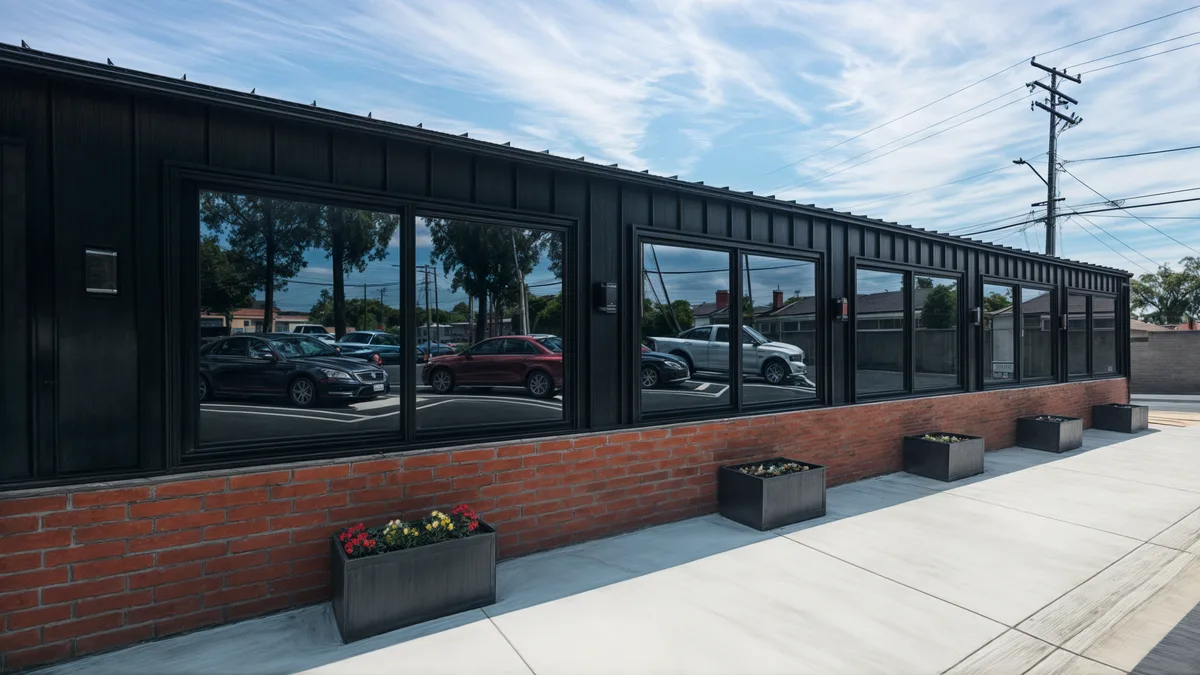
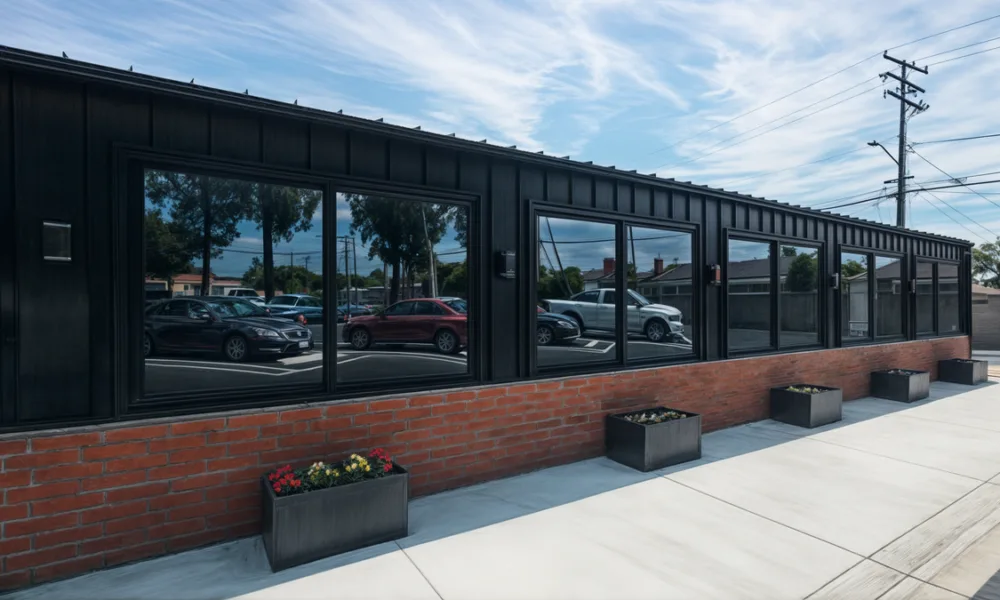
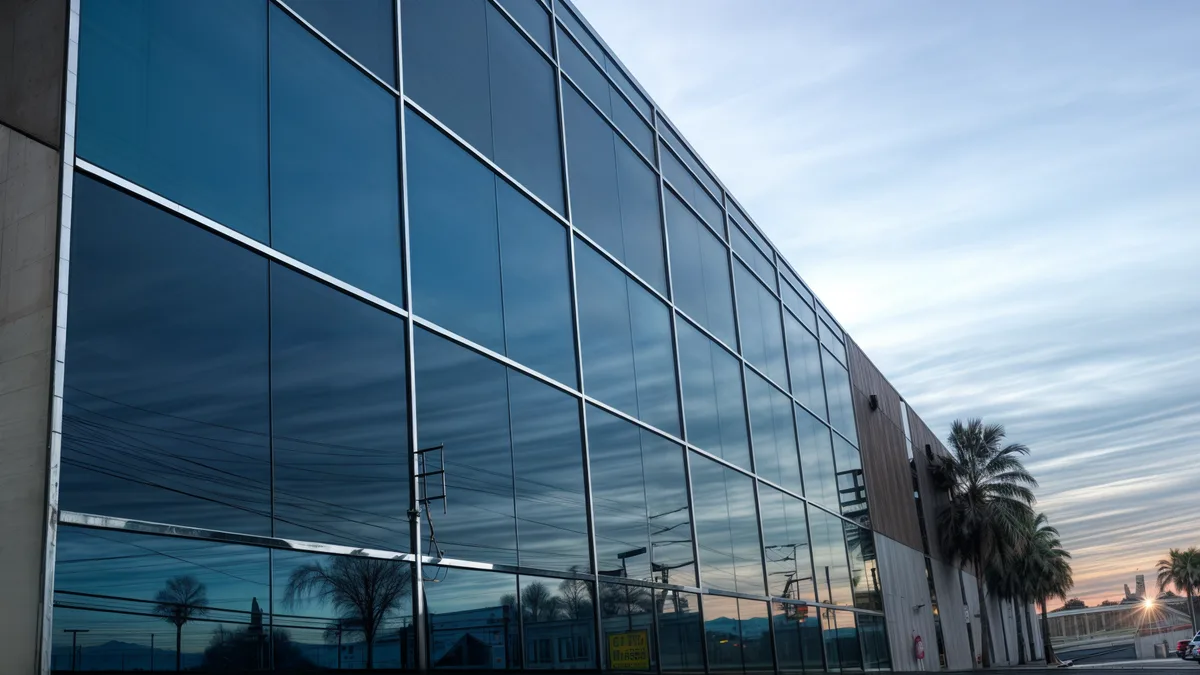
Modern office building façade using reflective glass to improve solar control and reduce heat gain in commercial architecture.

Reflective Glass vs Tinted Glass: Key Differences You Should Know

Home / Articles posted byadmin

When designing a façade or selecting a glazing system for a building, it’s not enough to simply choose what looks good. The type of glass has a direct impact on solar control, indoor comfort, energy efficiency, and the overall appearance of the project.

Two of the most common options are reflective glass and tinted glass. At first glance, they may seem quite similar, since both help reduce the impact of solar radiation and improve the performance of standard clear glass. However, they work in very different ways, and that difference significantly affects how they perform in a building façade.

Reflective glass relies on a metallic coating that reflects a large portion of solar energy, while tinted glass achieves its effect through pigmentation within the body of the glass, absorbing part of the light and heat instead. The difference between reflecting and absorbing energy influences not only the building’s appearance, but also interior temperatures, privacy levels, and the overall performance of the glazing system.

In this article, we’ll break down the real differences between reflective glass and tinted glass, how each type works, and when one may be the better choice depending on the needs of a project.

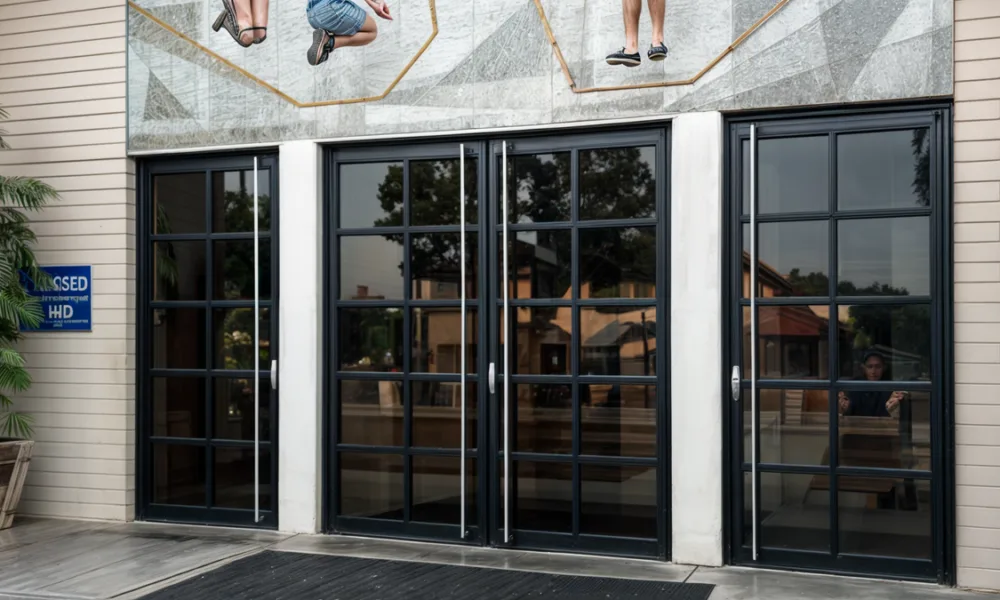
Comparison between reflective glass and tinted glass façades showing differences in solar reflection, color tone, and exterior appearance in modern architecture.

What Is Reflective Glass?

Reflective glass is a type of architectural glass that incorporates a very thin metallic coating on one of its surfaces. This coating changes the way solar radiation interacts with the glass, reflecting part of the energy back toward the exterior.

Because of this property, reflective glass helps reduce solar heat gain, minimize glare, and improve the overall energy performance of a building. At the same time, it creates the characteristic mirror-like appearance often seen on office towers and corporate building façades.

This type of glass is commonly used in curtain wall systems, commercial façades, and buildings with large glazed surfaces, where solar control and energy efficiency play an important role.

If you’d like to explore how this type of glass works in more detail and understand its architectural benefits, you can read our full article on what reflective glass is and how it works. 

What Is Tinted Glass?

Tinted glass is a type of architectural glass that incorporates pigments or metallic additives into the glass during the manufacturing process. These materials give the glass its characteristic color and alter the way it interacts with light and solar radiation.

Unlike reflective glass, which reflects part of the sun’s energy back toward the exterior, tinted glass reduces solar impact primarily by absorbing light and heat. This helps decrease glare and moderate the amount of solar radiation that enters the building interior.

Tinted glass is available in a range of tones, such as bronze, grey, green, or blue, which can also contribute to the overall aesthetic character of a façade or interior design.

Because of its uniform appearance and its ability to soften the intensity of natural light, tinted glass is commonly used in residential windows, commercial buildings, and projects where glare control is needed without creating a mirror-like exterior effect.

Reflective Glass vs Tinted Glass: Key Differences Between the Two Options

Although both reflective glass and tinted glass are used to improve how glass performs against solar radiation, the way they work is completely different. The main difference lies in how each one manages solar energy.

One relies on reflecting radiation, while the other works primarily through heat absorption. This distinction directly affects the building’s thermal performance, the appearance of the façade, and the level of privacy the glass can provide.

Reflection vs Absorption of Solar Energy

The most important difference between these two types of glass is how they control solar energy.

Reflective glass uses a metallic coating that reflects a significant portion of solar radiation back toward the exterior of the building. This reduces the amount of heat entering the interior and helps maintain more stable indoor temperatures.

Tinted glass, on the other hand, does not reflect solar radiation. Instead, it works by absorbing part of the sun’s energy within the glass itself, which reduces glare but can also cause the glass to heat up more.

Solar Heat Gain Control

Because of this operating principle, reflective glass typically provides better control of solar heat gain, especially in buildings with large glazed surfaces or in hot climates.

By reflecting a significant portion of solar energy, this type of glass helps reduce the building’s thermal load and can lower the need for air conditioning inside the space.

Tinted glass also helps reduce heat entering the building. However, because it works through absorption, part of that energy can later be transferred to the interior or to the surrounding area of the glass.

Appearance and Visual Effect on the Façade

Another noticeable difference between these types of glass is their appearance.

Reflective glass creates a mirror-like effect that reflects the surrounding environment, producing modern façades that visually change throughout the day depending on lighting conditions.

Tinted glass, by contrast, offers a more uniform and colored appearance. Instead of reflecting the surroundings, the glass maintains a consistent tone that can integrate easily into different architectural styles.

Daytime Privacy

In terms of privacy, reflective glass generally provides greater daytime privacy. When exterior lighting is stronger than interior lighting, the mirror effect makes it difficult for people outside to see inside the building.

However, this effect depends on lighting conditions. At night, when the building’s interior is illuminated, the glass may become more transparent from the outside.

Tinted glass provides a more moderate level of privacy, since its main function is to filter light rather than create a reflective surface.

Cost and Long-Term Value

Finally, cost is often another factor to consider.

Tinted glass is generally more affordable in terms of initial cost, as its manufacturing process is relatively simple.

Reflective glass may come with a higher cost due to its specialized coating. However, in many projects this can be offset by better solar control and potential long-term energy savings, particularly in commercial buildings or in climates with high solar exposure.

Modern office building façade using reflective glass to improve solar control and reduce heat gain in commercial architecture.

When to Choose Reflective Glass

Reflective glass is often the most suitable option in projects where solar control and energy efficiency are top priorities. Because it reflects a significant portion of solar radiation, this type of glass helps reduce the building’s thermal load and maintain more stable indoor conditions.

For this reason, it is frequently used in commercial buildings, office towers, and façades with large glazed surfaces, where sun exposure can significantly affect interior comfort and energy consumption.

It is also a common solution in curtain wall systems and modern architectural façades, where both performance and contemporary design are important. The mirror-like effect of reflective glass allows architects to create dynamic façades that reflect the surrounding urban environment and visually change throughout the day as lighting conditions shift.

In projects located in hot climates or areas with high solar exposure, reflective glass can improve the overall performance of the building envelope by limiting the amount of heat that enters the interior.

When to Choose Tinted Glass

Tinted glass can be a good option in projects where the main goal is to reduce glare and soften the intensity of natural light without creating a reflective effect on the façade.

Thanks to its uniform color, this type of glass is commonly used in residential windows, smaller-scale buildings, and projects where a more subtle aesthetic or a specific glass tone is desired.

It can also be suitable in temperate climates, where controlling solar heat gain is not as critical as in regions with intense sun exposure. In fact, in some locations, natural shading can already provide sufficient protection from direct sunlight.

Another factor that often influences the choice of tinted glass is the initial cost, since its manufacturing process is relatively straightforward compared to glass that uses specialized coatings.

Choosing the Right Glass for Each Project

Choosing between reflective glass and tinted glass largely depends on the project conditions, climate, and the performance goals of the building.

While tinted glass can be a suitable solution when the goal is to reduce glare and manage natural light in a simple way, reflective glass typically offers greater solar control, improved energy performance, and a more contemporary façade appearance.

In projects with large glazed surfaces, commercial buildings, or locations with high solar exposure, reflective glass often becomes a particularly effective option for improving the building’s thermal performance.

On the other hand, in applications where a more subtle aesthetic, a lower initial cost, or moderate light control is preferred, tinted glass can meet the project’s requirements effectively.

In any case, selecting the right glass should take into account factors such as building orientation, climate conditions, façade design, and the expected energy performance. Specialized manufacturers like PRL Glass & Aluminum provide glazing solutions in both reflective glass and tinted glass, designed for modern façade systems including curtain walls, storefront systems, and architectural projects that require different levels of solar control and performance.

A practical look at how folding patio doors can improve layout, usability, and year-round comfort at home.

The “Open It Up” Dream, Without the Winter Regret

Home / Articles posted byadmin

It’s easy to fall for the fantasy.

A wall of glass folds away, the patio feels like part of the room, and suddenly an ordinary Tuesday feels a little more like a getaway.

Then real-life steps in.

A chilly spot shows up right by the sofa. The handle feels too hot or too cold. The stacked panels take over the side of the room you actually use. And when guests come over, the wide opening somehow turns into an awkward bottleneck.

That’s the part people don’t always think about when choosing multi-panel folding patio doors. The best systems do more than look impressive when open. They need to feel comfortable, easy to use, and well integrated into the room every day, not just in perfect weather.

That is where thoughtful layout, glazing, and frame design start to matter. And when folding doors include thermally broken frames, the opening can feel more comfortable through seasonal temperature swings, which makes the space easier to enjoy year-round.

The Quick Way to Choose

Start with how you actually live in the room. Then choose the details.

Before comparing finishes, panel counts, or glass options, think about the basics:

  • how people move through the space
  • where you sit most often
  • when privacy matters
  • how much sun hits the opening
  • whether the room still needs to feel comfortable when the weather changes

Once those answers are clear, the right setup becomes much easier to identify.Here are a few “best for” ways to think about it.

Best For: Daily Comfort at the Handle and Along the Frame

This is one of the most noticeable benefits of a thermally broken system, because it shows up in the places you touch and use the most.

A thermally broken frame includes an insulating barrier inside the metal. In simple terms, that helps reduce how much outdoor temperature transfers to the interior side of the frame. The result is a door that tends to feel less extreme during hot afternoons, cold mornings, and seasonal swings.

That matters more than people expect.

  • Best for no-flinch mornings: the handle and interior frame are less likely to feel like the weather outside.
  • Best for high-use patio doors: when a doorway is part of your everyday routine, small comfort issues quickly become bigger annoyances.
  • Best for households that are constantly moving in and out: if the opening feels more comfortable to use, people naturally use it more often.

It is a practical difference, but it can shape the whole experience of the room.

Best For: Keeping the Room Functional When the Panels Are Open

Folding doors do not simply disappear. When open, the panels need somewhere to stack, and that stacked area becomes part of the room whether you plan for it or not.

That is why panel stacking should be treated like a layout decision, not an afterthought.

  • Best for protecting your favorite seat: keep the stack away from the chair, sofa corner, or dining spot you use most.
  • Best for cleaner sightlines: place the stack on the side of the room that matters less visually in daily life.
  • Best for fewer compromises later: think of the stacked panels as a tall piece of furniture and decide in advance where you want that “parking spot” to live.

When this is planned well, the opening feels natural. When it is not, the room can end up feeling slightly off every time the doors are open.

Best For: Better Insulation, Privacy, and Glare Control

The glass itself has a huge influence on how a folding door system performs, even though it often gets less attention than the frame.

This is where it helps to think in outcomes rather than technical jargon.

  • Best for a more stable-feeling doorway: pair thermally broken frames with insulated glazing.
  • Best for strong afternoon sun: choose glazing designed to reduce glare.
  • Best for a room that feels more comfortable near the glass: insulated glass options can help reduce that reactive feeling many people notice around large openings.
  • Best for privacy without shutting the room down: consider glazing choices that give you more privacy while still letting in light.

This is also where the system starts to work as a whole. When the frame helps limit temperature transfer and the glazing supports insulation, glare control, or privacy, the opening feels more balanced overall.

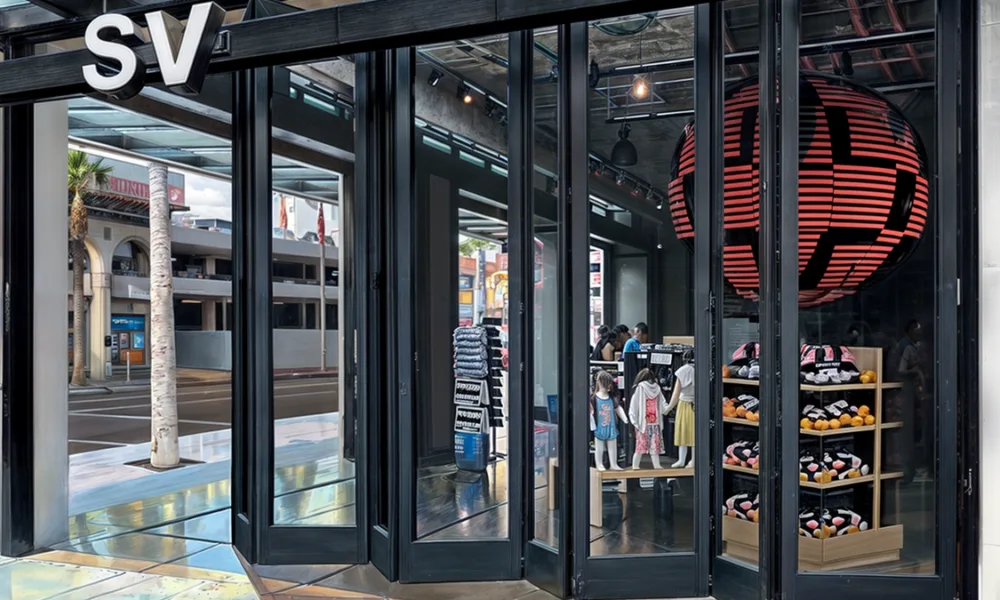
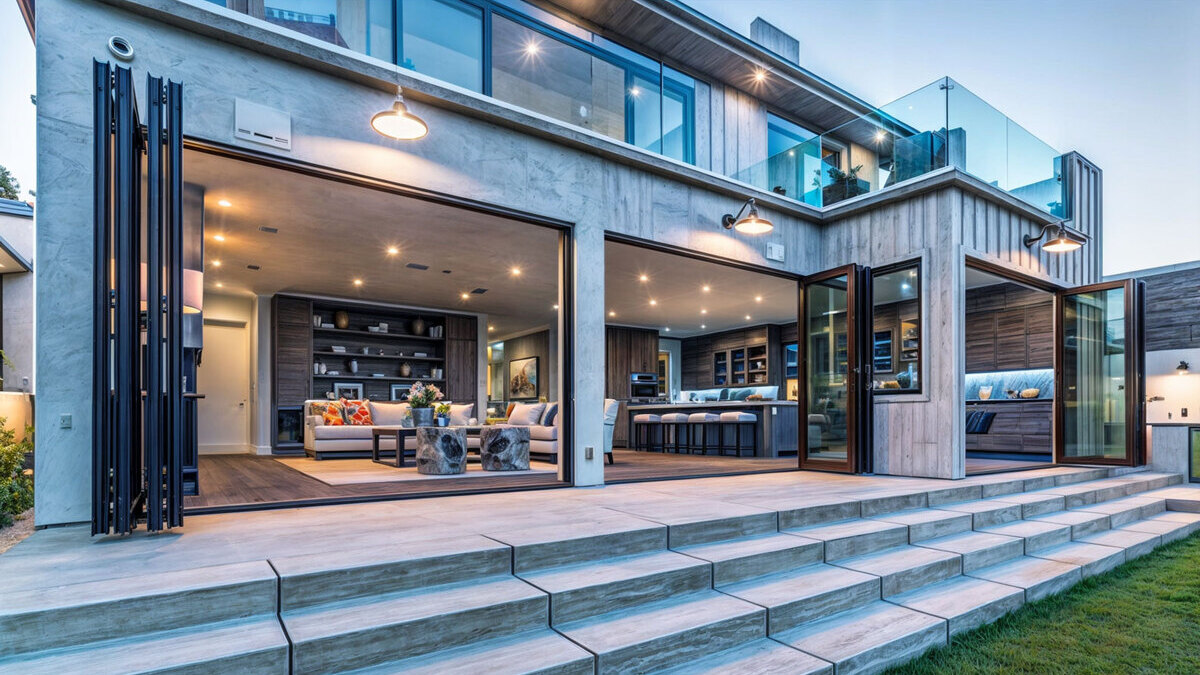
Folding patio doors designed for comfort, natural light, and better everyday flow between indoor and outdoor spaces.

Best For: Hosting Flow That Does Not Turn Into a Bottleneck

Many people choose a large folding opening for the view or the wow factor. In everyday life, though, you end up judging it by how people move through it.

Think about the real routes:

  • from the kitchen to the patio
  • from the patio back to the sink
  • from the dining area to outside
  • kids running in and out
  • someone carrying drinks, plates, or a tray with both hands full

That is where layout matters just as much as appearance.

  • Best for easy hosting: make sure the main walk-through area stays clear when the doors are fully open.
  • Best for everyday movement: create a natural path that does not require people to detour around furniture or stacked panels.
  • Best for flexible rooms: choose a configuration that preserves usable interior space instead of interrupting it.

A wide opening should make the room feel easier to use, not more awkward to navigate.

Best For: A Doorway Edge That Feels More Neutral Year-Round

One of the most overlooked details in large openings is the perimeter effect. Even when a room looks beautiful, people notice when the area near the frame feels warmer, colder, or less comfortable than the rest of the space.

Thermally broken frames are designed to reduce that contrast by helping the interior side of the frame feel less affected by outdoor conditions.

That can improve the room in subtle but important ways.

  • Best for sitting closer to the opening: the area near the frame can feel more usable and less like a “different zone.”
  • Best for a more consistent threshold: the doorway feels more integrated into the room instead of acting like a hard boundary.
  • Best for spaces that get ignored in winter or during weather extremes: the perimeter is less likely to become the part of the room people avoid.

This is not just about technical performance. It is about whether the opening still feels comfortable enough to be part of daily life.

The Part That Matters Most

Folding patio doors work best when they support the way you actually live.

That means thinking beyond the dramatic open-wall effect and asking a few more grounded questions:

  • Where do people sit most often?
  • How do they move through the room?
  • When does privacy matter?
  • What time of day does the sun hit the glass?
  • Will the doorway still feel comfortable when the weather is not ideal?
  • Will you actually use it in January, in summer, and on a completely normal weekday?

Those questions usually reveal more than style samples ever will.

A well-planned folding door system should not feel impressive only when everything is open and the weather is perfect. It should also feel easy on a regular day, when people are moving through the house, sitting near the glass, hosting friends, or simply walking outside with coffee in hand.

That is why frame design, panel stacking, and glazing choices all matter. And when thermally broken frames are part of the equation, the opening can feel more comfortable, more usable, and more consistent through changing conditions.

In the end, the best compliment is a simple one: the doorway gets used, the room feels good, and the big opening you dreamed about actually works in real life.

Spaces near windows react first to March weather changes. As outdoor temperatures shift throughout the day, sunlight, glass exposure, and frame materials can influence how quickly heat enters or leaves the room.

March Weather Swings. Why Your Favorite Spot Always Feels It First

Home / Articles posted byadmin

You wake up to a cold floor and a room that feels a little biting. By midday, sunlight hits the glass and your favorite spot feels warmer than it should. Then the sun drops, the temperature falls off fast, and you’re back to hoodie mode.

March has a talent for making a home or building feel undecided.

In many regions, early spring can bring temperature swings of 20°F or more within a single day, which makes indoor spaces react faster than expected.

So, you might even find yourself cracking windows open, then closing them an hour later, just to keep the temperature from drifting.

And if it seems like one area reacts more than the rest, you’re not imagining it. That’s usually where sun, shade, and the perimeter are doing the most work.

Why March Feels So Variable Near Glass

Mornings start cold and slow. Midday conditions can flip quickly, especially on the perimeter. By evening, the room can feel like it’s recalibrating again.

And your HVAC can’t predict this zigzag. It can only respond.

So, comfort becomes less about the thermostat number and more about how quickly one area gains heat, loses heat, or feels different the moment you step closer to the perimeter.

Why One Room Can Feel Like Two

Most March discomfort isn’t across the whole room. It’s along the edges. That’s where you’ll notice things like:

  • A couch corner that feels colder than the center
  • A sunny patch that flips from pleasant to distracting
  • An entry area that feels fine until the weather changes again

Those are the “high-impact variables” in real life. Small, specific spots that swing first, even when the rest of the room feels mostly normal.

March just makes those contrasts easier to notice.

The Window Factor Behind March Swings

When outdoor conditions change hour to hour, the areas near windows and frames often feel it first.

One non-technical factor matters a lot here: how easily heat moves through the frame.

A thermally broken window is designed to slow that heat transfer by separating the inside and outside portions of the frame with a non-conductive barrier.

This type of design helps reduce what architects call thermal bridging, which is when heat quickly travels through conductive materials like aluminum.

Many modern aluminum window systems use thermally broken frames to make indoor spaces feel less reactive during fast temperature shifts.

Early spring temperature swings can cause indoor comfort to change quickly near windows. Sunlight warming the glass during the day and cooler outdoor air at night often make perimeter areas of a room feel colder in the morning and warmer by the afternoon.

Three Small Tweaks That Help Fast

No overhaul needed. The win is smoothing out the swings, not chasing perfect. March comfort usually improves with steady, low-key adjustments, not constant thermostat whiplash.

1) Treat Sunlight Like a Dimmer Switch

If afternoon sun is heating one side of the room fast, don’t wait until it feels unbearable.

Close window shades partway before the brightest stretch. Open them again once the sun shifts. You’re reducing the spike, not blocking daylight all day.

If glare is part of your March annoyance, notice when it hits. Morning glare and late-day glare usually call for different shade timing.

2) Pick One “Open Window” Plan and Stick With It

In March, people often flip settings constantly and wonder why the room feels inconsistent.

So, for one week, keep it simple. If you like fresh air, crack windows open the same way at the same time of day. If you don’t, keep them closed and let the HVAC do the work.

The goal is consistency, so the room stops feeling like it’s changing personalities every hour.

3) Don’t Force the Problem Areas to Be Your Main Areas

If one seat or work spot feels noticeably colder or warmer than everything else, don’t treat that as a flaw in the whole room.

Try moving the chair, desk, or small table a bit. Even a short shift can change how your body reads the space.

And if the “cold spot” is always near the same window wall, that’s useful information. It may point to what designers often call a cold wall effect, rather than a whole-house issue.

Thinking About Window Upgrades?

If you’re planning upgrades this spring, March is often when people start noticing how much their windows influence indoor comfort.

Insulated glass units (IGUs), for example, are designed to slow down rapid temperature changes by adding an extra layer of insulation between interior and exterior environments.

Double-glazed units with tempered glass are commonly used in modern aluminum window systems because they help stabilize indoor temperatures while maintaining durability and safety.

For projects that require additional protection, windows can also be manufactured with impact-resistant or anti-intrusion glass, depending on the needs of the building.

If March has you constantly adjusting shades, airflow, and seating spots, it may simply be a sign that your windows are working harder than they should.

And in many cases, improving glazing performance can help create a more stable and comfortable indoor environment throughout the changing seasons.

Commercial building exterior with reflective glass panels designed to improve energy performance, glare control, and daytime privacy.

What Is Reflective Glass? Performance, Function, and Architectural Benefits

Home / Articles posted byadmin

Glass plays a far more complex role than simply allowing natural light to enter a space, at least in modern architecture. Today, façade systems must balance multiple factors such as energy efficiency, solar control, visual comfort, and architectural design.

In response to these challenges, reflective glass has become a widely used solution in commercial buildings and large-scale architectural projects.

This type of glass incorporates a thin metallic layer on its surface, designed to reflect a portion of solar radiation and control the amount of heat and light entering a building.

As a result, it helps improve the thermal performance of the façade, reduce glare, and create the characteristic mirrored appearance seen in many office towers and contemporary developments.

Beyond its visual impact, reflective glass also plays an important role in overall building performance. Its ability to reduce solar heat gain, enhance daytime privacy, and improve interior comfort has made it a common choice for curtain walls, storefront systems, and high-performance architectural façades.

In this article, we will explain what reflective glass is, how its reflective coating works, and the key benefits it provides in modern architectural applications.

Reflective glass curtain wall façade in a commercial office building, demonstrating solar control performance and mirrored exterior appearance.

What Is Reflective Glass?

Reflective glass is a type of architectural glass that incorporates a very thin layer of metal or metal oxides on one of its surfaces. This coating is designed to reflect a significant portion of solar radiation, reducing the amount of heat and light that passes through the glass into the building.

Unlike conventional glass, which allows most light and solar energy to pass directly through, reflective glass alters how radiation interacts with the glass surface. Part of the energy is reflected back to the exterior, another portion is absorbed, and the remainder is transmitted inside, resulting in improved thermal and visual control.

This behavior is based on the physical principle known as reflection, absorption, and transmission of light, three phenomena that determine how glass interacts with solar radiation and natural daylight.

In addition to improving a building’s energy performance, this type of glass also creates the distinctive mirrored appearance often seen on building façades, particularly when exterior lighting conditions are stronger than those inside the building.

For this reason, reflective glass is commonly used in office towers, hotels, corporate buildings, and other projects where energy performance and architectural aesthetics must work together.

How the Reflective Coating Works

The performance of reflective glass depends primarily on its microscopic metallic coating, which is applied to one of the glass surfaces during the manufacturing process. This coating is designed to modify how solar radiation interacts with the material.

When sunlight reaches the glass, the energy does not pass through the material in the same way as it does with conventional glass. Instead, three fundamental physical processes occur: reflection, absorption, and transmission.

A portion of the solar radiation is reflected back toward the exterior, which helps reduce the amount of heat entering the building. Another portion of the energy is absorbed by the glass, while the remainder is transmitted indoors as natural daylight.

Thanks to this balance between reflection and transmission, reflective glass allows buildings to maintain adequate levels of natural light without allowing the full thermal load of the sun to penetrate the interior. This helps reduce glare, improve visual comfort, and decrease solar heat gain inside the building.

In addition, the reflective coating is responsible for the distinctive mirror-like effect often seen on modern building façades. When exterior lighting conditions are stronger than those inside the building, the glass surface reflects its surroundings, creating the reflective appearance visible from outside the structure.

Key Benefits of Reflective Glass

The use of reflective glass in modern architecture is largely driven by its ability to improve the overall performance of a building’s envelope. Thanks to its reflective coating, this type of glass offers several advantages that directly impact interior comfort, energy efficiency, and façade design.

Reduction of Solar Heat Gain

One of the most important benefits of reflective glass is its ability to reduce solar heat gain. By reflecting a significant portion of the sun’s radiation, this glass limits the amount of thermal energy that enters the building.

This helps maintain more stable indoor temperatures and reduces the load on air conditioning systems, particularly in buildings with large glazed surfaces or in regions with high solar exposure.

Glare Control

Direct sunlight can create high levels of glare inside buildings, affecting the visual comfort of occupants. Reflective glass helps reduce the intensity of direct sunlight, allowing interior spaces to maintain a more balanced level of natural illumination.

This is especially useful in offices, commercial spaces, and corporate buildings where visual comfort plays an important role in productivity and occupant well-being.

Increased Daytime Privacy

Another advantage of reflective glass is its ability to provide privacy during the day. Because of the mirror-like effect created when exterior lighting is stronger than interior lighting, occupants inside the building can see outside while visibility from the exterior is significantly reduced.

However, it is important to consider that this effect depends on lighting conditions. At night, when interior spaces are illuminated and the exterior environment is darker, the reflective effect can be reversed.

Improved Interior Comfort

By reducing direct solar radiation and glare, reflective glass contributes to creating more comfortable indoor environments. Spaces benefit from pleasant natural lighting and more controlled temperatures, improving the overall experience for occupants.

In commercial and corporate buildings, this can translate into more comfortable and efficient working environments.

Aesthetic Impact on Building Façades

In addition to its functional advantages, reflective glass also has a significant impact on the appearance of a building. Its reflective surface allows architects to create dynamic and contemporary façades that visually change throughout the day depending on lighting conditions and surrounding environments.

For this reason, it is widely used in office towers, hotels, corporate buildings, and modern urban developments where architectural aesthetics play an important role.

Modern architectural façade using reflective glass to reduce solar heat gain while maintaining natural daylight inside the building.

Reflective Glass vs Conventional Glass

To better understand the value of reflective glass, it is useful to compare its performance with conventional glass, also known as clear glass, which is the most common type used in windows and building façades.

Clear glass allows most natural light and solar radiation to pass directly through the material. While this supports daylighting, it also means that a larger amount of solar heat can enter the building interior.

In contrast, reflective glass is designed to control the interaction between solar radiation and the glass surface. Thanks to its metallic coating, a significant portion of solar energy is reflected back toward the exterior, reducing the thermal load that reaches the interior spaces.

Another important difference is the visual effect on the façade. While clear glass maintains a completely transparent appearance, reflective glass creates a mirror-like effect that reflects the surrounding environment, contributing to a more modern and dynamic building design.

Because of these characteristics, reflective glass is often preferred in commercial buildings, office towers, and large-scale architectural façades, where solar control and energy performance play an important role in the overall project design.

Where Reflective Glass Is Used in Architecture

Thanks to its ability to control solar radiation and enhance the appearance of building façades, reflective glass is widely used in different types of architectural projects, particularly in commercial buildings and large-scale urban developments.

One of the most common applications is in curtain wall systems, where large glass surfaces form part of the building’s exterior envelope. In these cases, reflective glass helps reduce solar heat gain while creating a visually uniform and modern façade.

This type of glass is also frequently used in storefront systems and commercial spaces, where the combination of interior visibility and exterior privacy is especially valuable. In addition, its ability to control glare improves the experience of occupants inside the space.

In office towers, hotels, and corporate buildings, reflective glass is used both for its energy performance and its aesthetic impact. Reflective surfaces allow the building to visually interact with its surroundings, mirroring the sky, the urban landscape, or changing daylight conditions.

Glass manufacturing and recycling process highlighting the sustainability benefits of glass, including 100% recyclability and reduced carbon impact.

Benefits of Glass: Properties, Advantages and Applications in Modern Architecture and Industry

Home / Articles posted byadmin

Glass is one of the most influential materials in the evolution of modern architecture and industry. At first glance, it may seem simple (transparent, rigid, and fragile) yet its true value lies in the physical and chemical properties that make it extraordinarily versatile.

Today, glass does far more than allow natural light to pass through a space. It improves building energy efficiency, contributes to environmental sustainability, protects against noise and impact, and ensures high standards of hygiene in industrial and food-related applications.

What makes glass especially remarkable is that many of these advantages do not stem solely from its transparency, but from its molecular structure, chemical stability, and its ability to be treated, laminated, or coated to perform in very different environments.

In this article, we take a closer look at the key benefits of glass, from its fundamental technical properties to its applications in construction, design, technology, and packaging. The goal is not simply to list advantages, but to understand why glass remains an essential material in the development of safer, more efficient, and more sustainable spaces.

Modern glazed façade illustrating the benefits of glass in energy efficiency, natural daylight optimization, and thermal insulation performance in commercial buildings.

What Makes Glass Unique as a Material?

Before exploring the benefits of glass, it is important to understand what sets it apart from a material standpoint.

Glass is an amorphous solid, meaning that unlike metals or traditional crystalline materials, its molecular structure does not follow a regular, repeating pattern. It is primarily composed of silica (sand), along with additional components such as soda ash and limestone, which modify its thermal and structural behavior.

This amorphous structure is the reason glass can be transparent. Visible light passes through the material with minimal scattering, something that does not occur in materials with more complex crystalline structures. This ability to transmit light with very little distortion forms the foundation of many of its advantages in architecture, technology, and design.

Glass is also chemically stable. It does not react with most substances, does not leach compounds when in contact with food or liquids, and resists corrosion. This chemical inertness makes it a safe material for applications where purity and hygiene are critical.

Another defining characteristic is its thermal behavior. While conventional glass can transfer heat, its composition allows it to be treated or enhanced through processes such as tempering, lamination, or the application of low-emissivity coatings. These modifications significantly expand its performance, enabling it to adapt to specific climatic, structural, and energy requirements.

In other words, glass is not simply a transparent material. It is a technical platform that can be engineered to perform structural, energy-efficient, acoustic, and safety functions without compromising its fundamental properties.

Core Physical and Chemical Properties of Glass

The main benefits of glass are directly tied to its physical and chemical properties. Understanding these characteristics helps explain why this material can perform such diverse functions across architecture, industry, and technology.

Optical Transparency and Light Transmission

Transparency is likely the most recognized property of glass. Thanks to its amorphous structure, glass allows visible light to pass through with minimal scattering. This makes it an essential material for windows, façades, electronic screens, and optical systems.

In architecture, this capability enhances natural daylighting and reduces reliance on artificial lighting. In technological applications, it ensures visual clarity and precision.

Thermal Behavior and Heat Resistance

Glass has relatively low thermal conductivity compared to metals, making it useful for insulation when integrated into proper systems, such as double- or triple-glazed units.

It can also withstand high temperatures without easily deforming. Through treatments such as tempering or by using specialized compositions (for example, borosilicate glass), its thermal resistance can be significantly increased.

Electrical Insulation

A less frequently discussed but fundamental property is its high electrical resistance. Glass is an excellent electrical insulator, which makes it indispensable in electronic, industrial, and energy infrastructure applications.

Under normal conditions, it does not conduct electricity, adding an additional layer of safety in buildings and devices.

Chemical Stability and Corrosion Resistance

Glass is chemically inert to most common substances. It does not oxidize, does not corrode, and does not release compounds under normal conditions of use.

This stability makes it ideal for:

  • Food and beverage containers
  • Laboratory equipment
  • Pharmaceutical manufacturing
  • Chemical applications

Its impermeability prevents the absorption of liquids and odors, preserving the purity of its contents.

Structural Strength and Surface Durability

Although often perceived as fragile, glass can achieve high levels of strength when properly treated.

Tempered glass can be four to five times stronger than conventional annealed glass. Laminated glass, on the other hand, maintains structural integrity even after breakage due to its interlayer.

In addition, its surface resists scratching and degradation from UV exposure, contributing to a long service life in exterior applications.

Energy Efficiency and Thermal Performance

One of the most significant benefits of glass in modern construction is its ability to improve energy efficiency when integrated into advanced glazing systems.

While glass on its own can allow heat transfer, modern technologies have significantly transformed its thermal performance.

Double and Triple Glazing

Double- and triple-glazed units incorporate air or gas-filled cavities (such as argon or krypton) between glass panes. These cavities reduce heat transfer, improving insulation without blocking natural light.

The result is better indoor temperature control, reduced heat loss during winter, and lower heat gain during summer.

Low-Emissivity (Low-E) Coatings

Low-emissivity coatings, commonly known as Low-E, are designed to reflect infrared radiation while allowing visible light to pass through.

In colder climates, they help retain heat inside the building. In warmer climates, they reduce solar heat gain.

Solar Control Glass

Solar control glass is engineered to limit the amount of solar energy entering a space without compromising natural daylight.

This type of glass reduces the greenhouse effect that can occur in buildings with large glazed surfaces, particularly in commercial and residential structures with sun-exposed façades.

Reduction of HVAC Demand

By improving the thermal performance of the building envelope, advanced glass reduces the load on heating and air conditioning systems.

This not only lowers energy consumption, but also:

  • Reduces operating costs
  • Improves thermal comfort
  • Decreases the building’s carbon footprint
Laminated and tempered glass system demonstrating impact resistance, structural integrity, and safety performance in high-traffic architectural environments.

Sustainability and Environmental Benefits

Sustainability is now one of the most important criteria in architecture and industry. Glass stands out not only for its energy performance, but also for its ability to integrate into more responsible production and consumption models.

100% Recyclability

One of the greatest environmental benefits of glass is that it can be recycled indefinitely without losing quality or purity.

Unlike many other materials, glass does not degrade during the recycling process. Recycled glass (known as cullet) can be melted and transformed into new products with the same properties as the original material.

This process reduces the need for virgin raw materials and lowers energy consumption during manufacturing.

Reduced Carbon Impact

Using recycled glass in production significantly reduces the CO₂ emissions associated with the melting process.

In addition, when glass is incorporated into high-performance systems (such as Low-E or solar control units), it helps decrease a building’s operational energy use, directly contributing to a lower long-term carbon footprint.

Long Service Life

Glass is a durable material that resists environmental degradation. It does not oxidize, does not corrode, and is not affected by UV radiation under normal conditions.

Its long service life reduces the need for frequent replacements, minimizing waste and lowering maintenance or renovation costs.

Contribution to Green Building Standards

The thermal performance, recyclability, and durability of glass make it a key component in projects pursuing sustainable building certifications.

Safety and Security Advantages

Although glass has traditionally been associated with fragility, technical advancements have transformed its performance under impact, structural loads, and extreme conditions. Today, glass can play a key role in safety and protection.

Tempered Glass

Tempered glass undergoes a controlled heating and cooling process that significantly increases its mechanical strength.

It can be four to five times stronger than conventional glass of the same thickness. In addition, when it breaks, it shatters into small, relatively blunt fragments, reducing the risk of serious injury.

For these reasons, it is commonly used in:

  • Commercial façades and doors
  • Railings and interior partitions
  • Vehicles
  • Furniture

Laminated Glass

Laminated glass consists of two or more layers of glass bonded together with an interlayer, typically made of PVB or similar materials.

If the glass fractures, the interlayer holds the fragments in place, preserving the integrity of the assembly. This makes it an effective solution for:

  • Impact protection
  • Security against forced entry
  • Protection against flying debris
  • Applications in seismic or high-risk zones

In addition, laminated glass can incorporate added properties such as acoustic insulation or UV filtering.

Impact and Load Resistance

When properly specified, glass can withstand wind loads, structural pressure, and significant thermal variations.

In modern architectural applications, structural glass calculations allow its use in large panels, full façades, and even load-bearing elements in specialized systems.

Fire and Specialized Safety Glass

There are also glass compositions engineered to resist fire, high temperatures, or controlled explosions, commonly used in industrial environments and buildings with strict regulatory requirements.

Health, Daylighting and Human Performance

Beyond its physical properties, one of the less discussed (yet increasingly important) benefits of glass is its impact on health and human performance.

Access to natural light and visual connection to the outdoors directly influence physical and mental well-being. In this context, glass plays a strategic role in the design of healthier spaces.

Key contributions include:

  • Circadian rhythm regulation: Exposure to natural daylight helps synchronize the body’s biological cycles, improving sleep quality and hormonal balance.
  • Improved mood: Spaces with greater daylight access are often associated with reduced stress and a stronger sense of well-being.
  • Increased productivity and concentration: In offices and educational environments, natural lighting and exterior views can positively influence cognitive performance.
  • Reduced visual fatigue: Properly specified glass with solar control or anti-reflective treatments helps minimize glare.
  • Visual connection to the environment: Glass façades and partitions maintain sightlines to the outside, reducing feelings of confinement.

Design Flexibility and Architectural Innovation

One of the most notable benefits of glass is its ability to adapt to different design requirements without compromising technical performance. Over the past decades, its evolution has expanded the boundaries of contemporary architecture.

Glass can be manufactured in various thicknesses, sizes, and formats, including large panels that reduce visible joints and create cleaner, more continuous surfaces. It can also be curved, tempered, laminated, or combined with other structural materials to meet specific performance demands.

Among its main design advantages are:

  • The ability to create fully glazed façades
  • Integration into curtain wall systems
  • Use in interior partitions without blocking natural light
  • Application in skylights and overhead glazing
  • Incorporation of decorative, fritted, or privacy-control finishes

Glass also allows designers to work with different levels of transparency, reflectivity, and color. It can remain fully clear to maximize views or become translucent to provide privacy without sacrificing daylight.

In addition, advances in structural engineering have enabled glass to participate in specialized load-bearing systems, expanding its role beyond that of a simple enclosure.

In modern architecture, glass is not merely a finishing material. It is an active component in both the visual language of a building and its technical performance.

Industrial, Packaging and Technological Applications

Although glass is most commonly associated with architecture, its industrial and technological applications are just as significant. In fact, many of its fundamental properties (such as chemical stability and electrical resistance) make it indispensable across multiple sectors.

In the food and pharmaceutical industries, glass is widely used for packaging due to its chemical inertness. It does not alter flavor, does not release substances, and does not interact with its contents, ensuring high standards of purity and safety.

In laboratories and chemical processes, its resistance to corrosion and its ability to withstand controlled temperature changes make it suitable for containers, specialized equipment, and observation systems.

In the technological field, glass plays a central role in:

  • Electronic device screens
  • Fiber optics for telecommunications
  • Solar panels
  • Insulating components in electrical systems

Its transparency, combined with its ability to be surface-treated, enables applications in touchscreens, protective coatings, and high-precision optical systems.

In the energy sector, glass also functions as an electrical insulator and as a protective barrier in critical infrastructure.

These applications demonstrate that the benefits of glass extend far beyond design or construction. Its technical performance positions it as a strategic material in industries where precision, safety, and stability are essential.

Conclusion: Why Glass Remains Essential in Modern Construction and Industry

As this analysis demonstrates, the benefits of glass extend far beyond transparency. Its amorphous structure, chemical stability, electrical resistance, and capacity for technical adaptation make it a unique material within both industrial and architectural landscapes.

In construction, glass does more than allow natural light to enter a space. It enhances energy performance, contributes to thermal and acoustic comfort, and fulfills key structural safety functions. In industry, it ensures purity, durability, and stability in applications where precision is essential.

Its ability to be recycled indefinitely and its long service life further reinforce its role in more sustainable development models.

What truly distinguishes glass is its versatility. It can be treated, reinforced, laminated, curved, or coated to meet specific conditions without losing its fundamental properties. This combination of clarity, engineering potential, and durability explains why it remains a critical component in buildings, technological devices, and essential infrastructure.


A homeowner lightly touching the interior edge of a modern aluminum door frame on a cold morning, illustrating how temperature transfer can make the perimeter feel colder even without visible air movement.

The Comfort Clue Hiding in Your Door Frame

Home / Articles posted byadmin

You can have a beautiful doorway and still hate standing near it. Comfort doesn’t care how good it looks. It cares what the perimeter is doing.

It’s that temperature shift you feel before you even think about it, a cool line along the floor, a shoulder chill when you pass too close. In winter, the frame can feel sharp-cold under your fingertips. In summer, it’s oddly warm. Not the whole room. Just that zone.

And sometimes, it doesn’t even feel like air is moving. It feels like the room is quietly nudging you back a step.

What You’re Feeling Might Not Be Air

Two different problems can feel almost identical, which is why they’re often confused.

  • Air leakage: you feel movement.
  • Temperature transfer: the air is still, but the area near the frame feels noticeably colder or warmer.

Same complaint. Very different fixes.

The Frame’s Job and Where It Can Go Wrong

Aluminum is durable and precise, which is why it’s widely used in doors and window systems. But thermally, it conducts heat very well. That means outdoor temperatures can travel through the frame and show up on the interior surface, especially around the perimeter where people actually sit, walk, and live.

Without an insulating barrier inside the frame, cold winter air or summer heat can transfer directly through the metal.

In a thermally broken system, a non-conductive barrier separates the interior and exterior portions of the frame. That separation reduces how much temperature passes through, helping prevent that winter “cold stripe” feeling or the summer hot-touch effect.

It’s not always the glass. Often, it’s the edge.

Spot the Pattern

Instead of focusing on one uncomfortable moment, look for what repeats:

  • The discomfort shows up on the coldest nights or the sunniest afternoons
  • Curtains don’t move, but you still feel a cold “pull” near the frame
  • Condensation appears in a clean line along the frame edge or corners
  • The room feels normal, until you’re sitting or standing right next to the doorway

If it’s airflow, you’ll usually notice movement, whistling, or fluttering. If it’s temperature transfer, it’s quieter. And subtler.

Close-up of subtle condensation forming along the interior corner of a door frame, highlighting how heat transfer through metal frames can create localized comfort issues near the edge.

What to Say So You Don’t Get the Wrong Fix

If you lead with the word “draft,” the conversation often defaults to weatherstripping. Try describing what you actually notice instead:

  • “The interior frame surface feels much colder or hotter than nearby finishes.”
  • “Comfort drops near the perimeter even when everything’s closed.”
  • “We’re trying to reduce heat and cold transfer through the frame.”

If you want a little more context on why that frame detail matters, the heat-transfer difference between door materials is worth knowing.

One Simple Step Before You Call Anyone

Before reaching out to an installer, note two things:

  • When it feels worst (cold mornings, windy nights, the sunny side in summer)
  • Where it’s most noticeable (which room, which edge, which side)

That’s enough to help identify whether the issue is airflow or temperature transfer, without turning this into a full-time research project.

Comfort problems aren’t always dramatic. Sometimes they’re subtle. And sometimes the fix isn’t in the glass. It’s in the frame.