Loading

3 Design Decisions That Can Make a Small Living Room Feel Much Larger

Home / Archive by category "Design & Living"

Most homeowners believe their living room’s square footage is a fixed limit. However, space is often more about perception than floor measurements. It’s not just about the area you walk on; it’s about how light moves and where your eyes can travel.

Think of a typical living room: the furniture fits, but the space feels “heavy.” Often, the culprit isn’t the size of your sofa but how the architecture of the room handles boundaries. Solid walls and traditional swing doors can act as visual roadblocks, cutting off light and stealing usable floor space.

If you want to open your home without a full-scale demolition, these three design decisions can shift how you perceive your space.

1. Connecting with the Outdoors: The Glass That Reclaims Space

The most common mistake in a small living room is treating it like a closed box. A traditional wood or metal door requires a “swing zone,” a radius of several feet that must remain empty just so the door can function. In a tight layout, that’s valuable real estate lost.

A more effective approach is integrating a large-format sliding door. By replacing an opaque wall or a standard door with a glass system, the physical boundary effectively disappears. Instead of your gaze hitting a solid wooden surface, it extends toward the garden, the patio, or the horizon.

This change allows natural light to reach the darker corners that usually make a room feel cramped. When the visual line between “inside” and “outside” is softened, the room feels as deep as the landscape beyond it.

2. Strategic Depth: Moving Beyond Basic White

While “painting it all white” is the standard advice for small spaces, a total-white look can sometimes feel clinical or flat. To make a room feel larger, you actually need a sense of depth to accompany the light.

Designers often use a palette of warm neutrals—like sand, soft grays, or ivory. These tones don’t just bounce light; they distribute it with warmth. The goal is to eliminate high-contrast shadows that “shrink” the corners of a room. When you pair these soft tones with a clear view of the outdoors, the walls seem to recede rather than close in, creating a more relaxed, airy atmosphere.

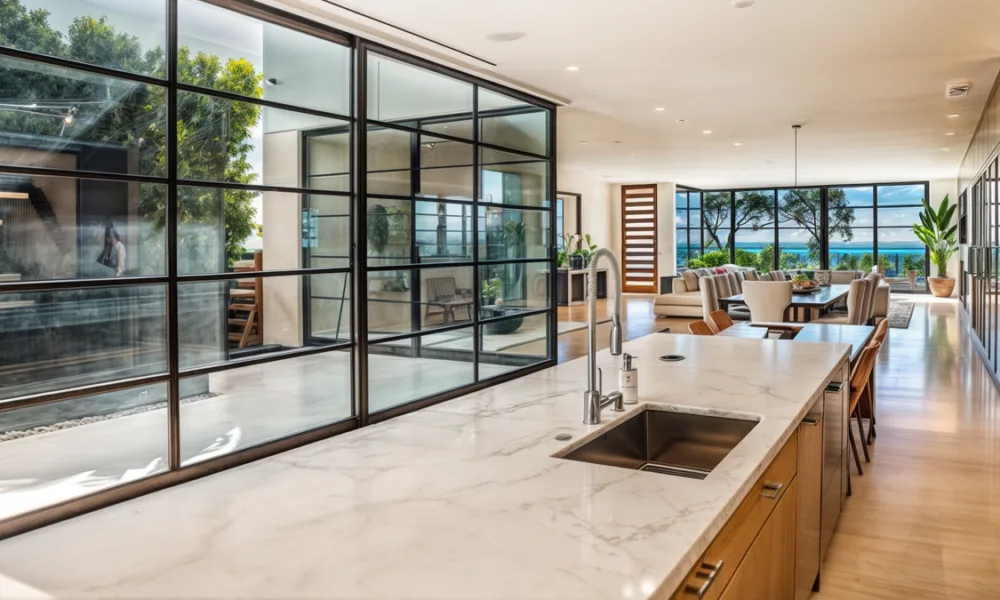
A small living room can feel significantly larger when natural light enters through a wide glass opening, extending the view toward a patio, garden, or outdoor area.

3. Mirrors as Visual Openings

A mirror is more than a utility; in a small room, it functions as an additional window. The key is placement. Instead of hanging a small mirror decoratively, consider a large-format piece positioned opposite a window or a glass sliding door.

By doing this, the mirror captures the exterior view and reflects it back into the living room. This creates the impression of a second opening on a solid wall. It’s a practical way to double the amount of natural light in the room and trick the eye into seeing more volume than the floor plan suggests.

A Shift in Perspective

Making a small living room feel spacious is less about adding square feet and more about removing visual barriers. The difference between a room that feels cramped and one that feels open often comes down to how you manage the connection with your surroundings.

The next time your living room feels a bit too tight, stop looking at the floor. Look at your walls and doors. Sometimes, the best way to “expand” your home is simply to let the outside world in.

Why high-performance glass matters in commercial storefronts to improve comfort, reduce environmental stress, and support a better interior experience

Your storefront may look modern, but the glass could still be making the space uncomfortable

Home / Archive by category "Design & Living"

A strong first impression does not always hold up inside

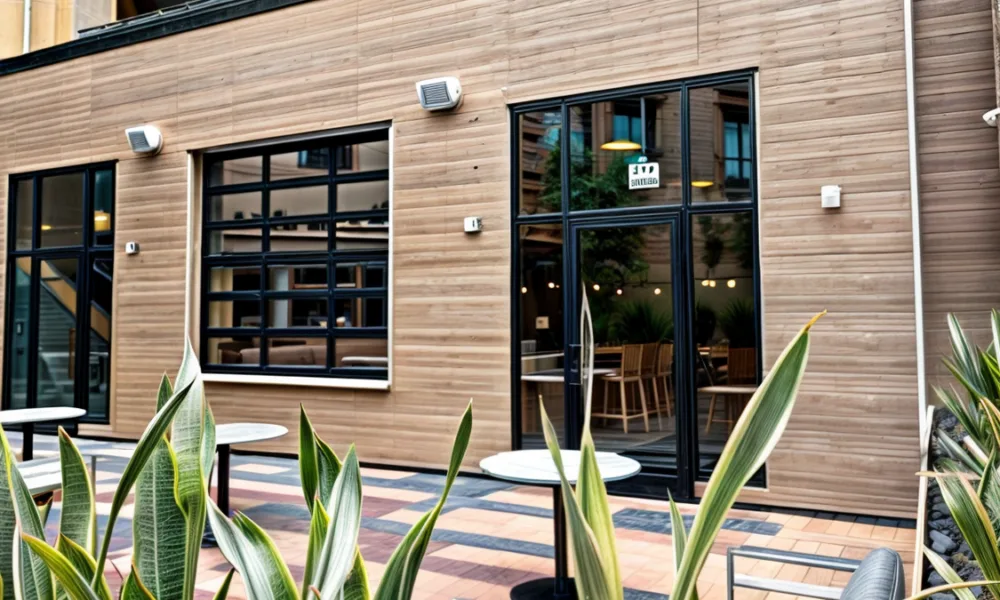
Glass facades naturally attract attention. They look clean, open, and contemporary. From the street, they can make a business feel bright, visible, and easy to approach.

But that first impression does not always hold up once people step inside.

A space can feel warmer, brighter, or more exposed than expected, even when nothing seems obviously wrong. Most visitors will not stop to explain that discomfort. They simply spend less time inside, move through the space more quickly, or leave sooner than planned.

In a commercial setting, those small changes in behavior matter.

The exterior does not stay outside

A glass facade may look like a clear boundary between indoors and outdoors, but in practice, the exterior environment still affects what happens inside.

On hot days, solar radiation passes through the glass and reaches floors, furniture, merchandise, and other interior surfaces. As that heat builds up, the space becomes harder to regulate and cooling systems have to work harder to keep up.

The effect is not always dramatic, but it is consistent. A space that gains heat too easily often becomes less comfortable to stay in, even if visitors never describe it that way.

When outdoor temperatures drop, the issue can shift in the opposite direction. Interior comfort becomes harder to maintain, and the space may feel less stable throughout the day.

Light also changes how people use the space

Temperature is only part of the problem.

When natural light enters without enough control, glare and reflections begin to affect how people move, sit, and interact with the space. Screens become harder to read. Display areas lose clarity. Customers change position to avoid direct light or move away from certain areas without really thinking about it.

These reactions may seem minor, but in commercial environments they add up quickly.

A table that stays empty. A seating area people avoid. A visitor who looks around briefly and leaves. In retail and hospitality, those patterns can directly affect dwell time, interaction, and conversion.

What discomfort inside a building can reveal

When a building stops moderating heat, light, and noise effectively, the impact often shows up first in occupant comfort.

This broader issue has been associated with what the World Health Organization described as sick building syndrome: situations in which people experience discomfort indoors and tend to feel better after leaving the space. In practice, the problem is rarely caused by one factor alone. It usually comes from several environmental conditions that are not being controlled well enough.

That is why appearance alone is not a reliable measure of performance. A facade may look polished from the outside and still create an uncomfortable interior experience over time.

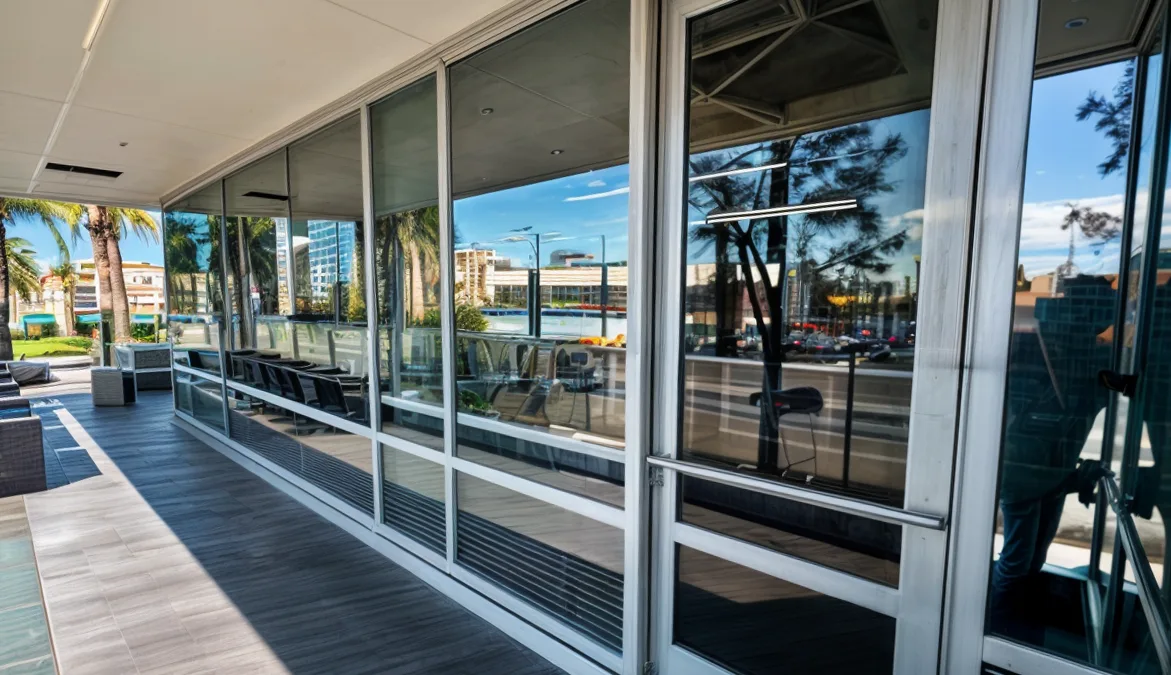
How solar heat gain, glare, and uncontrolled light affect customer comfort, dwell time, and interior performance in glass-fronted spaces.

Why glass still matters in commercial spaces

None of this means glass is the problem.

Glass remains one of the most effective materials for commercial storefronts when it is used well. It improves visibility, makes interiors feel more accessible, and helps connect the activity inside with the street outside.

That is one reason it continues to shape storefront design in cities like New York, Chicago, and Miami, where visibility and openness are part of the commercial experience. The value of glass is clear. The real difference lies in whether the system is designed to perform, not just to look good.

What makes the difference

The difference between a storefront that performs well and one that only looks attractive usually comes down to how the glass system responds to real conditions.

Low-E coatings help reduce solar heat gain without blocking visibility. Insulated glazing improves thermal stability and helps reduce the strain on HVAC systems. Laminated glass can reduce outside noise and make the interior feel more controlled and comfortable.

In areas where direct light becomes disruptive, additional treatments such as tinting or patterned finishes can help manage glare more precisely.

These solutions do not need to stand out visually to make a difference. Their value shows up in how the space feels and in how people behave inside it.

The issue is not the material, it is the missed performance decision

A glass facade can look flawless from the street. But if people inside are constantly adjusting, avoiding certain areas, or leaving sooner than expected, then the space is not performing as well as it should.

The issue is not the presence of glass itself. It is the lack of decisions about how that glass should perform in real conditions.

Because in commercial architecture, a facade is not only part of the building’s image. It is part of the experience people have once they enter.

The Triangle Shirtwaist Factory fire of March 25, 1911, became a turning point in industrial safety after blocked and inadequate exits contributed to the deaths of 146 workers

The Tragedy of 1911: It Wasn’t Only the Fire, but How the Exit Failed

Home / Archive by category "Design & Living"

In an emergency, an exit is not judged by its appearance or by how well it seemed to work during installation. What matters is whether people can get through it immediately when panic sets in.

That is one reason the Triangle Shirtwaist Factory fire of 1911 is still remembered today. The fire was devastating, but so was the failure of the exits people depended on to escape.

Why the 1911 Factory Fire Still Matters

On March 25, 1911, a fire broke out at the Triangle Shirtwaist Factory in New York. Many workers on the upper floors could not get out. Some exits had been locked, reportedly to prevent theft, and others did not function in a way that matched the reality of a mass escape.

As workers tried to flee, the doors became part of the disaster. In a crowd, people do not evacuate calmly or one at a time. They move together, pressed forward by fear, urgency, and the force of others behind them.

That is what makes this tragedy more than a story about fire. It also revealed how badly exit design could fail when it did not account for real human behavior.

Why Emergency Behavior Changes Everything

For years, many doors were designed around a single user: someone who approaches, sees the hardware, understands it, and operates it correctly. But that is not how evacuations happen.

In a real emergency, no one stops to study a handle or think through how a mechanism works. People react. They head for the exit and push forward. Any system that depends on calm interpretation in that moment is already vulnerable to failure.

That is the lesson safety design had to learn: emergency egress must respond to instinct, not work against it.

Modern panic hardware exists in part because disasters like the 1911 Triangle fire showed that emergency exits must function under crowd pressure, urgency, and instinctive human behavior.

How Panic Hardware Changed Exit Design

Over time, tragedies like this helped reshape building safety standards. One of the most important changes was the wider use of panic hardware: a horizontal bar or touchpad installed on the interior side of a door that releases the latch when pushed.

Its value is straightforward. It follows the way people actually behave in an emergency. Instead of requiring a key, a turn of the wrist, or any precise movement, it allows the door to open through direct forward pressure.

That principle became essential in commercial and high-occupancy buildings, where exits need to work quickly, clearly, and reliably.

A Door Should Not Need to Be Figured Out in a Crisis

Today, the effectiveness of an emergency exit depends less on whether a person can figure it out and more on whether the system was designed to respond clearly in a chaotic moment.

That shift changed the way safe exits are built. Modern panic hardware is intended to reduce hesitation, support immediate egress, and keep a door functional even when several people are pushing toward it at once.

The lesson from 1911 is not just historical. It remains relevant now: in a real emergency, a door must work the way people actually move.

If Your Door Makes a Customer Hesitate, You’re Already Losing More Than You Think

Home / Archive by category "Design & Living"

It may seem like a small moment, but hesitation at the entrance changes the entire rhythm of a space. One person stops, the person behind them slows down, and what should feel like a smooth arrival turns into a minor point of friction.

In a busy commercial setting, that moment can happen again and again throughout the day. Most people would never describe it as a door problem. They simply register that entering the space felt less intuitive than it should have.

Why Glass Doors Often Create This Problem

This is especially common with glass doors. Their visual appeal is part of the reason businesses choose them: they look clean, modern, and open. But that same minimal appearance can remove the cues people usually rely on when approaching an entrance.

A customer may not immediately know whether to push or pull. The hardware may not clearly suggest direction. And because the door feels visually light or almost invisible, people tend to react on instinct rather than pause to interpret it carefully.

The result is familiar: someone pushes when they should pull, stops to check, or loses momentum before even stepping inside.

When Hardware Reduces Hesitation

The issue is not the glass itself. The issue is asking the user to make a decision in a moment that should feel automatic.

That is where the right hardware matters. A properly integrated panic device simplifies the interaction: push the bar, and the door opens. The action is immediate and easy to understand, especially in moments of pressure or heavy foot traffic.

In practical terms, that means the entrance works with human behavior instead of interrupting it.

Their visual appeal is part of the reason businesses choose them: they look clean, modern, and open

Panic Bars Are Not Only About Emergencies

Although panic bars are essential in emergency egress, their value is not limited to crisis. In many commercial environments, they also support everyday performance by handling repeated use more clearly and consistently than less intuitive systems.

That matters in entrances that deal with constant traffic. When the hardware is easy to read, the door stops becoming a point of hesitation and starts doing what it should have done from the beginning: allow movement without slowing people down.

Consistency Comes From the Full System

Reliable performance does not depend on appearance alone. It depends on whether the door and its hardware were designed to function together as a complete system.

When the components are properly integrated from the start, the result is more consistent under daily use. The door responds the way people expect it to respond—quickly, clearly, and without unnecessary friction.

Human behavior plays a bigger role in door performance than most projects anticipate. When a system lacks clear cues, hesitation becomes part of the user experience from the first contact point

Glass Doors Aren’t Used as Designed; They’re Used as People Behave

Home / Archive by category "Design & Living"

Most people don’t stop to think about how a door works. They react. If a space looks open, they move forward. If a handle suggests pulling, they pull. If a crowd is pushing from behind, they push too.

That is what makes glass doors so interesting in commercial spaces. They are often chosen for visual reasons—they extend the storefront, let natural light in, and make the business feel more open from the street. But once people start using them, appearance stops being the main issue. Behavior takes over.

Why Glass Doors Change the Way People Move

A glass entrance reduces the visual separation between outside and inside. From the sidewalk, people can already see the lighting, the merchandise, and the activity inside. That makes the entrance feel more accessible and lowers hesitation.

But that same visual openness can also create confusion. When the barrier feels almost invisible, users rely even more on instinct. They do not study the hardware. They respond to what seems obvious in the moment.

That is why the real test of a door is not how clean it looks in elevation. It is how clearly it communicates what to do when someone reaches it.

People Don’t Use Doors Theoretically

In design, this is a familiar principle: people interact with objects based on perception, habit, and context—not based on the designer’s intention alone.

A door may seem straightforward on paper, but real use is rarely that controlled. Someone approaches while looking at their phone. Another person has their hands full. A group enters while others try to exit. In those moments, the body reacts first.

That is where design either helps or fails.

In commercial architecture, a glass door is not only a visual feature. Its real performance depends on whether people can understand how to use it immediately, without stopping to think

When Door Hardware Works With Human Behavior

The best door systems do not force users to stop and decode them. They guide action immediately.

That is especially important in emergency egress. A horizontal push bar works because it matches the most instinctive response in a high-pressure moment: push and move. There is little ambiguity, and that clarity matters.

The same principle applies beyond emergencies. Everyday entrances also benefit from hardware that reads quickly—lever handles, push paddles, and full-width pulls all help reduce hesitation when they are selected correctly for the way people actually move through a space.

Good Design Anticipates Real Reactions

The issue is not that people use doors “wrong.” The issue is expecting perfect behavior in imperfect situations.

Good design accounts for distraction, urgency, repeated traffic, and split-second decisions. It does not depend on users pausing to interpret the system correctly every time.

That is why the most effective glass door is not simply the one that looks integrated with the storefront. It is the one that continues to work clearly when real people approach it the way they actually do: quickly, distracted, carrying things, or moving with a crowd.