Loading

A homeowner lightly touching the interior edge of a modern aluminum door frame on a cold morning, illustrating how temperature transfer can make the perimeter feel colder even without visible air movement.

The Comfort Clue Hiding in Your Door Frame

Home / Archive by category "Design & Living"

You can have a beautiful doorway and still hate standing near it. Comfort doesn’t care how good it looks. It cares what the perimeter is doing.

It’s that temperature shift you feel before you even think about it, a cool line along the floor, a shoulder chill when you pass too close. In winter, the frame can feel sharp-cold under your fingertips. In summer, it’s oddly warm. Not the whole room. Just that zone.

And sometimes, it doesn’t even feel like air is moving. It feels like the room is quietly nudging you back a step.

What You’re Feeling Might Not Be Air

Two different problems can feel almost identical, which is why they’re often confused.

  • Air leakage: you feel movement.
  • Temperature transfer: the air is still, but the area near the frame feels noticeably colder or warmer.

Same complaint. Very different fixes.

The Frame’s Job and Where It Can Go Wrong

Aluminum is durable and precise, which is why it’s widely used in doors and window systems. But thermally, it conducts heat very well. That means outdoor temperatures can travel through the frame and show up on the interior surface, especially around the perimeter where people actually sit, walk, and live.

Without an insulating barrier inside the frame, cold winter air or summer heat can transfer directly through the metal.

In a thermally broken system, a non-conductive barrier separates the interior and exterior portions of the frame. That separation reduces how much temperature passes through, helping prevent that winter “cold stripe” feeling or the summer hot-touch effect.

It’s not always the glass. Often, it’s the edge.

Spot the Pattern

Instead of focusing on one uncomfortable moment, look for what repeats:

  • The discomfort shows up on the coldest nights or the sunniest afternoons
  • Curtains don’t move, but you still feel a cold “pull” near the frame
  • Condensation appears in a clean line along the frame edge or corners
  • The room feels normal, until you’re sitting or standing right next to the doorway

If it’s airflow, you’ll usually notice movement, whistling, or fluttering. If it’s temperature transfer, it’s quieter. And subtler.

Close-up of subtle condensation forming along the interior corner of a door frame, highlighting how heat transfer through metal frames can create localized comfort issues near the edge.

What to Say So You Don’t Get the Wrong Fix

If you lead with the word “draft,” the conversation often defaults to weatherstripping. Try describing what you actually notice instead:

  • “The interior frame surface feels much colder or hotter than nearby finishes.”
  • “Comfort drops near the perimeter even when everything’s closed.”
  • “We’re trying to reduce heat and cold transfer through the frame.”

If you want a little more context on why that frame detail matters, the heat-transfer difference between door materials is worth knowing.

One Simple Step Before You Call Anyone

Before reaching out to an installer, note two things:

  • When it feels worst (cold mornings, windy nights, the sunny side in summer)
  • Where it’s most noticeable (which room, which edge, which side)

That’s enough to help identify whether the issue is airflow or temperature transfer, without turning this into a full-time research project.

Comfort problems aren’t always dramatic. Sometimes they’re subtle. And sometimes the fix isn’t in the glass. It’s in the frame.

Close-up of a thermally broken aluminum door frame, showing the internal insulated barrier that reduces heat transfer between exterior and interior surfaces.

Why Your Store Entrance Feels Cold (Even When the Heat Is On)

Home / Archive by category "Design & Living"

It’s 8:45 a.m. You’re unlocking your business for the day.

Everything seems normal. The lights are on, the HVAC system is running, and the space feels comfortable, until someone mentions it.

“Why is it so cold by the door?”

You check the thermostat. It’s set correctly. The rest of the store feels fine. But the entrance area consistently feels different, especially during colder months.

This situation is more common than most retail operators realize, and it usually has less to do with heating capacity than with how the entry system was designed.

The Most Overlooked Stress Point in Retail Buildings

In high-traffic environments, the front door absorbs more stress than almost any other part of the building envelope.

It opens and closes continuously throughout the day. It’s exposed to wind, rain, and seasonal temperature swings. It handles physical impact from carts, deliveries, and daily use. And unlike fixed walls or windows, it functions as a moving thermal boundary.

When a door system is designed primarily for structural strength without addressing thermal performance, comfort issues tend to develop gradually. Not as a sudden failure, but as recurring imbalance.

Cold air collects near the entrance. Draft complaints increase. Condensation forms on the interior frame. Staff avoid working near the front counter during winter months. HVAC systems run longer than expected.

These symptoms often point to one overlooked factor: thermal conductivity.

Why Standard Aluminum Can Create Temperature Imbalance

Aluminum is widely used in commercial entry systems because of its durability and structural strength. It performs well under heavy daily use.

Thermally, however, aluminum transfers temperature efficiently.

Without an internal thermal barrier, exterior temperatures pass directly through the frame to the interior surface. During colder months, this can make the inside face of the door significantly cooler than adjacent wall systems. In warmer seasons, heat transfers inward just as effectively.

In a busy storefront where the door opens frequently, this effect compounds. The entrance zone struggles to stabilize, and the HVAC system compensates by working harder.

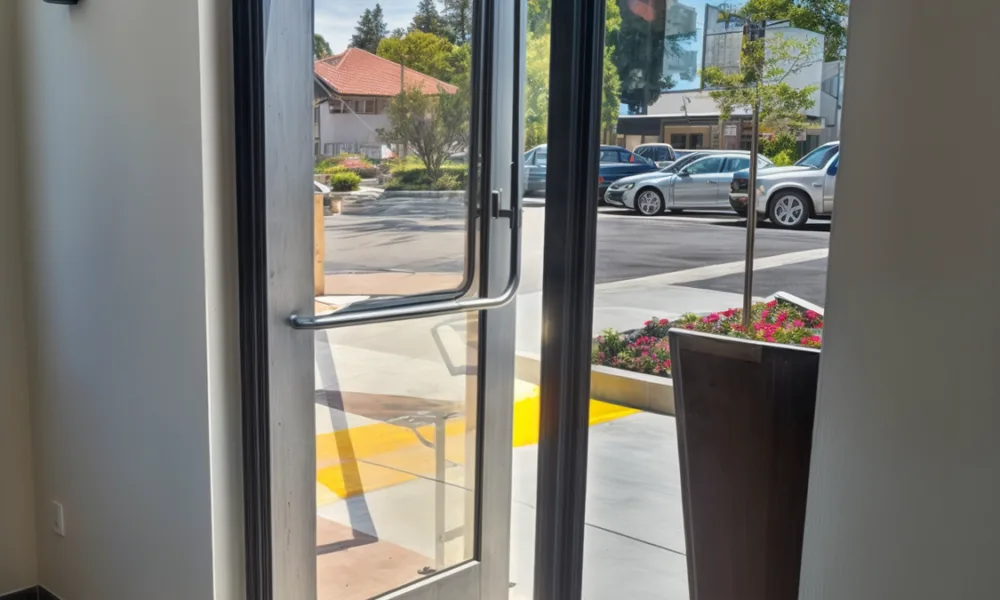
High-traffic retail entrance exposed to cold weather, where aluminum framing without thermal insulation can contribute to drafts and temperature imbalance near the doorway.

What a Thermally Broken System Changes

A thermally broken entry system incorporates an insulated barrier that separates the exterior aluminum from the interior aluminum components. This interruption significantly reduces heat transfer through the frame and improves thermal stability at the entrance.

In practical terms, that means:

  • More consistent temperatures near the door
  • Reduced condensation
  • Less strain on HVAC systems
  • Fewer recurring comfort complaints

In retail environments exposed to daily traffic and seasonal weather, these improvements become operational advantages rather than technical details.

The 3-Question Reality Check

Before looking at product specifications or replacement options, it helps to step back and assess the situation more directly. If you manage a storefront, ask yourself:

  • Does the entrance get heavy daily traffic?
  • Is it exposed to harsh seasonal weather?
  • Do people regularly complain about temperature near the door?
  • If the answer is yes to even one of these, your door isn’t “just a door.”
  • It’s part of your energy strategy.

When the Entrance Becomes an Energy Variable

Temperature imbalance at an entry point does more than create mild discomfort. Over time, it increases energy consumption, disrupts climate consistency within the space, and contributes to avoidable operational costs.

Many businesses replace worn doors without reconsidering the thermal performance of the system. When insulation isn’t part of the design, the same issues often return.

Commercial entrances are not simply access points. They are part of the building’s energy envelope. When designed for both durability and insulation, they stop functioning as weak spots and start supporting overall performance.

And sometimes, the first sign that something has changed is simple: fewer complaints at 8:45 in the morning.

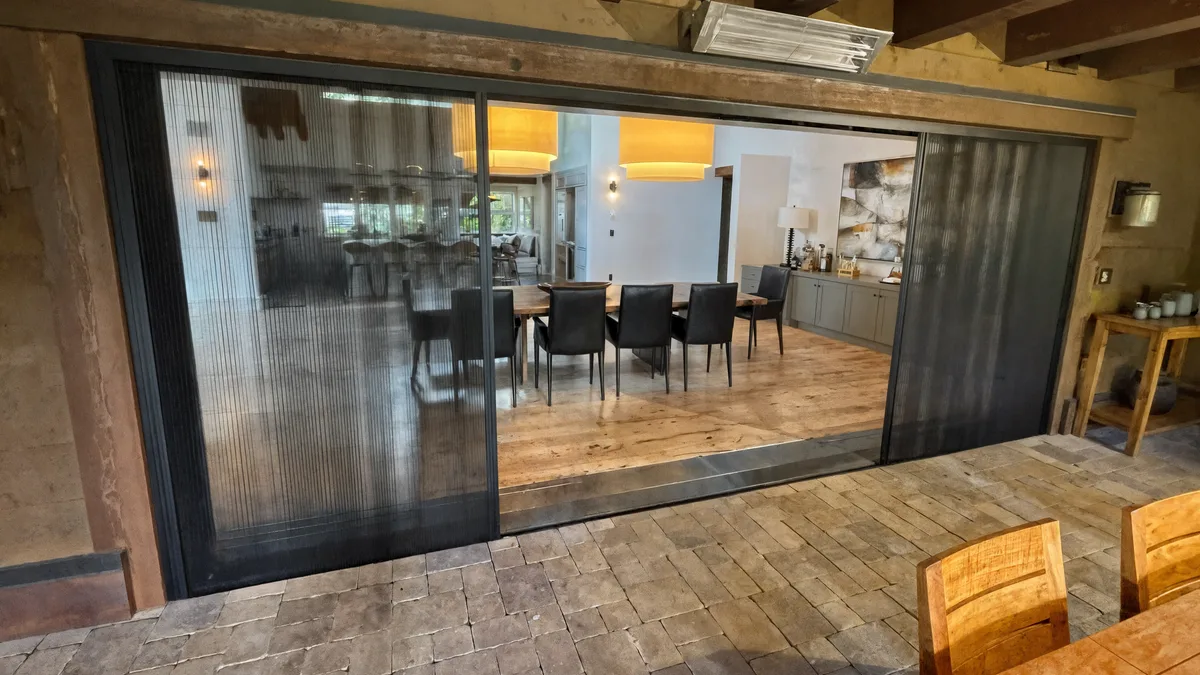
Without thermal separation inside the frame, aluminum patio doors may transfer outdoor temperatures inward, affecting comfort near the glass and subtly influencing how living spaces are used in colder seasons.

Why That One Spot in Your Living Room Is Always Freezing in Winter

Home / Archive by category "Design & Living"

You know that one spot.

  • In August, it’s the best seat in the house. Sunlight, view, breeze.
  • In January, it’s suddenly the “decorative chair” no one actually sits in.

You can feel the temperature shift when you walk toward it. Sit down for a minute and you’re reaching for a blanket. It’s not your imagination and it’s not your furniture’s fault.

When large openings like patio doors or glass entries aren’t properly insulated at the frame, they can create what homeowners quietly call the cold corner problem. One part of the room feels like a different climate. And once that happens, winter starts picking your floor plan.

❄️ When Winter Redesigns the Room

It rarely feels dramatic at first: The sofa shifts slightly away from the glass, rugs layer up, the play area migrates to the center and the thermostat gets nudged higher because “something feels off.”

The room might technically be heated. But the perimeter (especially near the frame) feels noticeably colder. That’s usually not a whole-room problem, it’s a heat-transfer problem.

❓ What “Thermally Broken” Actually Means

In simple terms, a thermally broken system has an insulating barrier built inside the metal frame. That barrier interrupts the path heat normally takes through aluminum.

Without that separation, cold outdoor temperatures can conduct directly through the frame and radiate inward. With it, that transfer is significantly reduced.

It’s not magic, it doesn’t replace proper glazing or good installation. But it changes how the space feels near the glass and that’s where comfort complaints usually live.

🌡️ Why It Matters More Than You Think

Most people don’t complain that their entire room is freezing. They complain about:

  • The chair no one uses in winter
  • The drafty feeling near the entrance
  • The temperature drop right by the sliding wall

When frames transfer cold into the room, your HVAC system often works harder to compensate, even if you don’t consciously notice it. Comfort and energy use are more connected than they seem.

Thermally broken framing helps stabilize the perimeter so the space near the opening feels usable, not just technically heated.

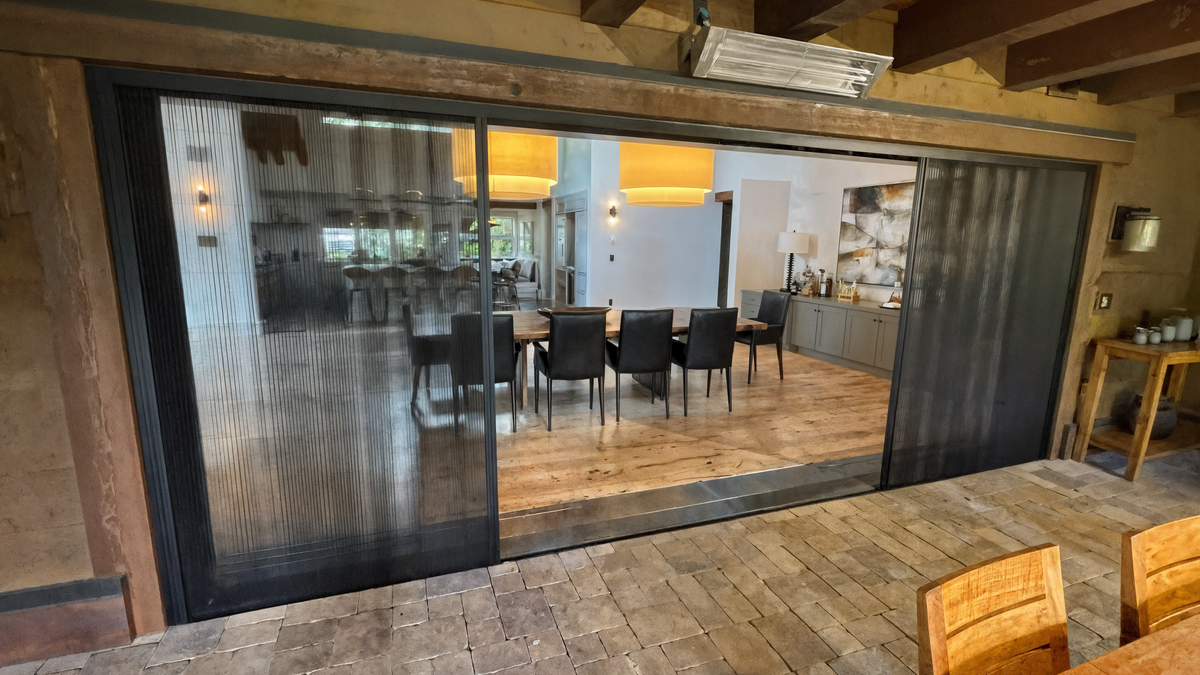
Large glass openings can create localized temperature shifts near the frame, often leading to what homeowners describe as a “cold corner” during winter months, even when the rest of the room feels heated.

⏱️ 60-Second Reality Check: Cold Corner or Cold Room?

Try this: 

  • Stand in the “cold corner” for a full minute.
  • Then walk to the center of the room and do the same.

If the space feels fine until you’re next to the glass, that’s usually a cold-corner issue. But, if the entire room feels consistently chilly, that’s a bigger insulation or HVAC question.

Either way, it’s useful information before making layout or system decisions.

🚫 The Common Mistake

Choosing thermally broken framing and then designing the rest of the room by accident. Comfort isn’t just about the frame. It’s about how the space is used.

  • Seating placed directly beside the opening
  • Daily traffic crossing the coldest zone
  • Glare hitting the exact chair you wanted to use
  • Privacy needs that keep blinds closed all winter

Thermally broken systems are a strong start. But comfort is always part system, part layout, part planning.

A Better Winter Layout Starts Early

If you’re planning a remodel or new opening, it’s worth asking about thermal performance from the beginning not after the furniture starts moving. Because winter shouldn’t decide which parts of your room get used.