Loading

Archives December 2025

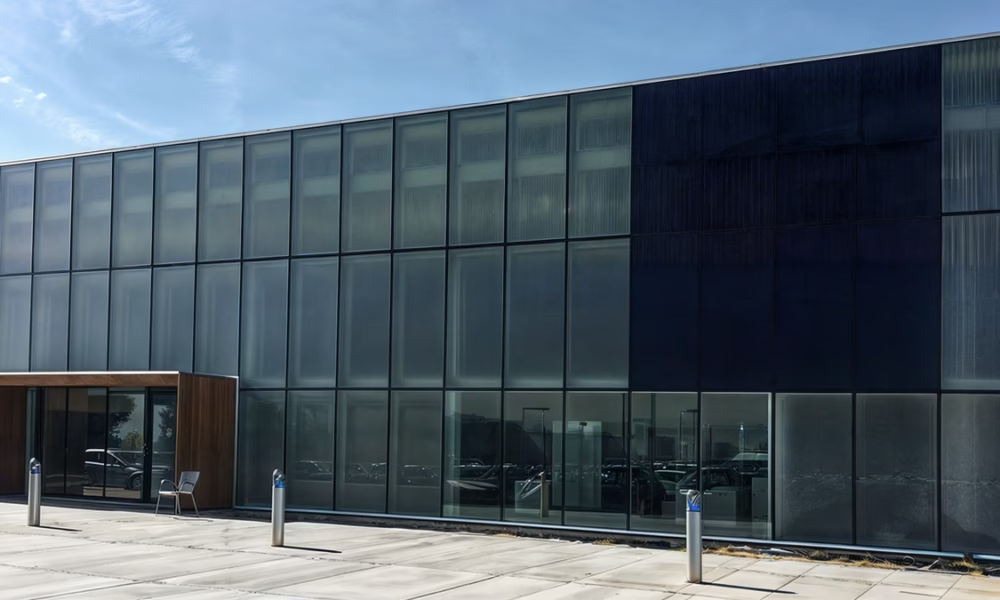
Architectural Low-E Glass with solar control coating used in high-performance glazing

Types of Low-E Glass: Hard Coat, Soft Coat & IGU Applications Explained

Home / 2025 / December

When people talk about low-E glass, it’s often presented as a single product. In practice, it’s not. There are different types of low-E coatings, each with distinct thermal benefits, solar control levels, and specific applications depending on climate, building type, and the window or façade system. 

For architects, contractors, and specifiers, understanding these differences is essential to: 

  • Select the correct glass based on the expected performance 
  • Avoid over-specifying or under-specifying a system 
  • Optimize U-factors, SHGC, and overall indoor comfort 
  • Ensure compatibility with IGUs, laminated glass, and aluminum framing systems 
  • Technically justify specification decisions to clients or developers 

In this article, we will clearly and technically explain: 

  • What hard coat low-E glass is 
  • What soft coat low-E glass is 
  • How low-E performs within an insulated glass unit (IGU) 
  • How to choose the right low-E type based on climate conditions 
  • How PRL works with these systems in real-world applications for windows, doors, and façades. The goal is not to promote one low-E type over another, but to help you specify the right solution based on the real performance requirements of each project. 
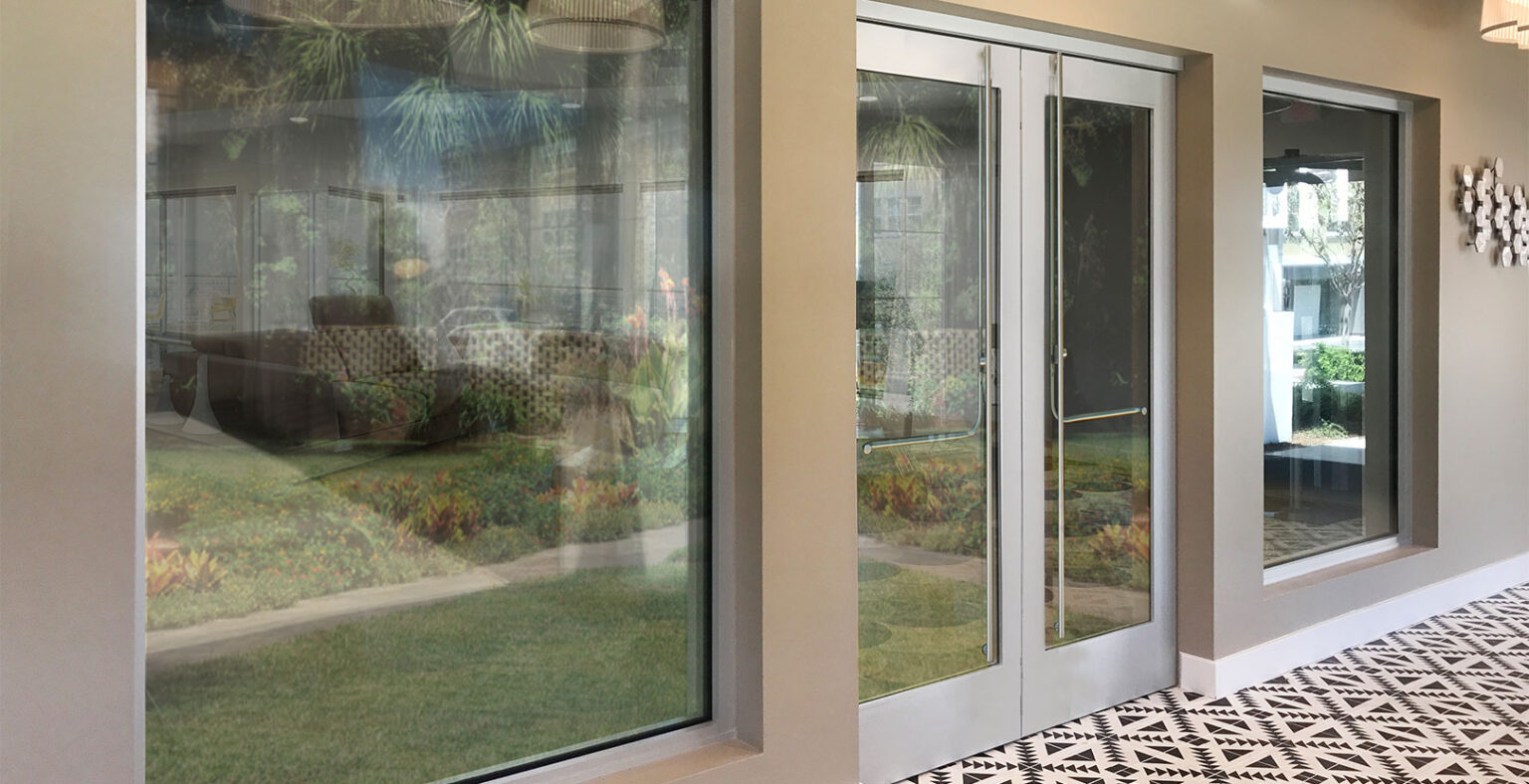
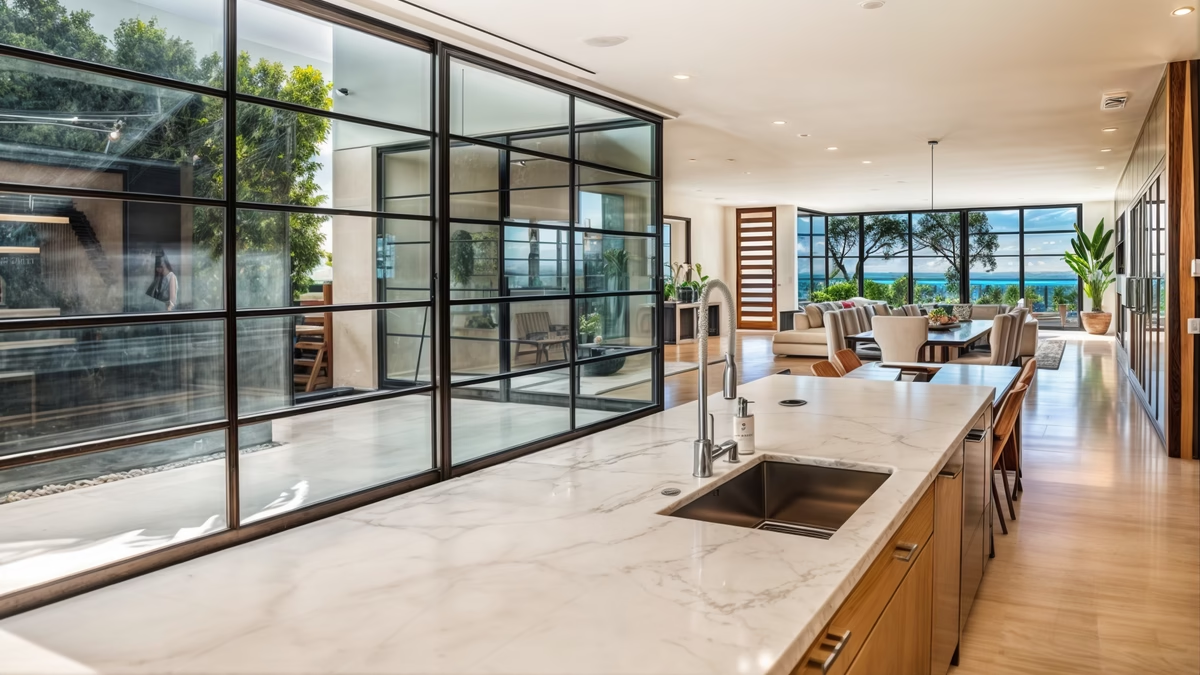
Low-E insulated glass unit installed in aluminum window system for energy-efficient architecture

What Is Hard Coat Low-E Glass? 

Hard coat low-E, also known as pyrolytic low-E, is a type of low-emissivity coating that’s applied directly to the glass during the manufacturing process, while the glass is still hot on the float line. 

Because of this process, the coating chemically fuses with the glass surface, resulting in an extremely durable and resistant layer. 

Characteristics of Hard Coat Low-E 

  • Coating applied at high temperature (pyrolytic process) 
  • High mechanical and chemical durability 
  • Can be used as monolithic glass or integrated into an IGU 
  • Higher solar heat gain compared to soft coat low-E 
  • Low emissivity, though higher than soft coat low-E 

In simple terms, hard coat low-E reduces heat loss while allowing more solar energy to enter the building. 

Thermal Performance of Hard Coat Low-E 

Hard coat low-E primarily works as an interior heat reflector: 

  • In winter, it reflects interior heat back into the space 
  • Reduces heat loss through the glass 
  • Takes advantage of direct solar radiation 

For this reason, it’s often associated with projects where solar heat gain is desirable rather than blocked. 

Typical Applications of Hard Coat Low-E 

Hard coat low-E is a suitable option for: 

  • Cold climates with long heating seasons 
  • Residential buildings with high heating demand 
  • Projects that prioritize simplicity and coating durability 
  • Applications where the glass may be exposed before being assembled into an IGU 

It’s also useful in projects where extreme solar control is not a priority, but basic energy efficiency and coating resistance are required. 

Limitations of Hard Coat Low-E 

Although it’s a reliable system, hard coat low-E has limitations when compared to soft coat low-E: 

  • Less effective solar heat control in warm climates 
  • Higher SHGC values 
  • Lower overall performance in mixed or high-solar radiation climates 
  • Doesn’t achieve the same energy efficiency levels as modern soft coat low-E within an IGU 

For these reasons, its use today is more specific and climate-dependent, and it’s generally recommended only when the project conditions clearly justify it. 

What Is Soft Coat Low-E Glass? 

Soft coat low-E, also known as solar control low-E, is a low-emissivity coating applied to glass using an off-line process called Magnetron Sputter Vacuum Deposition (MSVD). 

Unlike hard coat low-E, this coating is applied to cooled glass inside a vacuum chamber, allowing for much greater precision in thermal and solar performance control. 

The result is a microscopic, highly efficient coating, engineered to maximize thermal insulation and solar control, especially when integrated into an insulated glass unit (IGU). 

Key Characteristics of Soft Coat Low-E 

  • Cold-applied coating (MSVD process) 
  • Very low emissivity (significantly lower than hard coat) 
  • High control of infrared (IR) and ultraviolet (UV) radiation 
  • Must be protected within an IGU or laminated glass 
  • Excellent energy performance in mixed and warm climates 
  • Available in neutral, selective, or high solar-control versions 

In simple terms: soft coat low-E not only reduces heat loss, but actively blocks unwanted heat gain, without sacrificing natural daylight. 

Thermal and Solar Performance of Soft Coat Low-E 

Soft coat low-E acts as a high-performance thermal barrier: 

  • In summer, it reflects a large portion of solar heat before it enters the interior 
  • In winter, it helps retain interior heat when combined with an IGU 
  • Significantly reduces the solar heat gain coefficient (SHGC) 
  • Substantially improves the overall U-factor of the glazing system 

This balance makes it the most versatile low-E option for many contemporary projects in the United States. 

Typical Applications of Soft Coat Low-E 

Soft Coat Low-E is ideal for: 

  • Mixed climates (most of the U.S.) 
  • Warm or high solar-radiation regions 
  • Facades with large glass openings 
  • High-performance windows and doors 
  • Premium residential projects and commercial buildings 
  • Systems aiming to meet modern energy standards 

For these reasons, soft coat low-E is the most widely used low-E coating in modern window systems today. 

Important Considerations for Soft Coat Low-E 

  • Despite its superior performance, soft coat low-E requires specific conditions: 
  • Must be sealed within an IGU or laminated glass 
  • Not designed for prolonged direct exposure 
  • Requires controlled fabrication and handling 

These requirements are not disadvantages, but rather part of its advanced design to achieve maximum energy performance and durability. 

Low-E in IGUs (Insulated Glass Units): Why It Maximizes Performance 

The true potential of low-E glass is achieved when it is integrated into an insulated glass unit (IGU). While low-E coatings already improve the thermal performance of glass on their own, combining them with an air or gas-filled cavity transforms the system into a high-performance solution for modern windows, doors, and façades. 

An IGU generally consists of: 

  • Two or more glass panes 
  • A sealed cavity between them (air or argon gas) 
  • A perimeter spacer 
  • Seals that ensure airtightness 

When low-E is strategically positioned within this unit, thermal and energy performance are significantly enhanced. 

Low-E Coating Placement Inside an IGU 

In a standard double-pane IGU’s, there are four possible glass surfaces: 

  • Surface #1: Exterior face of the outer glass 
  • Surface #2: Interior face of the outer glass 
  • Surface #3: Exterior face of the inner glass 
  • Surface #4: Interior face of the inner glass 

In most applications: 

👉 Soft coat low-E is installed on surface #2 or #3, protected inside the sealed cavity. 

This placement allows the coating to: 

  • Reflect solar heat before it enters the interior 
  • Retain interior heat during winter 
  • Remain protected from physical or environmental damage 

Correct placement is critical to optimizing U-factors, SHGC, and overall indoor comfort. 

How Low-E Works Inside an IGU 

When low-E is part of an IGU, it: 

  • Reflects infrared radiation depending on the season 
  • Reduces heat transfer through conduction and radiation 
  • Works together with argon gas to minimize energy loss 
  • Maintains high visible light transmittance 

The result is a system that doesn’t just block heat but actively manages the energy entering and leaving the building. 

Key Benefits of Low-E + IGU’s 

The low-E + IGU combination delivers: 

  • Significantly lower U-factors (better insulation) 
  • Controlled SHGC, ideal for warm or mixed climates 
  • Greater comfort near windows and large glazing areas 
  • Reduced load on HVAC systems 
  • Less condensation in cold climates 
  • Increased durability of the overall glazing system 

For this reason, an IGU without low-E is now considered incomplete in modern architectural projects. 

Low-E in IGUs for Advanced Applications 

In higher-performance projects, low-E within IGUs can be combined with: 

  • Argon or krypton gas for enhanced insulation 
  • Laminated glass for safety, acoustic control, or impact resistance 
  • Selective low-E coatings for highly sun-exposed façades 
  • Triple-pane configurations for extreme climates 

This flexibility allows glass performance to be tailored to the specific needs of each project, without compromising aesthetics or visual clarity. 

Low-E glass reaches its maximum performance when it’s part of a well-designed IGU. It’s not just about the coating itself, but about the entire system working together as an intelligent thermal barrier. 

That’s why, in contemporary architecture, specifying low-E + IGU’s is no longer a premium optionIt’s a logical technical decision to achieve long-term efficiency, comfort, and durability. 

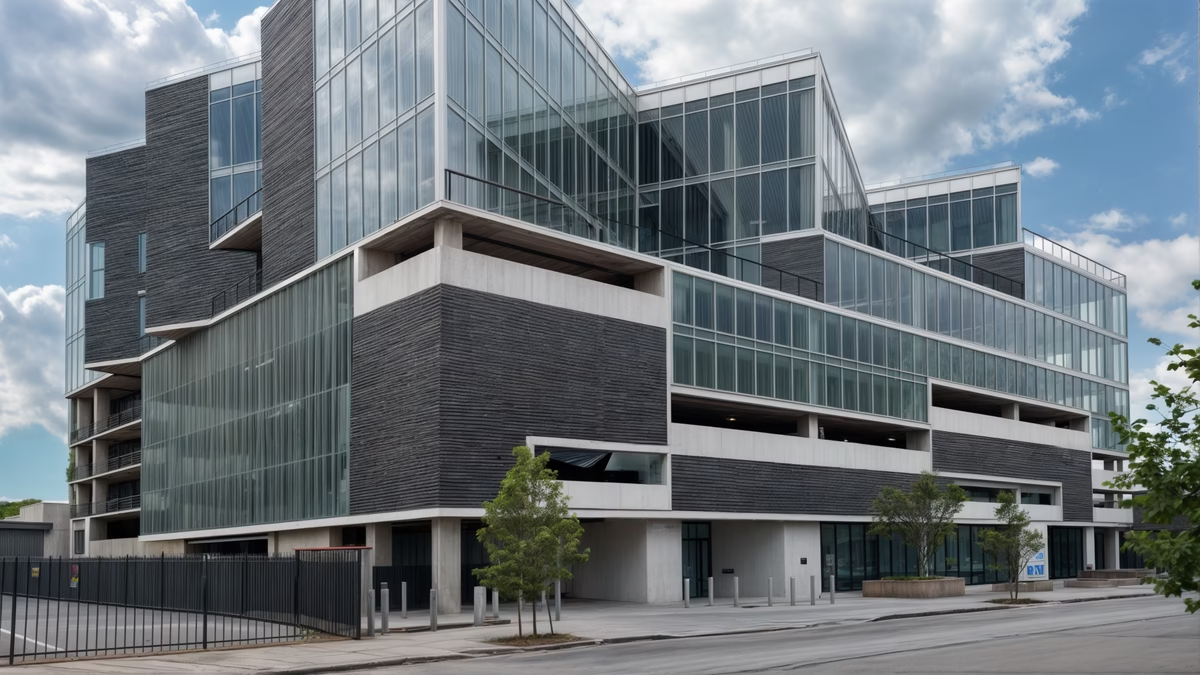
PRL Low-E Glass applied in modern curtain wall and storefront façade system.

How to Choose the Right Low-E Glass Based on Climate 

Choosing between hard coatssoft coats, or advanced IGU configurations should never be a cost-driven decision. 

The real performance of low-E glass depends directly on climate, building orientation, opening sizes, and the project’s energy goals. For that reason, proper specification must always start with the climate. 

Below is a practical guide to selecting the right low-E solution based on real project conditions. 

Cold Climates (Long Winters and Low Solar Radiation) 

👉 Primary goal: Retain interior heat and take advantage of passive solar gain. 

Recommended configuration: 

  • Hard coat low-E 
  • Basic IGU (double pane) 
  • Medium–high SHGC 

Why it works: 

  • Allows higher solar heat gain 
  • Reflects interior heat back into the living space 
  • Reduces heat loss without blocking useful solar radiation 

Typical applications: 

  • Residential projects in northern cold regions 
  • Buildings with constant heating demand 
  • Projects where solar control is not a priority 

Hot Climates or High Solar Radiation Areas 

👉 Primary goal: Block heat gain and reduce air conditioning loads. 

Recommended configuration: 

  • Soft coat low-E (solar control) 
  • IGU with argon gas 
  • Low SHGC 
  • High UV protection 

Why it works: 

  • Reflects a large portion of solar heat before it enters the building 
  • Reduces interior overheating 
  • Improves comfort near windows and exposed façades 

Typical applications: 

  • Desert or very sunny regions 
  • East or west-facing façades 
  • Projects with large, glazed openings 

Mixed Climates (Most of the United States) 

👉 Primary goal: Balance summer solar control with winter thermal insulation. 

Recommended configuration: 

  • High-performance soft coat low-E 
  • Well-sealed IGU 
  • Medium–low SHGC 
  • Low U-factor 

Why it works: 

  • Provides year-round thermal control 
  • Reduces both excessive heat gain and heat loss 
  • Most versatile and efficient long-term solution 

Typical applications: 

  • Modern residential homes 
  • Commercial buildings 
  • New construction and energy-focused renovations 

Coastal Zones or Severe Weather Conditions 

👉 Primary goal: Combine energy efficiency with durability and resistance. 

Recommended configuration: 

  • Soft coat low-E + IGU 
  • Laminated glass (impact / safety) 
  • Argon gas fill 
  • High-performance sealing systems 

Why it works: 

  • Controls heat and solar radiation 
  • Improves acoustic insulation 
  • Adds structural resistance and extends system lifespan 

Projects Requiring Maximum Visual Clarity or Premium Aesthetics 

👉 Primary goal: Energy performance without compromising glass appearance. 

Recommended configuration: 

  • Selective soft coat low-E 
  • High visible light transmittance (VLT) 
  • Neutral color tone 

Why it works: 

  • Maintains clean, uniform façades 
  • Reduces excessive reflectivity 
  • Ideal for contemporary architecture and premium projects 

Key Technical Recommendation 

There is no single “universal” low-E solution that works equally well in every scenario. The best choice always comes from combining: 

  • Climate conditions 
  • Building orientation 
  • Size of glazed surfaces 
  • Energy and comfort objectives 
  • Budget and building life cycle 

For this reason, in professional projects, low-E specification should be supported by technical expertise, not selected solely based on trends or initial cost. 

PRL’s Capabilities in Low-E Glass Manufacturing and System Specification 

Specifying low-E glass correctly goes beyond selecting a coating type. Performance depends on how the glass is manufactured, integrated into the glazing system, and adapted to the project’s real conditions.  

At PRL, low-E glass is treated as part of a complete architectural system, not as a standalone product. 

PRL works with both passive (hard coat) and solar control (soft coat) low-E technologies, allowing each project to be specified based on climate, orientation, system type, and performance objectives rather than a one-size-fits-all solution. 

Broad Low-E Options for Architectural Applications 

PRL’s low-E glass options support a wide range of architectural needs, including: 

  • Solar Control Low-E: Designed to reduce solar heat gain in warm or high-radiation climates while maintaining high visible light transmission. 
  • Passive Low-E: Optimized for cold climates where heat retention and passive solar gain are priorities. 

These options allow architects and engineers to balance U-factors, SHGC, visual clarity, and comfort depending on project requirements. 

Compatibility with Advanced Glazing Systems 

PRL’s low-E glass is fabricated to integrate seamlessly into high-performance glazing assemblies, including: 

  • Insulated glass units (IGUs) for improved thermal insulation 
  • Laminated glass for safety, acoustic control, or impact resistance 
  • Curtain wall systems, storefronts, and window or door applications 
  • Double-skin and point-supported curtain wall systems 

Low-E coatings are properly protected within IGUs or laminated assemblies to ensure long-term durability and consistent performance. 

Multiple Thicknesses and Coating Technologies 

PRL offers low-E glass in multiple thicknesses—1/8″ (3.2 mm), 3/16″ (5 mm), and 1/4″ (6 mm)—making it suitable for a wide variety of residential and commercial applications. 

Available coating technologies include: 

  • Pyrolytic (hard coat) low-E, valued for durability and ease of handling 
  • MSVD (soft coat) low-E, offering superior solar control and lower emissivity 

This flexibility allows PRL to support both straightforward applications and highly customized, performance-driven projects. 

Technical Support for Proper Specification 

One of PRL’s key strengths lies in supporting architects, contractors, and developers during the specification process. This includes: 

  • Guidance on selecting the correct low-E type based on climate and orientation 
  • Integration of low-E glass into IGUs, laminated systems, and aluminum framing 
  • Assistance optimizing energy performance without compromising visual design 
  • Ensuring compatibility with local energy codes and performance expectations 

Rather than promoting a single solution, PRL focuses on helping teams specify the right low-E configuration for each project, balancing efficiency, durability, aesthetics, and long-term value. 

PRL’s low-E glass solutions are designed to deliver year-round efficiency, occupant comfort, and visual clarity. By combining coating technology, glass thickness, IGU configuration, and system integration, PRL ensures that low-E glass performs as intended, not just on paper, but in real architectural conditions. 

Comparison between Low-E glass and clear glass showing heat reflection and solar control

Low-E Glass vs Clear Glass: Real Performance Differences and When to Choose Each One

Home / 2025 / December

Glass is one of the most important components in any window, door, or façade system. And while Low-E glass and conventional clear glass may look very similar at first glance, their thermal, visual, and energy performance is completely different.

For architects, developers, and homeowners, understanding these differences is essential to specify a project correctly, optimize building performance, and justify costs to the final client.

In this article, we explain:

  • How Low-E glass performs compared to clear glass
  • What changes in terms of UV, infrared, SHGC, and U-Factor
  • When clear glass is sufficient
  • When Low-E is absolutely worth the upgrade
  • How to evaluate upfront cost vs. real energy savings

The goal is to help you make informed decisions based on climate, performance needs, and architectural objectives.

Modern window installation using Low-E glass for improved energy efficiency

and architectural objectives.

Performance Differences: UV, Infrared, SHGC and U-Factor

Although clear glass and Low-E glass may look similar at first glance, their behavior when interacting with solar energy is completely different. These differences determine interior comfort, energy consumption, and the long-term durability of finishes and furnishings.

  1. UV (Ultraviolet) Protection
  • Clear glass: Allows 75–90% of UV rays to pass through, which are responsible for fading floors, furniture, textiles, and interior finishes.
  • Low-E glass: Blocks a significant portion of UV radiation thanks to its microscopic metallic coating.

Result: Better protection for interiors and reduced material deterioration in residential and commercial projects.

  1. Infrared (IR) Control — Heat Management
  • Clear glass: Allows thermal energy to pass freely, causing increased heat gain in summer and heat loss in winter.
  • Low-E glass: Reflects part of the infrared energy depending on the coating type (hard coat or soft coat), reducing heat entering or escaping the building.

Result: More stable indoor temperatures and reduced HVAC usage.

  1. SHGC (Solar Heat Gain Coefficient)

Represents how much solar heat enters a building through the glass.

  • Clear glass: High SHGC (more heat enters).
  • Low-E glass: Controlled SHGC; soft-coat coatings can achieve very low values.

Result: Better performance in warm or mixed climates.

  1. U-Factor — Thermal Insulation

Indicates the glass’s ability to prevent heat loss.

  • Clear glass: High U-Factor (poor insulation).
  • Low-E glass: Lower U-Factor, especially when used in IGU systems.

Result: Higher energy efficiency year-round.

Characteristic

Clear Glass

Low-E Glass

UV Protection

Low

High

IR Control

Very low

High

SHGC

High

Low–Medium

U-Factor

High

Low

Energy Efficiency

Limited

Superior

Interior Comfort

Low

High

Ideal for…

Budget projects or low solar exposure

Modern windows, façades, extreme climates

Visual Differences Between Low-E Glass and Clear Glass

Although many of the differences between Low-E Glass and clear glass are technical, there are also visual variations that architects, designers, and homeowners should consider. These differences can influence both the exterior aesthetics of a façade and the interior user experience.

In most cases, the visual difference is subtle, but it does exist. Here’s what you need to take into account:

  1. Glass tone or color
  • Clear glass: Has a slightly green tint due to its iron content, especially noticeable on edges or large panels.
  • Low-E Glass: Depending on the coating type (hard coat or soft coat), it may show a very slight tint in blue, silver, or neutral tones. Soft coat tends to look more neutral and hard coat may show a slightly warmer tint.

Result: The difference is minimal, but in ultra-premium projects or large façades, tonal uniformity can influence the architectural aesthetic.

  1. Reflection and sheen
  • Clear glass: Reflects light naturally, offering standard brightness and a simple appearance.
  • Low-E Glass: Its microscopic metallic coating can increase reflectivity, creating a more modern or high-tech appearance.

Result: Low-E glass often looks “cleaner” and more sophisticated — ideal for contemporary façades.

  1. Visual clarity from the interior
  • Clear glass: Maximum clarity with no optical alteration.
  • Low-E Glass: Maintains nearly identical clarity but: Reduces excessive glare. Creates a more comfortable perception of daylight

Result: In spaces with intense solar exposure, Low-E offers a more comfortable experience without compromising the view.

  1. Consistency in IGUs and large window systems

In insulated glass units (IGUs), the visual appearance may vary depending on: the type of Low-E coating, number of layers (single or double Low-E) and presence of argon gas

Result: Low-E provides a more uniform and stable appearance throughout the day, while clear glass can show greater variability depending on sunlight conditions.

Feature

Clear Glass

Low-E Glass

Tone

Noticeable green hue

Neutral or slightly cool tone

Clarity

Maximum clarity

Nearly identical, with reduced glare

Reflection

Standard reflection

Enhanced control of brightness & reflections

Aesthetic

Traditional

Premium, modern, and consistent in large panels

When Clear Glass Is Enough

Although Low-E glass outperforms standard clear glass in almost every efficiency and comfort metric, there are cases where clear glass is still a valid and functional option.

Not every project requires advanced solar control or high levels of thermal insulation, and choosing Low-E in unnecessary situations can increase costs without delivering real benefits.

Here are the scenarios where clear glass is sufficient:

Projects with low solar exposure

When the window does not receive direct radiation for most of the day:

  • Walls facing north in the U.S.
  • Windows shaded by overhangs or vegetation.
  • Facades with obstructions (nearby buildings).

In these cases, solar heat gain is minimal, so Low-E has less impact.

Budget-driven or cost-sensitive applications

In projects where upfront cost is the main decision factor:

  • Entry-level or budget housing.
  • Quick remodels.
  • Temporary glass replacements.

Clear glass has a lower cost and can meet the basic functional requirements.

Spaces where thermal control is not critical

Examples:

  • Utility rooms.
  • Storage areas.
  • Hallways without HVAC.
  • Interior windows between rooms or offices.

Here, insulation does not significantly affect interior comfort.

Projects that seek maximum visual neutrality

Although Low-E can be very neutral, clear glass:

  • Does not alter color tones.
  • Does not create a metallic reflection.
  • Is ideal for museum applications or interiors that require absolute transparency.

When compatibility with existing glass is required

In projects where clear glass is already installed and only one panel is being replaced, sticking with clear glass can help avoid visual differences across the façade.

Diagram illustrating UV, infrared, and visible light performance of Low-E glass

When Low-E Glass Is Worth the Investment

While clear glass can be sufficient for certain applications, there are many scenarios where choosing Low-E glass not only improves energy performance and comfort, but also becomes a strategic investment for the project. In modern window systems, Low-E glass has become the standard because it delivers measurable benefits in virtually any climate.

Below are the situations where Low-E glass is clearly the best choice:

  1. Regions with extreme climates (hot or cold)

In areas where temperatures reach very high or very low levels, Low-E glass:

  • Reduces heat loss during winter
  • Minimizes solar heat gain in summer
  • Maintains a more stable indoor temperature

This translates into real, year-round savings on HVAC systems.

  1. Residential or commercial buildings with large windows

Large-format glazing enhances architectural design, but it is also the main source of thermal transfer in a façade. Low-E glass:

  • Reduces glare
  • Preserves visual clarity
  • Improves comfort near window areas

Without Low-E, these zones often become uncomfortably hot or cold.

  1. Projects where energy efficiency is a priority

Common in:

  • High-performance homes
  • Commercial buildings
  • Projects pursuing energy certifications

Low-E glass is essential to meet modern efficiency standards.

  1. Spaces exposed to prolonged direct sunlight

When glass receives direct solar exposure for several hours a day, Low-E helps protect against:

  • Fading of flooring, textiles, and furniture
  • Interior overheating
  • Visual discomfort
  1. Windows that are part of a modern IGU system

Installing insulated glass units (IGUs) with clear glass alone greatly limits system performance. Low-E glass enhances:

  • Thermal insulation
  • Solar control
  • Overall IGU efficiency

In short: IGU + Low-E is the optimal combination.

  1. Premium projects where perceived quality matters

Low-E glass contributes:

  • More uniform appearance
  • Neutral, contemporary tones
  • Higher visual sophistication
  1. When long-term property value is a goal

Windows with Low-E glass:

  • Lower operating costs
  • Improve indoor comfort
  • Increase energy efficiency
  • Are perceived as a premium upgrade

All of these factors help increase the resale value of the property.

Cost vs. Long-Term Savings: Is Low-E Glass Really More Expensive?

One of the most common arguments when comparing Low-E Glass vs clear glass is the initial cost. It is true that Low-E glass has a higher upfront price, but evaluating only the purchase cost can lead to incomplete decisions, especially in medium- and long-term residential or commercial projects.

To understand whether Low-E glass is truly “worth it,” it is essential to compare initial cost vs operational savings.

Initial Cost: The Real Difference

In general terms:

  • Clear glass → lower upfront cost
  • Low-E glass → moderately higher cost due to the coating and manufacturing process

The price difference typically represents a small percentage increase within the total cost of the window system, especially when integrated into a complete solution that includes frames, hardware, installation, and IGU configuration.

In premium or new-construction projects, the budget impact of specifying Low-E glass is usually minimal.

Energy Savings Over Time

The real value of Low-E glass appears after installation:

  • Reduced air-conditioning usage in summer
  • Lower heating demand in winter
  • Less continuous strain on HVAC systems

In extreme or mixed climates, these savings accumulate month after month and can offset the additional cost of Low-E glass in just a few years, depending on project size and building usage.

Indirect Costs That Low-E Glass Helps Reduce

Beyond energy consumption, Low-E glass also reduces costs that are often overlooked:

  • Less fading and deterioration of floors, furniture, and textiles due to UV exposure
  • Longer lifespan of interior finishes
  • Reduced need for curtains, films, or additional solar-control solutions
  • Improved indoor comfort without artificial shading systems

While these benefits may not appear on a monthly utility bill, they significantly impact the long-term maintenance and quality of the property.

Return on Investment (ROI) in Modern Projects

From a practical perspective:

  • Small or low-use projects → ROI may take longer
  • Homes with large glazing areas, extreme climates, or commercial buildings → ROI is significantly faster.

Additionally, Low-E glass is often perceived as a quality upgrade, which can:

  • Increase resale value
  • Improve marketability
  • Differentiate the project from comparable properties

Low-E glass should not be viewed simply as an added expense, but as an investment in performance, comfort, and efficiency.

While clear glass fulfills a basic function, Low-E glass actively works every day to reduce operating costs and enhance indoor comfort.

Why Low-E Glass Has Become the Standard in Modern Projects

When comparing Low-E Glass vs clear glass, the difference goes far beyond appearance. While clear glass may meet basic requirements in certain low-exposure or budget-driven applications, Low-E Glass delivers measurable advantages in energy efficiency, comfort, and long-term value.

Low-E Glass actively works every day to:

  • Reduce heat gain in summer and heat loss in winter
  • Improve indoor thermal comfort near windows and façades
  • Lower HVAC energy consumption over time
  • Protect interior finishes from UV damage
  • Enhance the overall performance of IGUs and modern glazing systems

Although the initial cost of Low-E Glass is slightly higher, the operational savings, increased comfort, and improved building performance often offset that difference in a relatively short period, especially in climates with temperature extremes, large glazed areas, or energy-conscious designs.

For architects, developers, and homeowners, the decision is no longer about whether Low-E Glass is “worth it,” but whether a modern project can afford not to include it.

  • Clear glass fulfills a basic role.
  • Low-E Glass delivers performance.

That is why Low-E Glass has moved from a premium upgrade to a recommended standard in residential, commercial, and architectural glazing across the United States.

👉 Request a Low-E vs clear glass evaluation for your plans. Our technical team can help you select the right glass configuration to optimize performance, efficiency, and long-term value for your project.


Modern Glass and Aluminum Solutions for Upper West Side

Modern Glass & Aluminum Solutions for Homes & Businesses in Upper West Side, Manhattan

The Upper West Side blends prewar charm with modern Manhattan living, lined with historic brownstones, luxury apartments, cultural institutions, and boutique commercial spaces.

In a neighborhood known for architectural character and upscale design, PRL Glass & Aluminum supplies premium glass and aluminum systems that bring refinement, performance, and contemporary elegance to residential and commercial properties.

From custom sliding doors to boutique storefronts, we craft architectural solutions tailored to UWS renovations, restorations, and new developments.

Building or Renovating in the Upper West Side? Connect with PRL Glass & Aluminum Today

Whether you’re modernizing a classic apartment near Central Park, renovating a brownstone, or upgrading a restaurant or gallery space, PRL provides custom fabrication, nationwide delivery, and expert technical support.

We proudly support homeowners, architects, and developers throughout the Upper West Side and greater Manhattan.

Service 

Contact Number 

Aluminum Division 

📞 877-775-2586 

Glass Division 

📞 800-433-7044 

📍 Visit our locations in City of Industry, California and explore our wide range of innovative, high-quality aluminum and glass solutions!

Premium Residential Glass & Aluminum Products for Upper West Side Homes

Upper West Side residences often combine classic architecture with modern interiors. PRL’s premium systems enhance natural light, improve functionality, and elevate the aesthetic of high-end homes.

  • Sliding Glass Doors: Perfect for maximizing space and bringing modern elegance to condos, penthouses, and renovated apartments.
  • Residential Aluminum Doors: Refined, secure, and contemporary, ideal for stylish entrances and interior transitions.
  • Glass Handrails: A sleek choice for duplex staircases, lofts, balconies, and terrace upgrades.
  • Luxury Shower Sliders: Crafted for spa-like bathrooms in luxury apartments, prewar renovations, and modern condominium upgrades.
  • Custom Glass Table Tops: Perfect for living rooms, dining spaces, and home offices—combining durability with refined style.

All residential systems meet ASTM and NFRC standards for performance and longevity.

Glass & Aluminum Solutions for Upper West Side Businesses

From boutique storefronts to cultural institutions and contemporary office spaces, UWS businesses rely on modern, sleek, and durable architectural solutions.

  • Curtain Wall Systems: Perfect for high-end retail, galleries, educational facilities, and commercial renovation projects.
  • Storefront Systems: Engineered for visibility, performance, and design impact, ideal for restaurants, boutiques, and luxury service spaces.

These systems elevate curb appeal while providing the durability required for Manhattan’s active commercial environment.

PRL Glass and Aluminum Upper West Side

Why Upper West Side Developers and Homeowners Trust PRL Glass & Aluminum

PRL is a top choice for luxury construction and renovation due to:

  • Custom fabrication for high-end architectural projects
  • Reliable nationwide shipping and production timelines
  • Energy-efficient designs compliant with modern standards
  • Premium materials crafted for durability and minimal maintenance
  • Expert engineering support from concept to installation
  • Designs compatible with both historic and contemporary interiors

Benefits of Glass and Aluminum Systems in the Upper West Side

The UWS lifestyle blends tradition with sophistication, qualities that align perfectly with PRL’s modern glass and aluminum systems.

  • Thermal and acoustic performance ideal for Manhattan’s urban density
  • Time-resistant durability suitable for high-use residential and commercial spaces
  • Sleek, modern aesthetic that complements historic architecture
  • Energy efficiency supporting eco-conscious renovations
  • Recyclable, sustainable materials aligned with green building practices
  • Battle Door capability offering enhanced protection from vandalism, protests, and break-ins

Transform Your Space with PRL Glass & Aluminum

Based in California and trusted nationwide, PRL serves New York and all 50 states with luxury-grade architectural glass and aluminum systems.

From custom sliding doors to boutique storefronts, we deliver craftsmanship designed to elevate your next project.

We are present in the most important neighborhoods in the United States, offering the highest quality service.

Upper East Side

SoHo

Tribeca

Chelsea

Follow us on social media ✅

Stay tuned for news, events, discounts and new products through the different social media channels.

Modern Glass and Aluminum Solutions for Upper East Side

Modern Glass & Aluminum Solutions for Homes & Businesses in Upper East Side

The Upper East Side is one of Manhattan’s most iconic residential and commercial districts, known for its historic architecture, luxury townhomes, high-end retail, art galleries, and modern apartment renovations.

In a neighborhood where design excellence and craftsmanship matter, PRL Glass & Aluminum provides premium architectural systems that elevate both residential spaces and business environments.

From sliding doors and custom handrails to boutique storefronts and curtainwall systems, PRL delivers the performance, sophistication, and precision that Upper East Side projects demand.

Building or Renovating in the Upper East Side? Connect with PRL Glass & Aluminum Today

Whether you’re upgrading a luxury apartment, modernizing a historic brownstone, renovating a penthouse, or developing a high-end retail space, PRL offers custom fabrication, nationwide delivery, and expert technical support.

We proudly support architects, contractors, developers, and homeowners throughout Manhattan, providing luxury-grade glass and aluminum solutions tailored to the Upper East Side’s unique design standards.

Service 

Contact Number 

Aluminum Division 

📞 877-775-2586 

Glass Division 

📞 800-433-7044 

📍 Visit our locations in City of Industry, California and explore our wide range of innovative, high-quality aluminum and glass solutions!

Premium Residential Glass & Aluminum Products for Upper East Side Homes

Upper East Side residences, whether classic prewar apartments, renovated brownstones, or modern high-rise units, benefit from clean lines, functional elegance, and premium materials.

PRL manufactures residential systems that enhance natural light, expand spaces, and elevate interior design.

  • Sliding Glass Doors: Perfect for luxury apartments and penthouses, our sliding doors bring openness and modern simplicity while maintaining insulation and quiet operation.
  • Residential Aluminum Doors: A sleek alternative for contemporary renovations, offering strength, security, and minimalist aesthetics suitable for both classic and modern interiors.
  • Glass Handrails: Ideal for staircases, lofts, balconies, and terraces, our handrails merge safety with elegant transparency, popular for upscale interior remodels.
  • Luxury Shower Sliders: Designed for high-end bathrooms and hospitality-style renovations, PRL shower sliders provide smooth operation and premium hardware finishes.
  • Custom Glass Table Tops: Perfect for sophisticated dining rooms, offices, or contemporary living spaces, offering durability with refined, timeless style.

All residential systems meet ASTM and NFRC standards, ensuring top-tier durability and performance for upscale Manhattan homes.

Glass & Aluminum Solutions for Businesses in the Upper East Side

From boutiques and cafés to galleries and medical offices, business spaces in the Upper East Side demand high design standards and long-lasting performance. PRL supports commercial environments with architectural systems crafted for beauty, durability, and code compliance.

  • Curtain Wall Systems: Ideal for retail facades, galleries, and contemporary office spaces—combining modern transparency with structural performance.
  • Storefront Systems:Engineered for high-end retail and hospitality, offering customizable hardware, premium finishes, and exceptional clarity to highlight luxury interiors.

These systems enhance visibility, elevate brand presence, and meet the demanding requirements of Manhattan’s architectural landscape.

PRL Glass and Aluminum in Upper East Side, Manhattan

Why Upper East Side Developers and Homeowners Trust PRL Glass & Aluminum

PRL is a top choice for luxury construction and renovation because we deliver:

  • Custom fabrication for boutique and high-end projects
  • Fast, reliable nationwide shipping
  • Energy-efficient and acoustically sound designs
  • Premium finishes and hardware crafted for longevity
  • Expert engineering support from planning to installation
  • Solutions that align with both historic and modern architectural styles

Whether preserving a classic aesthetic or introducing contemporary upgrades, PRL provides unmatched quality and precision.

Benefits of Glass and Aluminum Systems in the Upper East Side

Upper East Side architecture thrives on a blend of tradition and modernity, glass and aluminum systems complement this effortlessly.

  • Thermal Performance for year-round comfort in prewar and modern buildings
  • Noise Reduction, essential for Manhattan’s active urban environment
  • Elegant Architectural Appeal aligned with luxury interiors and facades
  • Durability suitable for busy residential and commercial applications
  • Eco-Friendly Materials, supporting LEED and sustainability-focused projects
  • Battle Door Capability, offering reinforced security against break-ins, vandalism, or protests, essential for high-visibility retail and street-facing entrances

Transform Your Space with PRL Glass & Aluminum

Based in California and trusted nationwide, PRL serves New York and all 50 states with luxury-grade architectural glass and aluminum systems.

From custom sliding doors to boutique storefronts, we deliver craftsmanship designed to elevate your next project.

We are present in the most important neighborhoods in the United States, offering the highest quality service.

Upper West Side 

SoHo

Tribeca

Chelsea

Follow us on social media ✅

Stay tuned for news, events, discounts and new products through the different social media channels.

Glass and Aluminum Manufacturers in Billings

Premium Glass & Aluminum Solutions for Billings

Billings is Montana’s largest and fastest-growing urban center, serving as a regional hub for healthcare, logistics, education, energy, and commercial development.

Builders in Montana require architectural systems that deliver durability, energy efficiency, and performance in a climate marked by cold winters, hot summers, snow, wind, and wide temperature swings.

At PRL Glass & Aluminum, we supply premium glass and aluminum systems engineered for long-term reliability, ideal for commercial, industrial, institutional, and modern residential projects throughout Billings and the surrounding region.

Building in Billings? Connect with PRL Glass & Aluminum Today

PRL provides custom fabrication, nationwide shipping, and technical support for construction projects of any size across Montana.

We proudly serve Billings, Bozeman, Missoula, Great Falls, and construction teams statewide.

Service 

Contact Number 

Aluminum Division 

📞 877-775-2586 

Glass Division 

📞 800-433-7044 

📍 Visit our locations in City of Industry, California and explore our wide range of innovative, high-quality aluminum and glass solutions!

Advanced Glass & Aluminum Designs for Billings Builders

Our systems are engineered to handle Montana’s rugged climate while maintaining strong structural integrity and modern aesthetics.

All PRL systems comply with ASTM, NFRC, and LEED standards, ensuring high performance and code compliance for Montana projects.

Why Billings Developers Trust PRL Glass & Aluminum

In a region defined by large-scale construction and extreme weather, PRL is the trusted partner for long-lasting, precision-engineered architectural systems.

Why Montana professionals rely on PRL:

✅ Fast nationwide shipping and reliable production schedules

✅ Custom solutions built for heavy snowfall, wind, and temperature extremes

✅ Energy-efficient, LEED-ready systems that support sustainable construction

✅ Technical guidance from planning to installation

PRL Glass and Aluminum in Billings

Benefits of Glass and Aluminum Systems in Billings

Glass and aluminum provide the strength and efficiency required for Montana’s challenging construction environment.

  • Thermal Efficiency – Helps maintain comfort during cold winters and hot summers
  • Noise Reduction – Ideal for mixed-use, medical, and commercial zones
  • Extreme Weather Durability – Withstands snow loads, winds, freeze-thaw cycles, and hail
  • Modern Aesthetic Appeal – Fits contemporary Western architecture and institutional design
  • Eco-Friendly & Sustainable – Fully recyclable and compatible with LEED standards
  • Battle Door Capability – Reinforced systems offer added protection against vandalism, break-ins, protests, and severe weather

PRL Glass & Aluminum, your National Supplier

From our location in California, PRL Glass & Aluminum serves Montana and all 50 states in the United States.

We offer service in major cities across the country:

Cheyenne

Honolulu

Sioux Falls

Burlington

Charleston, West Virginia

Follow us on social media ✅

Stay tuned for news, events, discounts and new products through the different social media channels.

Diagram showing how Low-E glass reflects heat and blocks UV radiation in modern window systems

What Is Low-E Glass and Why Is It Essential in Modern Windows?

Home / 2025 / December

Glass is one of the most important materials in any modern façade or window system. It not only defines the visual identity of a project, but also has a direct impact on interior comfort, energy consumption, and the long-term durability of surrounding finishes. 

Among today’s high-performance solutionslow-E glass (low-emissivity glass) has become the industry standard for projects seeking better thermal performance and improved energy efficiency, both in residential applications and commercial buildings. 

In simple terms, low-E glass is a type of glass with a microscopic, transparent coating that controls how heat moves through the glass. This coating allows visible light to pass through but reduces the transmission of infrared (heat) and ultraviolet (UV) radiation. This helps interior spaces maintain a more stable temperature and better protection against solar exposure. 

Below, we explain what low-E glass is and why it’s essential if your aluminum and glass systems require high performance. 

Diagram showing how Low-E glass reflects heat and blocks UV radiation in modern window systems.

Low-E Glass Meaning: A Simple Explanation for Architects and Homeowners 

The term low-E comes from low emissivity. Emissivity refers to a material’s ability to emit energy in the form of heat. 

  • A material with high emissivity easily releases the heat it absorbs. 
  • A material with low emissivity (low-E) reflects a large portion of that heat instead of allowing it to pass through. 

Applied to architectural glass, this means that low-E glass is designed to reflect infrared heat back toward where you want to retain it: 

  • In winter: it reflects interior heat back inside. 
  • In summer: it reflects exterior heat away from the building. 

At the same time, low-E glass maintains high levels of visible light transmission, ensuring natural daylight without compromising interior comfort. It also reduces UV radiation, helping prevent fading and deterioration of furniture, flooring, and textiles. 

In other words, when someone searches for “low E glass meaning” or “What is low E glass”, the simplest and most accurate explanation is: It’s a glass with a special coating that improves the energy efficiency of windows and façades by controlling heat transfer, without sacrificing natural daylight. 

How Low-E Glass Works: Solar Spectrum, Emissivity, and Thermal Control 

To truly understand why low-E glass is so efficient, it’s important to examine how glass interacts with solar energy. Sunlight isn’t a single type of energy. It’s composed of three distinct ranges that affect windows and façades in different ways. 

  1. Ultraviolet Radiation (UV): This is the portion of the spectrum responsible for fading and deterioration of furniture, flooring, textiles, and interior finishes. Although it represents only a small percentage of solar energy, its long-term impact is significant in spaces with high sun exposure. 
  1. Visible Light: This is the part of the spectrum we perceive as natural daylight. High-quality glass should allow visible light to enter without causing excessive glare. 
  1. Infrared Radiation (IR): This is the energy we experience as heat. It’s divided into two types: short-wave IR, coming directly from the sun; and long-wave IR, emitted by warm objects inside a building like people, appliances, heating systems, and warm surfaces. 

The Role of Emissivity 

Emissivity refers to a material’s ability to emit energy in the form of heat. 

  • Standard glass has high emissivity, allowing heat to transfer freely. 
  • Low-E glass has low emissivity, meaning it controls thermal radiation and reflects heat toward the most beneficial side depending on the season. 

low-E coating is up to 500 times thinner than a human hair, yet it drastically improves the glass’s thermal performance. 

How Low-E Works Throughout the Year 

  • In Winter: Low-E glass reflects interior heat back into the room, reducing heat loss and helping maintain a stable indoor temperature with less reliance on heating systems. 
  • In Summer: It reflects a large portion of the sun’s heat away from the building, reducing solar heat gain and lowering the cooling load on HVAC systems. 

Because of how it interacts with the solar spectrum, low-E glass provides: 

  • Better energy efficiency in any climate 
  • Reduced heat transfer through the glass 
  • UV protection 
  • Improved interior comfort 
  • Lower energy costs 
  • Natural daylight without compromising thermal insulation 

Types of Low-E Coatings: Passive Low-E vs. Solar Control Low-E 

Not all low-E glass performs the same. Its efficiency depends largely on the type of coating applied and the manufacturing process behind it. In modern architecture, selecting the correct low-E coating is essential to achieve the right thermal performance based on climate and project needs. 

There are two main categories of low-E glass:

1. Passive Low-E (Hard-Coat)

This coating is applied during the float glass manufacturing process, when the glass is still at very high temperatures. The coating “fuses” into the glass surface, creating a durable and resilient layer. 

Key features: 

  • Highly durable and scratch-resistant 
  • Allows more solar heat gain 
  • Ideal for cold climates that benefit from passive heating 
  • Can be installed on surface #3 or #4 of an IGU 

✅ When it’s Recommended: In regions with long, cold winters where capturing solar heat is advantageous.

2. Solar Control Low-E (Soft-Coat)

This coating is applied after the glass is manufactured, using a process called MSVD (Magnetron Sputter Vacuum Deposition) inside vacuum chambers. It delivers superior thermal performance but must be protected inside an IGU. 

Key features: 

  • Much lower emissivity (better insulation) 
  • Excellent solar control: blocks heat and UV radiation more effectively 
  • Higher overall energy efficiency in most climates 
  • Typically installed on the #2 surface of the IGU 

 When it’s Recommended: In almost all regions of the U.S. and Latin America, where reducing cooling loads and improving energy efficiency is a priority. 

Feature: 

Hard-Coat (Passive): 

Soft-Coat (Solar Control): 

Durability: 

Very high 

Must be inside an IGU 

Solar Control: 

Low 

Excellent 

Heat Gain: 

High 

Low 

Energy Efficiency: 

Medium 

Very high 

Ideal Application: 

Cold climates 

Warm or mixed climates 

Visible Light: 

High 

Slightly lower 

In most modern residential and commercial projects, soft-coat solar control low-E coatings are the most efficient choice because they provide: 

  • Superior thermal insulation 
  • Lower UV radiation 
  • Reduced solar heat gain 
  • Better indoor comfort and energy savings 

Low-E hard coats continue to be used, but mainly in applications where maximizing solar heat gain is beneficial in cold environments. 

Low-E windows installed in a contemporary home façade, highlighting energy efficiency and natural light transmission

Where Low-E Coatings Are Placed Inside an IGU (and Why It Matters) 

For low-E glass to perform correctly, it’s not enough to select the right type of coating. Its placement inside the insulated glass unit (IGU) is equally important. 

standard double-pane IGU has four possible surfaces: 

  • Surface #1: the exterior face exposed to the outdoor climate 
  • Surface #2: the internal face of the first lite, facing the airspace 
  • Surface #3: the internal face of the second lite, also facing the airspace 
  • Surface #4: the interior face of the glass, inside the building 

Thermal and solar performance can change significantly depending on which surface receives the low-E coating. 

Solar Control Low-E → Best on Surface #2 

  • Soft coat solar control low-E coatings perform best on surface #2, because they: 
  • Block most of the infrared radiation entering from the exterior 
  • Reduce solar heat gain in warm or mixed climates 
  • Maintain high visible light transmission while lowering heat load 

For this reason, low-E coatings are applied to this surface for most modern residential and commercial windows. 

Passive Low-E (Hard-Coat) → Best on Surface #3 or #4 

Passive low-E coatings are designed to retain heat and often allow some short-wave solar energy to enter. They are typically applied to: 

  • Surface #3: ideal for conserving interior heat while still benefiting from solar gain 
  • Surface #4: excellent for cold climates, reflecting interior radiant heat back inside 

This configuration allows windows to function as passive solar collectors during winter months. 

Climate: 

Recommended Low-E Type: 

Ideal Surface: 

Very Cold Climates: 

Passive (hard-coat) 

#3 or #4 

Mixed Climates: 

Solar control (soft-coat) 

#2 

Hot Climates: 

Solar control (soft-coat) 

#2 

High Solar Exposure: 

Solar control (soft-coat) 

#2 

North-Facing Cold Façades: 

Passive (hard-coat) 

#3 

Choosing the right surface ensures: 

  • Better energy efficiency 
  • Improved solar control 
  • Reduced thermal transfer 
  • Longer IGU lifespan 
  • Optimized UV protection 

Many window performance issues, such as condensation, overheating, or poor insulation, occur when low-E coatings are applied to the wrong surface. 

Benefits of Low-E Glass in Modern Windows and Facades 

Far beyond the technical aspects, low-E glass has become a defining trend in modern U.S. architecture. This is due to the real, measurable benefits it brings to window and facade systems. These are the most important ones:

1. Greater energy efficiency and reduced consumption

Low-E glass minimizes heat transfer into the interior during summer and prevents heat from escaping during winter. 

This results in: 

  • Reduced heating demand 
  • Lower annual energy costs 

Even small improvements in U-factor and SHGC values can generate significant savings in extreme climates.

2. Year-round thermal comfort

Windows maintain a more stable interior temperature. With low-E glass you avoid: 

  • Excessive heat near sun-exposed windows 
  • “Cold wall effect” during winter 

The result is a more comfortable and consistent indoor environment.

3. UV protection and reduced interior fading

Low-E glass blocks a significant portion of ultraviolet radiation, the main cause of: 

  • Fading of wood floors 
  • Deterioration of textiles and carpets 
  • Damage to furniture and interior finishes 

This is one of the most valued advantages in premium residential projects.

4. Better visual comfort without sacrificing natural light

Unlike tinted or reflective glass, low-E maintains high visible light transmission: 

  • Reduces glare 
  • Maintains more balanced color rendering 
  • Preserves visual clarity 

It’s ideal for large windows, curtain walls, or any architecture that relies on natural daylight.

5. Improved overall performance when used in IGUs

When paired with insulated glass units (IGU), low-E coatings enhance: 

  • Thermal insulation 
  • Acoustic insulation 
  • Solar control 
  • Durability of seals and components 

This is why low-E glass has become the standard choice for modern high-performance window systems. 

Low-E Windows by Climate: How to Choose the Right Type 

The ideal type of low-E glass depends directly on the climate where it will be installed. Although all low-E coatings improve energy efficiency, each performs better under specific environmental conditions. 

Cold climates (long winters) 

  • Goal: retain interior heat and maximize passive solar gain 
  • Recommendedhard coat low-E (pyrolytic) 

Why it works: 

✅ Allows more solar heat gain (higher SHGC) 

✅ Reduces interior heat loss 

✅ Ideal for homes with constant heating needs 

Warm climates or regions with high solar exposure 

  • Goal: block solar heat gain and reduce air-conditioning consumption 
  • Recommendedsoft coat low-E (solar control) 

Why it works: 

 Low SHGC to minimize incoming heat 

 Better UV protection 

 Cooler and more stable interior environments 

Mixed climates (most of the U.S.) 

  • Goal: balance performance between hot and cold seasons 
  • Recommendedhigh-performance soft coat low-E 

Why it works: 

 Optimal insulation during winter 

 Advanced solar control in summer 

 Excellent efficiency-to-cost ratio 

Coastal regions or areas prone to storms 

In addition to low-E glass, the system should be reinforced with: 

  • IGU with argon gas 
  • Laminated glass for increased impact resistance 
  • High-performance seals 

Ideal configuration: 

 Soft coat low-E + IGU + laminated glass 

 Projects requiring maximum visual clarity 

 For large window walls or façade systems where aesthetics are a priority: 

 Soft coat low-E with high visible light transmission (VLT) 

 Neutral coatings without noticeable blue-green tint 

Low-E Glass vs. Clear Glass: When Is It Worth the Investment? 

Although clear glass is still a common choice for standard residential windows, its thermal and solar performance is extremely limited. The difference between a system with low-E glass and one with clear glass is so significant that, in most modern projects, low-E is no longer a luxury, it’s a technical requirement. 

Below is a direct comparison that explains when and why low-E glass is worth the investment. 

Criterion: 

Clear Glass: 

Low-E Glass: 

Which One Is Better?: 

Thermal Performance: 

High heat transfer. Hot in summer, cold in winter 

Reflects infrared heat, stabilizes indoor temperatures 

Low-EIdeal for any climate 

Energy Efficiency: 

No impact on energy savings 

Reduces HVAC usage and lowers energy bills 

Low-EPays for itself over time 

UV Protection: 

Allows most UV rays to enter. Causes fading in interiors 

Blocks a significant portion of UV radiation 

Low-EProtects floors, furniture, and textiles 

Visual Comfort: 

Can cause glare. No solar control 

Allows natural light with reduced glare. No need for heavy tints 

Low-EBetter clarity and light balance 

Interior Comfort: 

Noticeable hot/cold spots near windows 

More consistent temperatures year-round 

Low-EOffers superior comfort 

IGU Performance: 

Relies solely on the spacer and seals 

Enhances overall IGU performance (thermal + solar). 

Low-EEssential for modern systems. 

Durability of Interiors: 

Interior materials degrade faster due to UV exposure 

Helps preserve finishes and extend interior lifespan 

Low-EEspecially in premium projects 

Best Use Cases: 

Low-budget projects or interior partitions without sun exposure 

Residential, commercial, energy-efficient buildings, large glazing areas 

Low-E: For any modern façade or window system 

Low-E glass is no longer considered a “premium” option. It’s become a technical requirement for today’s windows, doors, and façade systems. 

Its ability to reduce energy consumption, improve thermal comfort, block UV radiation, and maintain optimal levels of natural light makes low-E one of the most efficient materials for residential and commercial applications 

Whether in warm, cold, or mixed climates, low-E glass acts as an intelligent thermal regulator, delivering measurable benefits to both building design and long-term performance. 

For architects, developers, and contractors, specifying low-E glass means: 

  • Better energy performance 
  • More stable indoor comfort throughout the year 
  • Extended protection for interiors and finishes 
  • More durable and efficient IGU systems 
  • A real value-add for any project 

This is why low-E glass has become the industry standard. It’s also why PRL Glass offers one of the most complete low-E product lines that’s adaptable to every climate, system type, and performance requirement. 

👉 Request low-E samples and technical sheets for your next project. Our team can help you select the right low-E configuration. Whether it’s a hard coat, soft coat, or IGU with a laminated interlayer or argon-filled gas, we can help you maximize energy performance and comfort in your designs.