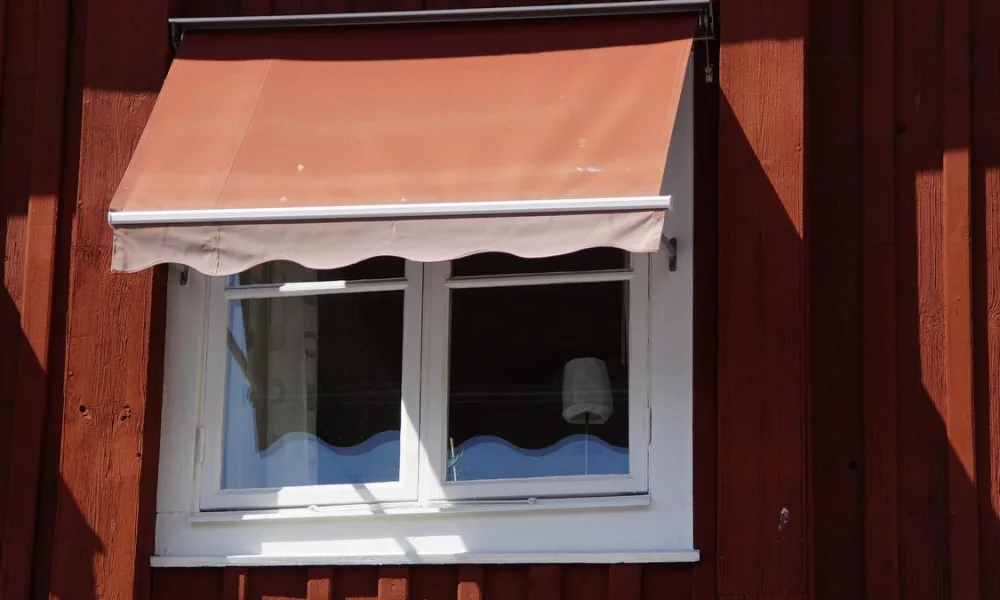
Frame, sash, glazing, hardware, gaskets and drainage paths are separate parts of a window assembly. Using the correct names makes it easier to review drawings or identify a component.
The parts change with the window type. Operable units need movement and locking components; fixed windows do not. This guide explains modern window anatomy and the differences among fixed, casement and awning configurations.
What Are the Main Parts of a Window?
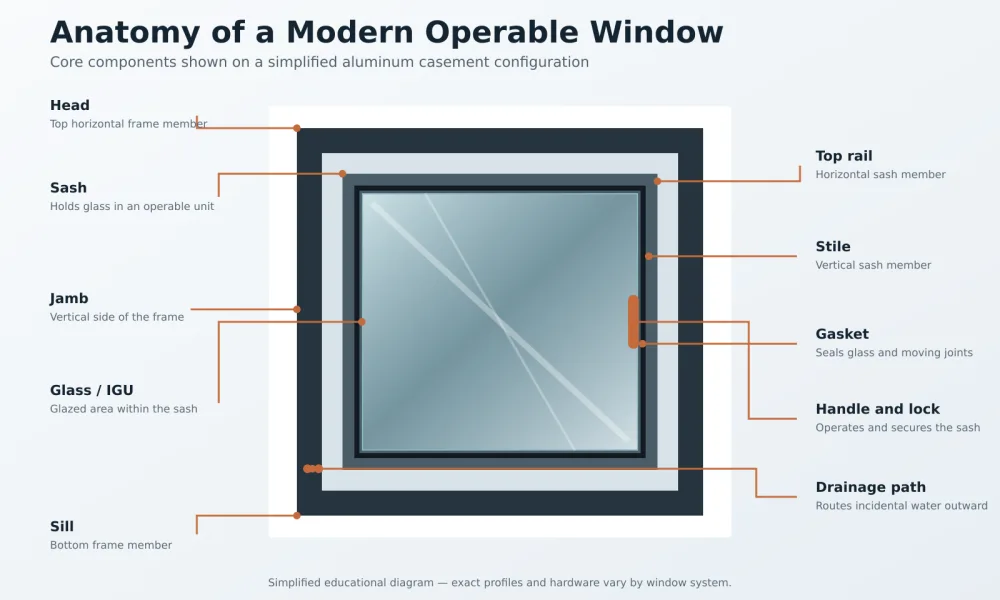
A typical operable window has five main component groups: frame, sash, glazing, hardware, and sealing or drainage components. Not every configuration uses the same pieces.
Main component | Basic function |
Frame | Surrounds and supports the window assembly |
Sash | Holds the glass and moves within an operable unit |
Glass or glazing unit | Provides daylight, visibility and part of the thermal barrier |
Hardware | Allows the sash to open, close and lock |
Sealing and drainage components | Help manage air, water and incidental moisture |
A fixed, direct-glazed window retains the glass in the main frame and omits the operable sash and hardware.
Parts of a Window Frame
The frame is the stationary structure surrounding the sash or glass. It connects the window to the building opening but is different from the opening and decorative trim.
Head, Jambs and Sill
The head, jambs and sill form the perimeter of the frame.
- Head: The horizontal member across the top.
- Jambs: The vertical members on the left and right sides.
- Sill: The horizontal member across the bottom.
The visible finish surrounding the frame is casing or trim, not the jamb. The sill is also different from the interior ledge, called the stool. Depending on its design, the sill can include slopes or channels that direct water outward.
Frame Profiles, Mullions and Thermal Breaks
Extruded aluminum profiles provide strength, glass support and interfaces for seals and hardware. Their geometry influences frame depth and visible glass area.
A mullion separates or joins adjacent window units. A muntin instead divides—or creates divisions within—the glazed area of a sash.
Because aluminum conducts heat, many systems place a lower-conductivity thermal break between the interior and exterior profiles. This reduces direct heat transfer through the metal. Our guide to thermally broken window and door systems examines the separator in detail.
Window Sash and Its Components
The sash holds the glass and moves in an operable window. It must remain aligned with the hinges, operator and perimeter seals.
Rails, Stiles and Glazing Stops
A sash generally includes horizontal and vertical members surrounding the glass.
- Rails: The horizontal members at the top and bottom of the sash.
- Stiles: The vertical members at each side.
- Glazing stops or beads: Retaining profiles that help secure the glass within the sash or frame.
Check rails occur where the upper and lower sashes meet in hung windows. They are not used in casement, awning or direct-glazed fixed windows.
Muntins, Grilles and Screens
Traditional muntins separate individual lites within a sash. Modern grilles may instead be applied to the glass or installed inside an IGU to create a divided-light appearance.
An insect screen is optional. In an outward-opening casement or awning window, it is generally located on the interior side.
Window Glass and Glazing Components
Glass, pane and glazing are related but distinct terms. A pane—or lite—is an individual sheet; glazing can describe the installed glass or how it is secured.
Insulating Glass Units, Spacers and Edge Seals
An insulating glass unit, or IGU, uses two or more lites separated by a sealed space. A spacer maintains their distance, while edge seals enclose a cavity containing dry air or, when specified, insulating gas.
Desiccant within or near the spacer helps control residual moisture. Setting blocks support the glass, while gaskets, sealants and glazing beads cushion, seal or retain the IGU.
Pane thickness, coatings, spacer design, cavity width and gas fill influence performance; pane count alone does not determine the result.
Coatings and Glass Options
Clear glass provides daylight and views. Low-E coatings help manage radiant heat transfer, while tinted or reflective products modify solar heat gain, visible light and exterior appearance.
Tempered glass is heat treated and designed to break into relatively small pieces when fractured. Laminated glass contains an interlayer that helps retain fragments after breakage and may contribute to security or sound-control strategies.
The appropriate glazing specification depends on climate, orientation, opening size and project goals. Our Low-E and clear glass comparison examines these choices further.
Window Hardware and Operating Mechanisms
Hardware controls how an operable sash moves and locks. The required pieces depend on window type, sash dimensions and operation.
Casement Window Hardware
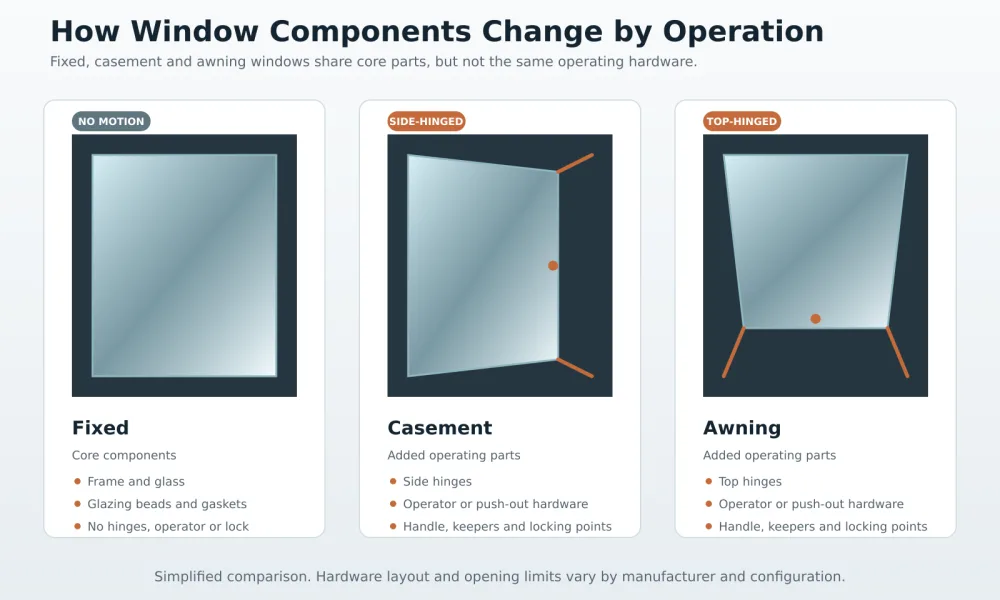
A casement window is side-hinged. Most U.S. residential versions open outward, although inward-opening configurations are available.
Components may include hinges, an operator or push-out mechanism, a handle, locking points and keepers. The operator controls movement; the locking hardware draws the sash against its seals.
Its applications and limitations are covered in our guide to casement windows.
Awning Window Hardware
An awning window is top-hinged and opens outward from the bottom. It may use friction stays, an operator or push-out hardware, a handle and locking points.
Hinge position changes how the sash moves and the shape of the clear opening. Our casement and awning comparison examines both configurations.
Fixed Window Components
A fixed window has no operator, hinges, operating handle or sash lock. It still requires a frame, glass support, glazing retainers, seals and components that connect the unit to the opening.
Seals, Gaskets and Window Drainage Components
Some of the least visible parts of a window help control the joints where air or water could enter. Their effectiveness depends on correct fabrication, continuous contact and compatibility with adjacent materials.
Weatherstripping and Glazing Gaskets
Weatherstripping seals the joint between an operable sash and the stationary frame. When the window closes, the sash compresses or engages these seals to reduce unintended air and water movement.
Glazing gaskets are positioned around the glass, where they cushion or seal it against surrounding profiles. Some systems use wet-applied sealants or combine sealants with preformed gaskets.
Weep Holes and Drainage Paths
Many frames include internal drainage paths and exterior openings called weep holes. They direct incidental water from designated cavities toward the exterior. Drainage design varies by system and works with the frame geometry, glazing seals, sash seals and surrounding installation. Paint, sealant or construction debris should not obstruct intended drainage openings.
Parts Around a Window That Are Not Always Part of the Unit
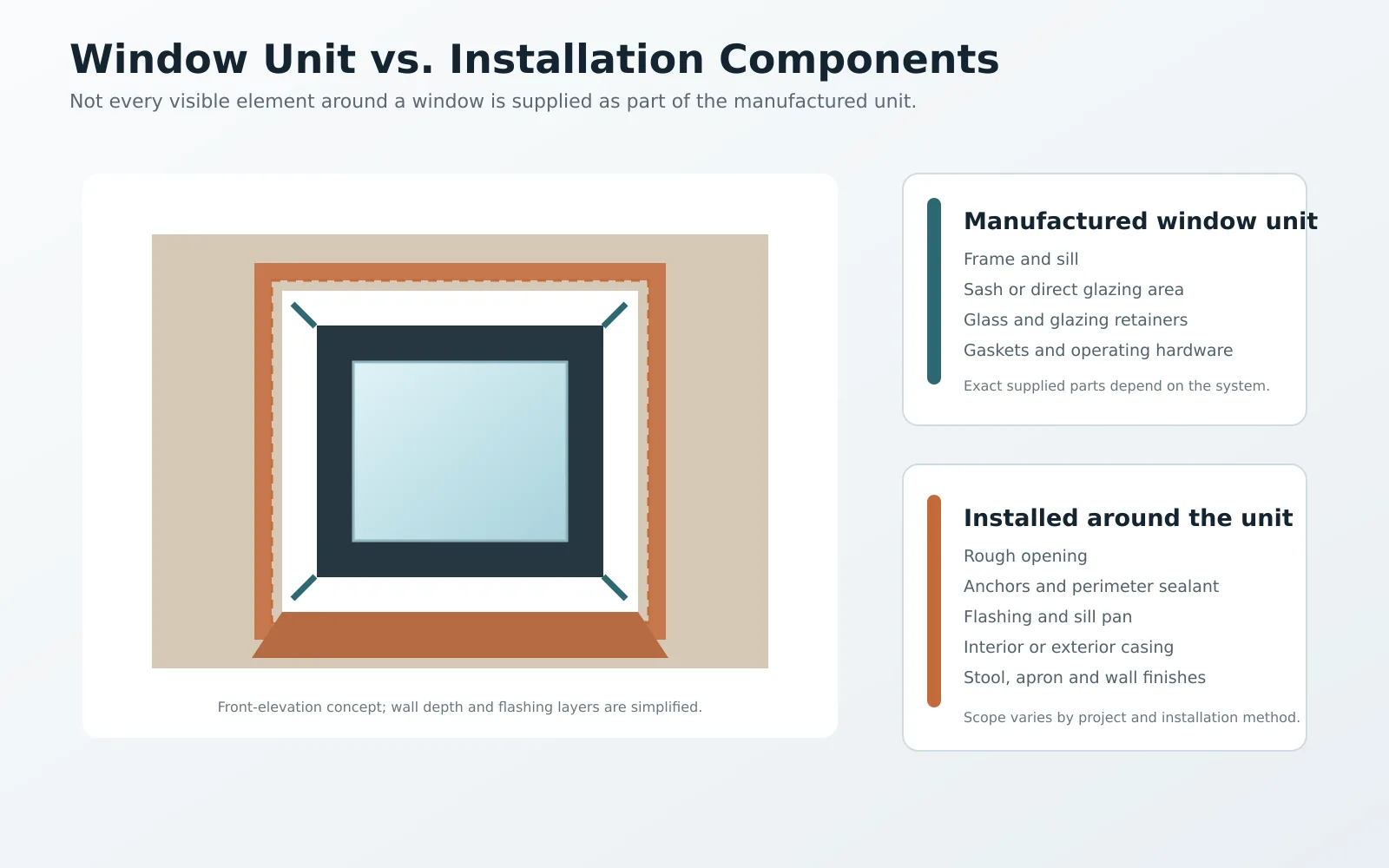
Several familiar terms describe the opening or surrounding materials, not components of the manufactured unit. This distinction defines product and installation responsibilities.
Element | Location or function | Part of the manufactured window? |
Casing or trim | Finishes the transition between the wall and window | Usually no |
Stool | Interior horizontal ledge at the bottom | Usually no |
Apron | Decorative trim below the stool | No |
Jamb extension | Extends the finished depth toward the interior wall | Not always |
Nailing fin or installation flange | Provides an attachment and flashing interface | Depends on the frame configuration |
Flashing or sill pan | Manages water around or beneath the opening | Installation component |
Perimeter sealant | Seals the joint between the frame and adjacent construction | Installation component |
Rough opening | Opening formed in the wall to receive the window | Part of the building |
Drawings and installation instructions should establish which components are supplied and which are completed in the field.
How Window Components Work Together
Performance cannot be assigned to one part in isolation. The components that matter depend on the objective being evaluated.
Performance area | Components or factors that may influence it |
Structural stability | Frame, sash, glass support, anchors and opening dimensions |
Thermal performance | Glass configuration, thermal break, spacers, gaskets and seals |
Air and water resistance | Sash engagement, weatherstripping, glazing seals, sill and drainage paths |
Ventilation | Window type, sash dimensions, hinges and operator |
Security | Frame, glass, locking hardware, keepers and installation |
Visible glass area | Frame, mullions and sash profile dimensions |
For example, a thermally broken aluminum frame reduces conduction through the metal, but whole-window performance also depends on the IGU and sealed interfaces. Locking hardware can improve sash engagement, while security also depends on the glass and how the frame is anchored.
Frequently Asked Questions About Window Parts
These answers address common questions about window terminology.
What are the five main parts of a window?
A typical operable window has a frame, sash, glazing, hardware, and sealing or drainage components. Direct-glazed windows may omit the sash and hardware.
What are the sides of a window called?
The vertical sides of the frame are jambs. The finishing material around the frame is casing or trim.
What is the bottom part of a window called?
The bottom horizontal frame member is the sill. The interior ledge beneath the window may be called the stool, although it is commonly referred to as a windowsill.
What is the difference between a mullion and a muntin?
A mullion separates or joins adjacent window units. A traditional muntin separates individual lites within a sash, while a grille can create a divided-light appearance without separating the glass.
Identify the Window Type Before Selecting Its Components
Begin by determining whether the opening will be fixed or operable. That decision establishes whether the unit needs a movable sash, hinges, an operator, locking hardware and ventilation area. The frame, glazing and installation details can then be evaluated against the project’s structural, thermal and water-management requirements.
PRL’s Max Window System is available in fixed, casement and awning configurations for residential and commercial applications. Contact PRL Glass & Aluminum to discuss the frame, glass, hardware and performance requirements for your next project.