The Role of Aluminum Frames in Structural Performance
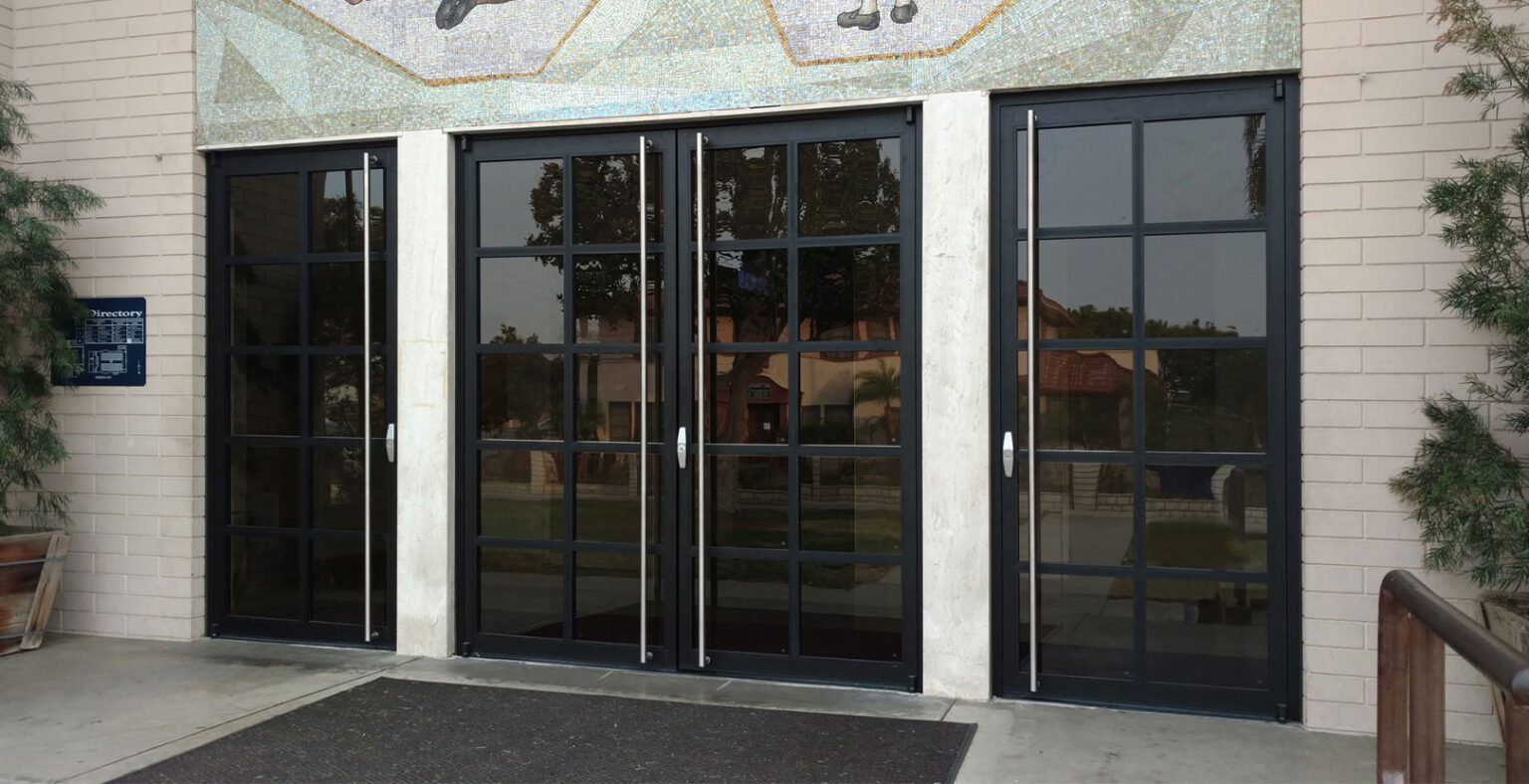
In glass door systems exposed to extreme conditions, the frame plays a structural role that is just as critical as the glass itself. Beyond serving as a support or aesthetic element, the frame is responsible for transferring loads, controlling deformation, and maintaining system stability under wind forces, impact loads, and sustained pressure.
Why Aluminum (Compared to Other Materials)
Aluminum is one of the most widely used materials in high-performance door systems due to its balance of strength, rigidity, and durability. Unlike more flexible materials such as vinyl, aluminum maintains its shape under high loads, which is essential when a system is subjected to constant pressure or repeated stress.
Under extreme conditions, frames with low rigidity may deform, lose alignment, or compromise system sealing. Properly designed and reinforced aluminum frames offer a greater capacity to resist these forces without affecting functionality or the integrity of the enclosure.
Structural Reinforcement and Deformation Control
Not all aluminum frames deliver the same level of performance. In high-risk applications, frames often incorporate internal reinforcements, thicker sections, or geometries designed to increase structural inertia.
These reinforcements help control deflection under wind loads and reduce the likelihood of progressive failure. A frame that maintains its rigidity allows the glass to perform within its design limits, preventing stress concentrations that could lead to breakage or detachment.
Anchoring to the Building Structure
Frame performance depends not only on design, but also on how the system is integrated and anchored to the building structure. Insufficient, poorly distributed, or incompatible anchoring can become a critical weakness under extreme loads.
During high-energy events, forces are transferred from the glass to the frame and then into the structure. If this load path is not continuous and controlled, excessive movement, partial detachment, or localized failures may occur, compromising the entire enclosure.
Frame and Track Failures Under Extreme Conditions
In severe scenarios, failures do not always originate in the glass. Frames and tracks may deform, separate from the structure, or lose load-bearing capacity when they are not designed to withstand combined wind, impact, and water loads.
These failures can result in unintended openings, loss of weather tightness, or partial system collapse. For this reason, analyzing the frame and its components must be an integral part of evaluating the performance of aluminum and glass doors in environments exposed to extreme conditions.
Designing for High-Risk Urban and Coastal Environments
Dense urban settings and coastal zones present very specific exposure conditions for aluminum and glass door systems. In these environments, system performance depends not only on individual strength, but on how it responds to variables such as visibility, scale, location, and the building’s use within its immediate context.
Visibility and Direct Exposure
In urban and commercial areas, glass doors are often part of highly visible façades. This constant exposure increases the likelihood of direct loads, whether from wind, accidental impact, intentional actions, or even prolonged solar exposure. While visibility is desirable from an architectural standpoint, it places greater demands on the system, which must maintain its integrity without relying solely on additional protective barriers.
Designing for high visibility requires considering not only the glass itself, but also frame continuity, support points, and the way the system absorbs and redistributes concentrated loads, as discussed in the sections above.
Large Glazed Spans
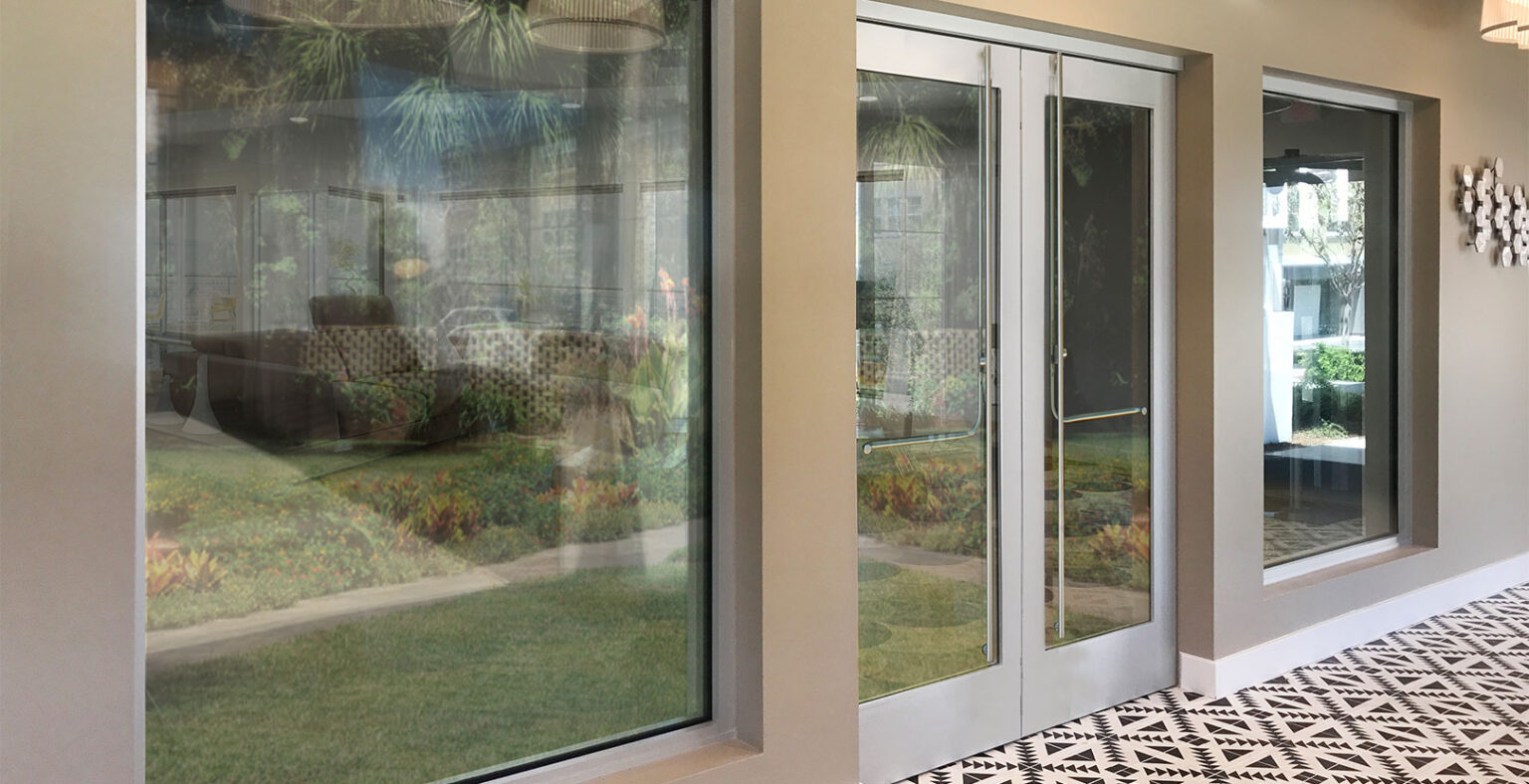
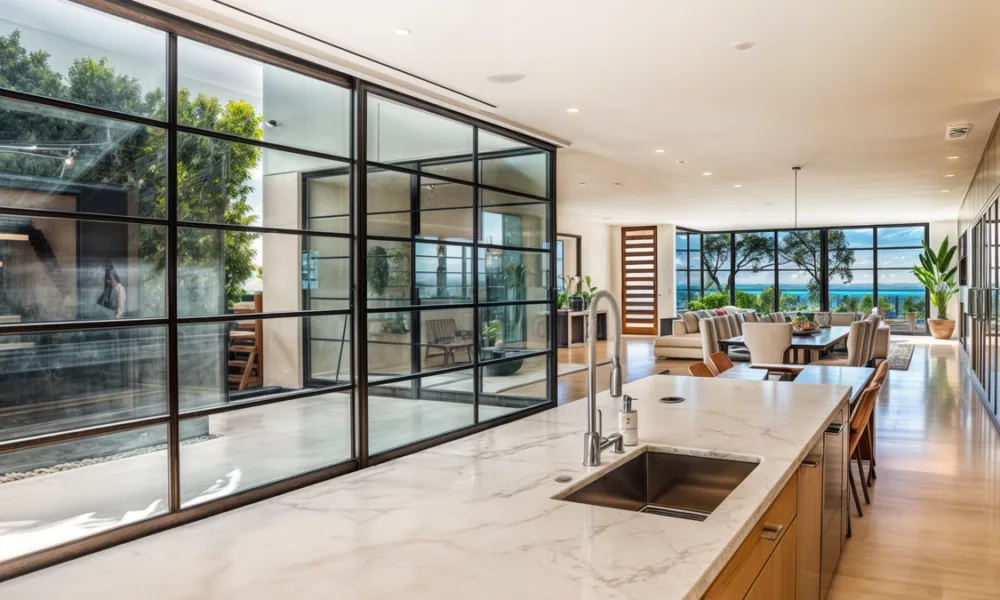
Contemporary architectural trends favor the use of large-format glass panels, particularly in high-end residences, hotels, and coastal developments. However, as exposed surface area increases, so do wind loads, pressure, and suction forces acting on the system.
In these cases, design must focus on controlling deflection, limiting excessive movement, and ensuring that both the glass and the frame operate within safe structural parameters. Systems not engineered for these dimensions may experience progressive failure under extreme conditions.
Ground-Level Exposure
Doors located at street level or on lower floors are subject to additional risks. Beyond direct wind and rain loads, these areas experience higher levels of accidental impact, hydrostatic pressure during flooding events, and increased structural demands during severe conditions.
This exposure is further intensified by the combination of wind, saltwater, and sand in coastal environments—factors that can accelerate component wear if materials and finishes are not properly specified for these conditions.
Mixed-Use Buildings
In mixed-use developments (where residential, commercial, and public spaces coexist) aluminum and glass doors must fulfill multiple functions simultaneously. They are expected to provide visual openness, structural resistance, and enclosure continuity within a single system.
These buildings often exhibit more complex load patterns, driven by variations in height, occupancy, and circulation. As a result, door design in these contexts must account not only for individual system performance, but also for its integration within an architectural envelope subject to variable and, in many cases, extreme demands.
General Door Security vs Extreme-Condition Performance
Although these concepts are related, general door security and performance under extreme conditions address different needs and should be evaluated separately.
Everyday security typically focuses on preventing unauthorized access through solutions such as additional locks, security bars, sensors, or mechanical reinforcements. These measures are effective for common scenarios and form part of a daily protection strategy for homes and buildings.
Performance under extreme conditions, on the other hand, focuses on how a door system responds to high-energy events, such as hurricanes, windborne debris impacts, sustained wind pressure, or severe water infiltration.
In these situations, analysis goes beyond visible security components and centers on the structural behavior of the entire assembly, glass, framing, anchoring, and its integration within the building envelope.
For everyday door security, including locks, bars and burglary prevention, see our complete guide to sliding door security.
When Standard Glass Doors Are Not Enough
In many projects, conventional aluminum and glass doors perform adequately under everyday use and moderate climate conditions. However, in high-risk environments, there are scenarios where standard solutions simply do not provide the level of performance required to protect the integrity of the building.
Areas exposed to recurring hurricanes, coastal developments facing extreme winds, urban buildings with large glazed surfaces, or critical ground-level access points require systems specifically designed to withstand high-energy events. In these cases, the approach must shift from adapting traditional solutions to specifying advanced systems from the outset.
Reinforced solutions are based on a different design logic. Rather than focusing solely on resisting an initial impact, they aim to maintain enclosure continuity under combined impact, pressure, and suction loads. This involves higher-capacity structural frames, glass engineered to absorb energy, optimized anchoring systems, and precise deformation control.
Systems such as Battle Door represent an evolution in aluminum and glass door design for extreme conditions. These systems are conceived as integrated solutions, where every component (glass, frame, internal reinforcements, and anchoring) works together to deliver superior performance against severe impacts and extreme weather events, without compromising functionality or architectural design.
When risk exceeds conventional conditions, proper specification moves beyond aesthetics or comfort and becomes a critical decision for structural performance and safety. Identifying when a standard door is no longer sufficient is the first step toward designing buildings that are more resilient in the face of extreme conditions.