How to Tell if Glass Is Tempered
Look for a small stamp near a corner of the pane. The mark may be etched or printed on the glass. Check each pane separately in a shower enclosure or glass entrance, since panes in the same assembly can have different specifications.
What to Look for on the Glass Stamp
Look for “Tempered” or a code that identifies the glass type. The stamp may also name the fabricator and list a safety glazing standard, such as ANSI Z97.1 or CPSC 16 CFR Part 1201. If it includes an SGCC number, look up the product in the SGCC Certified Products Directory.
What to Do if You Can’t Find a Stamp
Ask the installer or fabricator for a record that identifies the specific pane. A glazing schedule, product submittal, or order record can tell you what was supplied. Dark bands or spots seen through polarized lenses can indicate heat treatment. They can appear in both fully tempered and heat-strengthened glass, as the NGA explains in its technical paper on iridescence.
How Is Tempered Glass Made?
Fabricators start with an annealed glass pane that has already been cut and prepared for the job. The furnace heats the pane evenly to near its softening point. As the glass leaves the furnace, air jets cool both faces quickly and evenly. This step is called quenching.
The surfaces cool and stiffen while the center is still hot. As the center cools and contracts, it puts the surfaces in compression and leaves the interior in tension. The surface compression makes it harder for a crack to spread, giving the pane greater resistance to breakage. The National Glass Association describes this process in its production guidelines for heat-treated flat glass.
How Strong Is Tempered Glass?
Fully tempered glass has about four times the breakage strength of annealed glass of the same thickness under comparable conditions. The National Glass Association gives this figure as a rule of thumb for heat-treated glass.
Tempering leaves the glass’s stiffness unchanged. Take two panes of the same size and thickness, one annealed and one fully tempered. With the same supports and the same evenly distributed load, both panes bend by the same amount. This distinction matters when the design sets a limit on deflection, as described in the GANA Glazing Manual.
Does Tempered Glass Shatter?
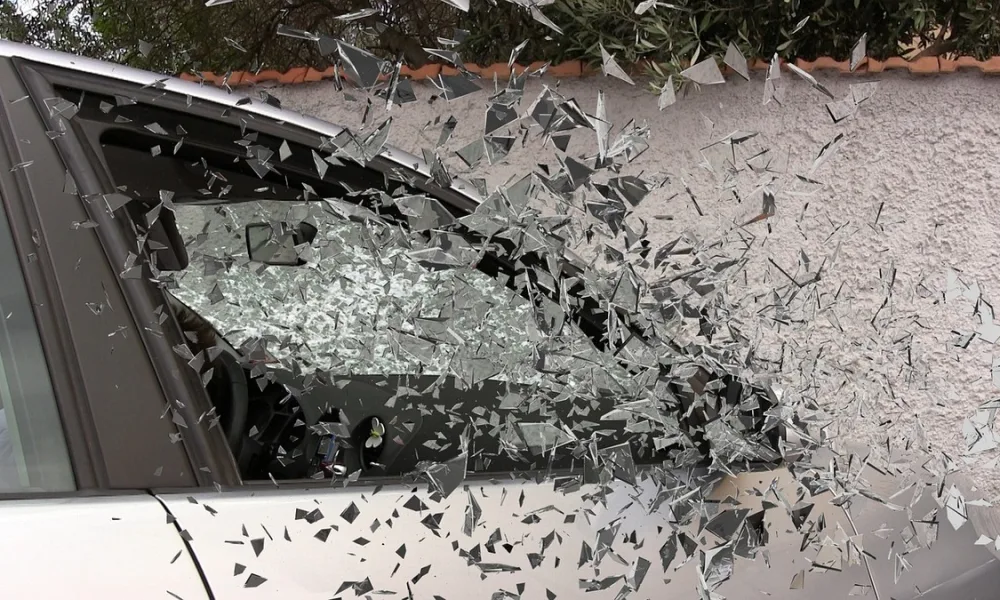
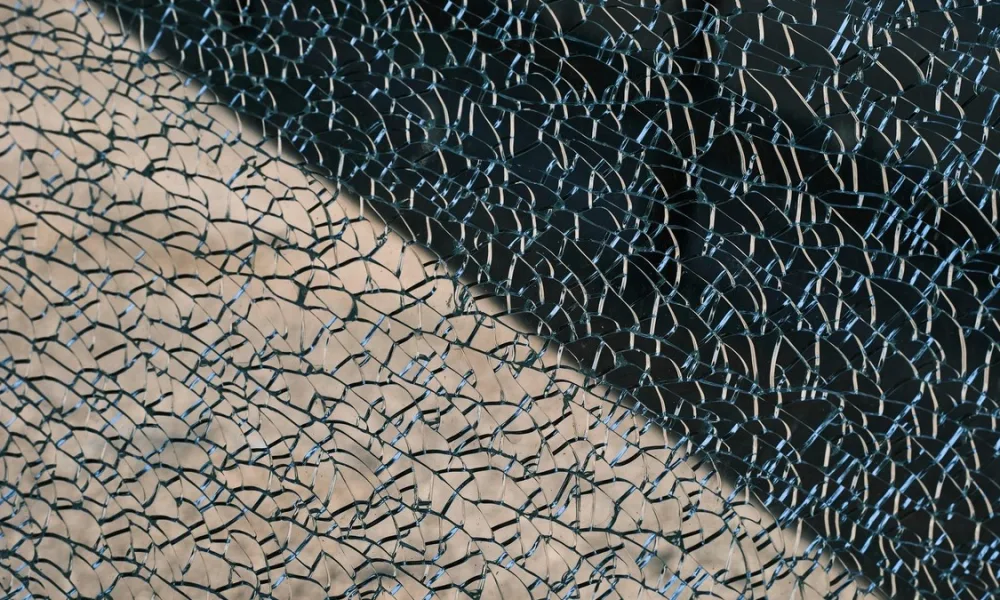
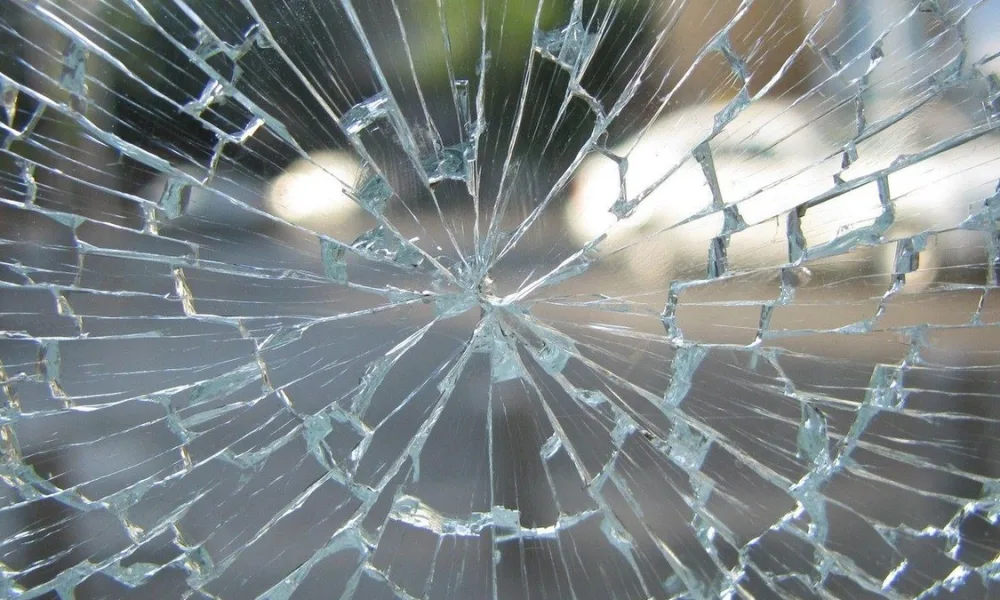
Yes. When a single pane of fully tempered glass shatters, the fragments can fall from the opening. A hard impact can break the pane, and a chipped edge can lead to breakage later. A nickel sulfide inclusion is a less common cause of spontaneous breakage.
An interlayer helps hold fragments together after breakage in a laminated assembly, which can also incorporate tempered panes. That behavior is one factor in choosing laminated or monolithic tempered glass for an opening.