What Are the PRL Alumi Door and Sunny Lux?
Alumi Door is the name for PRL’s commercial aluminum entrance door. It is available in narrow, medium, wide and custom stile configurations, allowing the profile to be selected according to the hardware, traffic and design requirements of the opening.
Depending on the configuration, it can accommodate panic devices, mechanical locks, electric strikes, access-control preparation, pivots, butt hinges and floor or overhead closers. Thermally broken entrance configurations can also coordinate with PRL 250DT center-glazed and 251DT offset-glazed storefront framing.
Sunny Lux is a premium aluminum swing door intended for contemporary residential and high-end commercial entrances. It has a 2 1/8-inch vertical stile, fully mitered construction, a thermally broken frame and options for 1 1/8-inch insulated glass.
The door uses a four-point locking system and additional perimeter seals. It is available in single and double configurations with inswing or outswing operation. Adjustable jambs and hinges provide additional control during installation.
Key Differences Between Alumi Door and Sunny Lux
Category | PRL Alumi Door | PRL Sunny Lux |
Primary application | Commercial, institutional and high-traffic entrances | Contemporary residential and high-end commercial entrances |
Vertical stile | Narrow 2″, medium 3 1/2″, wide 5″ and custom options | 2 1/8″ vertical stile |
Appearance | Commercial storefront entrance with several profile options | Slim, fully mitered appearance |
Hardware | Broad compatibility with commercial locks, panic devices, access control, pivots and closers | Integrated four-point lock, hinge and handle package |
Bottom rail | Standard 10″ bottom rail to support accessibility requirements | Project-specific bottom detail rather than the standard 10″ Alumi bottom rail |
Glass | From 1/4″ to 1″, depending on the selected door and storefront system | Options for 1 1/8″ insulated glass |
Thermal system | Thermal configurations can coordinate with 250DT and 251DT storefront framing | Thermally broken door frame |
Sealing | Commercial weatherstripping, threshold, sweep, storefront gaskets and perimeter sealant | Additional perimeter seals supported by multipoint closing compression |
Field adjustment | Depends on the selected pivots, hinges, closer, lock and threshold | Adjustable jambs and built-in vertical hinge adjustment |
Best fit | Projects driven by traffic, hardware and storefront coordination | Projects driven by appearance, insulated glazing, sealing and integrated operation |
Stile Width Does Not Tell the Whole Story
Sunny Lux is described as a slim-line entrance, but its 2 1/8-inch vertical stile is not technically narrower than the 2-inch Alumi narrow stile.
Its visual distinction comes from the complete assembly. Sunny Lux uses fully mitered construction and a coordinated frame and hardware package, producing an appearance that is better suited to contemporary residential and high-end commercial architecture.
Alumi Door offers more freedom to change the profile. A narrow stile preserves a clean sightline, while medium and wide stiles provide additional room for commercial hardware and more demanding entrance conditions.
Hardware Can Shape the Entire Entrance
Alumi Door can be configured around a wide selection of locks, panic devices, electric strikes, pivots, hinges and closers. This makes it adaptable to egress, access-control and traffic requirements.
For a high-traffic entrance, the stile, bottom rail and closer should be selected together. A floor closer affects the pivot preparation, threshold, bottom rail and installation—not just the way the door closes.
Sunny Lux uses a coordinated four-point locking system. The lock secures the door at several locations and helps maintain consistent contact between the leaf and its perimeter seals.
Smart-lock or electronic access preparation may be available for either product, but compatibility must be confirmed. The lock body, stile clearance, handle, power path and other hardware requirements can affect the final configuration.
Which Door Fits Your Project?
Specific project conditions provide a better basis for selecting a door than appearance or price alone.
A Storefront With Frequent Daily Traffic
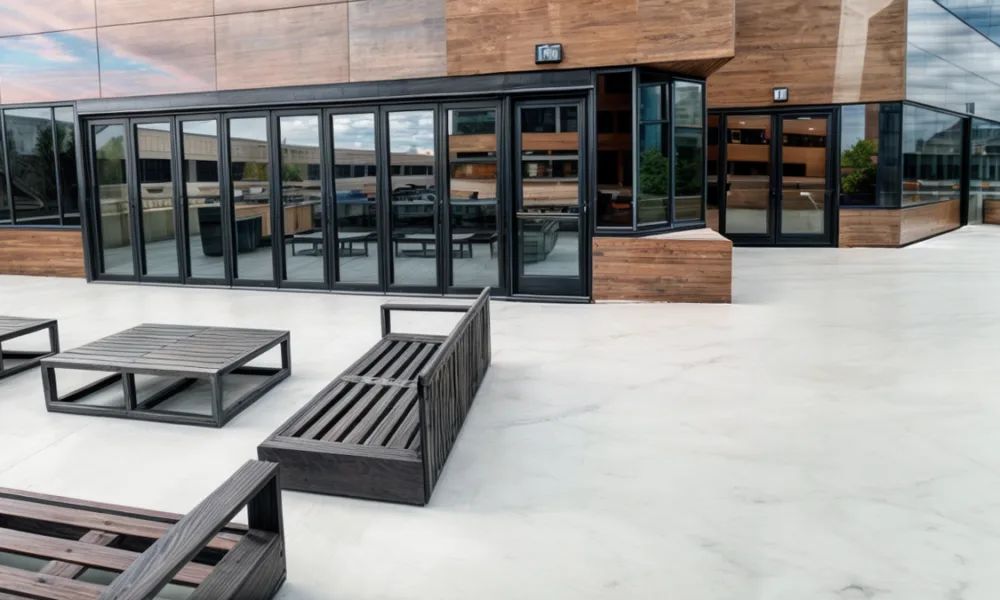
Alumi Door is generally the more practical starting point for retail entrances, offices and institutional buildings used continuously throughout the day.
Its style options allow the entrance to be configured for the expected traffic and hardware. Panic devices, electric strikes, access-control components and reinforced closer configurations can be coordinated with the door and surrounding storefront.
A Contemporary Residential Entrance
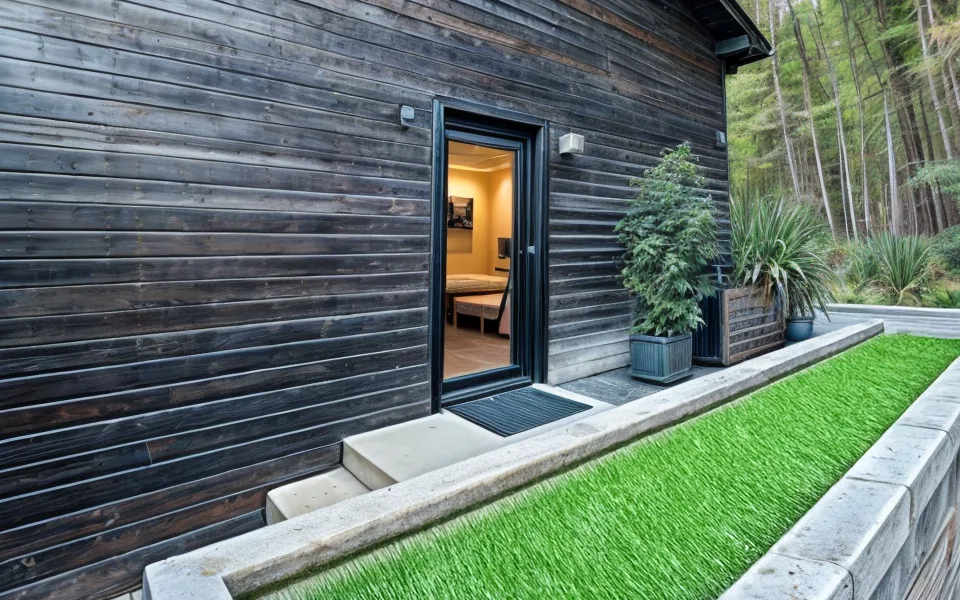
Sunny Lux is well aligned with homes that use slim windows, large glass openings and modern aluminum systems.
Its mitered construction avoids the conventional appearance of a commercial storefront door. The thermally broken frame, insulated glass options, perimeter seals and multipoint lock also address common requirements for an exterior residential entrance.
A High-End Commercial Space
A boutique, restaurant, showroom or executive office could use either product.
Sunny Lux may be appropriate when the project calls for a refined mitered appearance, insulated glazing and an integrated locking system. Alumi Door may be preferable when the same entrance requires panic hardware, intensive daily use or extensive access-control coordination.
The building type alone does not determine the selection. How the entrance will operate each day is equally important.