Loading

Disadvantages of Low-E Glass: Common Myths, Real Limitations, and How They Are Addressed

Home / BLOG / Disadvantages of Low-E Glass: Common Myths, Real Limitations, and How They Are Addressed

Low-E glass has become a standard solution for modern windows, doors, and façades due to its energy efficiency and indoor comfort benefits. However, like any technical solution, it is not perfect or universally ideal for every application.

When users search for “Disadvantages of Low-E Glass,” they are usually not rejecting the product. Instead, they are trying to understand its real limitations, its true costs, and whether it is the right choice for their specific project.

Some of the most common concerns include:

  1. Does Low-E glass significantly reduce natural light?
  2. Does it have a visible tint or reflective appearance?
  3. Is it much more expensive than clear glass?
  4. Can it cause reflected heat issues or condensation?
  5. Does it require special installation or additional maintenance?

In this article, we will break down:

  • The real disadvantages of Low-E glass
  • The most common myths that create confusion
  • When these limitations actually matter

And how, with proper specification, manufacturers and fabricators minimize, or completely eliminate, these issues in residential and commercial projects

The goal is not to oversell Low-E glass, but to provide clarity so architects, contractors, and property owners can make confident, well-informed decisions based on real performance and project needs.

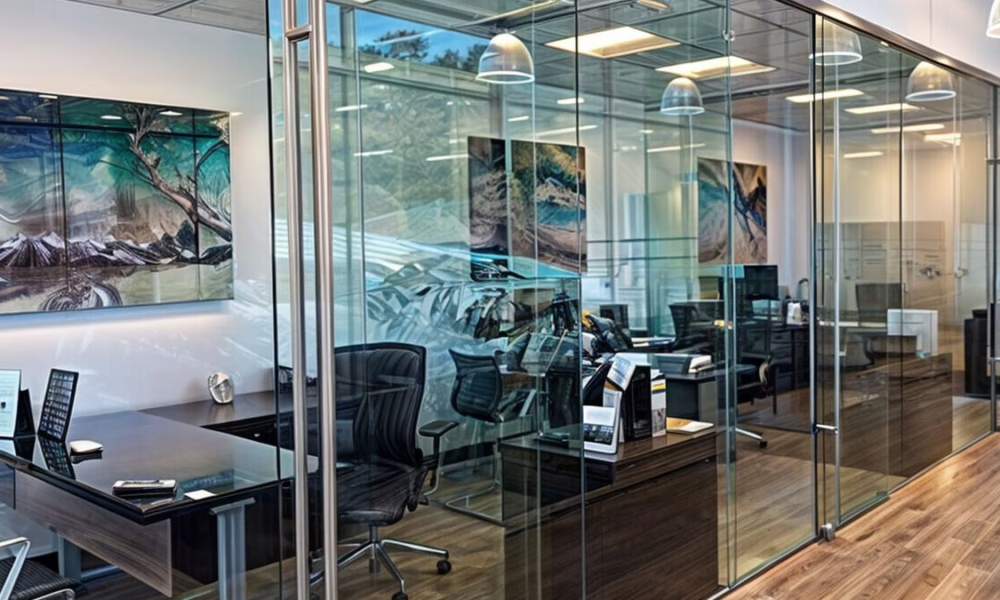
Exterior view of a modern façade highlighting increased reflectivity on Low-E glazing in sunlight

Why Do People Search for “Disadvantages of Low-E Glass”?

The fact that Low-E glass has become a standard in modern windows and façades does not mean it is a universal solution for every project. Precisely because of its widespread adoption, many users (architects, contractors, and property owners) begin to question its real limitations.

In most cases, people searching for “Disadvantages of Low-E Glass” are not challenging its value. Instead, they are trying to determine whether it is the right choice for their specific climate, budget, or application.

One key point must be understood: most issues associated with Low-E glass do not come from the product itself, but from incorrect technical decisions.

The most common situations behind these searches include:

  • Incorrect specification of the Low-E type, without considering SHGC, U-Factor, or visible light transmittance.
  • Poor climate-based selection, such as using coatings designed for hot climates in cold regions (or vice versa).
  • Unrealistic expectations, like assuming zero reflectivity, no added cost, or extreme performance without upgrading the full glazing system.
  • Generic installations that fail to properly integrate Low-E glass into a well-sealed IGU or compatible framing system.

The Most Commonly Mentioned Disadvantages of Low-E Glass (and Their Real Impact)

When discussing the disadvantages of Low-E glass, most people tend to mention the same concerns.

Below, we address the most commonly cited drawbacks, explaining why they occur, when they truly matter, and their real impact on modern projects.

Slight tint or color shift

Why it happens

Low-E coatings are made of microscopic layers of metals (such as silver or metal oxides) designed to reflect infrared radiation. These layers can cause a slight variation in glass tone, depending on the coating type.

When it may be noticeable

  • Large-format façades
  • Ultra-premium projects with side-by-side glass comparisons
  • Certain lighting angles or very bright sky conditions

Hard coat vs soft coat

  • Hard Coat Low-E: may show a slightly warmer tone
  • Soft Coat Low-E: typically more neutral and controlled, especially in modern selective versions

Real impact on current projects

In most residential and commercial applications, the color shift is minimal or virtually imperceptible, especially when the entire system is specified consistently. Today’s soft-coat Low-E products are engineered specifically to maintain high visual clarity.

Higher initial cost

Why it costs more

Low-E glass requires:

  • More advanced manufacturing processes
  • Stricter quality control
  • Proper integration within IGUs

This increases its cost compared to standard clear glass.

Real impact on the full system

In practice:

  • The price increase represents a relatively small percentage of the total cost of a window or façade system (frames, hardware, installation, seals).
  • In premium or new construction projects, the budget impact is usually marginal.

Why focusing only on upfront cost is incomplete

Evaluating Low-E solely by its initial price overlooks:

  • Long-term energy savings
  • Improved indoor comfort
  • Reduced wear on interior finishes
  • Higher perceived project quality

Increased reflectivity

What reflectivity means

Reflectivity refers to the glass’s ability to reflect part of the incoming light. Some Low-E coatings reflect more light than clear glass.

When it may be noticeable

  • Highly sun-exposed façades
  • East- or west-facing elevations
  • High solar-control coatings

Façade vs interior perception

  • From the exterior: can create a cleaner, more contemporary appearance
  • From the interior: typically does not affect visibility or user experience

When it can be an aesthetic concern

  • Projects requiring absolute transparency
  • Highly sensitive historical or museum contexts

In these cases, selective Low-E coatings with low reflectivity are recommended.

Reduced solar heat gain in cold climates

When this is a real drawback

In very cold climates, high solar-control Low-E glass can:

  • Block useful winter solar heat
  • Slightly increase heating demand

Common mistake

Using soft-coat solar-control Low-E (very low SHGC) in regions where passive solar heat gain is desirable.

Technical solution

  • Use Hard Coat Low-E, or
  • Use Soft Coat Low-E with a medium SHGC, depending on climate and orientation

This is not a flaw of Low-E glass, but a result of incorrect specification.

Exterior condensation (in some climates)

What it is and why it occurs

Exterior condensation appears when:

  • The glass is highly energy-efficient
  • The exterior surface remains cool
  • Ambient humidity condenses on the outer surface

Key point

This is not a glass defect. It is a sign of excellent thermal insulation, indicating that interior heat is not escaping outward.

Important distinction

  • Exterior condensation: normal with high-performance glass
  • Interior condensation: typically indicates sealing issues or excessive indoor humidity
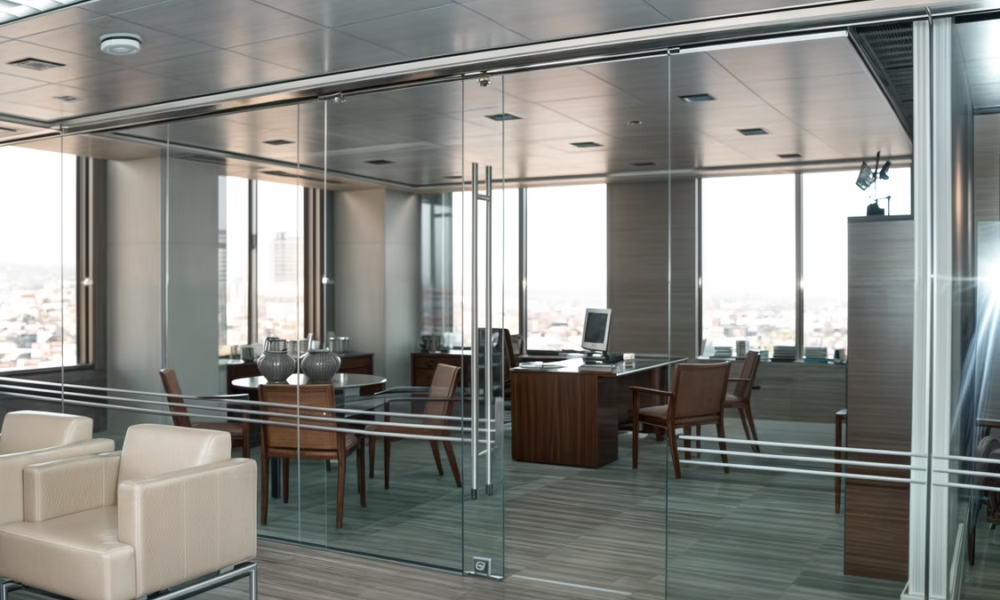
Close-up of Low-E coated glass showing a subtle neutral tint under daylight

Myths vs. Real Drawbacks of Low-E Glass

As with most building-performance topics, Low-E glass comes with both myths and realities. And as we’ve seen, it’s not a “perfect” solution, because nothing truly is. Still, we want to address a few concerns we hear most often from clients.

Common myths (and what’s actually true)

“Low-E blocks too much natural light.”

✅ Reality: Many modern Low-E coatings maintain high Visible Light Transmittance (VLT). Performance depends on the specific product—not on the Low-E concept itself.

“Low-E makes interiors darker.”

✅ Reality: This can happen with certain high solar-control coatings, but it’s not a rule. It’s determined by the combination of VLT + SHGC + coating tone.

“Low-E causes overheating.”

✅ Reality: When overheating occurs, it’s usually due to an improperly selected SHGC (based on orientation, climate, or glazing size). It’s not “Low-E’s fault”—it’s a selection/specification issue.

“Low-E is only for luxury projects.”

✅ Reality: Today, Low-E is an energy-efficiency standard in many residential and commercial specifications—it’s no longer exclusive to premium builds.

The drawbacks that do matter (depending on the project)

  • Slight tone shift / increased reflectivity: Can be noticeable on large façades or in projects that require absolute neutrality.
  • Higher upfront cost: Real, but it should be evaluated against operating savings, comfort improvements, and UV protection.
  • Risk of poor specification: The most common “problem” isn’t Low-E itself, but choosing the wrong coating for the climate/orientation, or integrating it incorrectly into the overall system (IGU, seals, frame).

When Low-E Glass Can Be the Wrong Choice

Low-E glass is a strong upgrade for energy efficiency and comfort, but it isn’t automatically the best choice for every project. In certain scenarios, it should be evaluated carefully (or avoided) to prevent unnecessary cost, visual mismatch, or performance trade-offs.

Situations where Low-E may not be the best fit

  • Very budget-driven or temporary projects: If the priority is the lowest upfront cost (or the glazing is short-term), clear glass may be the more practical option.
  • Partial replacements where visual matching matters: When you’re replacing only one panel and the existing glazing is clear glass, switching to Low-E can introduce slight differences in tone or reflectivity that become noticeable side-by-side.
  • Interior glazing with little to no thermal load: For interior partitions or areas without meaningful solar exposure or HVAC impact, Low-E typically won’t deliver measurable benefits.
  • Cold climates specified with aggressive solar-control Low-E: In heating-dominated regions, using a very low SHGC “solar control” coating can reduce beneficial winter solar gain and slightly increase heating demand. This isn’t a Low-E failure, it’s a specification mismatch.

Not every project needs Low-E. But many do, especially modern windows, doors, and façades exposed to sun, heat gain/loss, and comfort demands. The right approach is to select the coating based on climate, orientation, VLT, SHGC, U-Factor, and system configuration (IGU + frame + seals)—ideally with technical guidance.

Is Low-E Glass Worth It Despite Its Disadvantages?

Yes, it’s worth it for most modern projects, even with its limitations.

  • There are trade-offs (higher upfront cost, slight reflectivity/tone, climate-specific selection).
  • Most “disadvantages” are not defects, they’re the result of incorrect specification (wrong SHGC, VLT not aligned with expectations, poorly designed IGU, or generic installation).
  • When specified correctly, Low-E delivers more value than compromise: better comfort, lower HVAC load, UV protection, and more consistent performance.
  • In the U.S., Low-E is now part of the performance baseline for contemporary glazing, not just a luxury upgrade.

Want to avoid common Low-E pitfalls and choose the right coating for your climate and design goals? Request Low-E samples and technical sheets from PRL, and share your plans so our team can recommend the ideal Low-E + IGU configuration for your windows, doors, or façade system.

This content is provided for general informational purposes only. Actual glass performance depends on the specific Low-E coating, IGU configuration, framing system, installation quality, climate zone, and project requirements. Always confirm performance values (e.g., U-Factor, SHGC, VLT) using manufacturer data and consult a qualified architect, engineer, or glazing professional before final specification. PRL can support with technical guidance and product selection based on your plans and performance targets.


Leave a Reply

Your email address will not be published. Required fields are marked *