What Is Reflective Glass?
Reflective glass is a type of architectural glass that incorporates a very thin metallic coating on one of its surfaces. This coating changes the way solar radiation interacts with the glass, reflecting part of the energy back toward the exterior.
Because of this property, reflective glass helps reduce solar heat gain, minimize glare, and improve the overall energy performance of a building. At the same time, it creates the characteristic mirror-like appearance often seen on office towers and corporate building façades.
This type of glass is commonly used in curtain wall systems, commercial façades, and buildings with large glazed surfaces, where solar control and energy efficiency play an important role.
If you’d like to explore how this type of glass works in more detail and understand its architectural benefits, you can read our full article on what reflective glass is and how it works.
What Is Tinted Glass?
Tinted glass is a type of architectural glass that incorporates pigments or metallic additives into the glass during the manufacturing process. These materials give the glass its characteristic color and alter the way it interacts with light and solar radiation.
Unlike reflective glass, which reflects part of the sun’s energy back toward the exterior, tinted glass reduces solar impact primarily by absorbing light and heat. This helps decrease glare and moderate the amount of solar radiation that enters the building interior.
Tinted glass is available in a range of tones, such as bronze, grey, green, or blue, which can also contribute to the overall aesthetic character of a façade or interior design.
Because of its uniform appearance and its ability to soften the intensity of natural light, tinted glass is commonly used in residential windows, commercial buildings, and projects where glare control is needed without creating a mirror-like exterior effect.
Reflective Glass vs Tinted Glass: Key Differences Between the Two Options
Although both reflective glass and tinted glass are used to improve how glass performs against solar radiation, the way they work is completely different. The main difference lies in how each one manages solar energy.
One relies on reflecting radiation, while the other works primarily through heat absorption. This distinction directly affects the building’s thermal performance, the appearance of the façade, and the level of privacy the glass can provide.
Reflection vs Absorption of Solar Energy
The most important difference between these two types of glass is how they control solar energy.
Reflective glass uses a metallic coating that reflects a significant portion of solar radiation back toward the exterior of the building. This reduces the amount of heat entering the interior and helps maintain more stable indoor temperatures.
Tinted glass, on the other hand, does not reflect solar radiation. Instead, it works by absorbing part of the sun’s energy within the glass itself, which reduces glare but can also cause the glass to heat up more.
Solar Heat Gain Control
Because of this operating principle, reflective glass typically provides better control of solar heat gain, especially in buildings with large glazed surfaces or in hot climates.
By reflecting a significant portion of solar energy, this type of glass helps reduce the building’s thermal load and can lower the need for air conditioning inside the space.
Tinted glass also helps reduce heat entering the building. However, because it works through absorption, part of that energy can later be transferred to the interior or to the surrounding area of the glass.
Appearance and Visual Effect on the Façade
Another noticeable difference between these types of glass is their appearance.
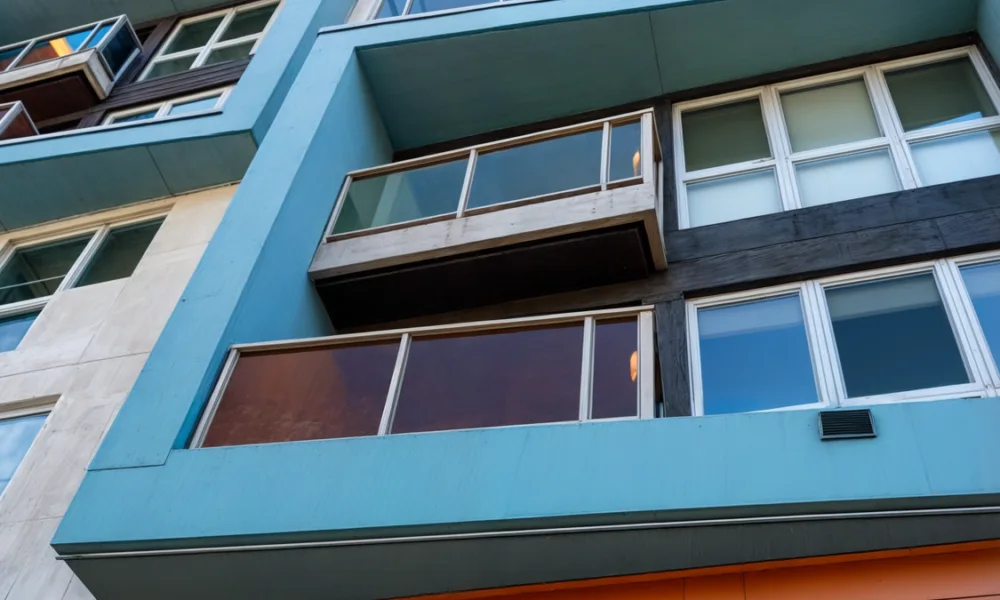
Reflective glass creates a mirror-like effect that reflects the surrounding environment, producing modern façades that visually change throughout the day depending on lighting conditions.
Tinted glass, by contrast, offers a more uniform and colored appearance. Instead of reflecting the surroundings, the glass maintains a consistent tone that can integrate easily into different architectural styles.
Daytime Privacy
In terms of privacy, reflective glass generally provides greater daytime privacy. When exterior lighting is stronger than interior lighting, the mirror effect makes it difficult for people outside to see inside the building.
However, this effect depends on lighting conditions. At night, when the building’s interior is illuminated, the glass may become more transparent from the outside.
Tinted glass provides a more moderate level of privacy, since its main function is to filter light rather than create a reflective surface.
Cost and Long-Term Value
Finally, cost is often another factor to consider.
Tinted glass is generally more affordable in terms of initial cost, as its manufacturing process is relatively simple.
Reflective glass may come with a higher cost due to its specialized coating. However, in many projects this can be offset by better solar control and potential long-term energy savings, particularly in commercial buildings or in climates with high solar exposure.