The Most Vulnerable Entry Points in a Home
Not all areas of a home carry the same level of risk. Intrusion attempts usually focus on points that offer quick, direct, or low-visibility access.
Understanding these weak points is essential when deciding how to secure a home.
Exterior Doors
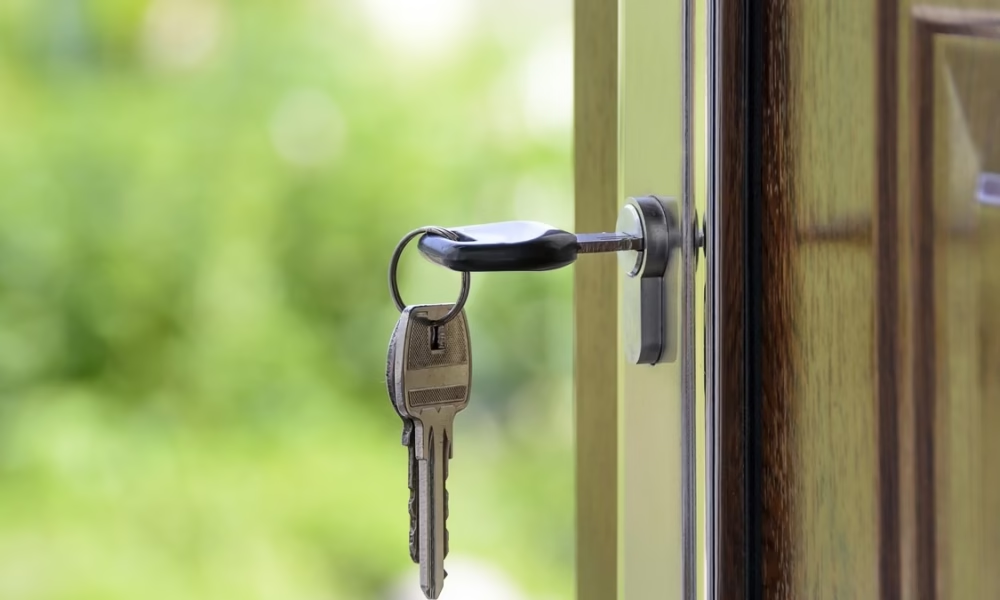
Front doors, back doors, side doors, and garage access doors are often the first line of defense. In many homes, the issue is not only the lock. The entire door system matters.
A strong lock may not be enough if the frame is weak, the hinges are exposed, or the door core cannot resist force. When a door gives way, it often fails as a system: lock, frame, hinges, and material.
A more secure door strategy should consider:
- door material;
- frame strength;
- lock quality;
- hinge protection;
- anchoring;
- installation quality.
Sliding Glass Doors
Sliding glass doors deserve special attention because they combine several vulnerabilities: a large glass surface, a track-based system, and a locking mechanism that may be easier to force if the system is not reinforced.
Basic rods or bars can help prevent sliding, but they do not protect the glass itself. If the glass breaks easily, an intruder may still be able to reach the lock or create an opening.
For homes with patios, pools, terraces, or direct backyard access, sliding doors should be evaluated as a critical part of the security plan.
Large Windows and Glass Walls
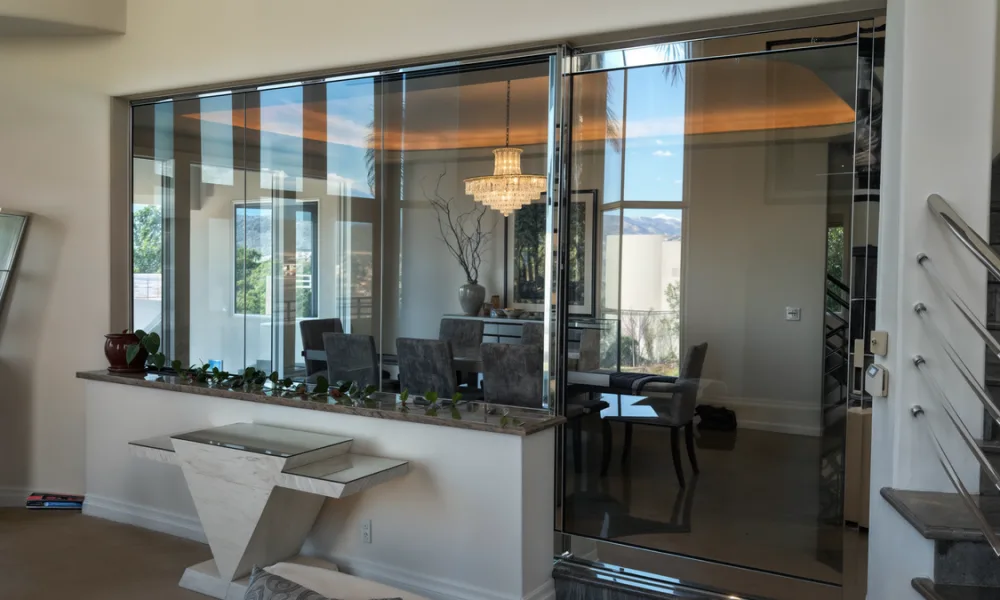
Large windows, glass façades, and wide openings are common in modern residential design. They improve natural light, views, and architectural appeal, but they also increase the number of vulnerable access points.
Standard glass can break quickly under impact. Once broken, it may allow someone to reach locks, open a door from the inside, or gain direct access.
In homes with large glass surfaces, reinforcing the glass can be just as important as installing cameras or alarms.
Ground-Floor Access Points
Ground-floor homes, street-facing properties, and residences with direct exterior access usually face higher exposure. These access points are easier to approach and may provide less time for a response.
For these homes, the strategy should go beyond detection. Doors, windows, and glass systems should be strong enough to delay or resist forced access from the beginning.
Structural Security: Reinforcing What Actually Gets Attacked
In many forced-entry scenarios, intruders are not trying to bypass complex technology. They are trying to overcome physical access points as quickly as possible.
That is where structural security becomes important.
Structural security focuses on reinforcing the elements that are most likely to be attacked: doors, windows, frames, locks, sliding systems, and glass surfaces. Unlike alarms or cameras, these solutions do not simply identify a problem. They are designed to make entry more difficult from the first point of contact.
Impact-Resistant Glass for Home Security
Impact-resistant glass is designed to withstand repeated blows better than standard glass. Instead of failing immediately, laminated and impact-resistant glass systems are engineered to help maintain a barrier even when damaged.
This is especially useful in homes with:
- large windows;
- sliding glass doors;
- glass walls;
- patio doors;
- exposed ground-floor openings;
- coastal or storm-prone locations.
Impact-resistant glass can support both security and weather protection, depending on the system and project requirements. It allows homeowners to preserve natural light and visibility while improving the resistance of one of the most vulnerable parts of the home.
Reinforced Doors and Entry Systems
A reinforced door is not only about a stronger lock. It is about the entire assembly. A secure door system may include:
- stronger door cores;
- reinforced frames;
- better anchoring;
- impact-resistant glass inserts;
- upgraded hardware;
- proper installation.
These solutions are designed to resist force more effectively than lightweight or basic residential doors. For main entrances, back doors, and high-risk access points, reinforced doors can play a central role in preventing or delaying entry.
Reinforced Sliding Door Systems
Sliding doors are often treated as aesthetic features, but they should also be evaluated as security systems. Their glass, frame, track, and locking mechanism all matter.
A stronger sliding door strategy may include:
- reinforced aluminum frames;
- impact-resistant glass;
- anti-lift systems;
- stronger locking hardware;
- improved track design;
- proper installation and alignment.
This is especially relevant for homes with backyard access, pool areas, patios, or terraces.
Bullet-Resistant Glass for Higher-Risk Properties
Most homes do not require bullet-resistant glass. However, for higher-risk properties, valuable assets, isolated locations, or specific security concerns, bullet-resistant glass may be considered as part of a more advanced protection strategy.
This type of glass is engineered for a higher level of resistance than standard residential glazing. It should be specified according to the risk level, desired performance, and professional guidance.
Home Security Options Compared
Different security measures serve different purposes. Some detect. Some deter. Others physically resist entry.
Security Measure | Main Function | Best Use | Limitation |
Alarms | Detect intrusion | Alerts and monitoring | Do not physically stop entry |
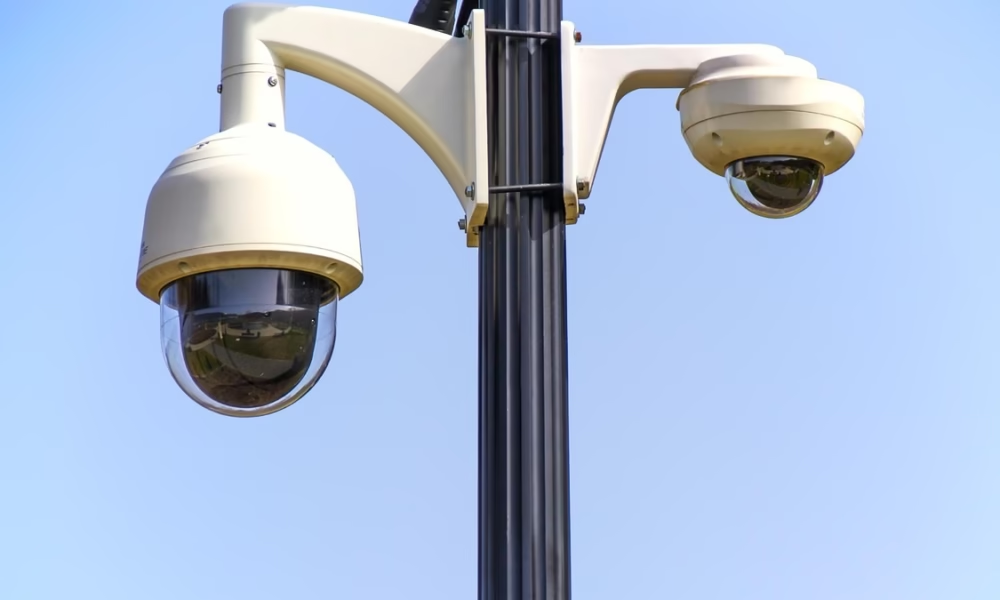
Cameras | Monitor activity | Visibility, evidence, deterrence | Depend on response time |
Smart lights | Deter movement | Exterior visibility | Do not reinforce access points |
Door/window sensors | Detect opening | Basic monitoring | Limited if the entry point fails quickly |
DIY bars or rods | Delay movement | Sliding doors and windows | Do not protect the glass itself |
Security film | Helps hold glass together | Existing glass surfaces | Limited compared with engineered impact-resistant glass |
Reinforced doors | Physical resistance | Main entry points | Requires proper product selection and installation |
Impact-resistant glass | Physical resistance | Windows, glass doors, large openings | Must be specified according to the project |
Bullet-resistant glass | Higher-level protection | High-risk properties | Not necessary for every home |
The goal is not to choose one measure and ignore the rest. The strongest strategy combines detection, deterrence, and physical resistance according to the property’s actual vulnerabilities.
Security Film vs. Impact-Resistant Glass
Security film is a common DIY or retrofit solution for glass surfaces. It can help hold broken glass together and may delay entry in some situations. For homeowners who are not ready to replace existing glass, it can be a useful first step.
However, security film does not change the underlying strength of the entire glass system. Its performance depends on the film quality, installation, existing glass, frame, and attachment method.
Impact-resistant glass, by contrast, is designed as a complete glazing solution. The glass layers and interlayer work together to resist impact and maintain a barrier even after damage.
For lower-risk situations, security film may add some delay. For homes where glass is a major vulnerability, impact-resistant glass offers a more complete structural approach.
How Much Does It Cost to Secure a Home?
The cost of securing a home depends on the type of protection, the size of the property, the number of vulnerable access points, and the level of risk.
There is no single cost because home security can include anything from basic habits to professional monitoring and structural upgrades.
Basic Security Measures
Basic measures are usually the most affordable. These include improving lighting, trimming landscaping, checking locks, using timers, and establishing daily routines.
They are important, but they do not replace stronger access-point protection.
DIY Security Devices
DIY devices usually require a lower upfront investment. Cameras, sensors, video doorbells, and smart locks can help homeowners monitor their property and receive alerts.
Some devices may also require subscriptions for cloud storage, monitoring, or app-based features.
Alarm and Monitoring Systems
Traditional security systems often include equipment costs, installation, and monthly monitoring fees. These systems can be valuable for detection and response, especially when paired with professional monitoring.
However, their long-term cost should be evaluated alongside what they actually protect. A system that detects an intrusion may still be insufficient if the door, window, or glass surface fails easily.
Structural Security Upgrades
Structural upgrades typically involve a higher initial investment, but they usually do not depend on monthly fees. These upgrades focus on reinforcing the most vulnerable points of the home.
Costs may vary depending on:
- glass type;
- door or window size;
- frame system;
- installation requirements;
- performance level;
- custom fabrication;
- project location.
For homes with large glass surfaces, sliding doors, or exposed ground-floor openings, structural protection can provide long-term value because it addresses the physical point where intrusion attempts often occur.
How to Choose the Right Home Security Strategy
Every home has a different risk profile. The right combination of measures depends on layout, location, exposure, lifestyle, and the type of access points on the property.
If Your Main Concern Is Monitoring
Start with cameras, alarms, sensors, and smart systems. These tools improve awareness and help you respond faster when something happens.
If Your Home Has Large Glass Areas
Consider reinforcing windows, patio doors, sliding glass doors, and glass walls. Large glass surfaces should not be treated only as design elements. They are also potential access points.
If Your Home Has Direct Street or Ground-Floor Access
Focus on stronger doors, better locks, reinforced frames, exterior lighting, and visible deterrents. These homes are easier to approach, so delaying physical entry becomes especially important.
If You Travel Often
Combine smart systems, lighting routines, mail management, trusted neighbor support, and stronger access points. The goal is to make the home look occupied while also reducing physical vulnerabilities.
If Your Property Has Higher Security Needs
For homes with high-value assets, isolated locations, or specific risk concerns, consider a layered strategy that includes cameras, alarms, reinforced doors, impact-resistant glass, and, when necessary, higher-security glazing options.
Bringing It All Together
Securing a home is not only about installing devices or waiting for an alarm to go off. It starts with prevention: understanding how intrusions happen, where they are most likely to occur, and which areas of the home need stronger protection.
Basic habits, exterior lighting, cameras, alarms, smart systems, and DIY solutions all play a role. But their effectiveness increases when they are combined with physical resistance at the most vulnerable points: doors, windows, sliding systems, and glass surfaces.
The difference between a failed attempt and a successful intrusion is often time. The more difficult, noisy, and slow an entry attempt becomes, the less attractive the property becomes as a target.
For homeowners evaluating how to reinforce doors, windows, sliding doors, or large glass areas, PRL Glass & Aluminum can help identify glass and aluminum solutions designed to support a stronger, more complete home security strategy.