Why That One Spot in Your Living Room Is Always Freezing in Winter

Without thermal separation inside the frame, aluminum patio doors may transfer outdoor temperatures inward, affecting comfort near the glass and subtly influencing how living spaces are used in colder seasons.

Home / Design & Living / Why That One Spot in Your Living Room Is Always Freezing in Winter

You know that one spot.

  • In August, it’s the best seat in the house. Sunlight, view, breeze.
  • In January, it’s suddenly the “decorative chair” no one actually sits in.

You can feel the temperature shift when you walk toward it. Sit down for a minute and you’re reaching for a blanket. It’s not your imagination and it’s not your furniture’s fault.

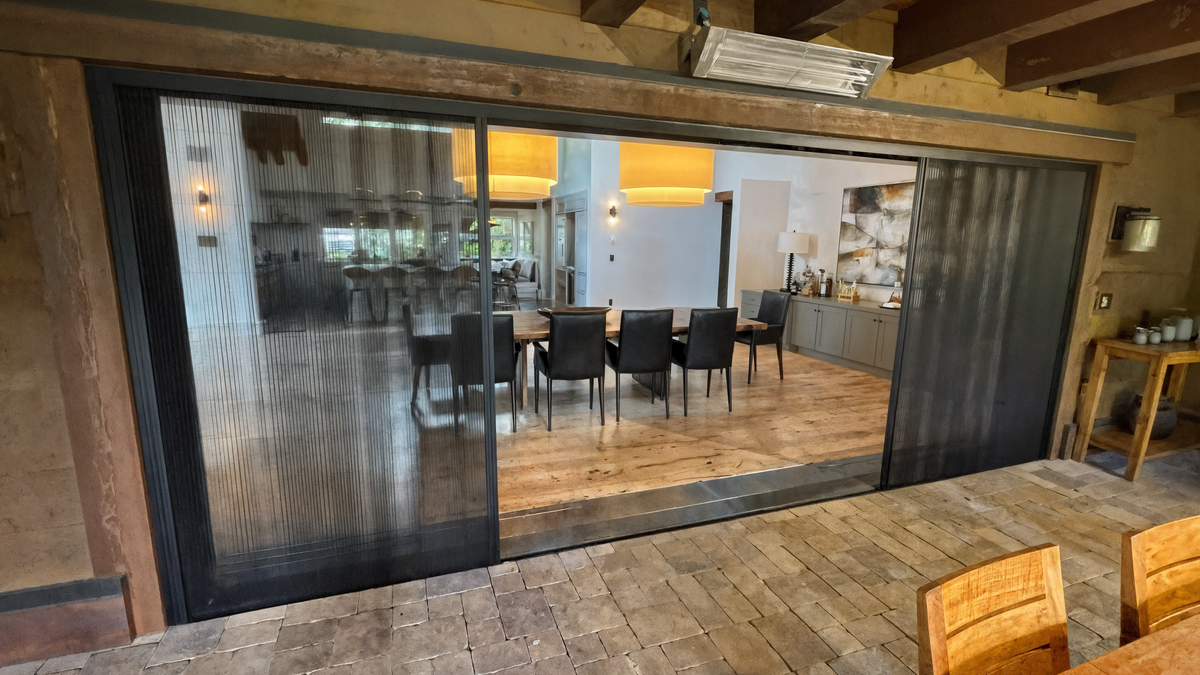
When large openings like patio doors or glass entries aren’t properly insulated at the frame, they can create what homeowners quietly call the cold corner problem. One part of the room feels like a different climate. And once that happens, winter starts picking your floor plan.

❄️ When Winter Redesigns the Room

It rarely feels dramatic at first: The sofa shifts slightly away from the glass, rugs layer up, the play area migrates to the center and the thermostat gets nudged higher because “something feels off.”

The room might technically be heated. But the perimeter (especially near the frame) feels noticeably colder. That’s usually not a whole-room problem, it’s a heat-transfer problem.

❓ What “Thermally Broken” Actually Means

In simple terms, a thermally broken system has an insulating barrier built inside the metal frame. That barrier interrupts the path heat normally takes through aluminum.

Without that separation, cold outdoor temperatures can conduct directly through the frame and radiate inward. With it, that transfer is significantly reduced.

It’s not magic, it doesn’t replace proper glazing or good installation. But it changes how the space feels near the glass and that’s where comfort complaints usually live.

🌡️ Why It Matters More Than You Think

Most people don’t complain that their entire room is freezing. They complain about:

  • The chair no one uses in winter
  • The drafty feeling near the entrance
  • The temperature drop right by the sliding wall

When frames transfer cold into the room, your HVAC system often works harder to compensate, even if you don’t consciously notice it. Comfort and energy use are more connected than they seem.

Thermally broken framing helps stabilize the perimeter so the space near the opening feels usable, not just technically heated.

Large glass openings can create localized temperature shifts near the frame, often leading to what homeowners describe as a “cold corner” during winter months, even when the rest of the room feels heated.

⏱️ 60-Second Reality Check: Cold Corner or Cold Room?

Try this: 

  • Stand in the “cold corner” for a full minute.
  • Then walk to the center of the room and do the same.

If the space feels fine until you’re next to the glass, that’s usually a cold-corner issue. But, if the entire room feels consistently chilly, that’s a bigger insulation or HVAC question.

Either way, it’s useful information before making layout or system decisions.

🚫 The Common Mistake

Choosing thermally broken framing and then designing the rest of the room by accident. Comfort isn’t just about the frame. It’s about how the space is used.

  • Seating placed directly beside the opening
  • Daily traffic crossing the coldest zone
  • Glare hitting the exact chair you wanted to use
  • Privacy needs that keep blinds closed all winter

Thermally broken systems are a strong start. But comfort is always part system, part layout, part planning.

A Better Winter Layout Starts Early

If you’re planning a remodel or new opening, it’s worth asking about thermal performance from the beginning not after the furniture starts moving. Because winter shouldn’t decide which parts of your room get used.

Leave a Reply

Your email address will not be published. Required fields are marked *

Exit mobile version