Loading

How to Increase Foot Traffic in Retail Stores

How to Increase Foot Traffic in Retail Stores: The Psychology of Storefronts

Home / Archive by category "BLOG"

Before a customer discovers your products or services, they’ve already formed an opinion about your business. The reason? Your façade. The storefront is the first point of contact, and in just a few seconds it can convey trust and modernity, or neglect and disinterest. 

Commercial architecture is not only about aesthetics; it’s a psychological tool that shapes how people perceive your brand and whether they choose to walk in or pass by. A strategic design can be the difference between an empty space and a store full of customers. 

In this article, we’ll analyze the key elements of a storefront, from glass transparency to the choice of materials and colors, and how each one directly impacts foot traffic and the overall success of your business. 

👉 You may also be interested in reading: Storefront Systems in Marketing: The Trend That Improves Your Business 

Storefront Systems is not only a protection, it has become a very effective marketing tool.

Why Storefronts Are Key to Business Success 

A storefront isn’t just a set of glass panels and aluminum frames: it’s the strategic showcase that connects your brand with the outside world. 

According to a report by Retail Customer Experience, more than two-thirds of consumers have completely avoided a business because of its external appearance, and around 52% decided not to enter because it looked dirty from the street. Exterior appearance has a significant impact on consumer decisions before they even experience the service or product. 

Visual appeal directly influences trust. A modern, well-lit, and accessible storefront projects professionalism and sends a clear message: this is a place worth entering. In contrast, a neglected façade can convey disinterest and drive away potential customers before they even learn about your offering. 

Now imagine this in terms of visibility. When a storefront clearly projects what it’s selling, it becomes much easier to reach potential customers and attract those who may turn into future sales. On the other hand, if no one can tell what you‘re offering, it will be difficult to convert passerby‘s into visitors. 

In addition, a storefront extends a company’s marketing efforts. Beyond digital or traditional advertising, the façade serves as a permanent, 24/7 advertisement that works silently to attract foot traffic. 

The Psychology Behind Storefront Design 

An effective storefront isn’t just an architectural feature. It’s designed to spark emotions and trigger an immediate response from customers. Every element, from the glass to the lighting, influences brand perception and the decision to enter or walk away. 

Transparency and Visibility 

The ability to see inside a store generates trust. Open and transparent displays invite customers to explore what’s inside, breaking down psychological barriers and conveying a sense of security. 

Colors and Materials 

Colors and materials convey subtle yet powerful messages. Aluminum and glass project modernity and professionalism, wood adds warmth and approachability, while metallic finishes are often associated with luxury and exclusivity. 

Lighting and Atmosphere 

Natural light is a key ally: it makes spaces feel larger and more welcoming. A well-lit façade, even at night, conveys vitality and creates a constant sense of invitation. 

Spatial Layout and Accessibility 

Wide doors, universal accessibility, and clear signage are elements that communicate openness and inclusivity. On the other hand, a complicated or poorly visible entrance can create rejection before the customer even steps inside. 

Taken together, these factors act as a silent language that guides consumer behavior. A storefront doesn’t just display what you sell, it communicates how you want your business to be perceived. That’s why having a strong visual identity is essential, and your marketing team can play a key role in ensuring your storefront is a true success. 

👉 You may also be interested in reading: Storefront vs. Curtainwall: Which Is the Best Option for Your Project? 

Real Examples: Storefronts That Attract More Foot Traffic 

Theory comes to life when we look at real cases of how a well-designed storefront directly impacts a business’s success. Some businesses simply need to draw more customers, while others aim to project an elegant and professional image. 

Case 1: Retail Store 

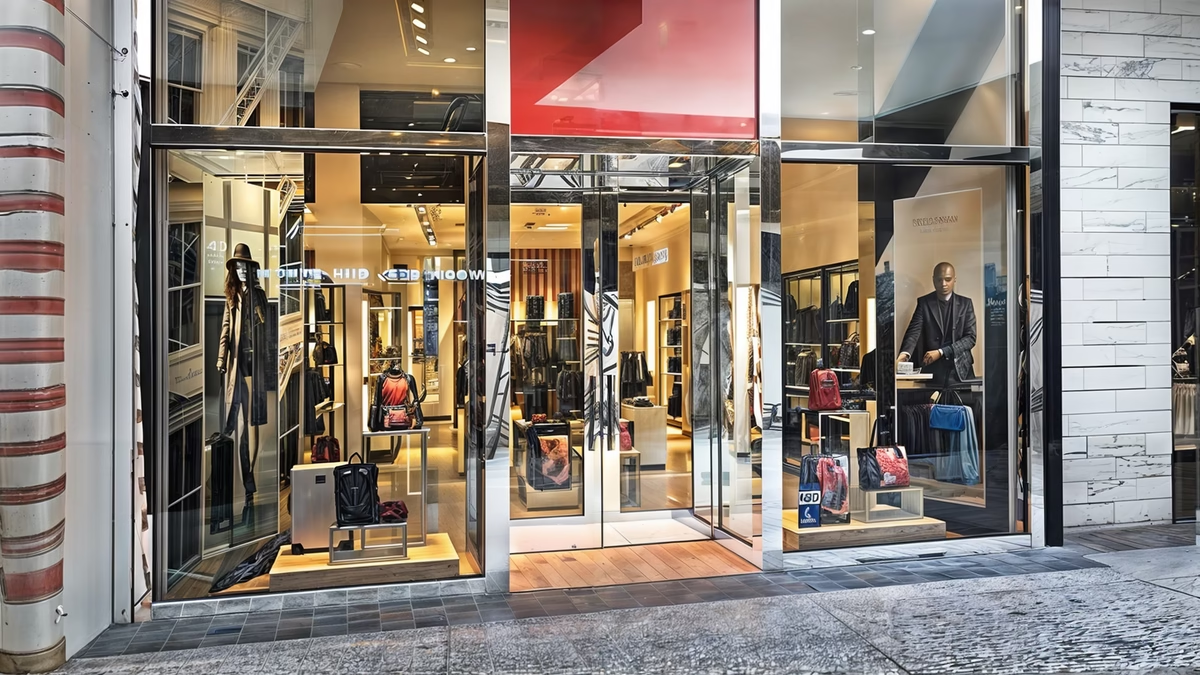
A local clothing retailer decided to modernize its façade by replacing an opaque front with a glass and aluminum system. The change allowed passersby’s to see the merchandise from the street, generating curiosity and increasing foot traffic by more than 30% during the first three months. ROI also grew by 50%. 

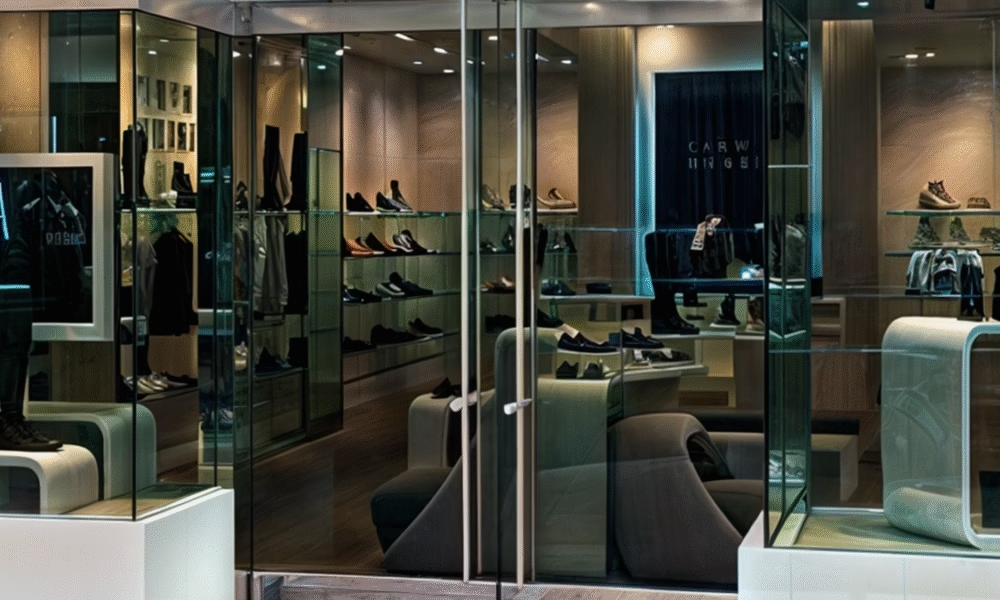
A retail store can elevate its style simply by showing off more lighting thanks to a storefront.

Case 2: Restaurant and Hospitality 

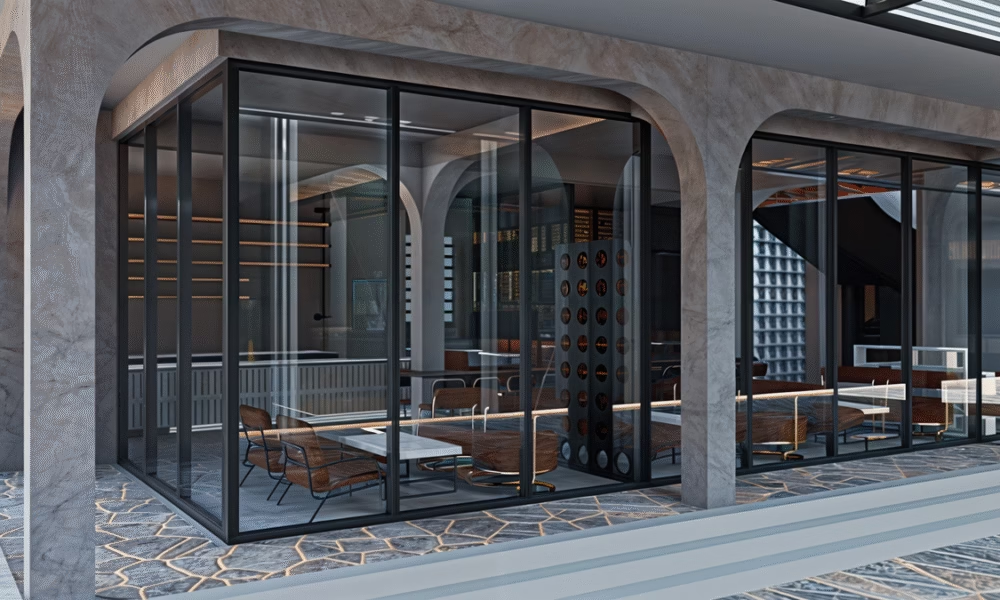
A restaurant in a tourist area renovated its entrance with a transparent design and warm lighting. The new storefront not only improved interior visibility but also created a welcoming atmosphere that attracted both tourists and local customers. The result was an increase in reservations and longer stays at the establishment. 

A restaurant gives an elegant and clean image when using a storefront.

Case 3: Recognized Brand 

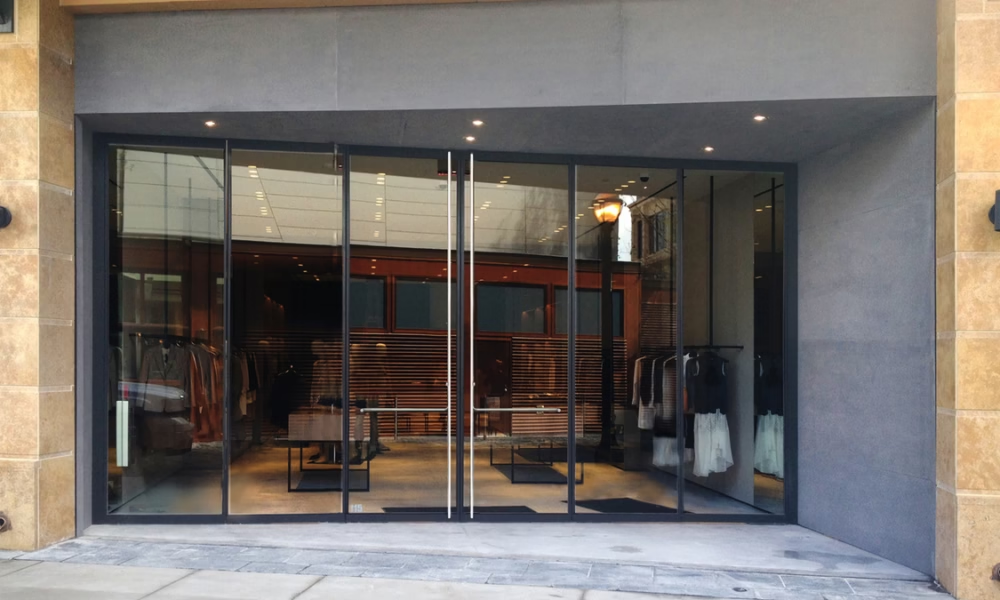
Global chains such as Apple and Starbucks have turned their storefronts into brand symbols. Transparency, premium materials, and minimalist design not only showcase their products but also communicate innovation, trust, and global consistency. These brands aim to offer an elegant style, and they achieved it, while also integrating marketing space to display promotions. 

These examples demonstrate that a well-designed storefront is not a decorative expense, but a strategic investment that strengthens brand perception and drives sales. 

👉 You may also be interested in reading: 5 New Trends for Storefront Systems This Year 

Retailers have undoubtedly benefited greatly from storefronts.

How Businesses Can Apply These Ideas 

Knowing that a well-designed storefront attracts more customers is only the first step. What truly matters is how to put these principles into practice so your business can benefit from them. 

Evaluate Your First Impression 

Stand in front of your store as if you were a new customer. Does the façade convey trust, modernity, and professionalism, or does it feel neglected and unappealing? That first impression is decisive. 

You can also interview customers who entered your store to learn why they came in and whether the storefront influenced their decision. 

Review Materials and Finishes 

Aluminum and glass are materials that combine aesthetics, durability, and low maintenance. If your façade looks outdated or worn, a renovation with these systems can be key to refreshing your brand image. 

Play With Lighting 

Maximize natural light and complement it with artificial lighting that highlights your products or creates the right ambiance for your business, even during evening hours. 

Ensure Accessibility 

Wide doors, clear signage, and access ramps foster inclusion and improve the customer experience from the very first contact. 

Integrate Your Visual Identity 

A storefront is not separate from your marketing. Colors, typography, and messaging should be aligned with your brand identity to project coherence and professionalism. 

In short, your storefront is a powerful tool that, with small strategic improvements, can transform brand perception and consistently attract more customers. 

A storefront is much more than aluminum frames and glass panels: it’s the first conversation between your brand and the customer. Its design not only shapes perceptions of professionalism and trust but also has a direct impact on purchase decisions and the daily flow of customers to your business. 

A well-designed storefront is a strategic investment that combines psychology, architecture, and marketing. From transparency and lighting to the choice of materials and colors, every detail sends a message about who you are as a brand. 

If you want to transform how your business attracts customers and projects its identity, start by evaluating your façade. Small improvements can make the difference between being overlooked or standing out from the competition. 

👉 Contact us today and discover how our aluminum storefront systems can help take your business to the next level. 

Maintains and works correctly with bulletproof glass

Bulletproof Glass Installation & Maintenace: What You Should Know

Home / Archive by category "BLOG"

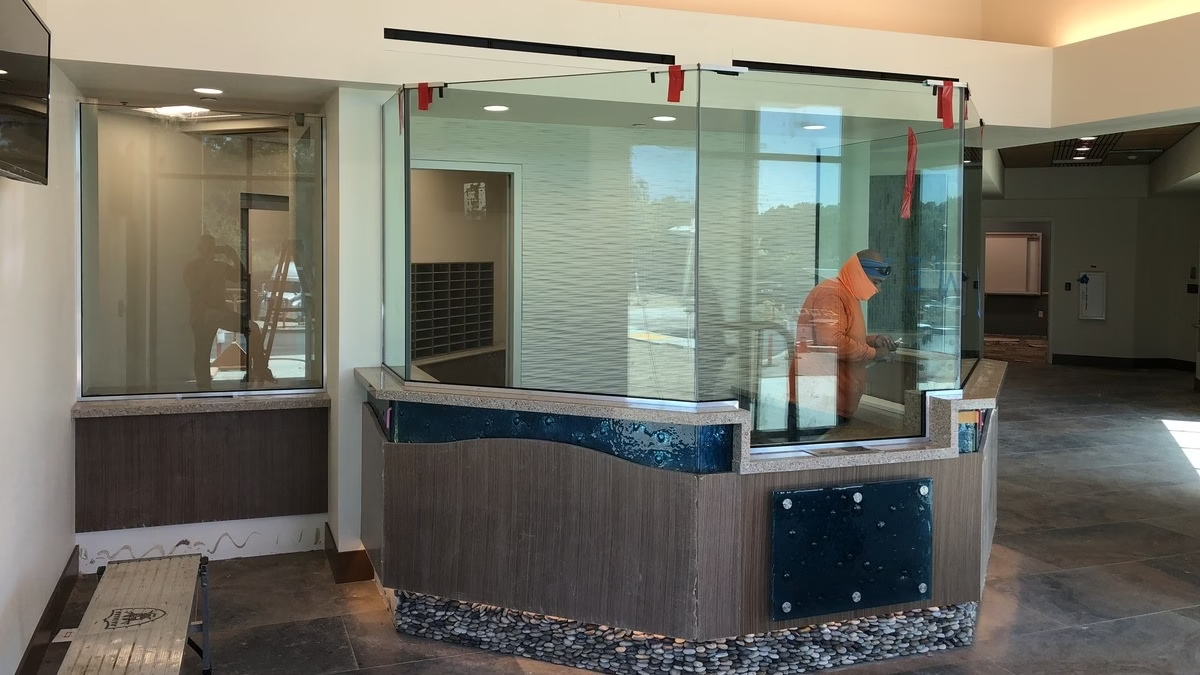
Choosing the right level of bullet resistant glass is only the first step in the process. For this material to truly perform its function, proper installation and maintenance are just as important. High-resistance glass can lose effectiveness if placed in an unsuitable frame, if it’s not properly adjusted, or if its condition is not monitored over time. 

Security doesn’t end with the purchase, it begins with selecting a specialized provider who can guarantee professional installation, quality testing, and a maintenance plan that ensures long-term durability. In practice, poor installation can create critical vulnerabilities, while neglected maintenance reduces the lifespan of the system and compromises your investment. 

In this article, you’ll learn how bullet resistant glass is installed, what certifications and testing you should demand from your provider, and the best maintenance practices to ensure your investment in security continues to protect for years to come. Is an experienced provider necessary? Yes, and we’ll explain why.

👉 You may also be interested in reading: Understanding Bulletproof Glass: How It Works and Where It’s Used 

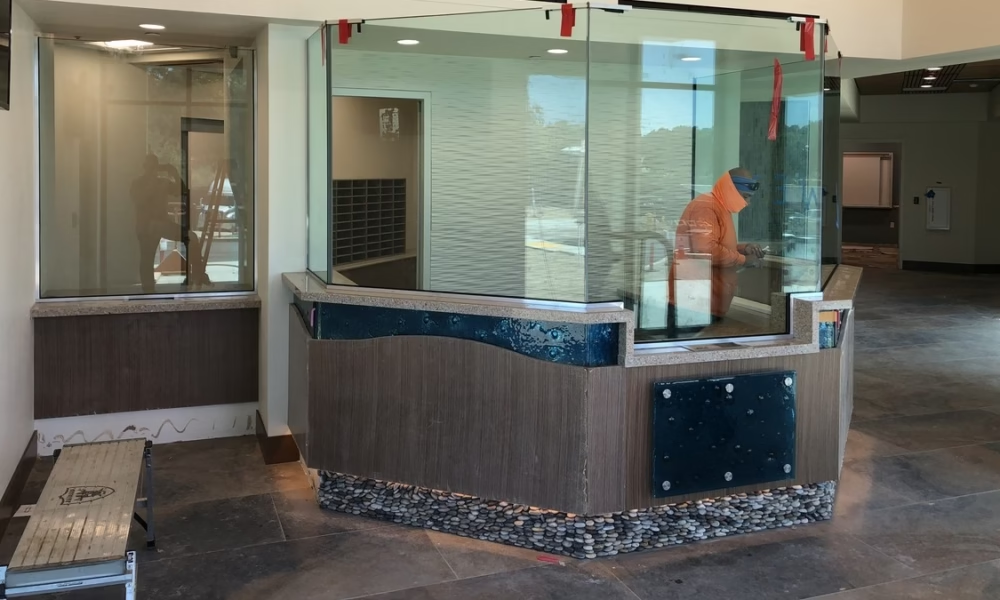
Proper installation of bulletproof glass will significantly improve the efficiency of the system.

Bullet Resistant Glass Installation Process 

Installing bullet resistant glass requires technical precision and specialized expertise, since even the smallest error can compromise the safety of the entire system. It’s not enough to simply replace conventional glass: the whole system must be adapted to guarantee the expected level of protection. 

Main Installation Steps 

Remember that, just like with more advanced aluminum and glass systems, you need a professional for installation. An error can compromise security and even jeopardize compliance with regulations. 

Project assessment 

  • On-site inspection and precise measurement of frames. 
  • Review of structural loads to ensure they can support the additional weight of the glass. 

Structural preparation 

  • Reinforcement of frames and fittings if necessary. 
  • Use of aluminum or steel profiles compatible with the glass thickness. 

Glass placement 

  • Careful mounting to avoid stress or cracks in the layers. 
  • Perimeter sealing with materials certified for ballistic security. 

Quality testing 

  • Verification of airtightness and proper fitting. 
  • Confirmation that the complete system complies with the required UL 752 or NIJ level. 

Estimated installation time 

  • Varies depending on the project size, but generally longer than a conventional installation due to the weight and additional care required by these materials. 

Certifications and Tests  From Your Provider 

Having bullet resistant glass does not guarantee security if the material has not been tested and certified. That’s why one of the most important aspects when purchasing and installing is to require that the provider backs the product with official documentation. 

Key Points to Verify: 

Certification For International Standards 

The glass must comply with recognized tests such as UL 752 (architectural) or NIJ (mobile and personal applications). This ensures that ballistic resistance has been validated under controlled conditions. 

Documentation and Traceability 

Each piece should be accompanied by certificates indicating the protection level achieved and the manufacturing batch. This allows you to verify authenticity and performance. 

On-Site Quality Tests 

The provider should conduct post-installation inspections, ensuring that the complete system, glass, frames, fittings, and seals, function according to the contracted protection level. 

Performance Warranties 

Beyond certification, you should receive a warranty that supports the material’s lifespan and its performance under everyday use. 

At PRL Glass & Aluminum, all our products are manufactured under certified processes and delivered with full documentation that validates their resistance level. This ensures that clients receive a reliable solution, ready to face real risk scenarios. From there, it all depends on the installer doing their job properly, so your protection is truly maximized. 

Certification is undoubtedly the most important factor for bullet-resistant glass. Choosing the right one is the best thing for your business.

Maintenance of Bullet Resistant Glass 

Bullet resistant glass, like any security system, requires preventive and corrective maintenance to ensure it retains its properties over time. Although it’s designed to be highly durable, factors such as climate, installation, and daily use can affect its performance. 

Here are the best maintenance practices you should follow: 

Proper cleaning: Use non-abrasive cleaning products and microfiber cloths. Avoid harsh chemicals such as solvents or ammonia that can damage the interlayers. 

Regular inspections: Check the condition of frames, seals, and fittings at least once a year. Detecting cracks, water leaks, or loss of airtightness early helps extend the lifespan of the glass. 

Post-event inspection: After an impact or attempted attack, the glass must be inspected by a specialist, even if no visible damage is present. In some cases, replacement is necessary to ensure the same level of resistance. 

Service life and replacement: Depending on environmental conditions and usage, the lifespan of bullet resistant glass can exceed 20 years. However, in critical projects, a preventive replacement is recommended before the material shows signs of wear. 

The installation and maintenance of bullet resistant glass are just as important as selecting the right protection level. A purchase without professional installation or a proper maintenance plan can compromise the entire investment, while a well-installed and well-maintained system ensures long-term safety and peace of mind. 

At PRL Glass & Aluminum, we understand that security doesn’t end with the manufacturing of the glass. It begins with expert installation, quality testing, and post-sale service that guarantees maximum durability. 

We offer bullet resistant glass solutions covering the most in-demand UL 752 and NIJ levels on the market, accompanied by professional installation and maintenance plans designed to protect your investment for years to come. 

👉 Contact us today and discover how PRL can guarantee your project is equipped with the most reliable and efficient security. 

NIJ Protection Levels

Bulletproof Glass Protection Levels According to NIJ Standards

Home / Archive by category "BLOG"

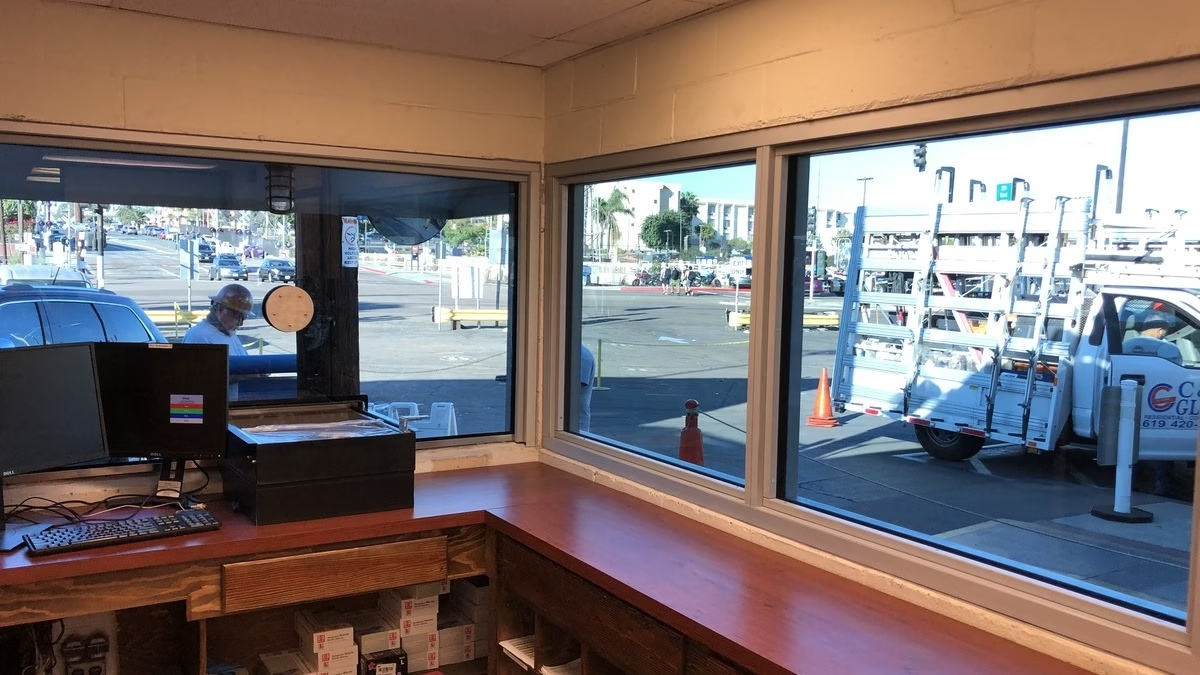
The NIJ (National Institute of Justice) standard is widely recognized in the field of ballistic protection, particularly for mobile and personal applications such as body armor, armored vehicles, and security booths. 

Unlike the UL 752 standard (explained here), which focuses on construction and architectural applications, the NIJ standard is designed for materials that must respond to threats in dynamic environments. 

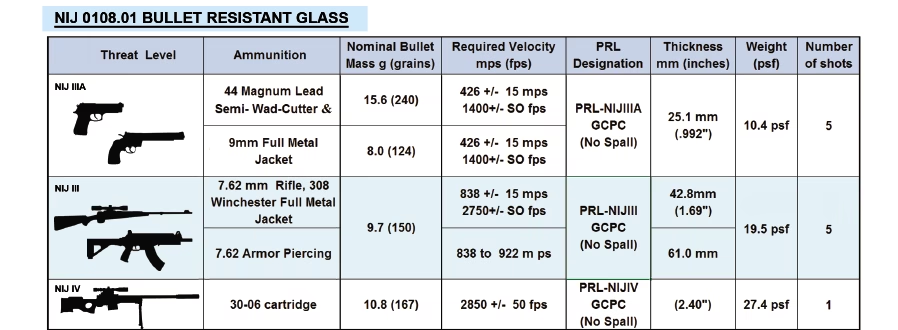
The NIJ classification includes four ballistic protection level, each tested with specific ammunition types and impact velocities. 

In this article, we will examine the four most relevant NIJ levels, explaining what each one entails and the most common use cases for them. 

There are many levels of bullet protection for windows, so it is necessary to know the standards

What Is the NIJ Classification? 

The NIJ classification is a system developed by the National Institute of Justice in the United States to establish standards for ballistic resistance. Its purpose is to ensure that protective materials and equipment meet specific performance levels against different types of threats. 

Unlike other standards, the NIJ system is primarily designed for personal protective equipment and mobile solutions, although it is also applied to ballistic glass and materials for vehicles, guard booths, sentry posts, and security cabins. 

Each NIJ level is tested with specific firearms, calibers, and velocities under controlled conditions that simulate real-world attack scenarios. This allows manufacturers, distributors, and clients to reliably compare the protection level offered by each product. 

In the case of bullet resistant glass, meeting an NIJ level means it has been engineered and tested to stop specific ballistic threats, from handguns to high-powered rifles, depending on the level. 

NIJ Protection Levels 

The NIJ standard defines five main levels of ballistic resistance, each tested with specific firearms, calibers, and velocities. Below, we explain what each level entails and its most common applications. 

NIJ IIA – Basic and Concealable Protection 

  • Standard threat: 9 mm pistols and .40 S&W. 
  • Common use: lightweight vests, personal protection in low-risk environments. 
  • Advantages for homes or businesses: extremely lightweight and easy to conceal. 

NIJ II – Lightweight Protection with Extended Coverage 

  • Standard threat: 9 mm pistols and .357 Magnum rounds fired from short-barrel handguns. 
  • Common use: personal protective vests, security booths, applications requiring discretion. 
  • Advantages for homes or businesses: greater protection than Level IIA without sacrificing lightness. 

NIJ IIIA – Protection Against Large-Caliber Handguns 

  • Standard threat: high-caliber handguns such as .357 SIG and .44 Magnum. 
  • Common use: personal protection, civilian vehicles, security cabins in urban environments. 
  • Advantages for homes or businesses: lightweight and versatile protection, ideal for mobility. 

NIJ III – Protection Against High-Powered Rifles 

  • Standard threat: 7.62 mm NATO (M80) rifle with soft-core projectile. 
  • Common use: armored vehicles, security facilities, checkpoints. 
  • Advantages for homes or businesses: stops standard rifle ammunition used in most assault rifles. 

NIJ IV – Protection Against Armor-Piercing Ammunition 

  • Standard threat: .30-06 Springfield (AP) armor-piercing rounds and other high-penetration projectiles. 
  • Common use: military installations, high-risk government buildings, VIP transport. 
  • Advantages for homes or businesses: maximum protection level for civilian and strategic applications. 

Levels such as RF2/RF3 (according to the most recent version of the standard) are designed for extreme ballistic threats and specialized military applications that exceed the protection range offered by any provider. 

At PRL Glass & Aluminum, we work with NIJ Levels IIIA, III, and IV, covering a protection range from large-caliber handguns to armor-piercing ammunition used in military environments. 

NIJ Bullet Resistant Glass

How to Choose the Right NIJ Level for Your Home or Business 

Selecting the correct NIJ level is essential to ensure the necessary protection without generating unnecessary costs. The decision should be based on a realistic assessment of the most likely threats and the specific context where the glass or ballistic material will be installed. 

Key factors to consider: 

  • Type of threat: handguns, high-powered rifles, or armor-piercing ammunition. 
  • Specific application: armored vehicle, security booth, corporate building, or military facility. 
  • Risk environment: areas with high crime rates, conflict zones, or low-risk urban environments. 
  • Mobility or fixed installation: higher levels may mean more weight, which is not always ideal for vehicles or lightweight structures. 
  • Regulatory compliance: some regulations require a minimum NIJ level for government or private security projects. 

At PRL Glass & Aluminum, we help our clients determine the most appropriate NIJ level for their specific case, ensuring a balance between protection, functionality, and technical feasibility. For example: 

✅ Residential or corporate in an urban area: NIJ IIIA 

✅ Armored vehicles for executive transportation: NIJ III 

✅ Critical security or high-risk facilities: NIJ IV 

Understanding the NIJ protection levels is essential to selecting a solution that truly addresses the threats in your environment, without overspending. A proper assessment ensures that your choice of bullet resistant glass or ballistic material is efficient, functional, and compliant with the technical and regulatory requirements of your project. 

At PRL Glass & Aluminum, we have the expertise, technical capabilities, and manufacturing capacity to deliver customized solutions that meet NIJ Levels IIIA, III, and IV. These levels cover everything from protection against large-caliber handguns to defense against armor-piercing ammunition used in high-risk environments. 

If you are looking for guidance in defining the most suitable NIJ level for your home, business, or strategic facility, our team is ready to help you find the safest and most cost-effective option. Contact us today and let’s take your security to the next level. 


ATMs, homes, businesses, and other establishments are focused on providing you with greater security thanks to bulletproof glass

Protective Bullet Resistant Glass Levels Under UL 752 Standards

Home / Archive by category "BLOG"

Choosing the right protection level for bullet resistant glass is not a decision to be taken lightly. Installing glass with an inadequate rating can leave security gaps or create unnecessary costs for protection you don’t actually need. In fact, installing more protection than required can turn out to be very expensive. 

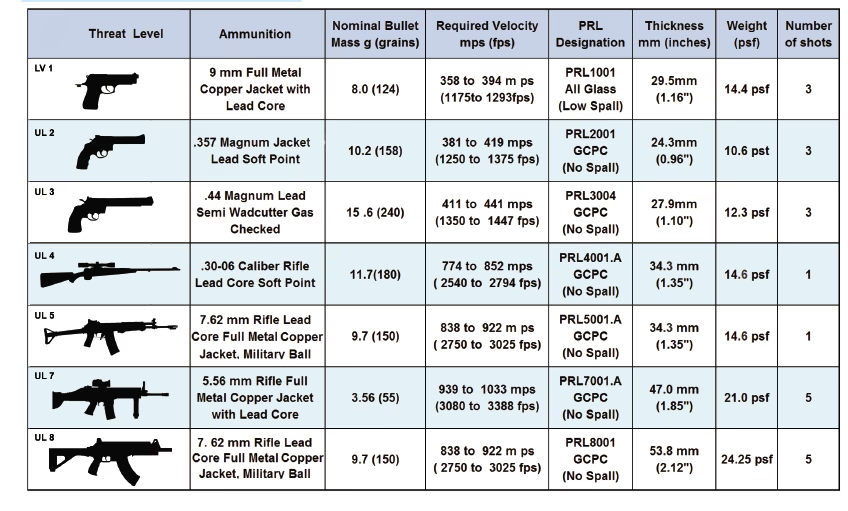
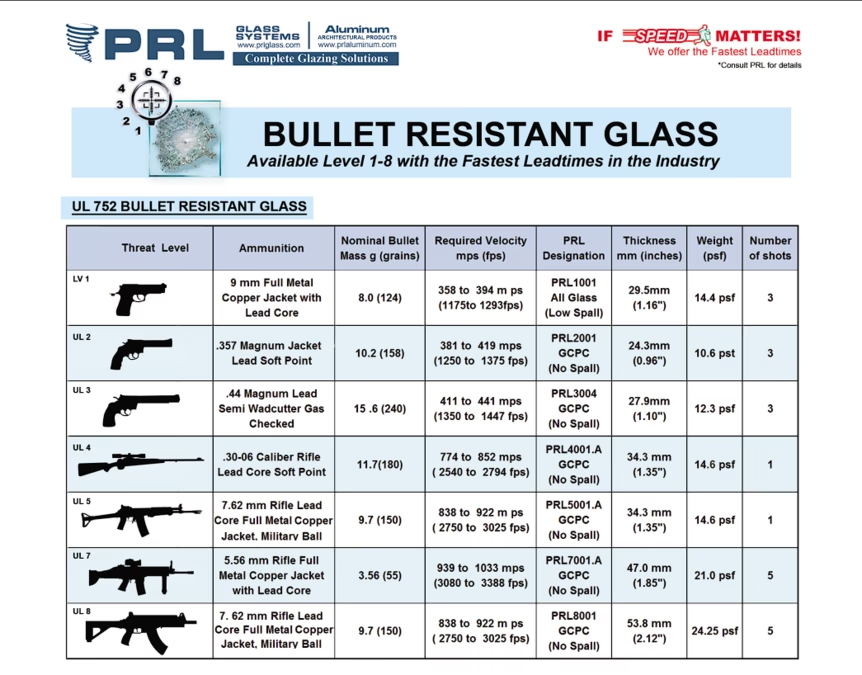
To standardize and ensure the performance of these materials, the industry relies on the UL 752 classification, developed by Underwriters Laboratories. This standard defines 10 protection levels, each tested with specific firearms, calibers, and velocities, simulating real-world threat scenarios. 

In this guide, we’ll examine the 10 protection levels under UL 752, their most common applications, and how to determine which one is best suited for your project. This will help you make an informed decision that balances security, functionality, and budget. 

👉 You may also be interested in reading: Why Choose Bulletproof Bullet Resistant Glass for Homes or Small Businesses? 

It should be noted that it is necessary to consider the type of glass we require, as it can be dangerous or a waste of money.

What Is the UL 752 Classification? Not All Bullet Resistant Glass Is the Same 

The UL 752 classification is one of the most recognized global standards for evaluating the ballistic resistance of glass and other protective materials. It was developed by Underwriters Laboratories, an independent organization that’s been certifying the safety and performance of products across multiple industries for over a century. 

This standard defines 10 protection levels, each tested with specific firearms, calibers, impact velocities, and number of shots. These tests are conducted under controlled conditions to simulate real-life scenarios, ensuring that the glass meets the resistance level assigned to it. 

Unlike other classification systems, such as NIJ (National Institute of Justice), which is primarily used for personal protective equipment, UL 752 is focused on architectural and structural applications, including windows, doors, counters, partitions, and specialized vehicles. 

Its purpose is to provide buyers with clear, reliable information for making purchasing decisions. Choosing the wrong protection level can create security vulnerabilities, while buying a higher level than necessary can lead to completely avoidable costs.  

The 10 UL 752 Protection Levels 

Bulletproof glass (although it’s correct to call it bullet resistant glass), has differences in thickness and protection depending on the projectile. The UL 752 classification establishes ten protection levels, each designed to withstand specific threats. Here’s a breakdown of each one: 

Level 1: 9 mm. Handgun 

Withstands impacts from 9 mm. handguns fired at approximately 1,175 ft. per second. 

  • Common use: Glass for retail stores, pharmacy counters, and residential entryways in low-risk areas, ideal for preventing robberies. 

In some cases, there’s a level 6 . Similar to Level 1 in bullet protection but designed to withstand a greater number of shots and repeated impacts in the same area. 

Level 2: .357 Caliber Magnum 

Withstands shots from a .357 Magnum revolver at approximately 1,250 ft. per second. 

  • Common use: Gas stations, convenience stores, and small businesses in moderate-risk areas where cash transactions are frequent. 

Level 3: .44 Caliber Magnum 

Withstands shots from a .44 Magnum revolver at approximately 1,350 ft. per second. 

  • Common use: Banks, jewelry stores, and high-value commercial areas. 

Level 4: .30-06 Caliber Rifle 

Withstands shots from a .30-06 caliber rifle with lead-tipped bullets at approximately 2,850 ft. per second.  

  • Common use: Government facilities and security checkpoints, such as currency exchange offices and banks. 

Level 5: High-Powered Rifle 

Withstands shots from a high-powered rifle using soft-core ammunition at approximately 3,080 ft. per second. 

  • Common use: High-profile buildings and corporate headquarters with strict security protocols, as well as sites housing servers or critical information. 

Level 7: 5.56 mm. Rifle (AR-15) 

Withstands shots from a 5.56 mm. rifle with soft-core projectiles at approximately 3,080 ft. per second. 

  • Common use: Military facilities, command centers, and high-security buildings such as government departments and intelligence agencies. 

Level 8: 7.62 mm. Rifle (AK-47) 

Withstands shots from a 7.62 mm. rifle with soft-core projectiles at approximately 2,750 ft. per second. 

  • Common use: Embassies, high-risk facilities, and cash-in-transit vehicles. 

Is There Greater Protection? Yes, But For More Specialized Markets 

In addition to the 7 commercial levels that PRL and other companies offer, there’s also a couple additional levels of protection. These are more specialized and designed for high-security protection, and they’re barely noticeable. 

Level 9: .50 BMG Sniper Rifle 

Withstands shots from 12.7 mm. (.50 BMG) ammunition at approximately 2,930 ft. per second. 

  • Common use: Military protection and extreme conflict environments; government buildings designed to protect high-level personnel. 

Level 10: Extreme Ballistic Threats 

Designed for environments anticipating high-caliber weapons, armor-piercing rounds, and sustained attacks. 

  • Common use: Military bases, strategic facilities, and national defense projects. 
There are different levels of protection when it comes to bulletproof glass.

How to Choose the Right Protection Level 

Selecting the correct bullet resistant glass level is a critical step in ensuring safety without incurring unnecessary costs. The highest level is not always the most appropriate; the choice should be based on a realistic risk assessment. 

Key factors to consider: 

  • Geographic location: Areas with high crime rates or armed conflict may require higher protection levels. 
  • Type of property or facility: Protecting a private residence is not the same as securing an embassy or a data center. 
  • Value of the assets to protect: The higher the value, the greater the need for ballistic resistance. 
  • Most likely threat: Choose the level based on the caliber or type of firearm expected. A common assailant typically uses more commercially available weapons, meaning rifle-level protection may not be necessary. 
  • Local regulations and standards: Certain sectors, such as banking or government, require a minimum level by law. In some cases, higher levels cannot be sold unless there‘s a specific security need. 

Example recommendations by sector: 

Residences: Levels 1 to 3 

Small businesses: Levels 2 to 4 

Financial institutions: Levels 3 to 5 

Government facilities: Levels 4 to 8 

Military or strategic projects: Levels 8 to 10 

At PRL Glass & Aluminum, we help our clients perform a personalized risk assessment to select the most efficient and secure solution based on their specific needs and budget. 

Understanding the 10 protection levels of bullet resistant glass under the UL 752 classification is essential for making an informed and effective decision. It’s not just about purchasing the most resistant glass, it’s about selecting the solution that matches the threat, type of facility, and the available budget. 

A well-chosen solution ensures that your security investment is efficient, proportional to the risk, and compliant with applicable regulations. This not only protects lives and property but also optimizes the resources allocated to safety. 

At PRL Glass & Aluminum, we have the technical expertise, manufacturing capabilities, and specialized team to design and install bullet resistant glass tailored to your needs.  

We offer solutions covering levels 1 through 8 of the UL 752 classification, customized for residential, commercial, government, and corporate projects. 

If you need guidance for deciding the right protection level for your project, our team is ready to help you find the safest and most cost-effective solution. 

Bulletproof glass aplications

Understanding Bulletproof Glass: How It Works and Where It’s Used

Home / Archive by category "BLOG"

Security has become a top priority this year. Bullet resistant glass, also known as bulletproof glass, has become an essential solution for protecting people, businesses, and property. 

While the term bulletproof is commonly used, the reality is that no material is completely impervious to bullets. Instead, this type of glass is engineered to withstand firearm impacts and minimize damage, offering a level of protection tailored to each specific need. 

Its use is no longer limited to banks or government buildings. Increasingly, homes, small businesses, educational institutions, and even vehicles are incorporating it to enhance security against potential threats. Technological advancements have made it possible to design solutions that combine high resistance with aesthetically appealing designs, without compromising visibility or affecting the architectural plan. 

In this article, you’ll learn what bullet resistant glass is, how it works, its main applications, and why it can be a strategic investment in security. We’ll also debunk common myths and help you understand the different protection levels available on the market. 

Bullet-resistant glass is one of the commercial upgrades you must make if you care about security

What Is Bullet Resistant Glass (or Bulletproof Glass) 

Bullet resistant glass is a security material designed to withstand the impact of projectiles fired from firearms. Unlike conventional glass, this product is made up of multiple layers of glass and high-strength plastic materials, such as polycarbonate or acrylic, bonded together through a specialized lamination process. 

Its main function is not to literally stop a bullet, but to absorb and disperse the energy of the impact, preventing the projectile from fully penetrating the surface. This significantly reduces the risk of injury and property damage. 

It is important to clarify that the term bulletproof is used commercially, but no glass is completely “bulletproof.” The correct term is bullet resistant glass, as each type and thickness is engineered to resist specific calibers and projectile velocities according to international standards such as UL 752 or NIJ. 

Thanks to its versatility, bullet resistant glass is manufactured in different thicknesses, protection levels, and finishes, making it suitable for integration into windows, doors, security counters, and vehicles, without compromising aesthetics or visibility. 

👉 You may also be interested in reading: Why Choose Bulletproof Bullet Resistant Glass for Homes or Small Businesses? 

How Bullet Resistant Glass Works 

Bullet resistant glass is designed with one fundamental principle: to stop or slow down a projectile by dispersing its kinetic energy before it can fully penetrate the surface. 

This effect is achieved through a combination of materials and layers: 

  • Glass layers – Provide rigidity and help deform the projectile’s tip. 
  • Polycarbonate or acrylic layers – High-strength plastics that absorb most of the impact and prevent glass fragments from projecting inward. 
  • Adhesive interlayers (PVB, SentryGlas, or others) – Bond the layers together and control crack propagation. 

When a bullet strikes, the front glass layers may crack or shatter, but the intermediate and back layers absorb the remaining energy, stopping the projectile or drastically reducing its speed. 

The number and thickness of the layers determine the level of protection, which is classified according to standards such as UL 752 or NIJ. This makes it possible to manufacture glass capable of stopping everything from low-caliber rounds to high-powered ammunition used in assault rifles. 

Common Applications of Bullet Resistant Glass 

Bullet resistant glass is used in a wide range of settings where safety and operational continuity are critical. These are the most frequent applications: 

Homes and Residences 

  • Windows and main doors in highrisk areas 
  • Safe rooms and access to terraces or patios 

💡 Key benefit: discreet protection without losing natural light or aesthetics 

Small Businesses and Retail 

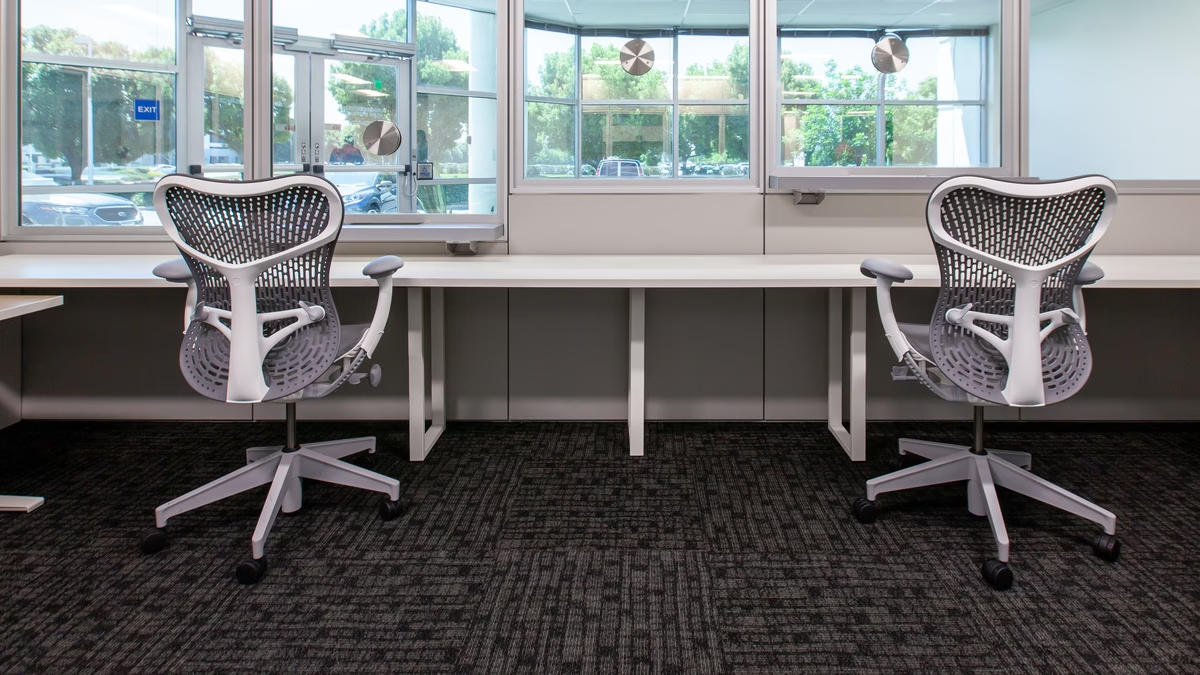
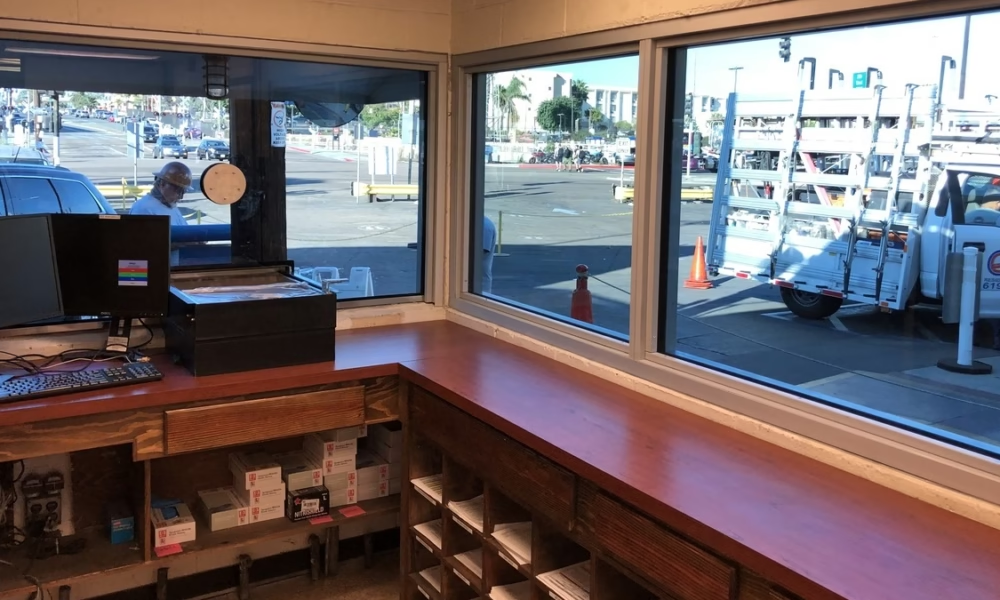
  • Counters, display cases, cash wraps, and checkout areas 
  • Convenience stores, jewelry shops, pharmacies, and gas stations 

💡 Key benefit: theft deterrence and loss reduction 

Financial Institutions 

  • Teller windows, customer service partitions, and vault areas 
  • Trading rooms and restrictedaccess entries 

💡 Key benefit: access control and staff protection 

Government and Security Buildings 

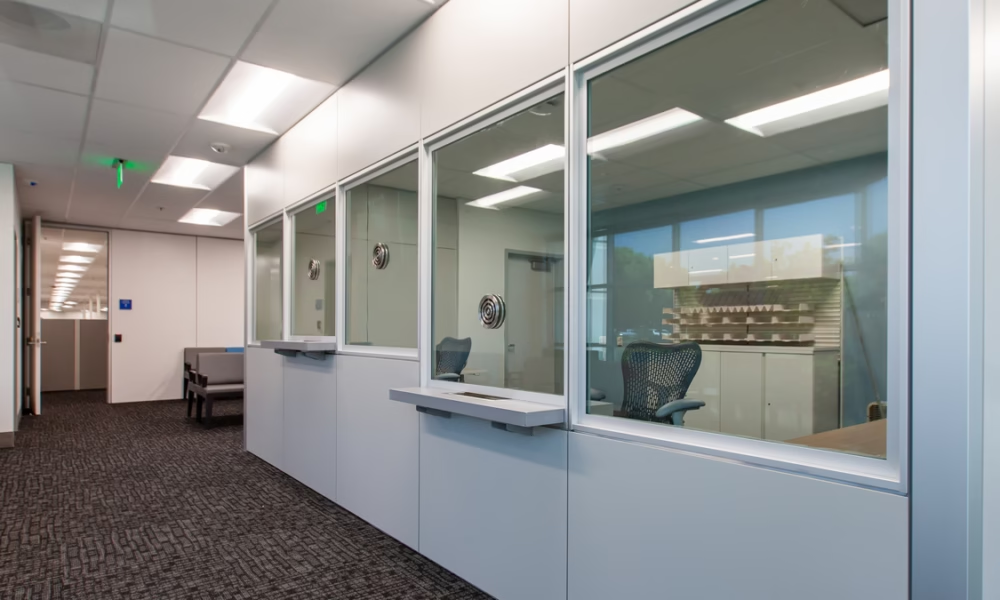
  • Lobbies, service windows, control rooms, and perimeter points 
  • Courthouses, embassies, police stations 

💡 Key benefit: compliance with regulations and resilience against threats 

Education and Healthcare 

  • Access control points in schools and universities 
  • Hospital receptions, inhouse pharmacies, and critical areas 

💡 Key benefit: protection for hightraffic spaces with full visibility 

Transport and SpecialPurpose Vehicles 

  • Cashintransit, escort units, tactical vehicles, and VIP cars 

💡 Key benefit: mobile protection with optimized weight and thickness 

Critical Infrastructure 

  • Data centers, utilities, telecom hubs, and process control rooms 

💡 Key benefit: operational continuity and reduced systemic risk 

Benefits of Installing Bullet Resistant Glass 

Installing bullet resistant glass offers multiple advantages that go beyond protection for you and your business. The most important include: 

Protection Against Armed Threats: Engineered to withstand firearm impacts, this glass serves as an effective barrier against robbery attempts, attacks, or violent intrusions. 

Reduced Risk of Injury: Layers of high-strength plastic prevent sharp fragments from breaking off toward the interior, minimizing the risk of cuts to occupants and staff. 

Crime Deterrence: Its visible presence creates a psychological effect on potential aggressors, reducing the likelihood of an attempted attack. 

Aesthetic Integration: Available in various thicknesses, tints, and finishes, it can be adapted to any architectural design without compromising aesthetics, you no longer have to sacrifice style for protection. 

Regulatory Compliance: In sectors such as banking, government, or cash-in-transit services, bullet resistant glass helps meet international safety standards and regulations. 

Greater Peace of Mind and Confidence: Both residents and employees feel safer, which improves well-being and productivity in work environments. 

Bullet-resistant glass does not shatter into a thousand pieces and has plastic parts that cause the kinetic energy to decrease.

5 Myths About Bullet Resistant Glass 

Although bullet resistant glass is becoming increasingly common in homes, businesses, and institutions, there are still misconceptions about how it works and what it can do. Let’s clear up these points so you can make informed decisions: 

  1. “It’s completely bulletproof”: No glass can stop every projectile without limits. Each model is designed to withstand specific calibers and velocities according to standards such as UL 752 or NIJ. There are projectiles so powerful that not even steel or concrete can stop them. 
  2. “It’s too thick and unattractive”: In the past, bulletproof glass was easy to spot. Thanks to technological advancements, today’s bullet resistant glass can be manufactured in thicknesses and finishes that maintain visibility and blend seamlessly into modern architectural designs. 
  3. “It’s only used in banks or government buildings”: Its applications are much broader, ranging from residences and small businesses to schools, hospitals, and vehicles. 
  4. “It can’t be installed in existing buildings”: In most cases, bullet resistant glass can be adapted to existing frames and structures, with the necessary technical modifications. 
  5. “It’s not worth the investment”: More than an expense, it’s an investment in safety and operational continuity. It can prevent financial losses, property damage, and most importantly, save lives. 

Bullet resistant glass is much more than a security feature, it’s a strategic investment to protect lives, safeguard assets, and ensure the continuity of your operations. With today’s technology, you can have solutions that combine high resistance, seamless aesthetics, and adaptability to a wide range of environments, from private residences to critical infrastructure. 

Understanding how it works, its applications, and the myths surrounding it is the first step toward making an informed decision. The next step is knowing that not all bullet resistant glass is the same, there are different protection levels, each designed for specific threats. 

At PRL Glass & Aluminum, we have the expertise, technical capabilities, and manufacturing capacity to deliver custom bullet resistant glass solutions tailored to your project.  

Contact our team today for a personalized assessment and discover how we can help you enhance the safety and resilience of your facilities. 

Buying guide for aluminum doors

Decided on Buying Aluminum Doors? Features, Prices and How to Choose

Home / Archive by category "BLOG"

You’ve already made a great decision: choosing an aluminum door. Now comes what may be the most important part of the process. How do you know which option is right for your project? 

While aluminum is known for its durability, strength, and modern look, not all doors are created equal. There’s different types of profiles, finishes, security technologies, and price ranges that can significantly impact both functionality and appearance. 

In this guide, we’ll help you understand what features to consider, how each element affects the final price, and what to expect from the installation process. That way, you can make an informed decision and ensure your door meets every need. 

Buying an aluminum door may be easy, but in reality there are many special considerations to be made.

What Should You Evaluate Before Buying an Aluminum Door? 

Before purchasing or custom ordering your aluminum door, it’s important to understand the elements that determine its quality, functionality, and appearance. Here are the key factors to consider: 

  • Finish and color: Aluminum doors can be anodized, painted, or powder coated. This not only influences aesthetics but also affects resistance to weather, corrosion, and wear. Today, you’ll find finishes that mimic wood or offer ultra-modern matte tones. 
  • Opening system: Depending on your space and usage, you can choose from hinged, sliding, pivot, folding, or swing doors. Each system offers specific advantages in terms of ergonomics, design, and function. 
  • Compatibility with locks and access controls: Make sure the selected door supports multi-point locks, electronic systems, or access control via fingerprint, card, or app. This is essential if you’re aiming for a smarter, more secure solution. 

Factors That Affect the Price of an Aluminum Door 

The cost of an aluminum door can vary significantly depending on several technical and aesthetic factors. Here are the main elements that influence the final price: 

  • Project dimensions: A standard residential door is not the same as a large format entry for a commercial or corporate space. Size directly impacts the amount of material, hardware, and structural reinforcement required. 
  • Type of glass: If the door includes glass, the type of glass selected will greatly affect the price. Options range from tempered and laminated to bulletproof or solar-control glass. 
  • Included technology: Systems like Battle doors or thermally broken options add functional value but also increase the price due to their enhanced security or thermal insulation features. 
  • Custom hardware and finishes: Digital locks, designer handles, hidden hinges, or specialty finishes (like wood grain or anodized textures) can increase the cost, but also elevate the aesthetic and user experience. 
  • Professional installation: The price should also include installation service. Poor installation can undermine even the best quality door, so it’s best to choose providers that offer specialized technical support. 

How Much Does an Aluminum Door Cost? 

While the final price will depend on the specific details of your project, it’s helpful to have a general reference to understand what to expect when requesting a quote for an aluminum door. 

  • Standard residential doors: For regular sized hinged doors without glass or basic glazing, prices typically start around $250 USD. Cost can increase depending on the finish, lock type, and level of customization. 
  • Doors with laminated or tempered glass: When safety glass is added, prices may range from $400 to $1,400 USD, depending on the type of glass and the mounting system used. 
  • Commercial or high-traffic projects: Large format entries, automatic sliding doors, or reinforced systems may exceed $1,300 USD, especially if advanced technology or high-end finishes are required. 
  • Premium systems like Battle doors: For maximum protection against impacts, fires, or extreme weather, these doors are priced based on technical specifications and can vary widely—but they represent a long-term investment in comprehensive security. 

These prices may vary depending on your region, supplier, and project requirements, but they offer a solid starting point for informed decision making. Always request a detailed quote to get a clear understanding before moving forward with your next purchase. 

Price, technologies and even a complete system. All of these can become important when choosing a type of aluminum door

How to Choose the Ideal Aluminum Door for Your Project 

Choosing the right door isn’t just about budget or design, it also involves evaluating usage, environment, and the level of security required. Here are some key recommendations to help you make the best decision: 

  • Type of space: For a house, a well-finished hinged door may be enough. But for a commercial location, an automatic or reinforced sliding door might be more appropriate. And in office spaces, combining aluminum and glass is often preferred to maintain visibility, aesthetics, and a modern design. 
  • Security needs: If the property is in a high-risk or isolated area, it’s advisable to choose a highly secure door, like our Battle doors, with multi-point locking systems, laminated glass, and additional technologies like thermally broken systems. 
  • Architectural style: Aluminum offers a wide range of finishes. You might opt for a sleek, minimalist look for a corporate building or a wood-like finish for a residence. The right color and texture can make a big visual impact. 
  • Consult a specialist: Even if you have a clear idea of what you want, working with an experienced supplier can help you catch technical details you may overlook—such as compatibility with existing frames or recommendations on glass type. Every detail matters. 

Are Aluminum Doors a Smart Investment That Transforms Your Space? 

Choosing an aluminum door isn’t just about aesthetics or function. It should be seen as a strategic investment in security and long-term durability. Thanks to their versatility, modern design, and adaptability, aluminum doors have become one of the most complete solutions for residential, commercial, and institutional projects. 

Having a clear understanding of key features, price ranges, and installation types will help you make a more confident decision, aligned with the real needs of your space. 

Ready to take the next step? At PRL Glass, we manufacture custom aluminum doors with high-end finishes and integrated security technologies. Contact us and discover how to transform your entryway into a door that offers it all: design, protection, and presence.